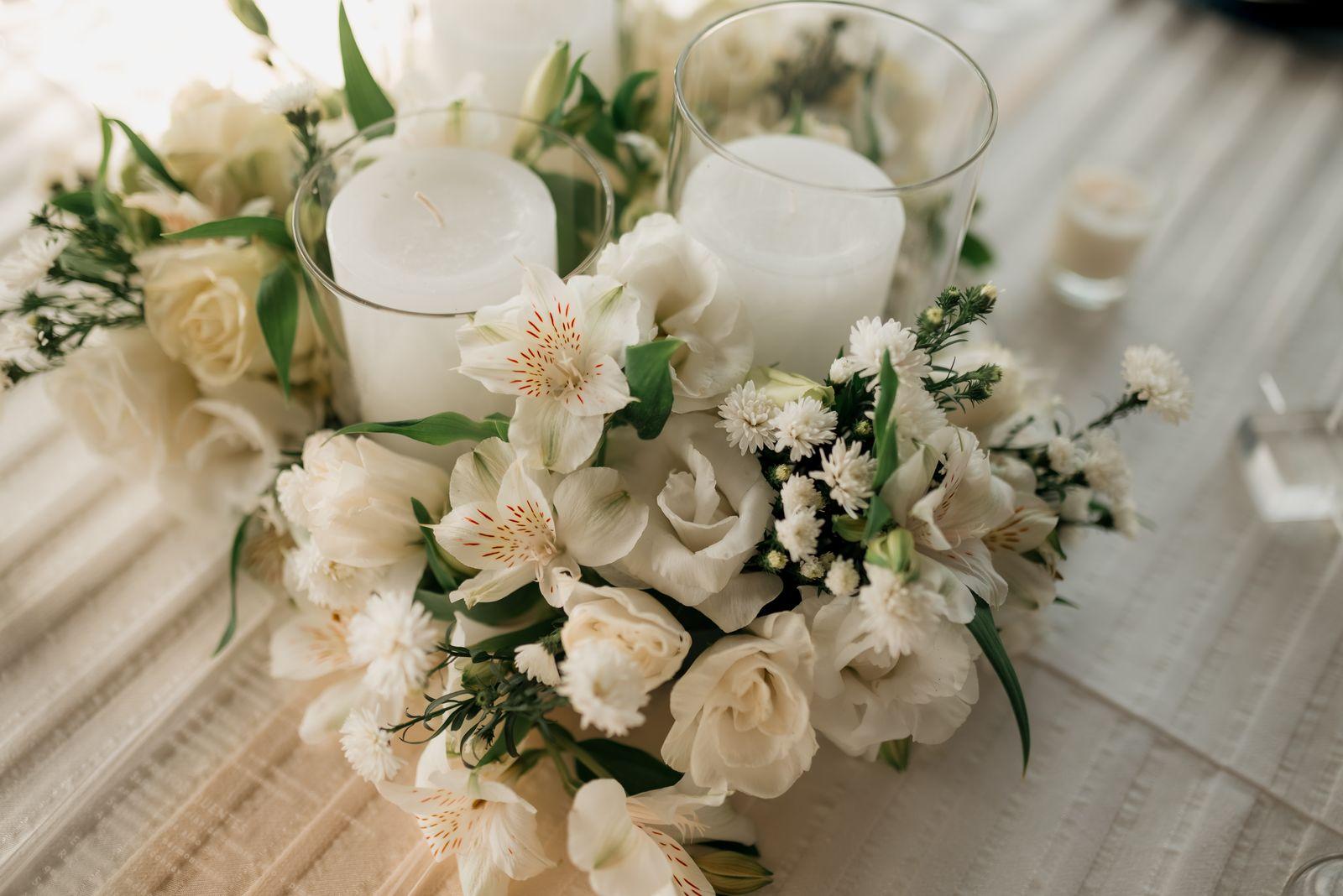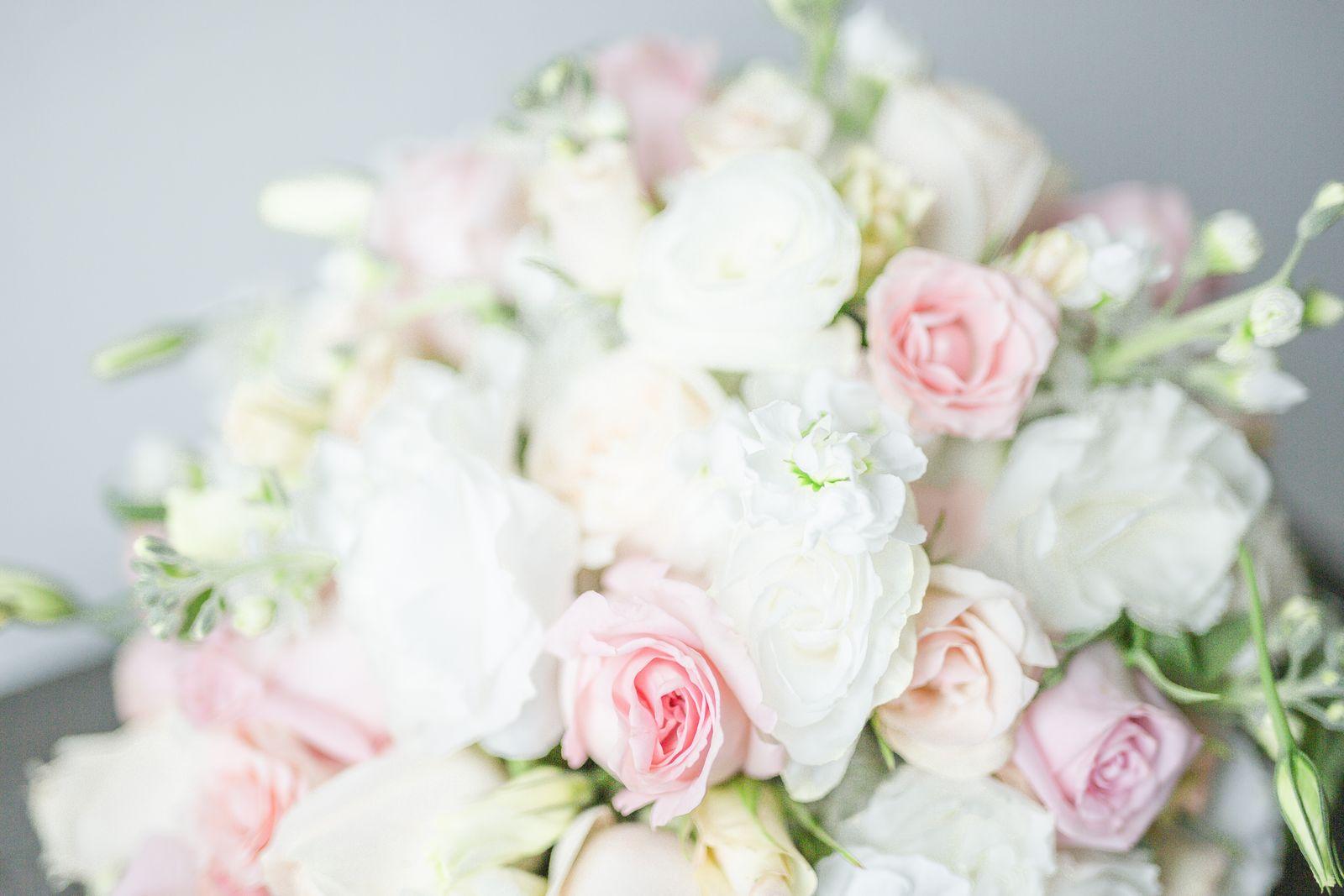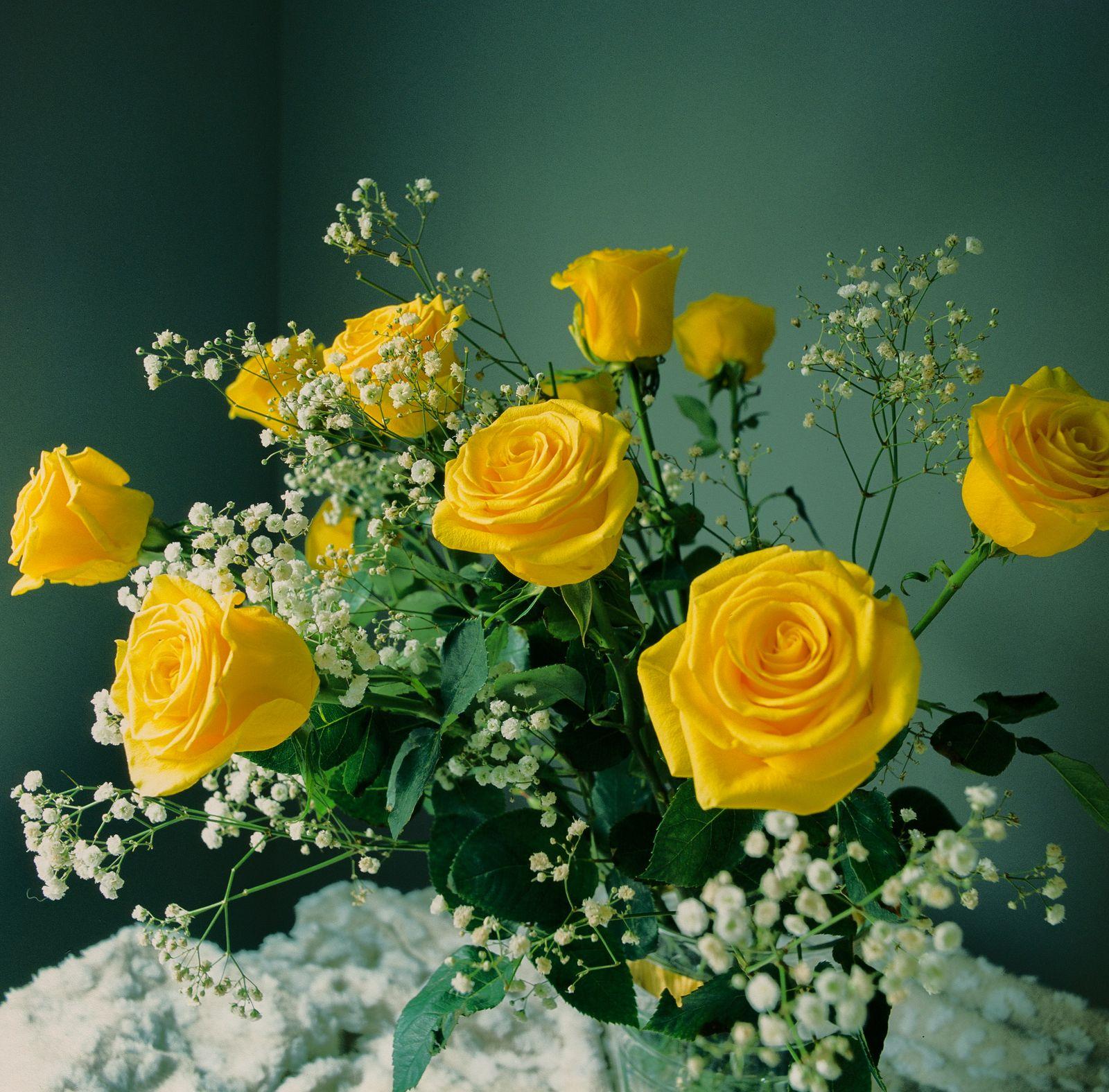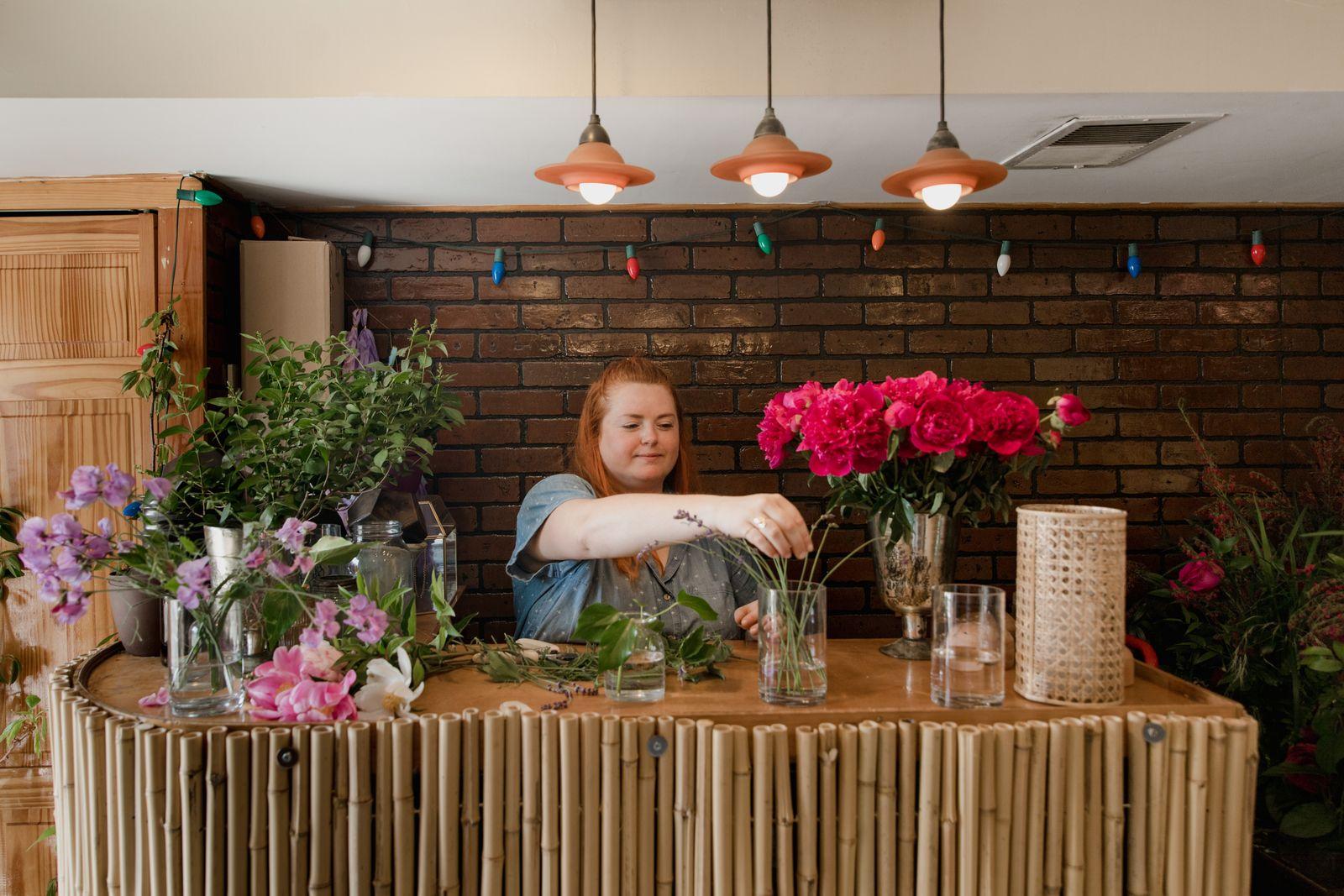
The difference is not the flowers. It is what happened to them between the field and your hands. Supermarket bunches are bought as a commodity, shipped dry and displayed at room temperature, usually a short walk from the produce section, and sold with no conditioning step. A florist buys smaller, holds the stems cold, rehydrates them in a treated solution, and builds the bouquet the day it leaves. That handling gap is where vase life is won or lost. Cindy's Flowers hand-ties every bouquet in a Toronto studio for same-day delivery, so the stems never do shelf time.
Why are grocery store flowers so much cheaper?
Because the price leaves out the handling. UMass Amherst Extension notes there are reports that "improper postharvest handling accounts to 20 to 30% of cut-flower loss during marketing", and high-volume retail absorbs that shrink rather than engineering it out. What you carry to the till is a sleeved bunch, not a conditioned, designed, delivered bouquet.
Four things the lower price excludes:
- Selection. A grocery buyer stocks a short list of high-turnover varieties. A florist buys to a recipe and can chase whatever is genuinely good that week.
- Conditioning. Nobody on the shop floor is recutting stems, stripping foliage or refreshing the solution. The bunch waits in whatever water the bucket started with.
- Design. The sleeve was assembled to a fixed formula, often before it left the farm. Proportion, focal flower and colour balance are not in the price.
- The errand. No chosen delivery date, no card, nobody accountable for how it looks when it lands.
None of that makes a supermarket bunch bad value. It makes it a different product. The numbers on our own bouquet collection carry the conditioning, the design and the trip across the city inside them.
What happens to a bunch between the field and the shelf?
Temperature happens. Oklahoma State University Extension advises cooling cut flowers as soon as possible after harvest and holding them at 32 to 35°F (0 to 2°C), then puts a figure on the cost of missing that window: "Flowers stored at 41°F, for example, may deteriorate up to four times faster than those stored at 32°F."
Nine degrees. Four times. That is the entire argument for a cold chain, and it is a temperature fact rather than a verdict on any retailer. Grocery bunches are frequently displayed in open store air rather than a floral cooler, and one may have been standing there for days before you noticed it.
Which means the clock was already running when you picked it up. Nothing you do at the kitchen sink rewinds it.
Does the produce aisle really shorten vase life?
It can, and the mechanism is measured in parts per billion. Ethylene, the ripening hormone, ages cut flowers as well as fruit. Oklahoma State University Extension notes that flowers produce it themselves during normal ageing, that ripening fruit gives it off too, and that "air containing 100 parts per billion ethylene (0.00001%) may damage flowers in the vicinity".
Cold storage works on both ends of that problem. The same source says refrigeration "helps to reduce ethylene production and lowers the sensitivity of vulnerable flower species", which a room-temperature display bucket cannot do.
The university's table of flowers "particularly sensitive to ethylene" reads like an inventory of a supermarket mixed sleeve: alstroemeria, carnation, baby's breath, freesia, lily, rose, snapdragon and stock all appear on it.
Two of those need a warning before they come home, and two more are simply ungraded. True lilies and daylilies cause fatal kidney failure in cats, and both the pollen and the vase water are hazards, so the honest advice is not to bring them into a cat's home at all; the detail sits in our post on lilies and cats. Carnations are on the ASPCA's toxic list for dogs, cats and horses. Roses, alstroemeria, snapdragons and baby's breath are ASPCA non-toxic to dogs and cats. Freesia and stock are absent from the ASPCA's searchable database but both appear on the ASPCA's own pet-safe bouquet list.
That overlap is why a mixed bunch is the hardest thing to buy off a shelf. Our mixed bouquets are built from stems held cold and conditioned first, then tied the day they go out.
What does a florist do that a shelf cannot?
Conditioning, in a solution with three separate jobs. UMass Amherst Extension puts most cut flowers at a continuous 2% sugar supply, warns that "a sugar solution is also perfect for the growth of microorganisms, so that a biocide should be added to the vase solution as well", and lowers pH with citric acid because "low pH water (pH=3.5) travels faster in the water-conducting system (xylem)".
The doses are species-specific, which is the part no shelf sachet can handle. The same fact sheet puts gladiolus (ASPCA-listed toxic to dogs, cats and horses) at 4 to 6% sugar, records that zinnias and coralbells "sustain damage when treated with concentrations of sugars higher than 1%", and finds chrysanthemums (ASPCA-listed toxic to dogs, cats and horses) and China asters "do well without any sugar in the keeping solution".
Then there is the unglamorous half of the job: clean buckets, fresh solution, stems recut on intake, foliage stripped below the waterline. Oklahoma State University Extension is direct about why, noting that microorganisms such as bacteria plug water-conducting channels, "necessitating the use of clean containers and solutions which contain germicides".
Roses are the stem most people price against each other across the two aisles, and they sit on that ethylene-sensitive list. Every one of our rose bouquets is recut and conditioned before a single stem goes into a hand-tie.
When a grocery store bunch is the right buy
Often, if it is for your own table. The ceiling is set by handling, and Oklahoma State University Extension is blunt about it: "While it is common to handle flowers dry and rehydrate them later, vase life generally suffers." UMass Amherst Extension adds that sunflowers stored dry for up to 24 hours can suffer irreversible wilting of the leaves.
So buy accordingly:
- Take the freshest single-variety bunch over the mixed sleeve. One flower type means one set of water and sugar needs.
- Get it into a clean vase of fresh solution within minutes, not hours.
- Keep the vase off the counter where the fruit bowl lives.
- Treat it as something for your own kitchen, not as a gift that has to arrive composed on a chosen day.
That last point is the real dividing line. A just-because bouquet has to reach someone else's door, on a particular day, looking like it was chosen rather than grabbed on the way to the checkout. That is a logistics problem as much as a flower problem. Cindy's Flowers takes orders across Toronto and the GTA until 3 PM for delivery the same day, Monday to Saturday.
The first ten minutes with any bunch
Recut under water, and be sceptical of the sachet. An eight-year North Carolina State University study of 121 cultivars from 47 genera (Clark, Dole and colleagues, HortTechnology, 2010) found that a holding preservative lengthened vase life for 53 cultivars and shortened it for 14, among them lisianthus, zinnia and yarrow (the last ASPCA-listed toxic to dogs, cats and horses). The authors' conclusion: "a universal recommendation for use of a holding preservative cannot be made".
The recut matters for a reason most guides get wrong, and it is not the angle of the blade. Oklahoma State University Extension attributes the blockage to trapped air: "Air bubbles may be drawn into the stem at time of harvest, resulting in restricted upward movement of water." Its remedy is to remove an inch of the stem end under water. OSU also notes that uptake improves in acidic water at pH 3 to 4 and at around 110°F (43°C), which is why professional solutions are warm and sour rather than cold and plain.
The rest of the routine, including how often to change the water, lives in our guide to making cut flowers last longer. If you would rather start from stems built to go the distance, the varieties with the longest vase life is the shortlist worth shopping from.
Neither aisle is a moral choice. One sells stems as groceries. The other sells the handling that decides how long they last.