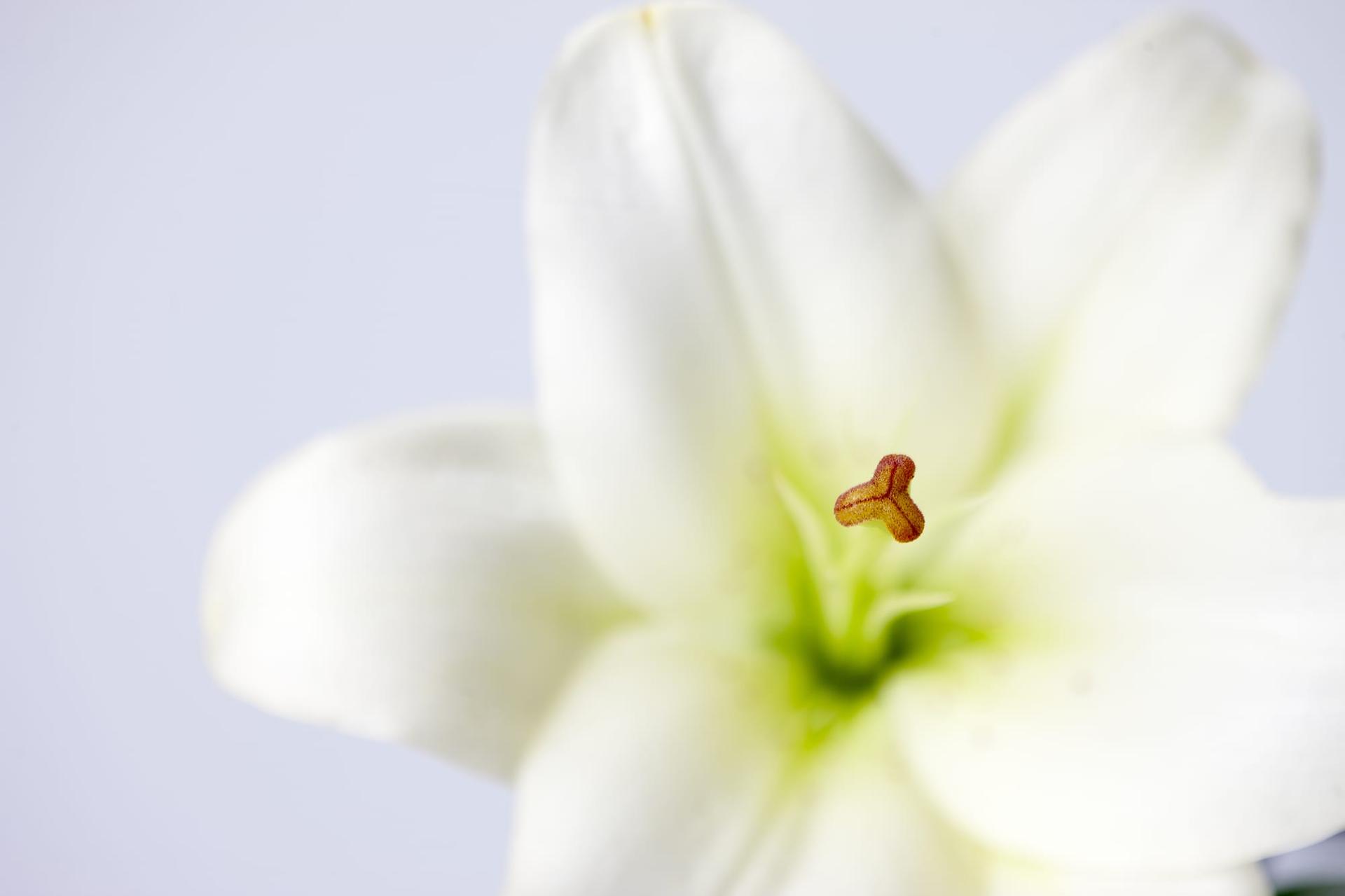
Yes. True lilies (Lilium species) and daylilies (Hemerocallis species) are severely poisonous to cats, and every part of the plant is dangerous: petals, leaves, stem, pollen, and the water in the vase. A cat that licks a few grains of pollen off its own fur can be in fatal kidney failure within three days, according to the U.S. Food and Drug Administration. There is no safe amount. If a cat in your home has been near a lily, the vet call happens now, not after you see symptoms.
That is the whole answer, and it is worth saying bluntly, because lilies are ordinary. They sit in supermarket bunches, in funeral arrangements, in the mixed bouquet a colleague sent last week. The rest of this is which ones, how fast, and what to send instead. For that last part, Cindy's Flowers hand-ties bouquets of roses, gerberas and alstroemeria, all on the ASPCA's non-toxic list, in our Toronto studio and delivers same-day across Toronto and the GTA on orders placed before 3 PM.
Which lilies are the dangerous ones?
The FDA names nine lilies as highly toxic to cats, and all of them belong to the Lilium or Hemerocallis genus:
- Asiatic lily (Lilium asiaticum), hybrids included
- Daylily (Hemerocallis species)
- Easter lily (Lilium longiflorum)
- Japanese Show lily (Lilium speciosum)
- Oriental lily (Lilium orientalis)
- Rubrum lily (Lilium speciosum var. rubrum)
- Stargazer lily (Lilium 'Stargazer')
- Tiger lily (Lilium tigrinum, also written lancifolium)
- Wood lily (Lilium philadelphicum or umbellatum)
Two things make this group worse than an ordinary poisonous plant. The toxin has never been identified, so there is no antidote to reach for, only supportive care. And the damage is species-specific: a dog that chews a lily may get an upset stomach and nothing more, which means a household that has kept dogs and lilies together for years has learned nothing at all about what will happen to a cat.
We sell lilies and we admire them. A lily bouquet is one of the most striking things you can put in a room, and for a home without cats, our lily care guide covers coaxing a stargazer open slowly. In a house with a cat, none of that matters. The rule is narrow and absolute.
What happens to a cat that eats a lily?
Kidney failure, on a short clock. The FDA's timeline runs like this: early signs (a cat gone quiet, drooling, vomiting, off its food) appear 0 to 12 hours after ingestion; signs of kidney damage such as increased urination and dehydration follow at 12 to 24 hours; kidney failure sets in within 24 to 72 hours and is fatal without treatment.
The number that matters most is 18. The FDA states that if treatment is delayed by 18 hours or more after ingestion, the cat will generally have irreversible kidney failure, and the ASPCA uses the same threshold, calling lily poisoning often fatal past that point. Everything a vet can do, meaning decontamination, aggressive intravenous fluids and monitoring of kidney values, works inside that window and works badly outside it.
If you think there has been an exposure:
- Call your vet or a 24-hour emergency animal hospital immediately. Do not wait for symptoms.
- Take the plant, or a clear photo of it, so the species can be confirmed.
- Say which part was involved: leaf, petal, pollen on the fur, or vase water.
- Do not induce vomiting at home unless a veterinarian tells you to.
Put the number for your nearest overnight emergency clinic in your phone tonight. Nobody researches well at 2 a.m.
Three lily myths that still get cats poisoned
"Pollen-free lilies are fine." They are not. Pet Poison Helpline lists the Roselily, a pollen-free hybrid of the Oriental lily, among the most dangerous lilies for cats, right beside stargazer, Asiatic, Oriental and tiger. Florists snip the anthers out of lilies to keep pollen off tablecloths and shirt fronts, and that habit has quietly convinced people the flower is then harmless. Taking the pollen away leaves the petals, leaves and stem exactly as toxic as they were.
"She only brushed past it." Grooming is ingestion. Pollen that lands on a cat's back or whiskers gets swallowed the next time she cleans herself, and the FDA counts licking a few grains off the fur as a route to kidney failure. That is why vets treat after contact rather than waiting for someone to witness a bite.
"It was only the vase water." Vase water sits on the hazard list alongside the stem, leaves, flowers and pollen. A cat that prefers drinking from the vase over its own bowl, and plenty do, is swallowing the toxin straight down, and the vase water on its own is enough to cause kidney failure.
Are peace lilies and calla lilies poisonous to cats?
They are toxic, but in a completely different way, and neither is a true lily. Peace lily (Spathiphyllum species) and calla lily (Zantedeschia species) carry insoluble calcium oxalate crystals that irritate on contact: pawing at the face, drooling, foaming, vocalising, sometimes vomiting or diarrhea. The FDA notes those signs usually resolve on their own, and that swelling of the airway can happen but is uncommon. Miserable for an evening, not a kidney emergency.
Lily of the valley (Convallaria majalis) is the opposite sort of surprise. Also not a Lilium, and not mild in the slightest: the ASPCA lists it as toxic to cats, dogs and horses, with cardenolides that act on the heart, producing vomiting, irregular heartbeat, low blood pressure, disorientation, seizures and coma. The gloriosa lily, sold as flame lily or glory lily (Gloriosa superba), is the second name in that bracket and a genuine florist flower, used for its clawed red and yellow petals: the ASPCA lists it as toxic to cats, dogs and horses, its colchicine alkaloids causing bloody vomiting and diarrhea, shock, kidney damage, liver damage and bone marrow suppression. Neither one spares dogs the way a true lily does. Different organs, same emergency phone call.
What flowers can you send to a home with a cat?
Most of them. The ASPCA's toxic and non-toxic plant database is the reference worth bookmarking, and it clears the flowers a florist reaches for constantly:
- Roses (Rosa species) are listed non-toxic to cats, dogs and horses, which makes a rose bouquet the least complicated thing a cat household can be sent.
- Gerbera daisies (Gerbera jamesonii) are non-toxic, and they bring the colour and scale people usually hire lilies for.
- Sunflowers (Helianthus) are non-toxic and sturdy enough to survive a curious paw.
- Alstroemeria, sold confusingly as Peruvian lily, is not a Lilium at all: the ASPCA lists it non-toxic, while Pet Poison Helpline notes it holds tulipalin A, and the FDA says it may cause mild stomach upset if a cat eats a large amount. No kidney risk on any of the three accounts.
- Moth orchids (Phalaenopsis) are non-toxic too, if a living plant rather than a vase suits the recipient better.
One caveat worth keeping straight: "non-toxic" on the ASPCA list means the plant will not poison a cat, not that a cat should be eating it. Any plant material in quantity can cause vomiting, and a stem left within reach becomes a toy. Put the vase somewhere boring.
How to send flowers into a cat household
Ask first. One text message settles it before anything is ordered, and nobody has ever taken offence at "do they have cats?" Mixed bouquets deserve the closest look, because "mixed" often means a couple of Oriental lilies doing the heavy lifting in the centre. Read what is actually in the arrangement rather than trusting the name on it.
Sympathy is where this collides hardest. White lilies are the traditional funeral flower by convention, which makes sympathy arrangements the ones most likely to arrive at a grieving household that also happens to have a cat. White roses, white gerberas and alstroemeria carry the same restraint with none of the risk, and nobody at the door will read it as a lesser gesture.
Cindy's Flowers is a Toronto florist delivering same-day across Toronto and the GTA, Monday to Saturday, on orders placed before 3 PM, with every bouquet hand-tied in our Toronto studio. You can see everything we deliver before you commit to anything, and if you are unsure what is in an arrangement, email hello@cindysflowers.ca and ask.
One last thing, for the person on the receiving end. If lilies arrive at your door and you own a cat, do not park them in the hallway just for now. Hand them to a neighbour, then wash your hands before you pick up the cat.