To make cut flowers last longer, start the moment they reach the vase: re-cut each stem at an angle, pull off any leaves that would sit under water, and add the flower-food sachet to clean, cool water. After that, keep the vase out of direct sun, away from the fruit bowl, and change the water every two to three days. Do those few things and most bouquets hold their shape for a week or more. Below are nine florist tips, plus the simple plant science that explains why each one works. Cindy's Flowers hand-ties every arrangement in our Toronto studio and delivers same-day across Toronto and the GTA on orders placed before 3 PM, so those tips start on a bouquet that was fresh on day one.
Why do cut flowers wilt in the first place?
Cut flowers wilt because water stops climbing the stem. A bloom keeps drinking after it's cut, pulling water up through the xylem, the narrow channels that run the length of each stem. That flow stalls when an air bubble gets sucked into the cut end, or when bacteria multiply in the water and plug the channels. Two more culprits pile on. The flower slowly runs out of stored food, and ethylene, a natural aging gas, signals the petals to drop. Almost every tip below fixes one of these four problems.
Start with a clean, angled cut
The biggest single gain happens before a flower ever touches the vase. A fresh cut re-opens the stem so it can drink again, and a clean start keeps the water from turning cloudy within a day.
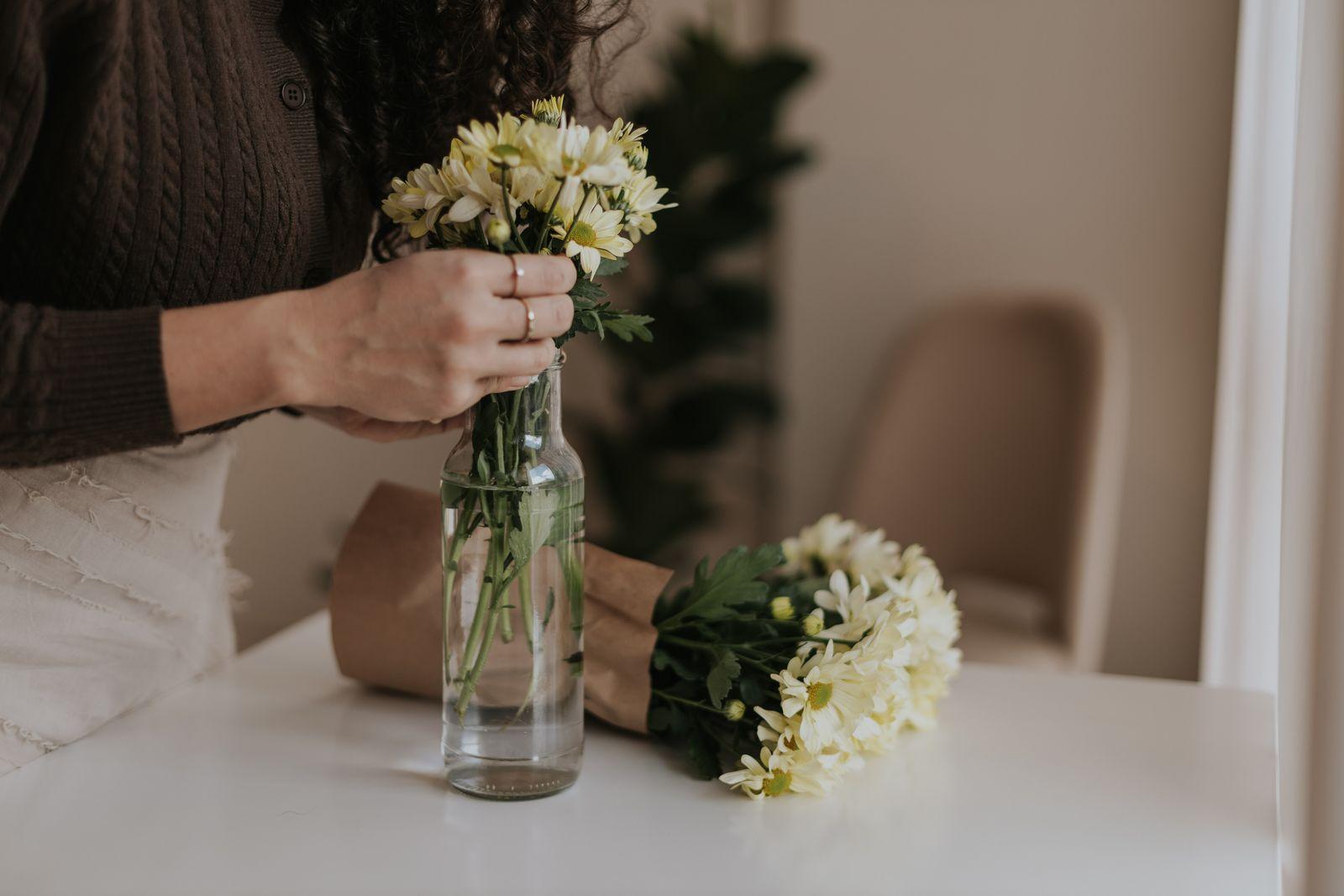
Tip 1: Re-cut every stem at an angle. Trim about an inch off the base with a sharp knife or florist's snips, holding the blade on a slant. The angle stops the cut end from sealing flat against the bottom of the vase, and making that cut with the stem end submerged, in a bowl or a sink of water rather than under a running tap, is what keeps air from being drawn back inside. Skip scissors that pinch: the Royal Horticultural Society notes that dull, crushing blades mash the channels and cut down how much water a stem can take up.
Tip 2: Strip the leaves below the waterline. Any foliage left underwater rots within a couple of days, feeding the bacteria that clog stems and shorten vase life. Pull off the lower leaves before arranging, but leave the upper ones alone. There's nothing to gain from stripping a stem bare above the waterline.
What should you put in the vase water?
The little sachet tucked into a bouquet isn't a marketing gimmick. A good flower food does three jobs at once, and if you've lost the packet, you can mix a rough version from the kitchen cupboard.
Tip 3: Use the flower food, and use the whole sachet. That powder combines three things your flowers need: sugar for energy, an acidifier that helps water climb the stem, and a mild biocide that holds bacteria back. Chemists at McGill's Office for Science and Society describe those same three roles, and slightly acidic water, around pH 3 to 4, is the sweet spot horticulturists point to for fast uptake. Follow the dose on the label. Too little won't protect the water, and too much can scorch soft stems.
Tip 4: No sachet? Mix a quick cut-flower food recipe. Per litre of water, add three things that copy what commercial flower food does, stirring each one into the full litre separately rather than premixing them, because neat bleach and acid together give off chlorine gas:
- two tablespoons of lemon or lime juice, for acidity
- one tablespoon of sugar, to feed the blooms
- half a teaspoon of household bleach, to keep bacteria down
That last ingredient is the catch with sugar on its own. Sugar feeds bacteria just as happily as it feeds flowers, so plain sugar water with no disinfectant often makes blooms wilt faster. More isn't better, either. Some flowers, like zinnias, are damaged by too much sugar.
Change the water before it turns cloudy
Fresh water is the cheapest life-extender there is. Bacteria are the main reason a bouquet fades early, and they build up fast in a warm room. Two habits keep them in check.
Tip 5: Refresh the water every two to three days, and wash the vase. The Royal Horticultural Society suggests changing the water and trimming a little off the stem ends every two to four days, topping up in between. When you do, pour out the old water, scrub the vase with a drop of dish soap and a brush, then refill. Cloudy, smelly water is bacteria at work, and a quick wash resets the whole arrangement.
Tip 6: Keep the vase somewhere cool. Heat shortens vase life faster than almost anything. As a room warms, flowers breathe harder and lose water, so they wilt sooner. Stand the arrangement out of direct sun and away from radiators, the top of the fridge, and heat vents. During a Toronto summer, that sunny spot on the kitchen sill is one of the quickest ways to cook a fresh bouquet.
Does keeping flowers away from fruit really help?
It genuinely does, and it's one of the most overlooked tricks. Ripening fruit releases ethylene, the same invisible gas a flower makes as it ages, and it tells nearby blooms to fade and drop petals early.
Tip 7: Move the bouquet away from the fruit bowl. Apples, bananas, tomatoes, and avocados are the biggest ethylene producers in a kitchen. Horticultural researchers note that as little as 100 parts per billion of ethylene can damage nearby flowers, so a vase sitting beside the fruit is quietly aging faster than it should. Carnations, delphiniums, snapdragons, and lilies are the most sensitive of all, while daffodils, despite their reputation, are among the least bothered. One safety note for pet owners: true lilies and daylilies cause fatal kidney failure in cats, and the pollen and the vase water are toxic on their own, so a high shelf is not a precaution. If there's a cat in the house, don't bring lilies into it at all. Dogs generally get no worse than an upset stomach.
Tip 8: Pinch off blooms as they fade. A dying flower gives off ethylene of its own, speeding the decline of the healthy stems around it. Snip out spent flowers and yellowing leaves the moment you notice them. In a mixed bouquet, pulling the fading stems keeps the sturdy ones going long after the short-lived blooms have finished.
Do roses and lilies need special care?
A handful of flowers reward a bit of extra attention. Woody-stemmed blooms drink through denser tissue, and a few flowers simply don't share a vase politely.
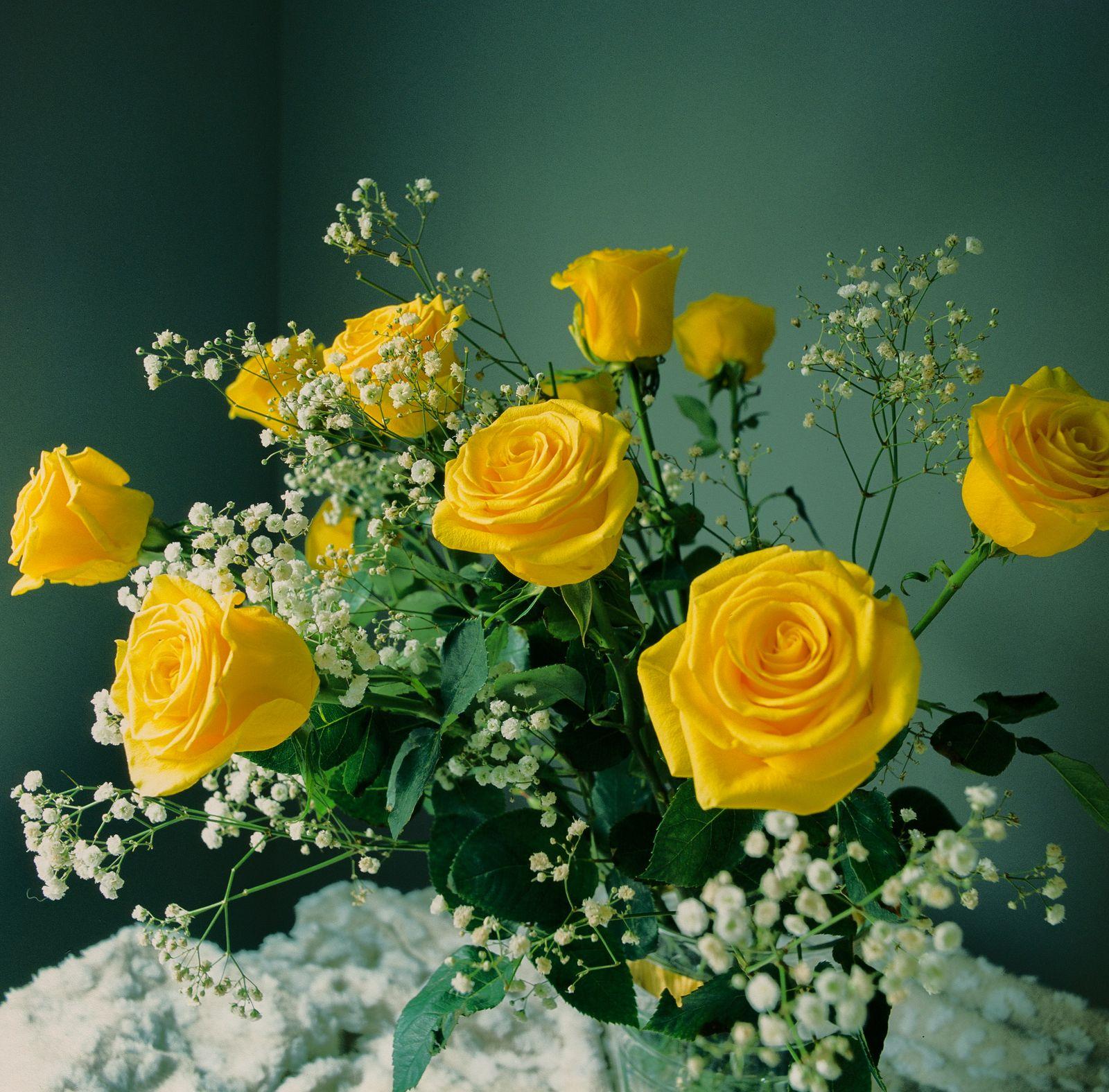
Tip 9: Give woody stems like roses an extra cut. Roses, lilac, and other woody stems pull water through tougher tissue than soft stems do. The Royal Horticultural Society suggests a second, vertical slit about 5 cm up from the base to open more surface for drinking. If a rose head flops early, re-cutting the stem and standing it briefly in hot water can often revive it. For the full routine, our guide on how to make roses last longer walks through it step by step.
One tip worth ignoring: smashing woody stems flat with a hammer. It's repeated everywhere, but the RHS advises against crushing stems, since the ragged wound invites bacteria and doesn't improve uptake at all.
Daffodils are the classic bad roommates. Their cut stems leak a sap that harms other flowers, so give them at least six hours alone in their own bucket of water before mixing them into an arrangement, and move them across without re-cutting. This is the one place where Tip 1 doesn't apply: a fresh cut starts the sap running again. Simplest of all is to keep them in a vase of their own.
Lilies deserve their own mention. They're among the flowers most bothered by ethylene, so the fruit-bowl rule matters double for them, and, as above, true lilies and daylilies are lethal to cats. In a home with a cat, the only answer is not to bring them in at all: height doesn't help, and neither does pulling the anthers, because the vase water alone will do it. Alstroemeria, often sold as Peruvian lily, gives you much the same look, and the ASPCA lists it as non-toxic to cats and dogs.
Put these nine habits together and you'll get noticeably more out of every arrangement, from a simple bunch of tulips to a lush hand-tied design. When you want a fresh one, take a look at the bouquets Cindy's Flowers is delivering across Toronto this week.