Carnations, chrysanthemums, alstroemeria, and anthurium are the marathon runners of the vase. Carnations hold their ruffled shape for 14 to 21 days, and a single anthurium can stay glossy for three weeks or more. Alstroemeria keeps opening fresh buds for close to two weeks, and garden mums run two to three weeks with clean water. Roses, tulips, and peonies are prettier to some eyes but shorter-lived, closer to five to ten days. The biggest lever is the flower itself: pick a long-lasting variety first, then fuss over the care. One caveat before you fall for the list: of those four, only alstroemeria is on the ASPCA's non-toxic list. Carnations, mums, and anthurium are all toxic to cats and dogs, so who else lives in the house matters as much as the vase life. Cindy's Flowers works from the hardy end of that list in our Toronto studio, so the variety decision is already made before the bouquet is hand-tied and sent out same-day across Toronto and the GTA on orders placed before 3 PM.
Which cut flowers last the longest?
The longest-lasting cut flowers cluster around the two-to-three-week mark, and four names lead the field. Carnations top most florist lists at 14 to 21 days in a vase, according to the Old Farmer's Almanac. Anthurium, alstroemeria, and chrysanthemums are close behind, and none of them needs coddling.
Here's how the champions stack up:
- Carnations (dianthus): 14 to 21 days. Those dense, ruffled petals and sturdy stems are built to go the distance, and older varieties throw a sweet clove scent. Pets: the ASPCA lists dianthus as toxic to cats, dogs, and horses, causing mouth irritation and stomach upset.
- Anthurium: three weeks, sometimes longer. The glossy heart you see is a waxy spathe, technically a modified leaf, which is why it reads more like patent leather than petal. Pets: the ASPCA lists anthurium as toxic to cats and dogs — the sap's oxalate crystals burn the mouth.
- Alstroemeria (Peruvian lily): about two weeks. Each stem carries several buds that open in turn, so fresh flowers keep replacing the spent ones. Despite the nickname, it isn't a true lily — and it's the only one of these four the ASPCA rates non-toxic to both cats and dogs.
- Chrysanthemums (mums): two to three weeks. Every bloom is a cluster of tiny florets, so a head stays presentable even as the oldest florets fade. Pets: the ASPCA lists mums as toxic to cats, dogs, and horses, and the foliage gives some people who handle it a rash.
Long-lived stems like these turn up throughout our full flower collection, and they're the ones I reach for when someone wants a bouquet that earns its keep.
Why do some flowers outlast others?
Variety is the single biggest factor in how long a bouquet lasts. Most cut flowers land somewhere in the one-to-two-week band on a kitchen counter, but that range hides a huge spread: an anthurium can triple a tulip. Choose a naturally long-lived flower and you're most of the way there before the vase is even filled.
The reasons are structural. A carnation's petals sit tight over thick-walled cells that hold water well. Anthurium's spathe is a modified leaf, engineered to last, not a delicate petal. Alstroemeria and mums both hedge their bets: one carries a succession of buds, the other bundles dozens of florets into a single head, so there's always something fresh on show. Flowers that peak on one big, thin-petaled bloom, tulips and peonies among them, simply have less held in reserve.
Where roses, tulips, peonies, and lilies land
Most of the flowers people actually buy sit in the one-week range, and that's fine once you know it going in. These blooms trade some staying power for scent, drama, or sheer romance, and a few habits stretch them further.
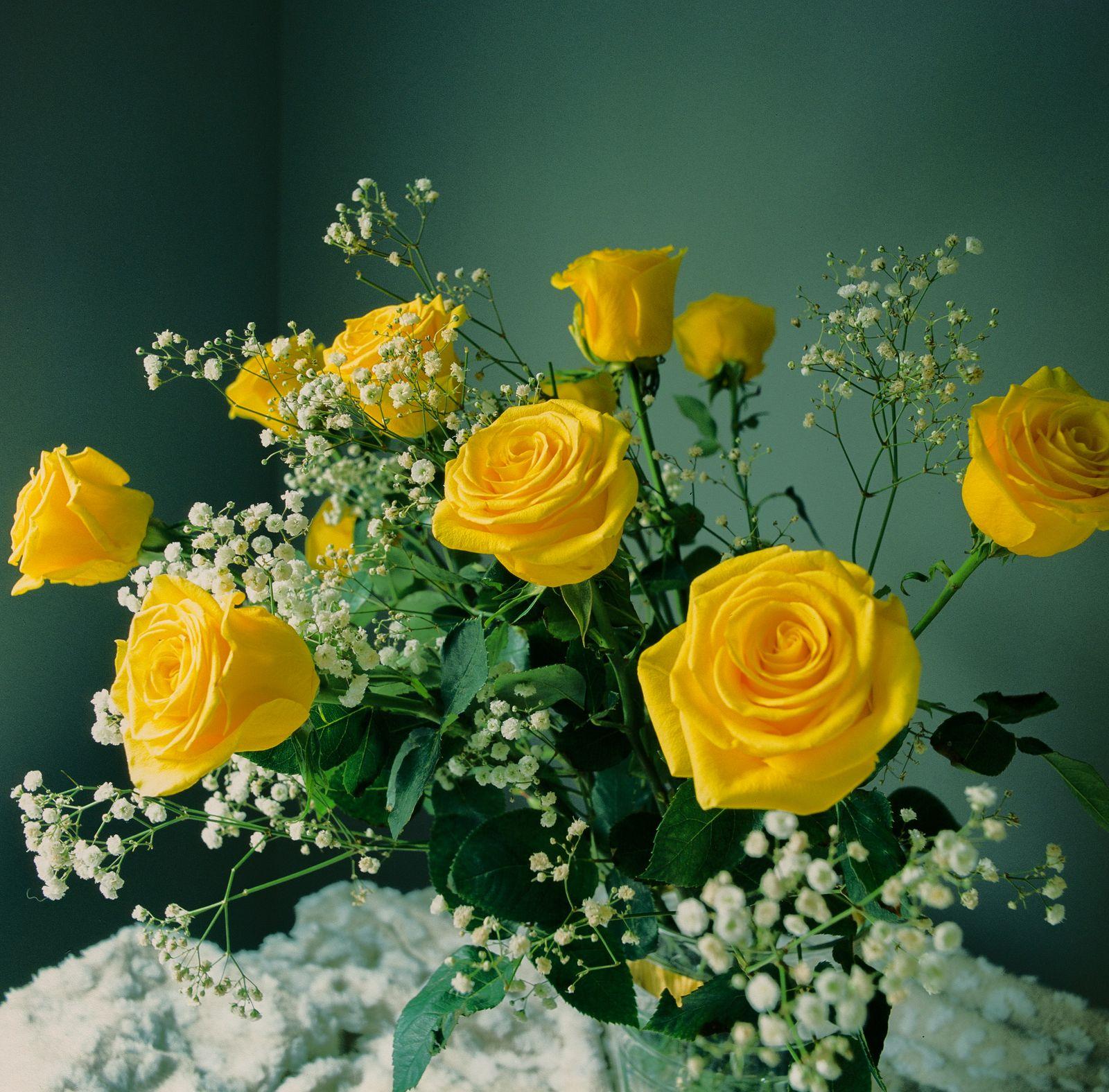
- Roses. A cut rose does keep opening in the vase — a bud that stalls shut is a recognised defect, not the norm — but one cut too tight may never get there, so choose firm buds that are just starting to crack open rather than pinched-tight or fully blown ones. Recut the stems under water to stop an air bubble, a stem embolism, from blocking uptake. If roses are the plan, our rose delivery starts with tight, fresh heads, and our rose care guide walks through the rest.
- Tulips: up to about 7 days. Here's the quirk: tulips keep growing after they're arranged, stretching one to two and a half centimetres a day and bending toward the light as auxin shifts inside the stem. Turn the vase daily if you want them upright. Pets: the ASPCA lists tulips as toxic to cats, dogs, and horses.
- Peonies: about 5 to 7 days. Gorgeous and fleeting. The local Ontario season is short, roughly late May into June, though imported stems appear at other times of year. Pets: peony is on the ASPCA's toxic list for cats, dogs, and horses too.
- Oriental lilies: about 8 to 10 days. Snip off the pollen-heavy anthers to avoid stains and buy a little time — that's a housekeeping trick, not a safety one. Lilies are where I draw a hard line: true lilies (Lilium) and daylilies (Hemerocallis) both cause fatal kidney failure in cats, pollen and vase water included, so skip both entirely in any home with a cat. Daylilies aren't true lilies botanically, but they are every bit as lethal to a cat, and they give you barely a day per bloom on top of it. Dogs get off with a stomach upset. When someone wants the lily look without the risk, alstroemeria is the swap I reach for.
Sunflowers and gladiolus sit a notch above the rest at seven to ten days, a useful middle ground when you want height and impact without the shortest clock. Sunflowers are ASPCA non-toxic; gladiolus is not, and is listed as toxic to cats, dogs, and horses.
How do you make any bouquet last longer?
Good care can add days to almost any flower, because the main reason blooms fade early is bacteria clogging the stems, not old age. Extension horticulturists are consistent on the fundamentals, and none of them costs a cent. Work through these in order:
- Recut the stems. Take off half an inch to an inch at a 45-degree angle, which exposes fresh tissue and keeps the cut from sealing flat against the vase bottom.
- Strip the lower leaves. Any foliage below the waterline rots and feeds bacteria. Pull it off before the flowers go in.
- Change the water often. Start with a clean vase and refresh the water every two to three days, or the moment it turns cloudy.
- Use the flower food. That little packet is doing real work: sugar to feed the bloom, an acidifier to lower the pH so water climbs the stem, and a biocide to hold microbes down. A DIY version needs all three, sugar plus something acidic plus a trace of bleach, and even then it works less well than the packet.
- Mind the room. Keep the vase somewhere cool, out of direct sun, off the radiator, and away from drafts.
- Move the fruit bowl. Ripening bananas, apples, tomatoes, and avocados give off ethylene gas that speeds wilting and petal drop. Carnations, daffodils, delphinium, and lilies are especially sensitive to it — and all four are on the ASPCA's toxic list, delphinium and lilies most seriously.
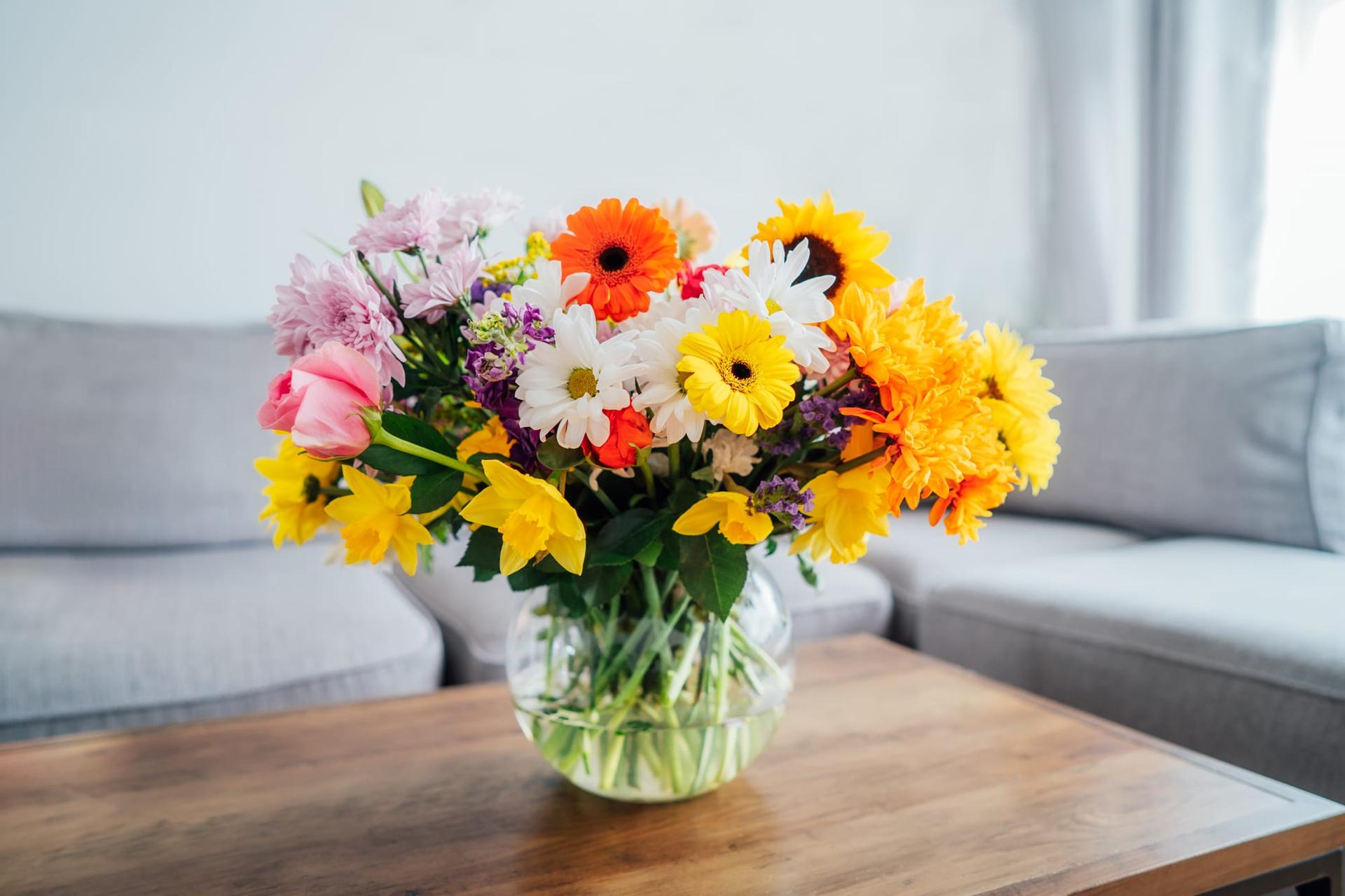
Mixed arrangements gain the most from steady water changes, since they combine stems with different thirsts. Our guide to caring for mixed bouquets covers the finer points.
Long-lasting flowers, delivered across Toronto
If you'd rather someone else picked the sturdy stems, that's our job. Cindy's Flowers hand-ties every arrangement in our Toronto studio and delivers it same-day across Toronto and the GTA when you order before 3 PM, Monday through Saturday. In a warm Toronto July, that hardiness earns its place: a carnation-and-mum mixed bouquet still looks sharp in a west-end condo long after softer blooms have bowed out.
Long-lasting doesn't mean plain. We build with texture and colour and lean on the varieties that reward a little patience, so a gift keeps giving for two weeks rather than a long weekend. Send it, then let it outlast the occasion.