Same-day delivery
Order before 3 PM, Monday to Saturday
GTA-wide
Every Toronto neighbourhood + 20 GTA cities
Designed to order
Arranged fresh in our Toronto studio
Four sizes
Mini to Grand, prices listed up front
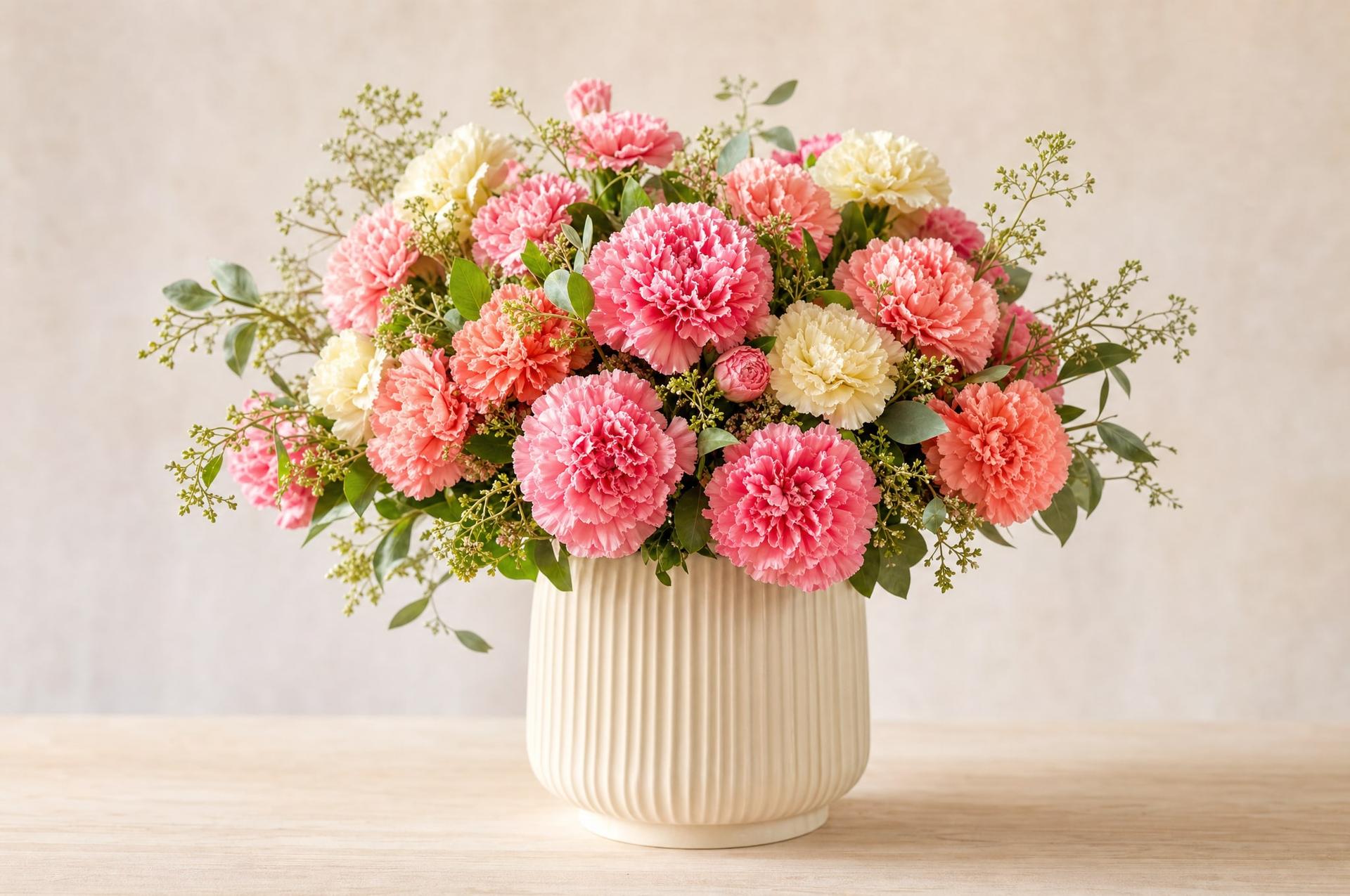
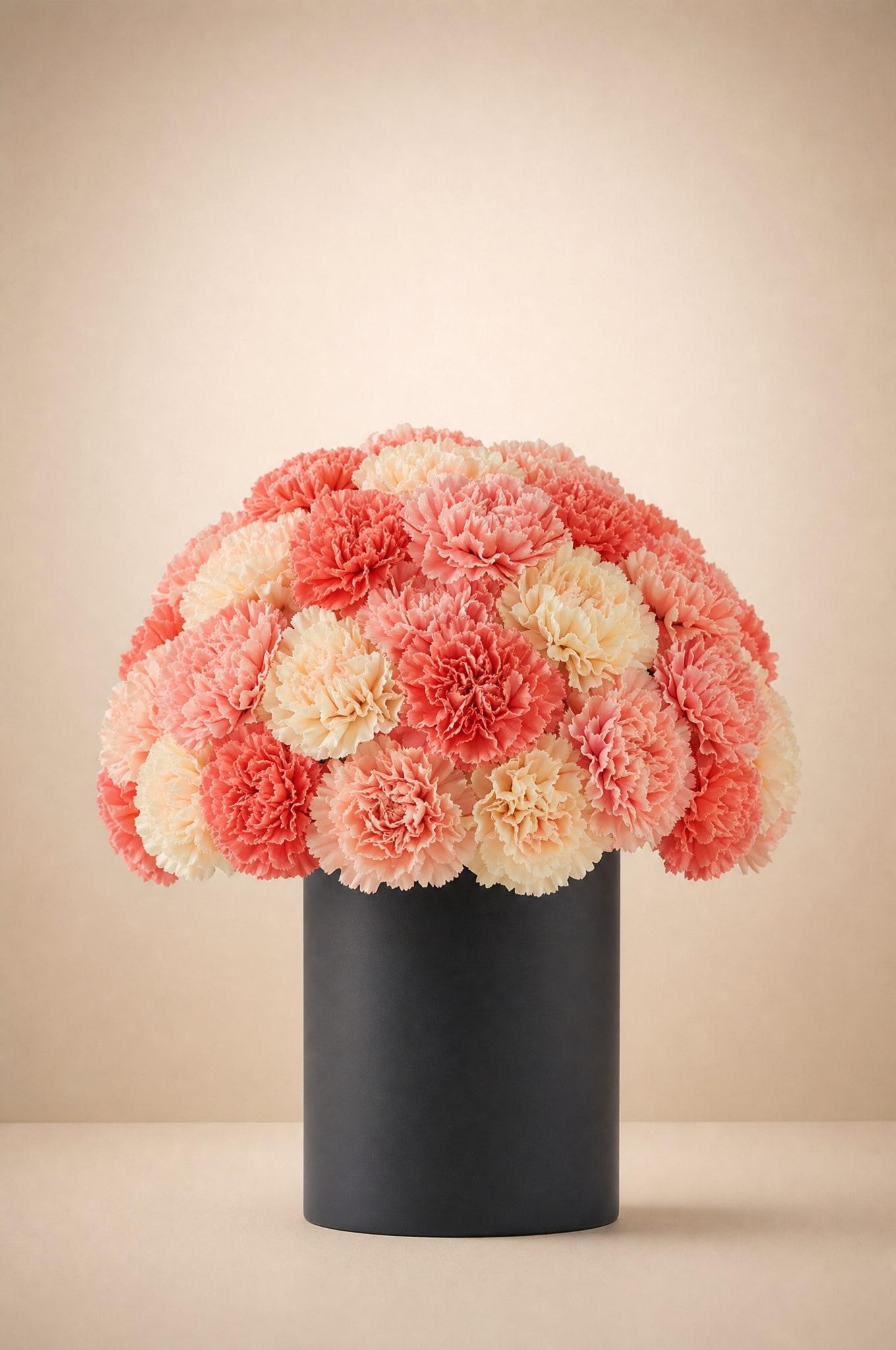
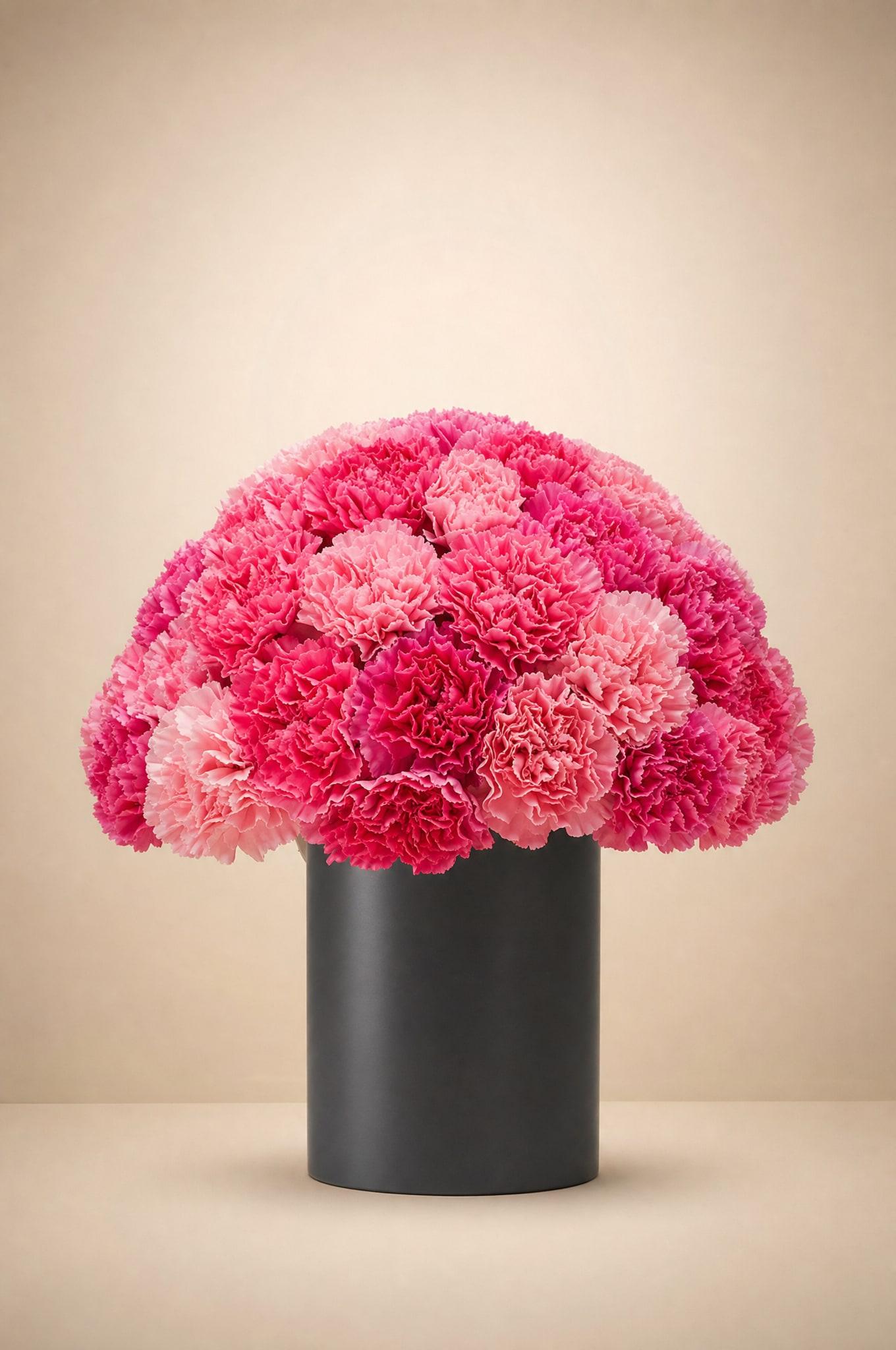
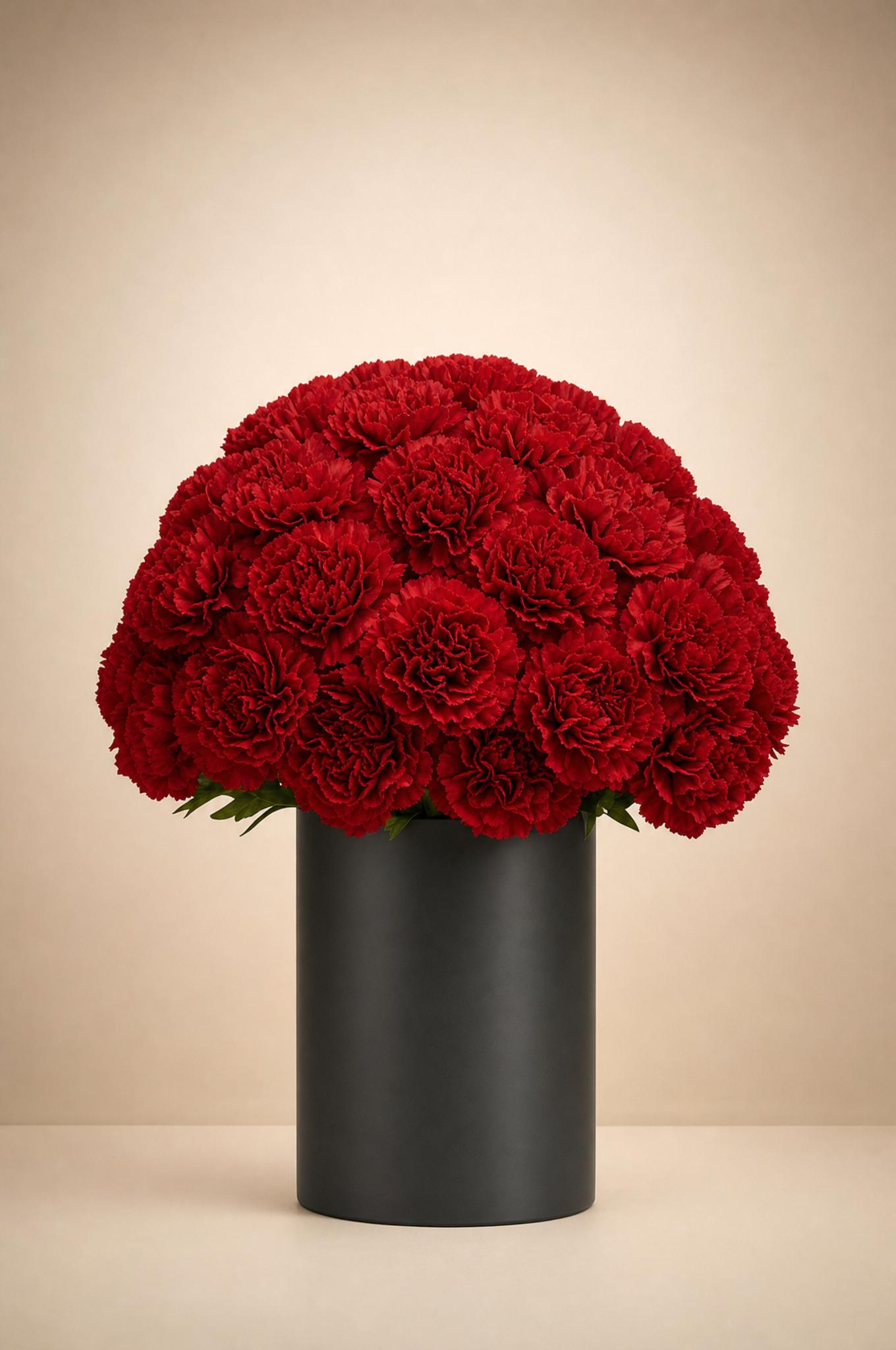
Cindy's Flowers offers same-day carnation delivery in Toronto and across the GTA. Order before 3 PM, Monday to Saturday, and your bouquet is arranged to order in our Toronto studio from $49. Clustered in dense single-colour domes, carnations last two to three weeks in the vase — longer than any other cut flower we sell. Two massed colourways are always available — coral-and-cream, and pink from pale rose to fuchsia — both built forty stems at a time.
Frequently asked
Two to three weeks — the longest vase life of any cut flower Cindy's Flowers sells. Recut the stems between the nodes, refresh the water every couple of days, and keep them away from ripening fruit. Every Toronto delivery includes care instructions.
When to send carnations
Pink carnations are the traditional Mother's Day flower — the holiday's founder handed out five hundred of them at the first service in 1908 — and they remain the most meaning-loaded choice for mothers and grandmothers. Their two-to-three-week vase life also makes carnations the smart send when you want the gesture to stick around: a birthday bouquet that outlasts the birthday week, a just-because cluster on a desk, or a cheerful get-well arrangement that's still fresh at the end of a hospital stay.
Their vase life also makes carnations the strategic choice for congratulations that should outlast the news cycle, thank-yous meant to be remembered, and long hospital stays where most bouquets fade before the patient comes home. And in January and February, when Ontario supply thins for nearly everything else, carnations stay reliable — the honest answer to 'what's actually fresh right now?'
Caring for your carnations
Carnations are the easiest-going cut flower there is, with one quirk: recut the stems between the nodes — the swollen joints along the stem — not through them, since the stem drinks poorly when cut at a node. Give them a clean vase, cool water refreshed every two or three days, and they'll do the rest.
Keep them away from ripening fruit; carnations are unusually sensitive to ethylene, and a nearby banana bowl can halve their vase life. Otherwise they tolerate rooms most flowers sulk in — warmer spots, brighter light — and individual blooms that fade can simply be plucked from the dome while the rest carry on. Two weeks of vase life is standard, three is common with fresh water and a cool corner.
If the dome starts to loosen after ten days, re-gather it: lift the whole bunch, trim two centimetres, and drop it back with the stems cut slightly shorter — the tighter cluster brings the cloud shape back for its final week.
About Carnations delivery in Toronto
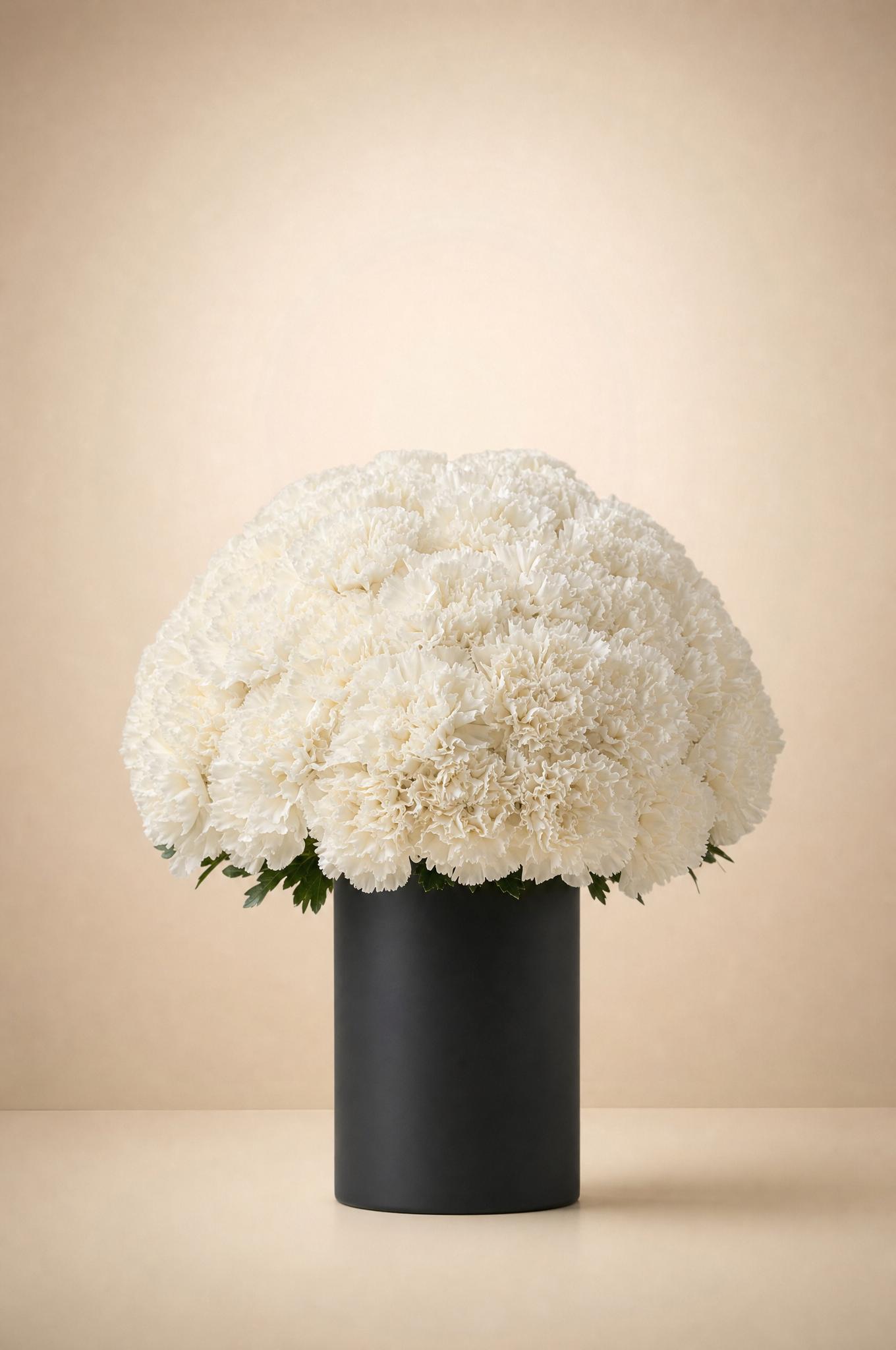
Carnations are having the comeback they always deserved. For decades they were typecast as the filler stem in grocery-store bunches; the modern treatment is the opposite — dozens of blooms of a single colour massed into a dense, ruffled dome, no filler at all, and suddenly the flower looks like couture. One ruffle at a time, a carnation is modest. Eighty of them clustered together are a cloud.
Two practical facts drive the revival. First, vase life: two to three weeks is routine for carnations, which means a carnation bouquet is still going strong when most flowers have been composted for a week. Second, the colour range is the widest in the trade — blush, coral, crimson, plum, butter yellow, and the antique 'terracotta' tones stylists chase. Symbolically they've carried meaning for centuries: pink carnations stand for a mother's love, which is why they've been the Mother's Day flower since the holiday was invented, and white for pure affection and good luck.
We use carnations both ways — massed alone in their modern form, and woven through mixed bouquets for texture. Every arrangement is hand-tied to order in our Toronto studio and delivered same-day across Toronto and the GTA on orders placed before 3 PM, Monday to Saturday.
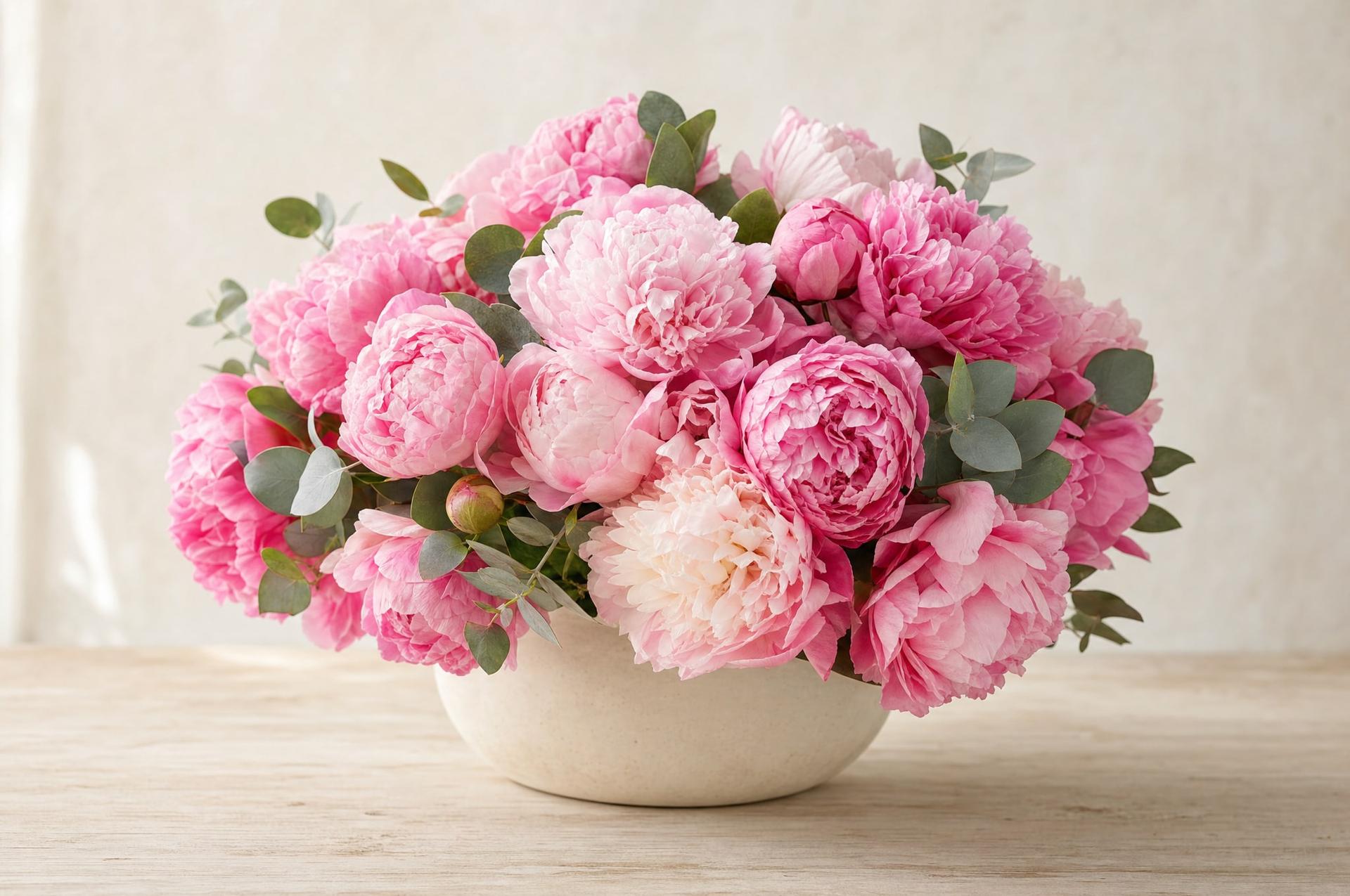
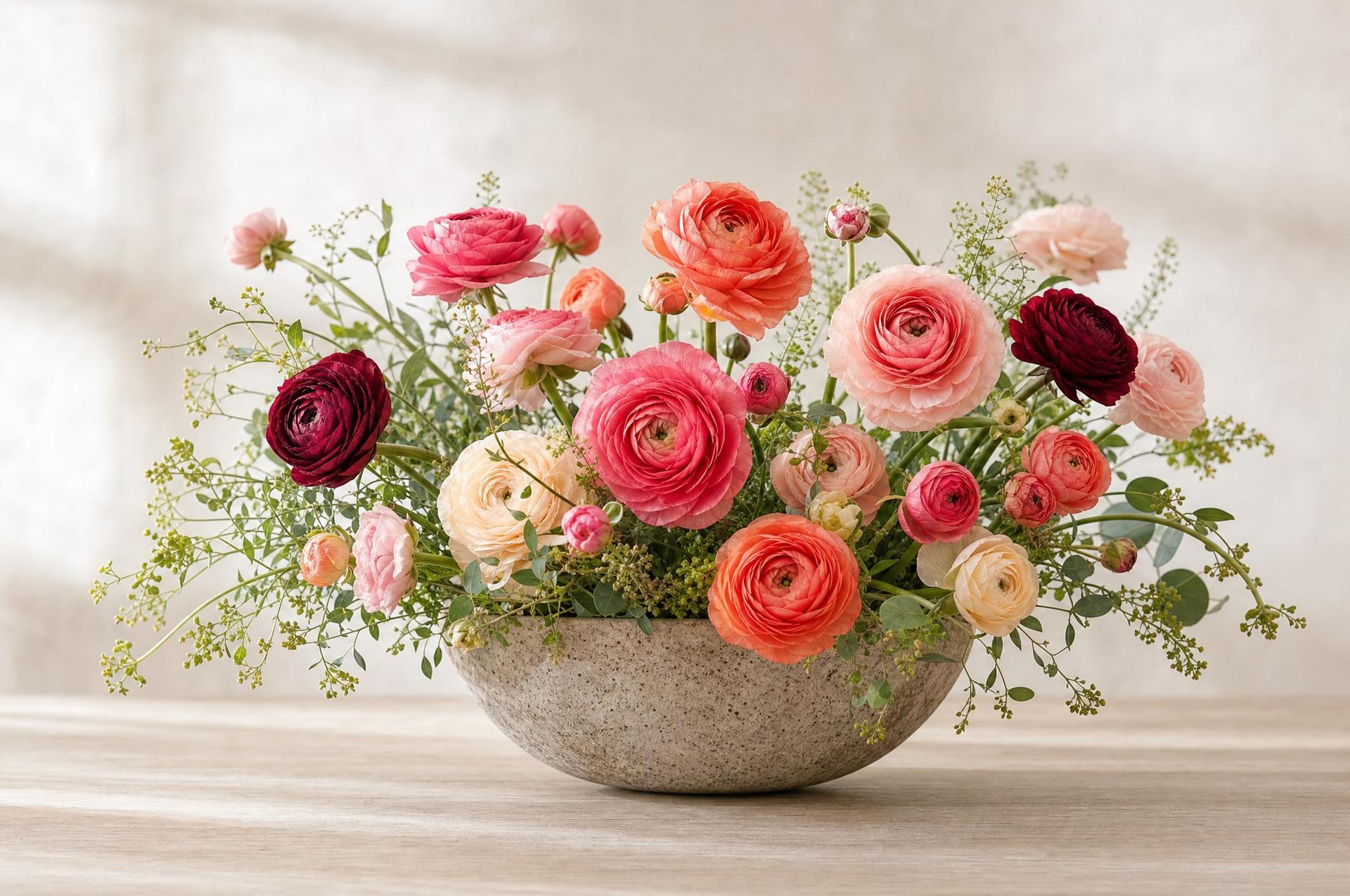
The menu keeps it to two colourways done properly: the Coral Carnation Cloud in coral, blush, and cream, and the Pink Carnation Cloud running pale rose to fuchsia — each a dome of forty ruffled blooms with no filler diluting the effect. At $49 for a twenty-stem Mini, they're also the strongest value-per-vase-day in the shop: three weeks of flowers for the price most bouquets charge for one.