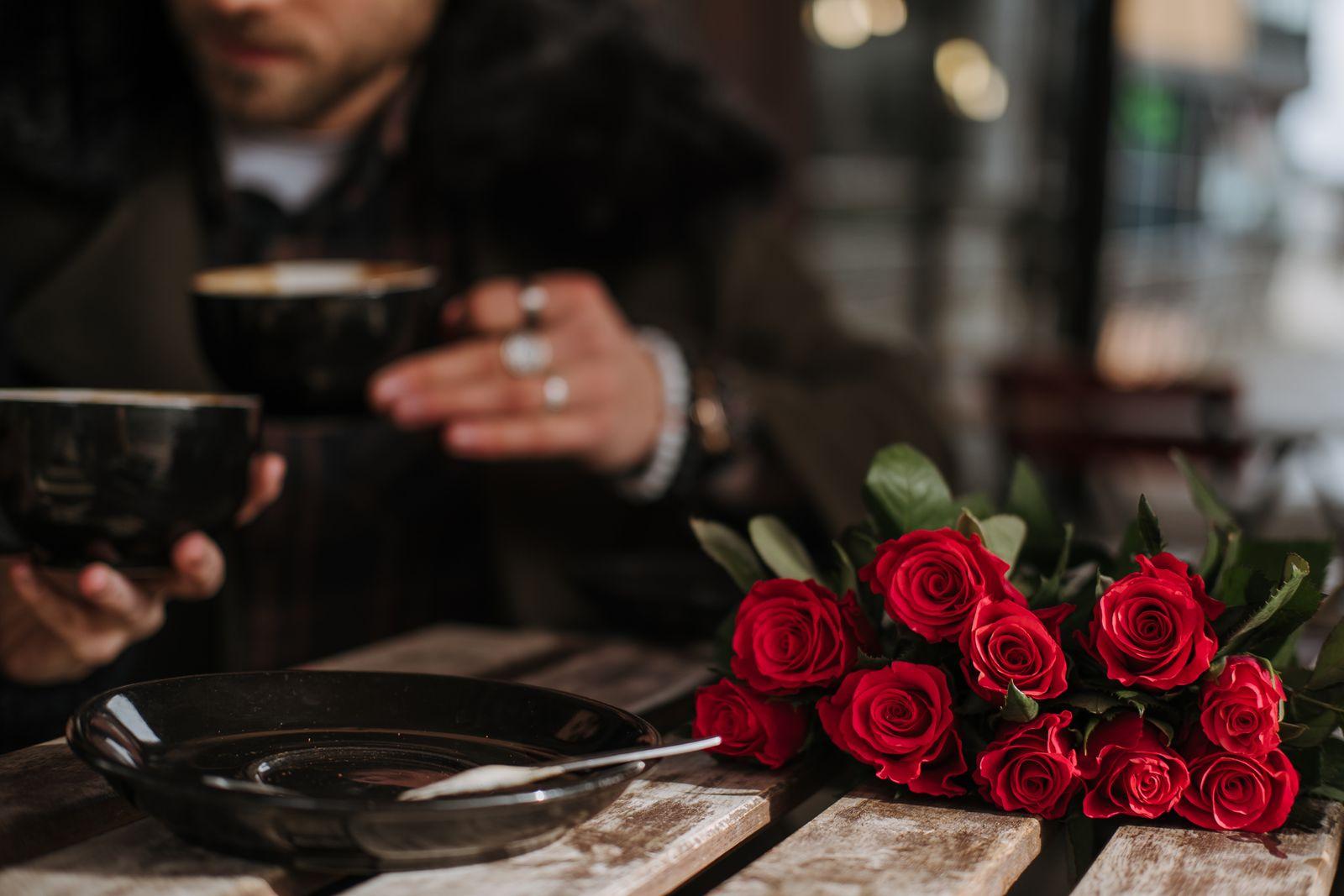
Halloween flowers are dark and moody rather than actually black, because a truly black flower does not exist. What florists sell as black is very deep burgundy, plum or oxblood: high concentrations of anthocyanin pigment reading almost black in low light. The palette that works on October 31 is built from near-black roses, burgundy dahlias, dark callas and bronzed foliage, with one pale stem for contrast. Cindy's Flowers hand-ties that palette in our Toronto studio and delivers it same-day across the GTA.
That gap between "black" and "as dark as botany allows" is the whole design problem. Get it right and the table looks genuinely gothic. Get it wrong and you have a muddy brown lump that disappears against the tablecloth.
Do black flowers actually exist?
No. Phil Gates, writing for BBC Wildlife Magazine, puts it plainly: "There are no truly black flowers." His explanation is straightforward biology. Petals exist to attract pollinators, and they do that with pigments that reflect one wavelength of light and absorb all the others. A few flowers seem black, or carry black petal patches, opium poppies being the classic example, because they contain such high concentrations of anthocyanin pigments that only purple wavelengths reflect back. The surface microstructure of the petal cells then deepens that hue further.
The Old Farmer's Almanac lands in the same place: no truly black flower has been found so far, though some blooms come close in shades of deep purple and the darkest reds. So when a catalogue promises black, read it as a marketing shade name. That is not a disappointment, it is a spec. Once you stop hunting for black, you get to choose between oxblood, aubergine, chocolate-brown and near-black crimson, which are four very different moods. Our guide to what flower colours mean covers the rest of the spectrum.
Which dark flowers actually work for Halloween?
Six stems carry almost every moody arrangement worth making, and two of them are the ones people search for by name.
- 'Black Baccara' rose. The standard florist answer to "black rose", and the honest description is burgundy. Wikipedia calls it a burgundy red hybrid tea: dark red-burgundy with a velvety texture, very full at 41 or more petals, 3 to 5 inches across, with little or no fragrance. It was bred by Jacques Mouchotte by crossing 'Celica' with 'Fuego Negro', introduced in France by Meilland International in 2000 and in America by Star Roses and Plants in 2002. Roses also sit on the ASPCA's non-toxic list for dogs and cats, which makes this the stem to build around when there are animals in the house.
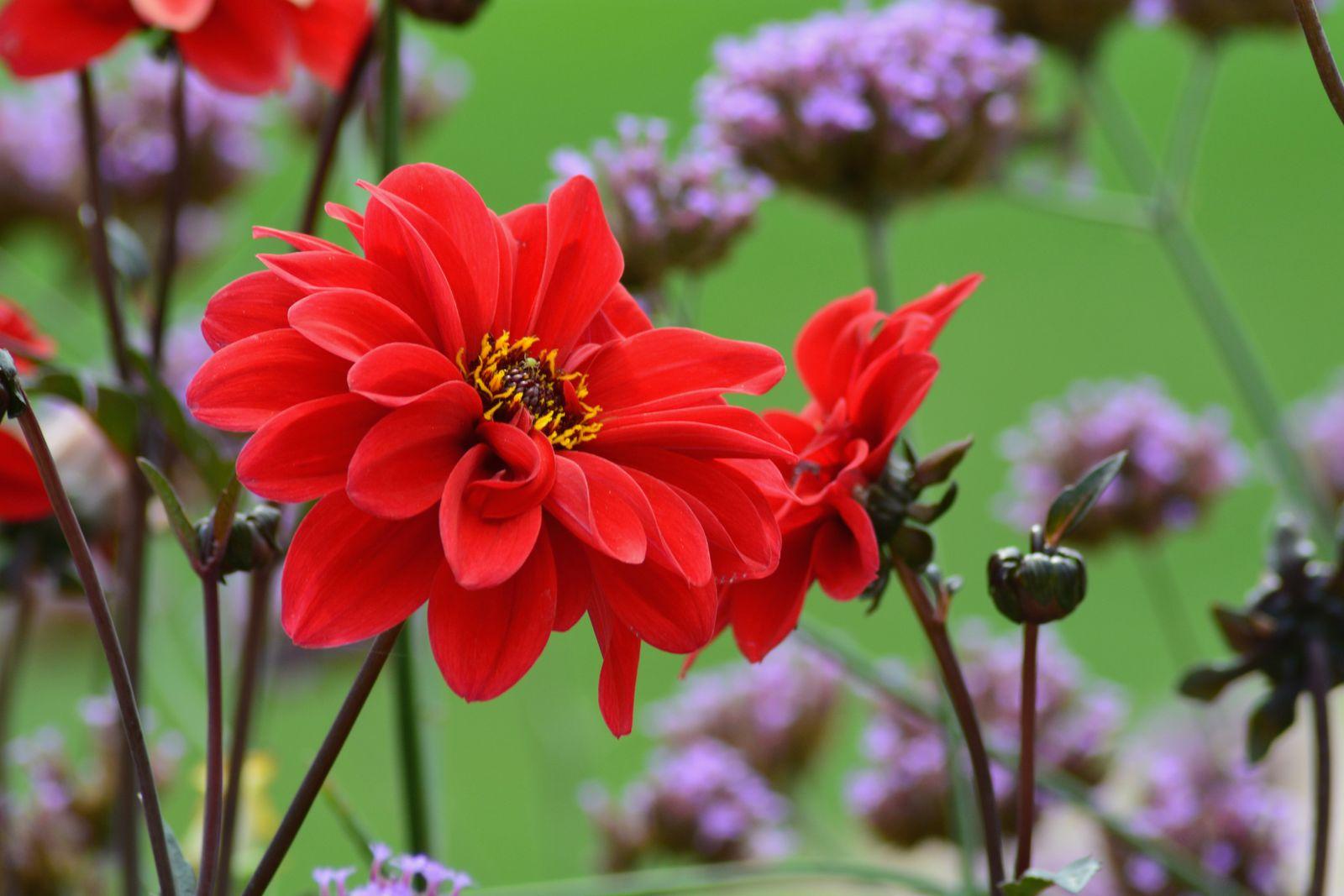
- Dark dahlias. Nothing else gets this close to black in a full, layered head. 'Karma Choc' is an RHS-registered cultivar from the Dutch Karma series, raised specifically for the cut-flower trade, with near-black-centred dark red blooms on strong stems and purple foliage. One caveat before you send them: the ASPCA lists dahlias as toxic to dogs, cats and horses.
- Dark calla lilies. Near-black cultivars give you a smooth, sculptural line that dahlias cannot. The ASPCA lists calla lily as toxic to dogs and cats (its separate horse list adds it too), and the fact that it is not a true lily changes nothing about that.
- Burgundy carnations. Cheap, sturdy and unfairly maligned. They hold their colour for well over a week and let you spend your budget on fewer showpiece stems. The ASPCA lists carnations as toxic to dogs, cats and horses.
- Chocolate cosmos. Deep maroon-brown, faintly sweet-scented, and mostly a garden plant rather than a florist staple, so treat it as a lucky find. The ASPCA's plant database does not list cosmos at all, so treat its pet safety as unverified rather than confirmed.
- 'Queen of the Night' tulip. Famous, genuinely near-black, and completely the wrong season: it is a spring bulb you plant in October to flower the following May. The ASPCA lists tulips as toxic to dogs, cats and horses.
Ask for these as a mixed seasonal bouquet rather than by cultivar name. Availability moves week to week, and a good florist will swap in whatever is darkest and freshest that morning.
Why Toronto's darkest dahlias are gone before Halloween
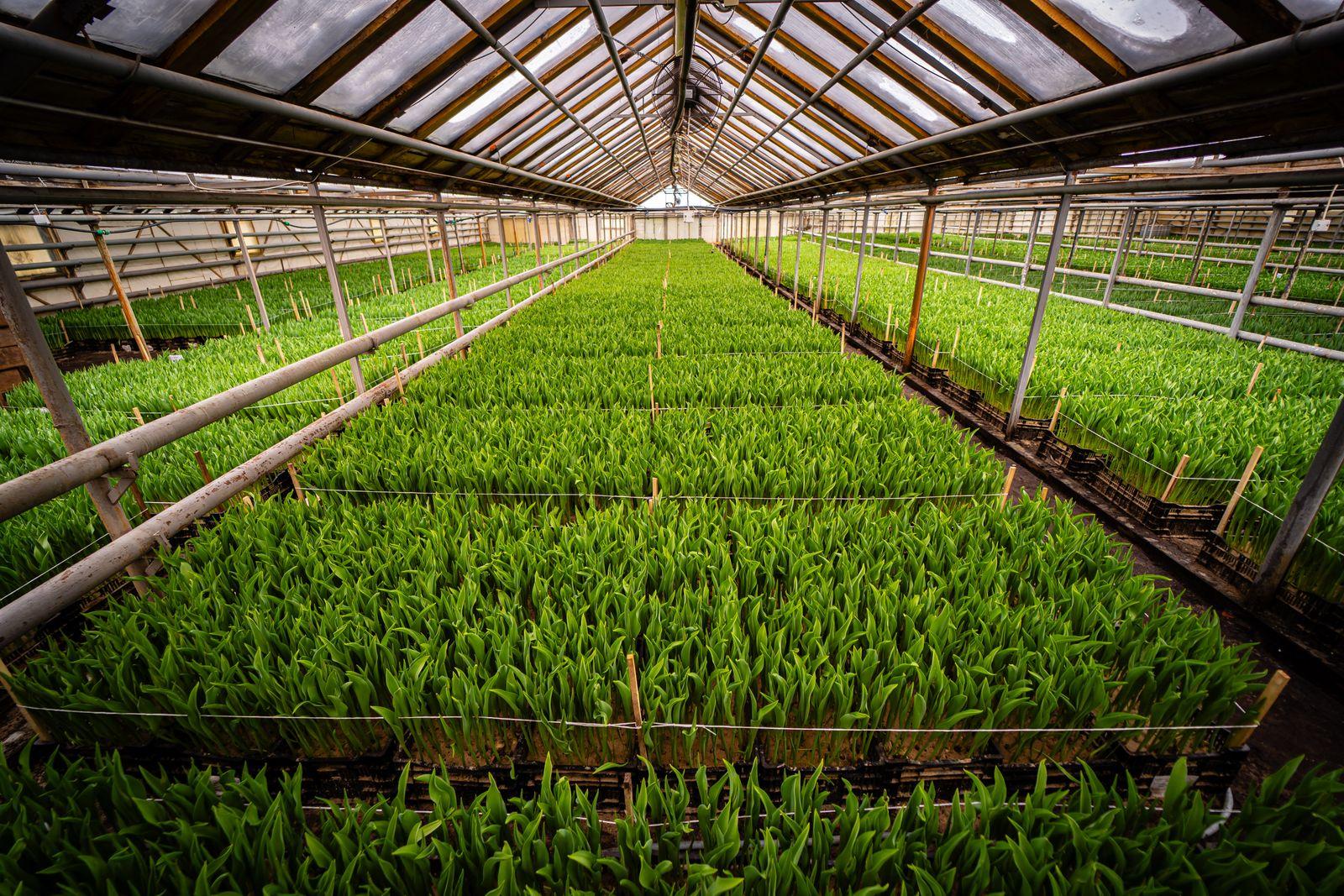
Here is the local wrinkle nobody mentions. Dahlias are the best near-black cut flower we have, and around Toronto they are usually finished before October 31. The Old Farmer's Almanac puts the city's first fall frost at about October 13 and its last spring frost at May 4, a growing season of 161 days, calculated at 33% probability from Environment Canada's 1981 to 2010 Climate Normals. Dahlias are tender Mexican tubers that flower until the first hard frost, so mid-October is genuinely the end of the local crop. Our post on late-summer dahlias in Ontario covers the growing side in full.
Frost dates vary sharply across the GTA, which is why one grower is still cutting while another has packed up for the year. The Almanac's first-frost dates run from roughly September 21 in Brampton to October 27 in Oakville. Markham, Newmarket and Aurora fall in the first days of October. Mississauga and Oshawa land within a few days of October 13.
What that means for a Halloween order is simple. By the 31st, the dark dahlias in a Toronto arrangement are greenhouse-grown or imported, not cut from a field in Milton that week. That is not a problem. It just means the local-and-seasonal framing belongs to September, while Halloween belongs to roses, callas and carnations that travel well.
How do you build a moody arrangement that still reads as flowers?
Dark palettes fail for one reason: everything sits at the same value, so the eye sees a silhouette instead of individual flowers. The fix is contrast, not more black.
- Vary the value, not just the hue. Set oxblood beside dusty plum beside near-black and the shapes separate.
- Add one pale stem. A single cream or bone-white bloom does more work than six more burgundy ones.
- Use texture as the second contrast. A smooth calla against a many-petalled rose reads clearly even when both are nearly the same colour.
- Light it warm and low. Dark flowers vanish under cool overhead light and come alive by candle.
- Skip the cobwebs. Dark botanicals are already unsettling, and plastic props flatten them into a party-store display.
One honest note on safety, because moody arrangements lean heavily on toxic species. Dahlias, carnations and tulips all appear on the ASPCA's toxic list for dogs, cats and horses, and calla lilies for dogs and cats. Where a pet shares the home, ask for the arrangement to be built on roses and alstroemeria, which the ASPCA lists as non-toxic to dogs and cats, and accept a slightly less inky result. You can see what is fresh right now and ask us to work from there.
What do black and dark flowers symbolize?
Less than the internet claims. Wikipedia's article on black rose symbolism carries an additional-citations-needed banner, and its list of meanings traces back to a single commercial florist's blog, so treat black-flower symbolism as modern florist convention rather than documented tradition. The same article is much firmer on the botany: flowers commonly called black roses do not really exist in that colour, and the varieties sold under the name, among them 'Black Magic', 'Barkarole', 'Black Beauty' and 'Baccara', are dark shades that are sometimes helped along with dye.
The reading that appears in the standard flower-meaning lists is about depth rather than darkness. Modern flower-meaning lists such as the Old Farmer's Almanac's give a dark crimson rose as mourning, a very different message from a bright red one; Greenaway's 1884 entry for deep red is bashful shame. That makes dark flowers genuinely expressive well beyond October: a dramatic birthday, an anniversary for a couple who married in black tie, or a just-because bouquet for someone whose taste runs closer to Nick Cave than to pastels. Send them because the colour suits the person, not because a symbolism chart said so.
Sending Halloween flowers across Toronto and the GTA
Timing matters more than usual on October 31, because dark stems are a specialty order rather than a shelf item. Cindy's Flowers delivers same-day across Toronto and the GTA on orders placed before 3 PM, Monday to Saturday, and hand-ties every arrangement in our Toronto studio. Halloween 2026 falls on a Saturday, so a same-day order that morning still works, though the darkest stems go early.
If you want the arrangement to outlast the pumpkins, dark flowers are the best possible candidates for drying. Deep burgundies and plums hold their colour far better than pale petals, which brown as they go. Our guide to drying and preserving flowers walks through the methods. A hanging bunch of dried oxblood roses is arguably more gothic in January than it ever was on Halloween night.