The winter wedding flowers that survive a Canadian cold snap are, happily, the ones at their seasonal best: anemones, ranunculus, hellebores, roses, Ontario greenhouse tulips and amaryllis, with winterberry branches for colour. Nothing blooms outdoors in Toronto in January, so every winter stem is greenhouse-grown, imported or forced indoors, and supply is steadier than most couples expect. Cold itself isn't the enemy; these are cool-season crops that travel well chilled. The real risk is the short walk between the delivery van and the venue door. That part is manageable, and this guide covers how. Cindy's Flowers covers that last stretch on its full-service tier, arriving to install and style on site anywhere within three hours of Toronto.
Which winter wedding flowers hold up best in the cold?
Cool-season crops are the backbone of winter wedding work. They're grown for exactly these months, they tolerate chilled transport, and they look right in December light. Here's the short list we reach for, honest footnotes attached.
- Anemones. Poppy anemones hit their commercial peak in the cooler months, late fall into spring, which makes an anemone bouquet one of the few genuinely seasonal winter choices. White petals around a near-black centre is the classic look. The footnote: NC State Extension lists all parts of Anemone coronaria as poisonous if eaten and irritating on skin, so keep stems away from pets and small hands.
- Ranunculus. The anemone's buttercup-family cousin, with the same cool-season habit and dozens of papery petal layers. The ASPCA files it under its buttercup entry: toxic to dogs, cats and horses. When the season allows, our ranunculus arrangements show what those layers can do.
- Roses. No season, no drama. Imported year-round, sturdy in cold handling, and the one bloom on this list the ASPCA marks non-toxic to dogs, cats and horses.
- Hellebores. Helleborus niger, the one nicknamed the Christmas rose, flowers in the cold months, and its green-white moodiness photographs beautifully against snow. The ASPCA lists hellebore as toxic to dogs, cats and horses.
- Greenhouse tulips. Ontario greenhouses force tulips right through winter, so a locally grown stem in January is a real option. Tulips keep growing after they're cut and drift toward the light; our tulip care guide explains how to work with that. The ASPCA lists tulips as toxic to dogs, cats and horses, with the toxin most concentrated in the bulb.
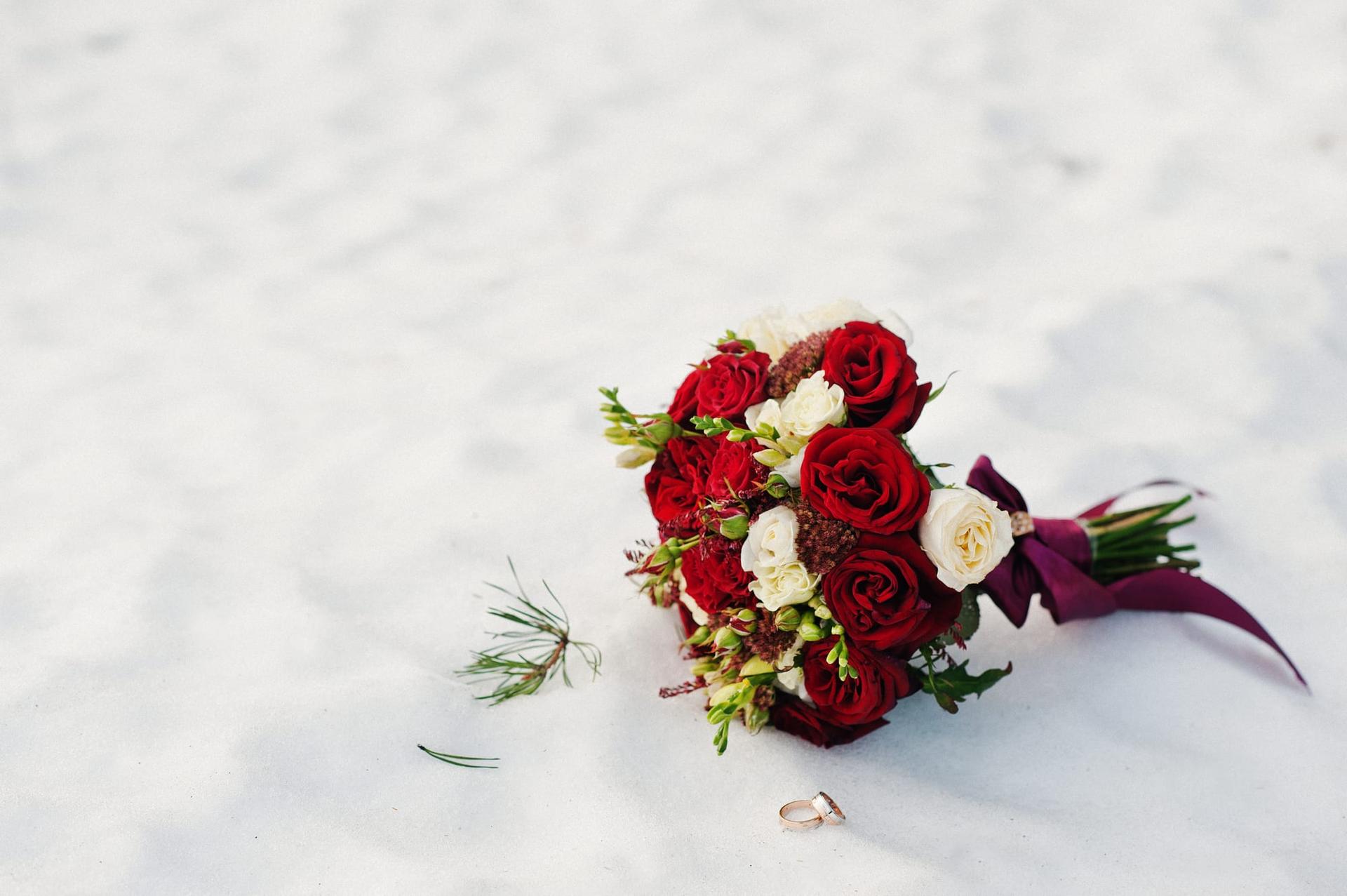
The winter bridal bouquets we build usually lean on two or three of these rather than all of them. A tight anemone-and-rose design reads deliberate; a sampler reads indecisive.
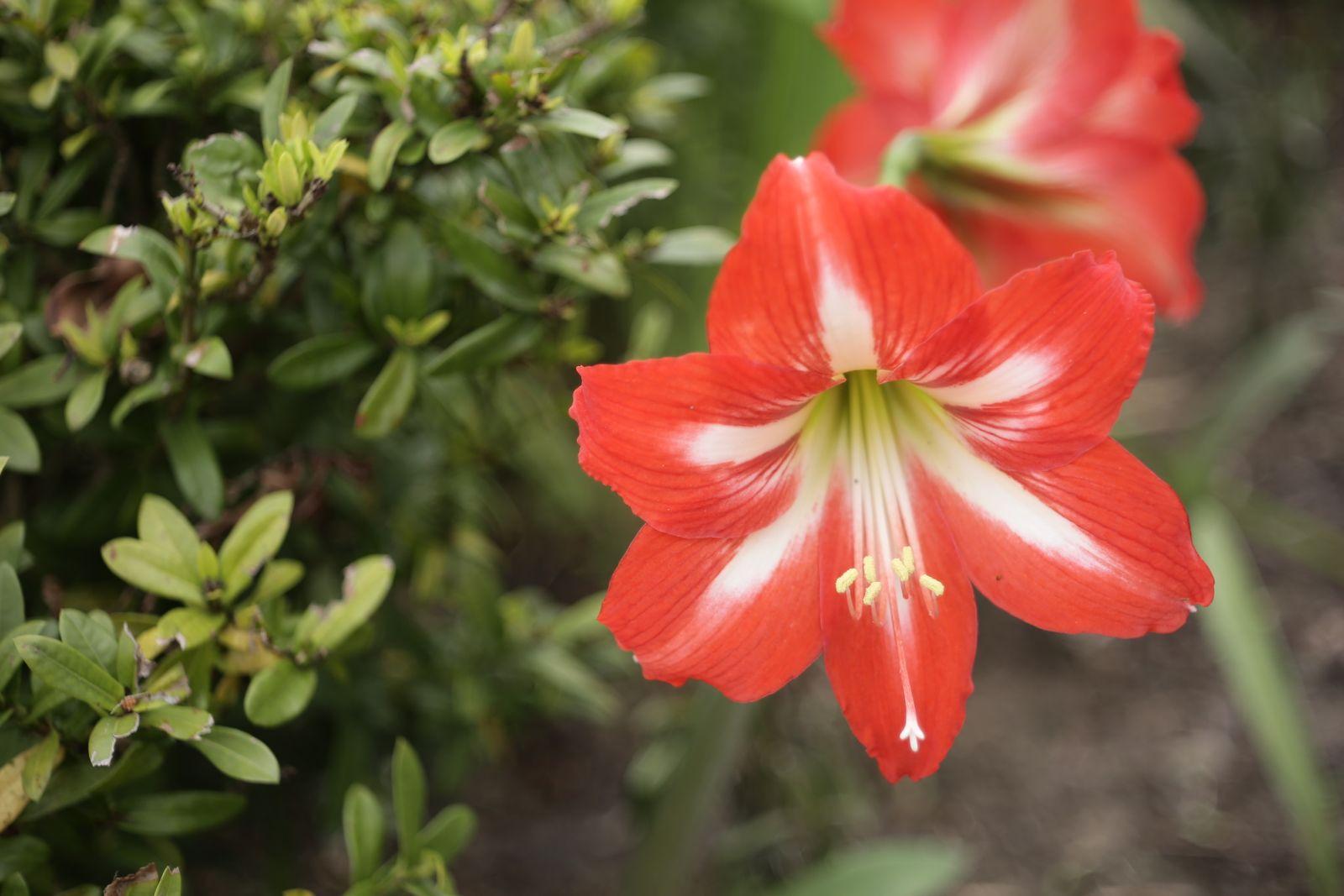
Amaryllis, the winter showpiece on a schedule
Amaryllis is the flower people picture when they picture winter: a thick hollow stem topped with trumpet blooms wider than your hand. Cut stems can carry a centrepiece almost alone, and potted bulbs double as decor that guests take home. The catch is timing. The Old Farmer's Almanac puts bloom at six to eight weeks after the bulb is planted, which is why bulbs meant to flower by Christmas get started in early to mid-November. Cut stems skip the scheduling entirely, which is one reason florists love them. And one caveat belongs in every amaryllis conversation: the ASPCA lists it as toxic to dogs, cats and horses.
What gives a winter arrangement its texture?
In winter, texture comes from branches and berries more than from blooms. Three staples do most of the work.
- Winterberry. Ilex verticillata is a holly native to eastern North America that drops its leaves in fall, leaving bright red berries on bare branches that hold deep into winter. That stripped-down silhouette is the whole appeal. It's still a holly, though: the ASPCA's American Holly entry counts winterberry among its common names and lists it as toxic to dogs, cats and horses, and dropped berries sit exactly at dog height.
- Eucalyptus. The default winter greenery, silvery and fragrant, though the ASPCA lists it too as toxic to dogs, cats and horses. We weigh it against other foliage in our guide to eucalyptus as wedding greenery.
- Paperwhites. Forced narcissus that bloom indoors through the darkest weeks, often with the bulb sitting visibly in the vessel. The ASPCA's daffodil entry names Paper White specifically, lists it as toxic to dogs, cats and horses, and calls the bulbs the most poisonous part.
All three show up constantly in winter centrepieces, usually around candles, where berry red does the job a flower would. Poinsettias we mostly leave to hotel lobbies: their deadly reputation is overblown, but the ASPCA still lists them as irritating to the mouth and stomach of dogs, cats and horses, and they read more office party than wedding.
How do you move flowers through a cold snap?
A petal is mostly water. Let it freeze and the cells rupture; the flower looks fine coming in from the cold, then turns translucent and browns over the following hours. Frozen flowers can't be rescued, which is why the transport plan matters more than the forecast.
- Warm the vehicle first, load flowers last. A car that sat out overnight in a Toronto January is a freezer on wheels.
- Keep every walk short. Paper wrap buys minutes, not hours. Under a minute from door to door is the goal.
- Never stage arrangements in a parked car. The cabin drifts back toward the outdoor temperature faster than a reception runs long.
- Brief the photographer. Outdoor portraits are worth having; keep each pass short and hand the bouquet back inside between setups. A ten-minute loop through the Distillery District is fine. An hour on the Harbourfront in a wind chill is not.
- Indoors, avoid both extremes. Park arrangements away from door drafts and away from radiators. A cool room, not a cold one.
This is also the strongest case for full service. Our wedding flower team works in two tiers, delivery-only and full service. On the full-service tier we arrive, install and style on site, with wedding delivery up to three hours from Toronto. In February, that's less a luxury than a logistics decision.
A word about pets before the centrepieces go home
Wedding flowers outlive the wedding. Centrepieces get carried off by aunts, the toss bouquet lands in somebody's apartment, and you won't know whose cat or terrier greets them at the door. We won't call any arrangement safe for pets, and you should be wary of a florist who does. What you can do is lean on roses and alstroemeria, both listed by the ASPCA as non-toxic to dogs, cats and horses, for anything designed to be given away, and let guests know that winterberry, tulips, amaryllis, ranunculus, hellebores, paperwhites and eucalyptus all sit on the toxic side of its list.
Does a winter date change the booking math?
A little, in your favour. Winter is the quiet season for wedding florists, with two loud exceptions: the week around Christmas and the run-up to Valentine's Day both squeeze supply and delivery capacity, red roses especially. A December 19 or February 12 date deserves the lead time you'd give a June Saturday. Away from those spikes, the December wedding flowers above are the same stems we can source in January and March.
Pricing deserves the same daylight. When we screened 277 Canadian florists for the 2026 Wedding Flower Price Study, fewer than half published any wedding pricing at all; our corrected estimate is 47%. Cindy's Flowers publishes every wedding price, so you can price a winter wedding piece by piece before a single phone call. There are no fixed packages and no consultation fee, and a written line-by-line quote comes back within one business day.
If your date sits at the season's edge, the palette shifts with it; our guide to fall wedding flowers in season covers October and November. And before any first call, winter or otherwise, read our questions to ask a wedding florist. The answers matter more in a month when the weather is a vendor too.