Seven things are genuinely in season for an Ontario fall wedding: dahlias, zinnias, wheat celosia, love-lies-bleeding, garden mums, Autumn Joy sedum and rose hips, with greenhouse roses dependable in any month. Everything on that list either blooms until the first frost or, like garden mums, saves its whole performance for autumn. Build your palette from these and a September or October date works with the season instead of against it. Below: what each flower does, when it quits, and the pet cautions the inspiration boards leave out. Cindy's Flowers builds Ontario fall weddings from that list, pricing every piece up front and returning a written line-by-line quote within one business day.
The Ontario Fall Short List
- Dahlias, midsummer until first frost. The statement flower of the season.
- Zinnias, blooming from summer to frost, and listed by the ASPCA as non-toxic to dogs, cats and horses.
- Wheat celosia, textured spikes until frost that also dry beautifully.
- Love-lies-bleeding, red or gold tassels from summer until frost.
- Garden mums, autumn's own flower, triggered by shortening days.
- Autumn Joy sedum, pink buds all summer that open red as the season turns.
- Roses and rose hips: greenhouse roses ignore the calendar, and hips ripen from late summer through autumn.
Two on that list, dahlias and garden mums, are listed by the ASPCA as toxic to dogs, cats and horses. More on each below, where it comes up.
Dahlias Are the Peonies of Fall
That line is floral convention, not botany, but The Knot's seasonal wedding guide states it outright: "Dahlias are like the peonies of fall (and one of the most popular flowers in season in September)." The convention exists because the timing is real. Fresh local peonies bloom from late spring through early summer and are long gone by autumn; our peony season guide explains that short window. Dahlias inherit the role with the same ruffled, extravagant face, in deeper shades: true burgundy, rust, near-black.
Their calendar is the best argument. The Old Farmer's Almanac notes that well-tended plants "will keep producing flowers from midsummer until frost", and that for many gardeners the first frost simply ends the dahlia season. Ontario grows them as tender perennials, tubers lifted once the cold arrives, so a September date lands inside their strongest stretch. We covered the growing side in our late-summer dahlia guide; for a wedding, the practical takeaway is that a burgundy dahlia wedding bouquet in September is about the most reliable request you can make of this province. We build bridal bouquets around them all season.
One caveat before dahlias go on every table: the ASPCA lists them as toxic to dogs, cats and horses, recording "mild gastrointestinal signs, mild dermatitis" as the clinical signs. Where arrangements are heading home to pets afterwards, zinnias and roses are the ASPCA's non-toxic picks.
The Until-Frost Annuals: Zinnias, Celosia, Love-Lies-Bleeding
Zinnias are the workhorse. The Old Farmer's Almanac lists them among its cut flowers and describes them blooming "nonstop from summer to frost", which is exactly how they behave in a September bucket order: bright, sturdy-stemmed, and available in every warm colour the fall palette wants. They are also the rare wedding flower with a clean pet record, listed by the ASPCA as non-toxic to dogs, cats and horses.
Wheat celosia is the texture play. University of Wisconsin-Madison Extension calls its slim flower spikes "excellent fresh or dried cut flowers" and notes the blooming continues until frost. The dried part matters more than couples expect: hung upside down in small bundles in a cool, dry room, celosia keeps its shape and colour, so ceremony flowers can become winter mantel flowers. Our drying and preserving guide walks through the method.
Love-lies-bleeding, Amaranthus caudatus if you are labelling place cards, is the drama. North Carolina State Extension describes an annual known best for its "long, drooping, red or gold tassels" that blooms from summer until frost. Those tassels are what give fall centrepieces their spill, trailing over the rim of a compote or a bud vase cluster the way nothing upright can. Wheat celosia does appear in the ASPCA's plant database: Celosia spicata is listed as non-toxic to dogs, cats and horses. Love-lies-bleeding's own species, Amaranthus caudatus, is absent, though the ASPCA lists its close relative Amaranthus hypochondriacus as non-toxic to all three, so for amaranthus itself we make no firm claim.
What Changes in October: Mums, Sedum and Rose Hips
Garden mums are autumn's own flower rather than a survivor of summer. The Old Farmer's Almanac crowns Chrysanthemum x morifolium "the Queen of the Fall Flowers" and explains the mechanism: bloom is set by day length, twelve hours of daylight or less, which is why northern growers get their one great show as the days shorten. No amount of wishing produces that look in June. Recommend them with the same caution as dahlias, though. The ASPCA lists chrysanthemums as toxic to dogs, cats and horses, citing pyrethrins and other irritants, with signs that include vomiting, diarrhea, drooling, incoordination and dermatitis.
Autumn Joy sedum is the quiet one. North Carolina State Extension describes light pink buds forming through the summer that open to red as summer wanes, a colour change that conveniently deepens right alongside a fall palette. And rose hips, the glossy fruit left on Rosa plants after the flowers finish, ripen from late summer through autumn, which is exactly why they turn up in October boutonnieres and garlands. Hips are simply the fruit of the rose, so they share the rose's listing: the ASPCA records Rosa species as non-toxic to dogs, cats and horses. Greenhouse roses themselves ignore the calendar entirely and anchor an October wedding as readily as a June one.
Is There a Colour for a September Wedding?
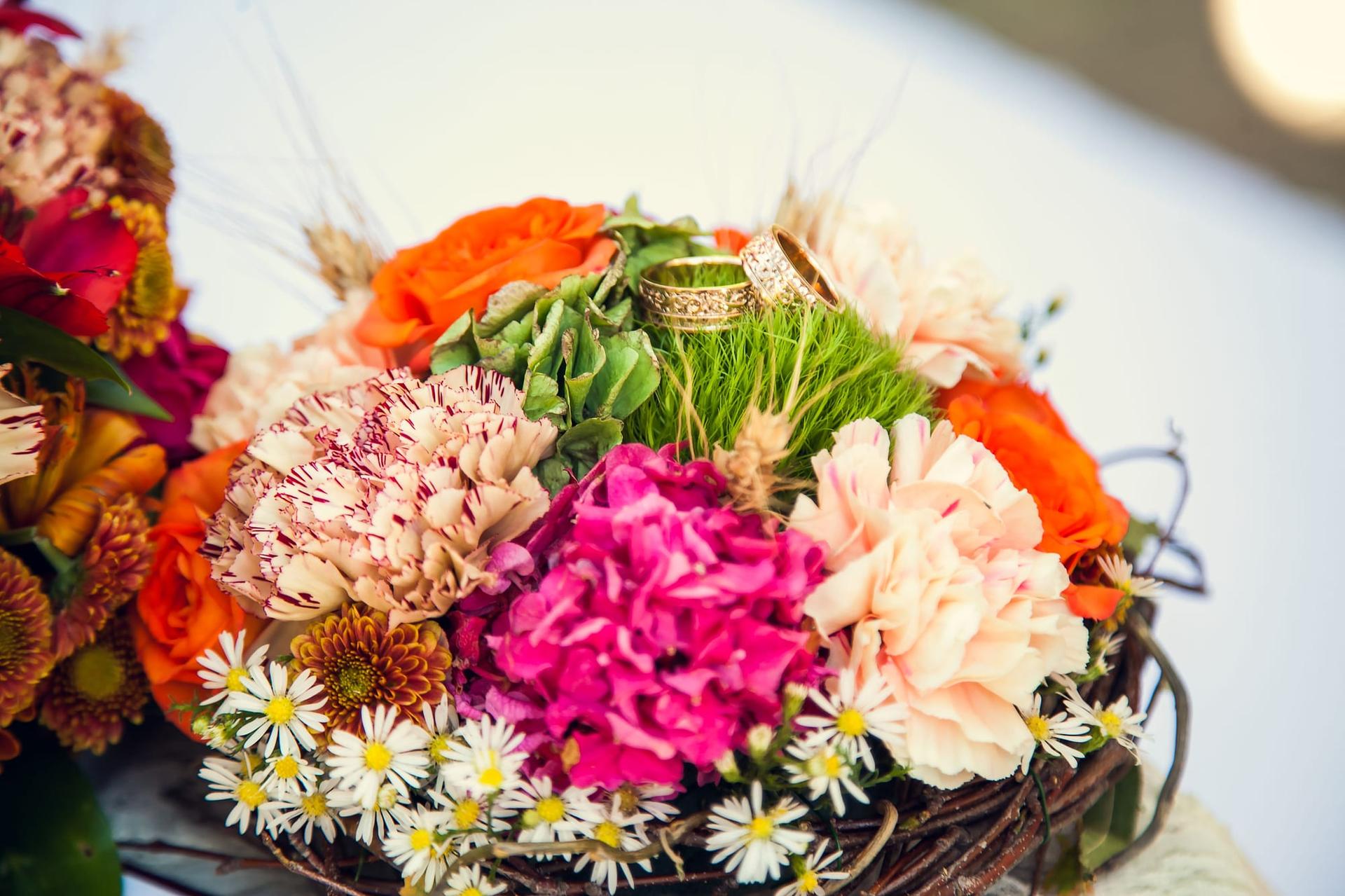
No committee assigns one. The convention among florists is that early fall means burgundy, rust, terracotta and gold, and the convention holds up because those are the colours the season actually grows: burgundy and near-black dahlias, red celosia spikes, amaranthus tassels in red or gold, sedum heads reddening week by week. A palette built from in-season stems needs almost no forcing.
Greenery deserves one honest note. Eucalyptus reads beautifully against all of those tones, and the ASPCA lists it as toxic to dogs, cats and horses, which matters when garlands and centrepieces go home with guests at midnight.
Getting the Season Into a Toronto Wedding
The whole point of choosing fall wedding flowers in season is that nobody has to fight the calendar or pay to fly around it. Tell your florist the palette and the date, then let the week's best stems fill the shapes. That is how we work at Cindy's Flowers: every piece on our wedding flowers pages is priced à la carte with every price published up front, there is no consultation fee, and a written line-by-line quote comes back within one business day. Wedding delivery runs up to three hours out of Toronto, far enough for Niagara vineyards and Kawartha lakefronts alike. September until first frost is a generous window. The flowers know exactly what to do with it.