Why Do Tulips Droop and Keep Growing in the Vase?
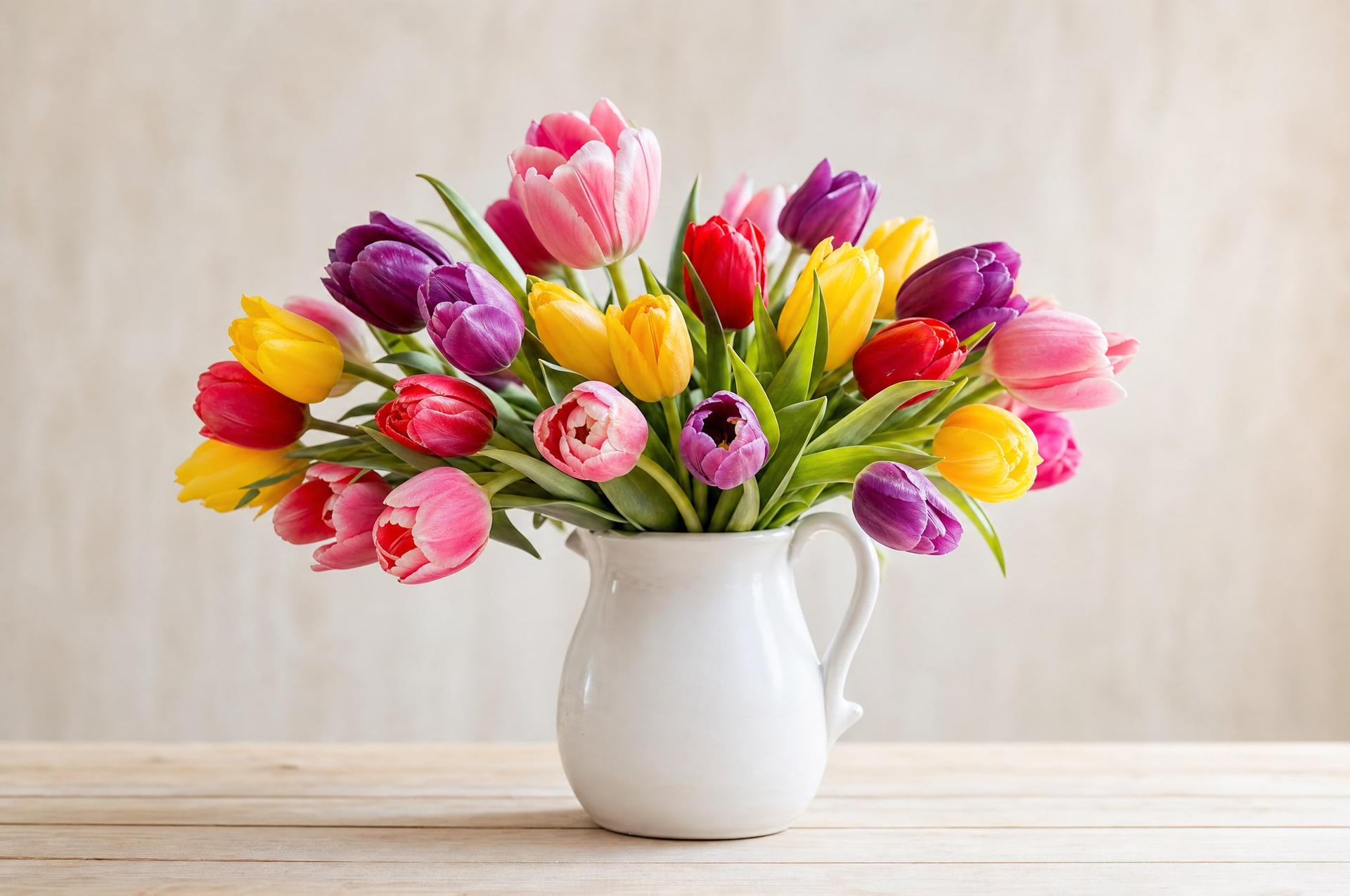
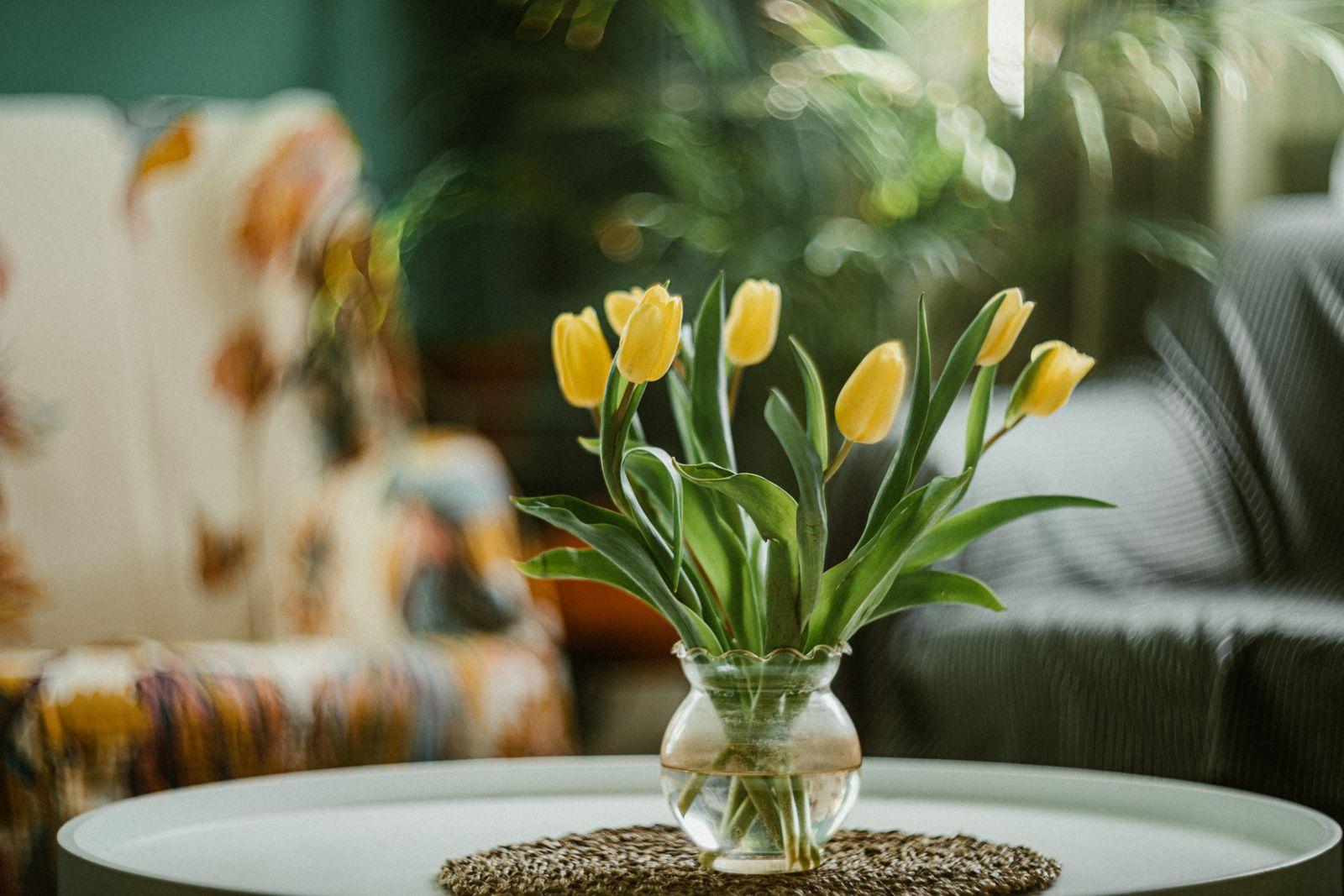
Tulips are unusual among cut flowers: their stems stay alive after cutting and keep elongating, driven by water-filled cells at the growing tip. They commonly gain about an inch in the vase (FloraLife); University of Maryland Extension has measured up to six inches. As the soft stems drink, the heavy blooms bend under gravity and lean toward light, so the bunch you arranged neatly on Monday arches and twists by Wednesday. That movement is character, not decline.
The fix is simple. Recut the stem ends, wrap the top two-thirds of the bunch snugly in newspaper or kraft paper, and stand it in deep cold water for an hour or more. The support matters: a bent tulip stem that rehydrates without support stays bent (University of Maryland Extension).
First Hour: Setting Up Tulips That Arrive Wrapped
Leave the paper or cellophane sleeve on while you prep; it holds the stems vertical. Fill a clean vase with cold water and stir in flower food. Recut roughly one inch off each stem, cutting where the green begins just above the pale base, and strip any leaves that would sit below the waterline. Then stand the still-wrapped bunch upright in deep cold water for an hour or more before arranging. That hydration hour sets the stems straight from day one.
What Kind of Water Do Cut Tulips Need?
Cold, clean, and plentiful. Tulips are bulb flowers, and unlike most cut stems that prefer lukewarm water, they hydrate best in cold because they naturally bloom in cool conditions (Brooklyn Botanic Garden). They're also heavy drinkers and very bacteria-sensitive, so change the water completely every one to two days and top it up daily in between. Skip softened water; FloraLife advises against it.
Feed them too. Cut stems need carbohydrates, a biocide, and an acidifier, the three things flower food supplies. Out of sachets? Brooklyn Botanic Garden's homemade substitute is one teaspoon of sugar plus one teaspoon of household bleach per quart of cold water.
How Should You Trim Tulip Stems?
With a clean, sharp knife or florist shears, never household scissors, whose gauge is set for paper and crushes the stem's vascular tissue (Brooklyn Botanic Garden). Cut at roughly 45 degrees; the angle exposes more surface and keeps the cut face off the vase floor. Recut immediately before the stem goes into water, since even a short dry spell can air-lock it. Take another half inch at every water change, and recut any bloom that goes limp; a limp tulip has stopped drinking. Some florists cut tulips straight across to slow their heavy drinking, though the angled cut remains the convention.
Where Should the Vase Go?
Somewhere cool, with even light and no fruit nearby. Direct sun, radiators, lamps, and drafts speed water loss and aging, and warmth accelerates the stem growth that makes tulips flop. Ripening fruit is the quieter threat: its ethylene gas holds buds closed, dulls colour, and shortens vase life (FloraLife notes some cultivars are ethylene-sensitive). Since tulips grow toward light, rotate the vase daily to keep new growth straight.
One safety note. The ASPCA lists tulips as toxic to cats, dogs, and horses; the toxins concentrate in the bulb, but nibbled petals or leaves can still cause vomiting, drooling, and diarrhea. Keep the vase out of pets' reach, and keep any bouquet containing true lilies away from cats entirely; those are far more dangerous.
How Long Do Cut Tulips Last?
About 5 to 7 days by horticultural convention (FloraLife), and attentive care commonly stretches that to roughly 7 to 10. The biggest lever is what you start with: tightly budded stems with colour just showing outlast fully open blooms, which is why a just-because bunch bought in bud gives the longest show. Cold clean water, fresh recuts, preservative, and a cool room extend life; warm rooms, stale or low water, ethylene, and dry stems shorten it.
The Mistakes That Cut Tulip Life Short
Four errors cause most early losses. Lukewarm water tops the list, since warmth speeds blooming and softens stems until they bend and fade. Neglected water comes second: stale, low, or fouled by leaves below the line. Third is placement: a warm room, direct sun, drafts, or a spot beside the fruit bowl. Fourth is starting wrong, with stems already fully open or showing yellowed leaves.
When the vase finally empties, browse the current bouquets for a fresh bunch; Cindy's Flowers delivers same-day across Toronto and the GTA on orders placed before 3 PM.