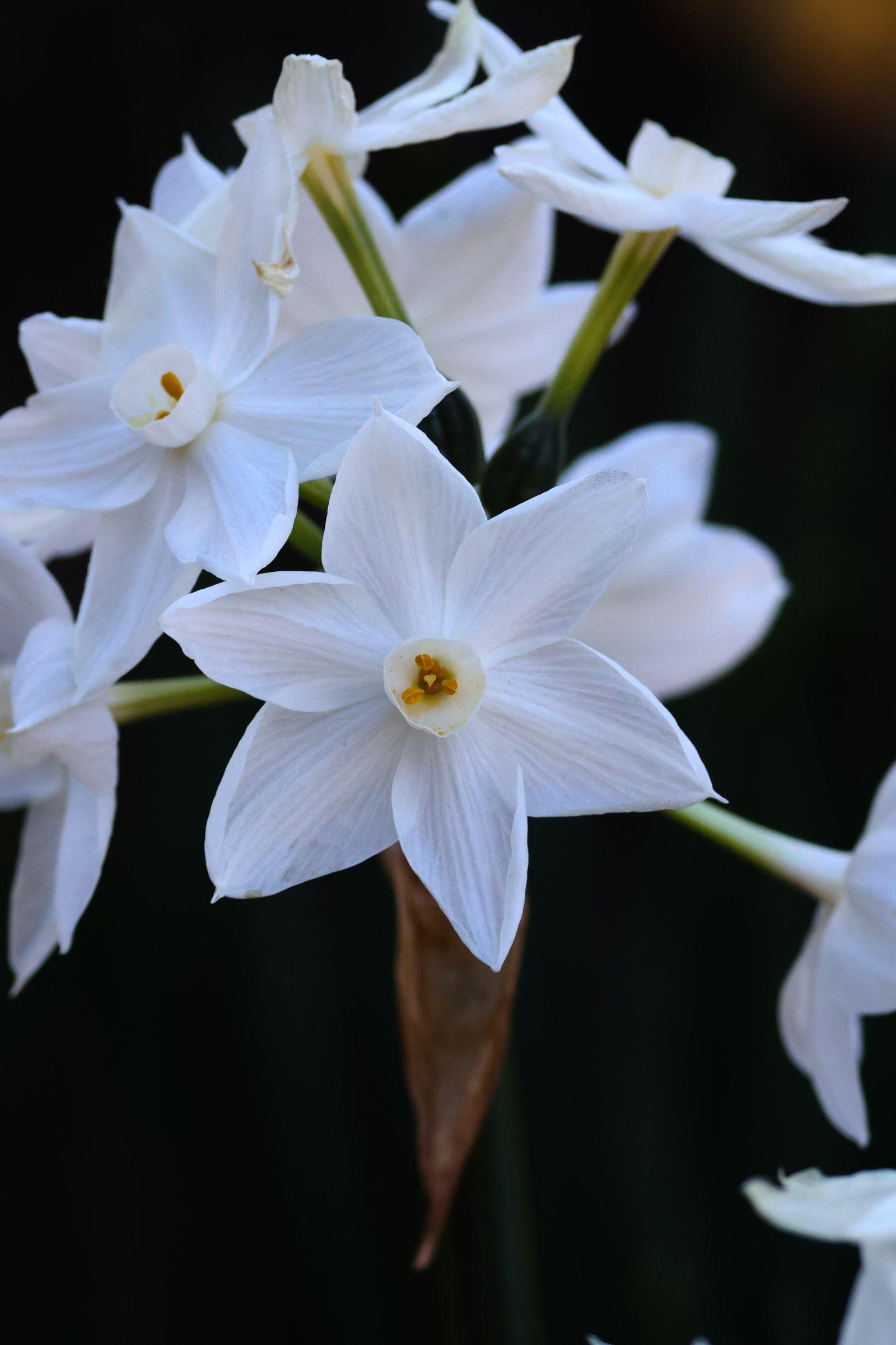
December's birth flowers are the narcissus and the holly. The Old Farmer's Almanac names narcissus the month's primary flower, singling out the paperwhite narcissus, with holly as the secondary bloom, and gives the pair one meaning: rebirth, hope, protection. That meaning splits between them rather than landing on either alone. Only the narcissus is a cut flower you can actually send; holly is a branch and a doorway tradition. For the giftable half, Cindy's Flowers hand-ties white winter bouquets in our Toronto studio and delivers them across the GTA.
Which is the real December birth flower?
Narcissus, if the question needs one answer. The Almanac's birth-flower table gives December a primary flower and a secondary one: narcissus first, "such as the paperwhite narcissus," then holly, with "Rebirth, hope, protection" in the meaning column beside the pair.
That column describes both flowers together, which is the part gift guides get wrong. Hand the whole phrase to the narcissus and you contradict the Almanac's own December page, where the protection belongs to the holly and traces back to the evergreens the ancient Celts carried indoors at the winter solstice. That leaves rebirth and hope for the narcissus, an inference the Almanac's page does not spell out; it gives the narcissus the Greek myth and unconditional love, and shares renewal with the holly.
Months with two flowers are common on these lists, and the reason is simple. Birth flowers are a custom, not a botanical system. No authority governs the pairings, so references disagree at the margins and several months ended up carrying a second bloom. Our month-by-month guide to birth flowers sets out all twelve side by side.
Narcissus and daffodil are the same flower
This trips up more people than anything else about December, and the American Daffodil Society answers it flatly: "What is the difference between daffodils and narcissus? None. The two words are synonyms. Narcissus is the Latin or botanical name for all daffodils, just as ilex is for hollies. Daffodil is the common name for all members of the genus Narcissus, and its use is recommended by the ADS at all times other than in scientific writing."
Notice the analogy the Society reached for. Ilex is holly, so December's two birth flowers turn up in the same sentence of a daffodil FAQ by coincidence.
There's a second oddity worth knowing. March's row on the same Almanac list reads daffodil and jonquil, and a jonquil is Narcissus jonquilla, another species in that genus. Narcissus is therefore the only genus the twelve-month calendar names twice: once in early spring as a yellow trumpet, once in midwinter as a cluster of small white paperwhites.
What does the narcissus actually symbolize?
Modern florist convention gives it rebirth, hope and new beginnings, which suits a flower that opens in the dead of winter. Just don't call that reading Victorian, because the Victorian record says something sharper.
Kate Greenaway's Language of Flowers, published in 1884, is the reference most floriography writing is quietly paraphrasing. Its entries for December's pair read: Narcissus, "Egotism." Daffodil, "Regard." Holly, "Foresight." Not a word about hope. The Old Farmer's Almanac reports a warmer version, that "In Victorian times, the gift of a narcissus meant you were 'the only one.'" The two readings do not agree, and saying so is more useful than blending them into one tidy sentence.
Greenaway's entry is easier to understand next to the Greek myth the genus name recalls, of the youth who could not stop looking at his own reflection. If the meaning is the point of the gift, put it in the card rather than trusting the flower to carry it. Those same meanings drive the ink, too: our guide to birth-month flower tattoos covers how the narcissus gets drawn, six tepals set behind a raised central cup.
Holly carries the protection half
Holly is the older half of the pairing as a winter custom; the narcissus's December slot is a modern birth-flower convention. Evergreens went into Celtic homes at the winter solstice, and per the Almanac the practice "was thought to symbolize protection from evil ... and the renewal of life and light" through the darkest weeks of the year. The wreath on a Toronto front door in December is the same gesture with better ribbon.
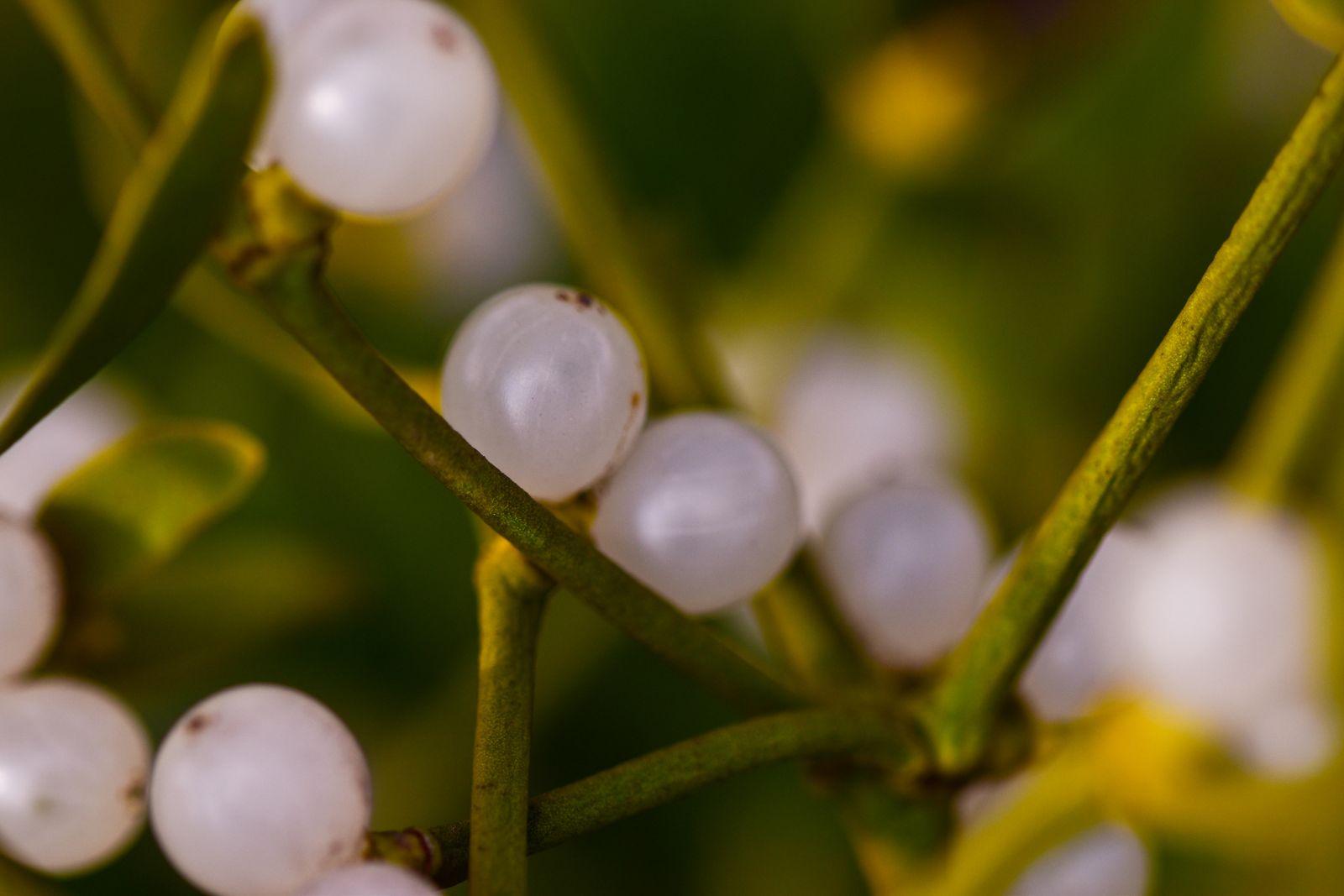
Botanically it is Ilex, and it is dioecious: only female plants carry berries, and they need a male plant nearby to set them. That's why a whole hedge of holly can be entirely berry-free while the one down the street is loaded.
Two cautions before any of it comes indoors. The ASPCA lists American holly as toxic to dogs, cats and horses, and once a branch is on the mantel the berries sit at exactly the height a dog, or a toddler, investigates. Holly is also greenery rather than a gift flower, so it works as accent and doorway material, not as the present itself. If you want that evergreen-and-berry look for someone, it's the palette our Christmas flower delivery is built around, and in a home with pets, roses and alstroemeria carry the same red without the berries. The ASPCA lists both as non-toxic to dogs and cats.
How do you force paperwhites indoors?
Because they skip the cold. That is the whole reason paperwhites are one of the few bulbs that flower on a windowsill in December. Cornell University's Flower Bulb Research Program puts it plainly: "Unlike most other daffodils, paperwhites (Narcissus tazetta) do not require a cold period. They are simply planted in pots with soil, or even more commonly, in dishes or bowls with gravel, marbles or other decorative material. With a little water, they rapidly form roots, grow leaves and shoots."
Timing depends on who you ask. Cornell says the flowers "usually open up within 2-3 weeks of planting"; the Old Farmer's Almanac says a bulb will often flower within a month. Plan on two to four weeks in a warm, bright room (the Almanac's cool-rooting method takes six to seven), and start a second bowl a fortnight after the first if you want them running through the holidays.
Light is the other variable, and a Toronto December is stingy with it. The shortest day here runs under nine hours, the problem we get into in our guide to indoor plants that cope with low light. Paperwhites will still bloom in that. They just lean hard toward the glass, so turn the bowl daily.
The Cornell alcohol trick
Forced paperwhites flop. The usual fix is staking; a better one came out of Cornell, where undergraduate Erin Finan, working under Bill Miller, director of the Flower Bulb Research Program, tested diluted alcohol as a growth regulator. The result was plants one-third to one-half shorter, "with equal sized flowers that last as long as normal."
- Start the bulbs in plain water, as normal.
- Wait about a week, until roots are growing and the shoot stands one to two inches above the bulb.
- Pour the water off and replace it with a 4 to 6 percent alcohol solution. One part 40 percent spirit to seven parts water gives you 5 percent.
- Keep using the dilute solution from then on.
Rubbing alcohol works too, at one part of the 70 percent kind to ten or eleven parts water. Beer and wine do not: Cornell is explicit that "the sugars in them will cause major problems with the plants." Nor does stronger help. Much above 10 percent "growth problems will start," and 25 percent is "dramatically toxic." Cornell's explanation is mild water stress. Alcohol makes water harder to take up, which shortens leaves and stems "but not enough to affect flower size or flower longevity."
One thing a forcing bowl does that a bouquet never does is leave a bulb sitting out in the open at pet height. The ASPCA's daffodil entry names Paper White among its common names, lists it as toxic to dogs, cats and horses, identifies lycorine and other alkaloids as the toxic principles, and calls the bulbs the most poisonous part. A dish of gravel with a fat bulb in it is an invitation. In a house with a cat or a dog, that bowl belongs behind a closed door, or not at all. If you'd rather give something already flowering, browse what's in the studio this week instead.
What should you send for a December birthday?
A December birthday competes with the holidays, so the useful move is making the gift read as a birthday rather than as decor. Paperwhites in a bowl do that well. They're the month's actual birth flower, they arrive as an unfinished thing that then performs for a couple of weeks, and nobody mistakes them for a Christmas centrepiece.
For cut flowers, take the narcissus palette rather than the stem itself. White, cream and soft green with something structural running through it reads like December without reading like a wreath, which is what mixed seasonal bouquets do best. If the date is the whole point of the gift, start from birthday flowers and let the colour follow.
Cindy's Flowers hand-ties every arrangement in our Toronto studio, and orders placed before 3 PM, Monday to Saturday, go out for same-day delivery across Toronto and the GTA. One seasonal note: a bouquet that has travelled through a Toronto December arrives cold. Let it come up to room temperature before you unwrap and trim it, and keep it off the radiator. Our guide to making cut flowers last longer has the rest of the routine.