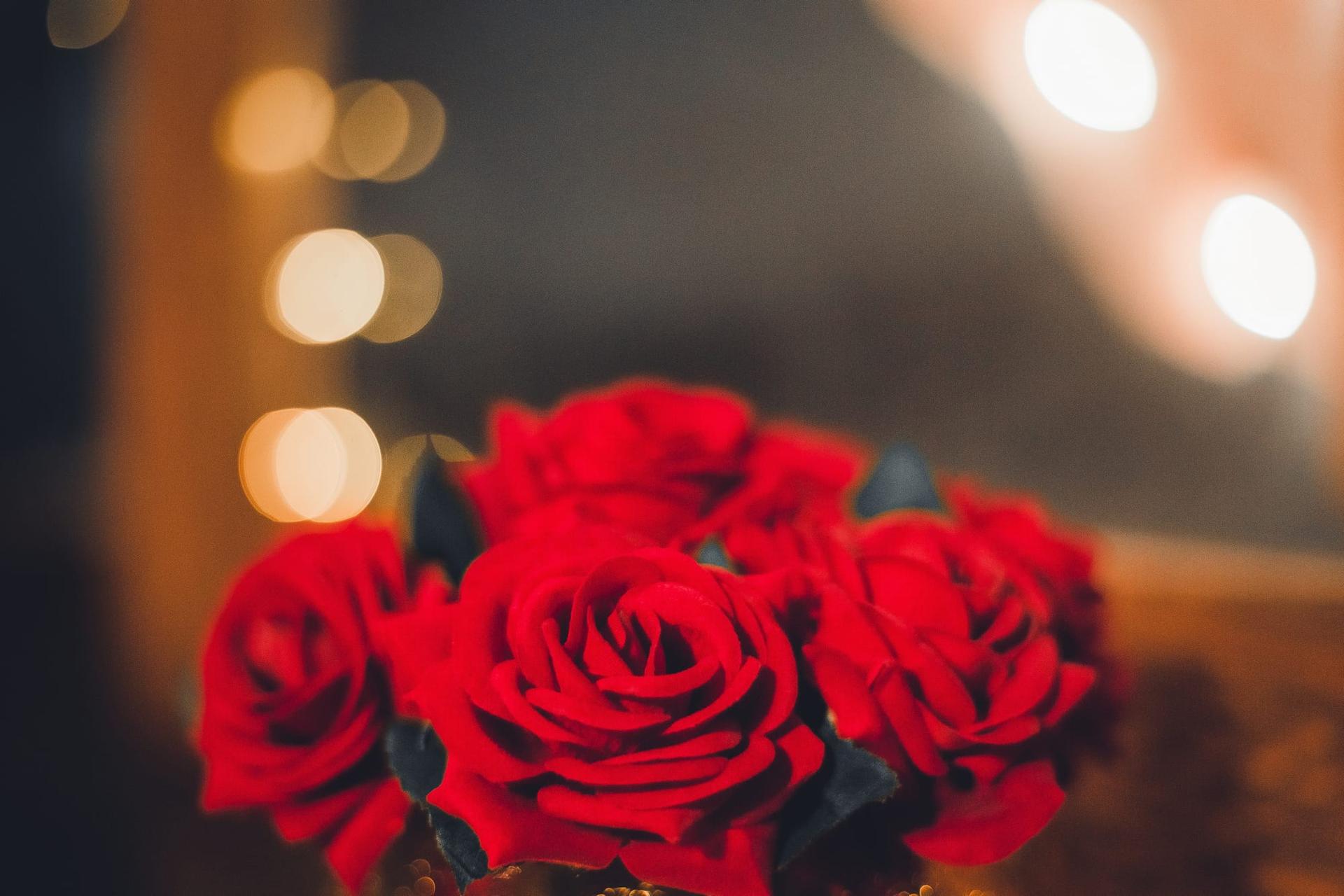
One flower does most of the work here: the red rose. In the Old Farmer's Almanac's language-of-flowers chart it means, plainly, "Love, I love you," and almost nobody misreads it. The shortlist behind it is small but real. The same chart gives the red tulip a declaration of love, the red chrysanthemum a straight "I love you," the red carnation deep love, the forget-me-not true love, and myrtle love in a marriage. One caution before you order: the yellow rose is not on that list, and traditionally means close to the opposite. Send the red one and the sentence arrives with it: Cindy's Flowers hand-ties red roses and red tulips in our Toronto studio for same-day delivery across Toronto and the GTA on orders placed before 3 PM.
Which flowers actually mean love?
Six, if you stick to the entries the old dictionaries agree on. The romantic meanings in the Almanac's chart cluster tightly around red, and they're specific enough to build a bouquet around rather than vague enough to mean anything. Here's the working list.
- Red rose, "Love, I love you." The plainest sentence in the whole language. Longer floriography lists stretch it further still, to burning love, immortal love and passion. When the message is the entire point, red roses carry it without any help from the card.
- Red tulip, a declaration of love. The Almanac puts it about as directly as a reference book can: the red rose is the classic symbol of love and admiration, the red tulip is a declaration of love. A bunch of tulips says the same thing in a lighter register. Swap to yellow and the meaning shifts to "sunshine in your smile," which is affection of a different kind.
- Red chrysanthemum, "I love you." The entry that surprises people. Same three words as the rose, a fraction of the ceremony, and a vase life that outlasts almost everything standing beside it.
- Red carnation, deep love. Its full entry is more anguished than romantic: "alas for my poor heart, my heart aches." The pink carnation is gentler and better on a card, reading "I'll never forget you."
- Forget-me-not, true love and remembrance. Literally "do not forget me." Small, blue, and hard to beat for someone in another city.
- Myrtle, love in a marriage, with good luck attached. That pairing is why sprigs of it keep turning up in wedding bouquets generations after anyone remembered why.
Colour changes the sentence, not just the volume. Pink roses read as happiness, and on longer lists as first love and admiration. White roses mean innocence and "I'm worthy of you." A lavender rose signals love at first sight, a meaning a thornless rose carries too, and red with white together has traditionally been read as unity.
Why did the rose end up speaking for love?
Rank, mostly. In the Western tradition the rose is the queen of flowers, and the bloom everyone already treats as the most important one tends to get handed the most important message. That crown is regional, though. In China the title of king of flowers belongs to the tree peony instead, which should tell you how much of this is culture rather than botany.
Everything else piles on top of the status. The rose shares June's birth-flower slot with honeysuckle. It's the flower attached to the fifteenth wedding anniversary on the standard list. It's also the rare bloom whose meaning travels across households, languages and generations without explanation, which is why red roses anchor so many date-night bouquets while a fistful of red chrysanthemums, for all their accuracy, occasionally needs a translator.
What do 12 roses mean, or 7, or 9?
Nothing historical. Stem-count charts (seven for infatuation, nine for eternal love, twelve for "be mine") are a modern retail-florist convention. They appear on flower-shop blogs and almost nowhere in the old floral dictionaries, and the historical record runs against them anyway: meanings varied from book to book with no standardized system behind them, which leaves nothing coherent to number.
What counts do communicate, in practice, is scale and intent.
- One stem reads as deliberate, and slightly bold, especially handed over in person.
- A dozen is the fullest version of the classic gesture and the number most people recognize on sight.
- Odd numbers simply arrange better. In the studio they spiral more evenly, so a florist choosing fifteen over sixteen is answering a design question, not a coded one.
If a particular number means something to the two of you, write it on the card. No two charts agree, and the card always wins.
Three romance myths worth dropping
Yellow roses are romantic. Traditionally they're the opposite. The Almanac files the yellow rose under jealousy, decrease of love and infidelity. Modern use has softened it toward friendship, which is lovely for a friend and a strange note to slip inside a love bouquet.
Peonies are the Victorian symbol of romance. They aren't. The Almanac's peony entry reads bashful, happy life, shame. The romantic, happy-marriage reading florists use today is a contemporary convention, worth enjoying as one, just don't credit the Victorians for it. The "twelfth anniversary equals peony" line circulating online is accurate as far as it goes — peony is the twelfth-anniversary flower on the standard year-by-year lists, and the rose holds year fifteen — but those lists are a twentieth-century commercial convention that kept growing as retailers added more years, not a Victorian inheritance. Choose anniversary flowers by what the person loves and the year sorts itself out.
Darker red means deeper love. It doesn't. A dark crimson rose has traditionally signified mourning, so the romantic red is the bright, clear one. Underneath all three myths sits the same fact: there's no universally accepted set of flower meanings. Floral symbolism worked as a loose collection of associations that shifted between books, never a fixed code.
How do you choose a love bouquet in Toronto?
Start with the person, then let the symbolism settle any tie. The chart never outranks their taste. If tulips are their flower, send tulips and let the red ones do the declaring.
Season decides much of the rest. Ontario-grown peonies run roughly late May into June, a genuinely short window, so a June anniversary can be timed around them in a way a January one can't. Roses, carnations and chrysanthemums arrive year-round from growers abroad, which is why red is available on a grey Tuesday in February. If you'd rather see what's looking best right now, this week's bouquets are the honest answer.
Two practical notes before you send. If the arrangement leans on scented lilies, check whether there's a cat in the home first: true lilies and daylilies are highly toxic to cats, and pollen or a sip of vase water is enough to cause kidney failure. And roses repay five minutes of attention, a fresh angled cut and clean water, with several more days of looking like a declaration.
Cindy's Flowers ties every bouquet by hand in our Toronto studio and delivers Monday through Saturday across the city and the GTA, with orders placed before 3 PM going out the same day. Then write the card. Victorians leaned on flowers to say what they weren't allowed to say out loud. You don't have that problem.