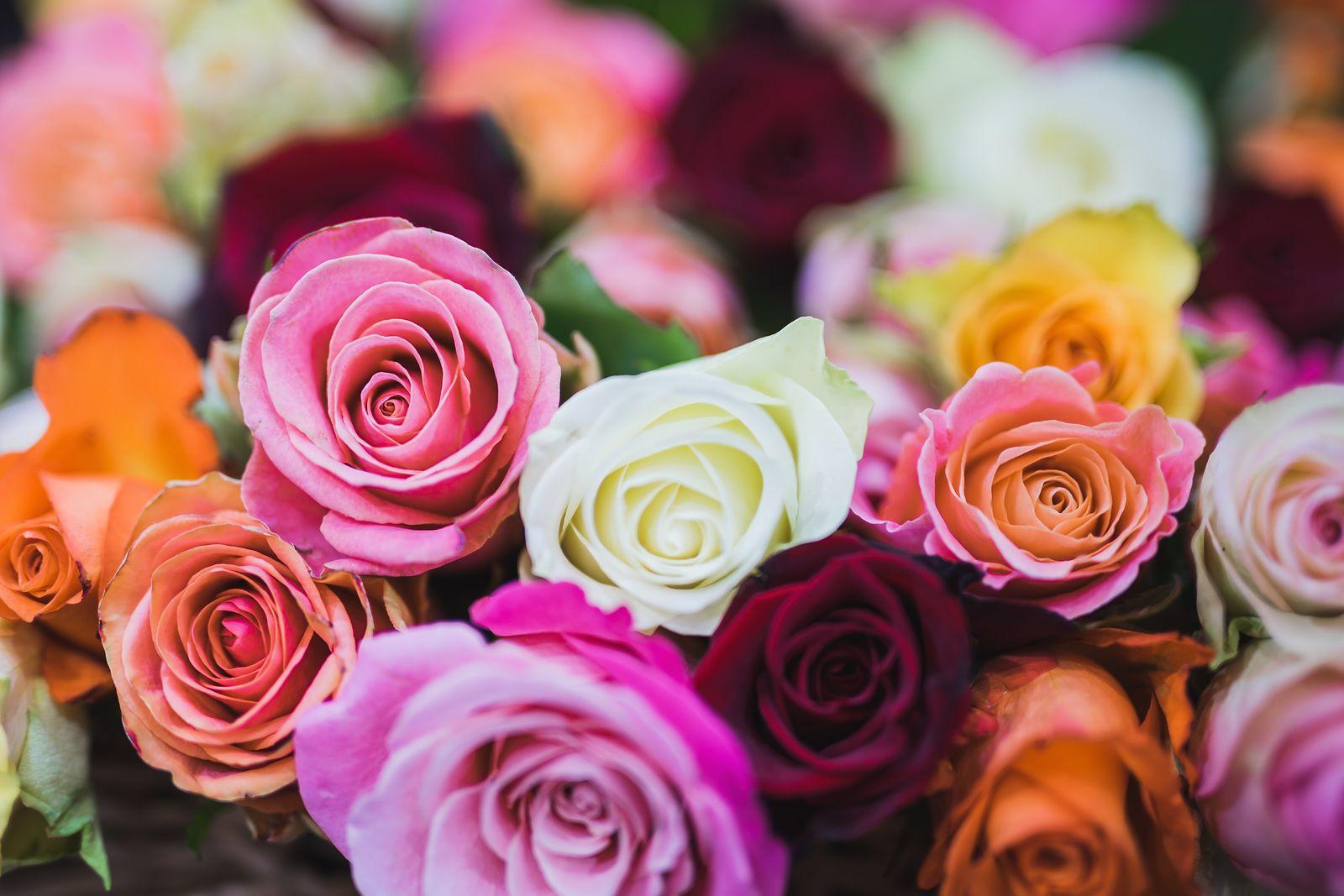
Flower colour meanings come down to tradition, not to any official rulebook. Red speaks of love and passion, white of purity and sympathy, pink of grace and gratitude, yellow of friendship and cheer, purple of admiration and dignity, orange of energy, and blue of calm. These associations grew out of Victorian flower dictionaries and shift from one culture to the next, so treat them as a shared language rather than fixed law. Below I walk through each colour, where the meanings came from, and how to choose a shade that fits your message. Tell us the shade and what you want it to say, and Cindy's Flowers hand-ties the bouquet around it in our Toronto studio, delivered same-day across Toronto and the GTA.
What does each flower colour traditionally mean?
Each colour carries a conventional message that gift-givers have leaned on for generations, though none of it is a hard rule. If you only remember one thing, let it be this: the colour usually carries more of the message than the type of flower does. The Old Farmer's Almanac, one of the most-quoted flower-meaning references, pairs the red rose with "love; I love you" and the white rose with "purity, innocence, a fresh start." Here is the shorthand most bouquets still speak.
- Red carries love, passion and romance, which is exactly why rose colour meaning gets searched most for this shade. A bunch of red roses reads as a declaration and crowds every florist on February 14, the traditional date for Valentine's flowers.
- White stands for purity, innocence, reverence and new beginnings. It's also the steady choice for sympathy and funerals, where its quiet reads as respect.
- Pink signals grace, happiness, gentleness and gratitude, a softer, quieter affection that suits a thank-you or a gentle apology.
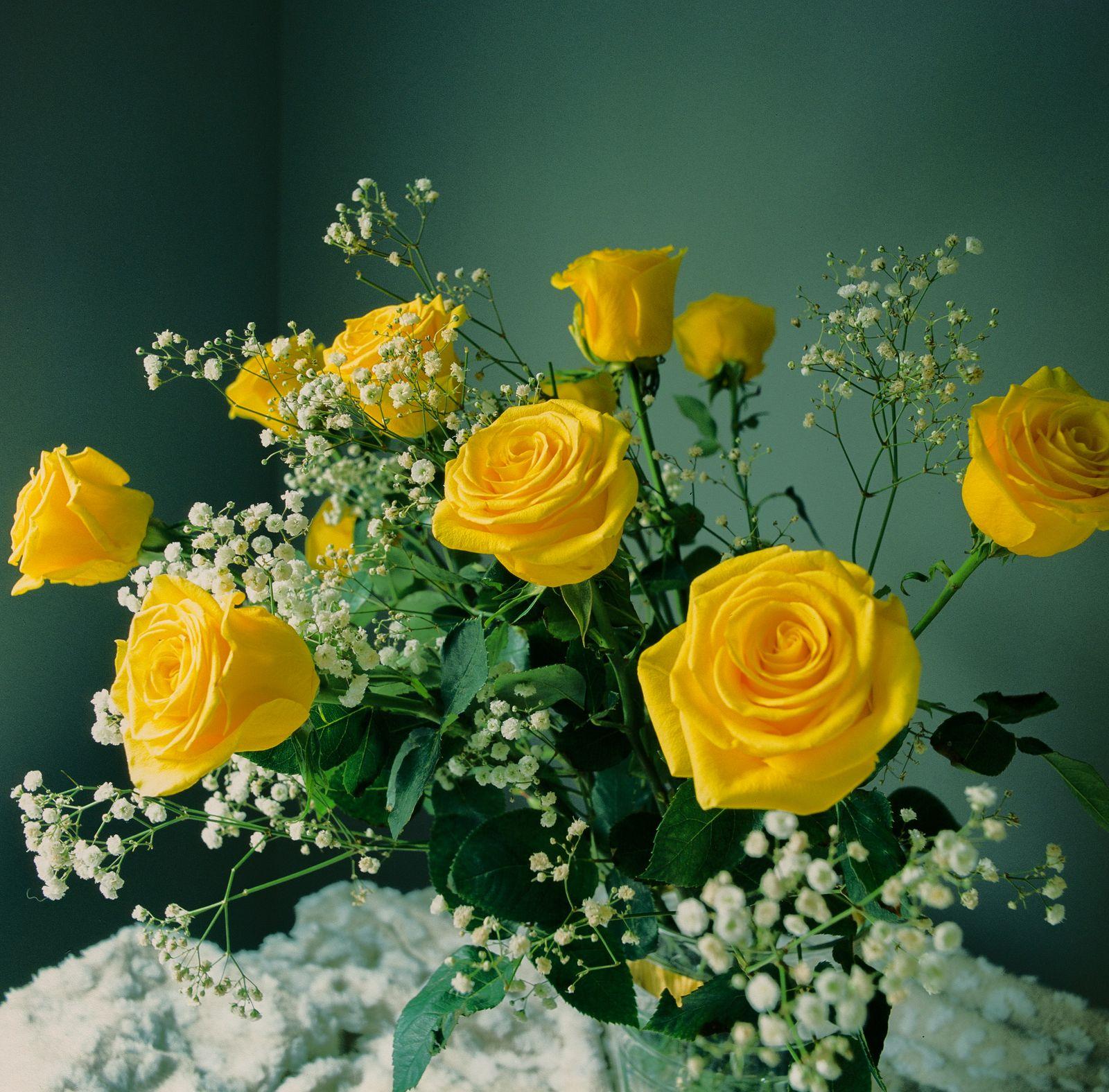
- Yellow means friendship, joy and cheer in modern use; picture a fistful of sunflowers on a grey day. Its history has a twist, and more on that below.
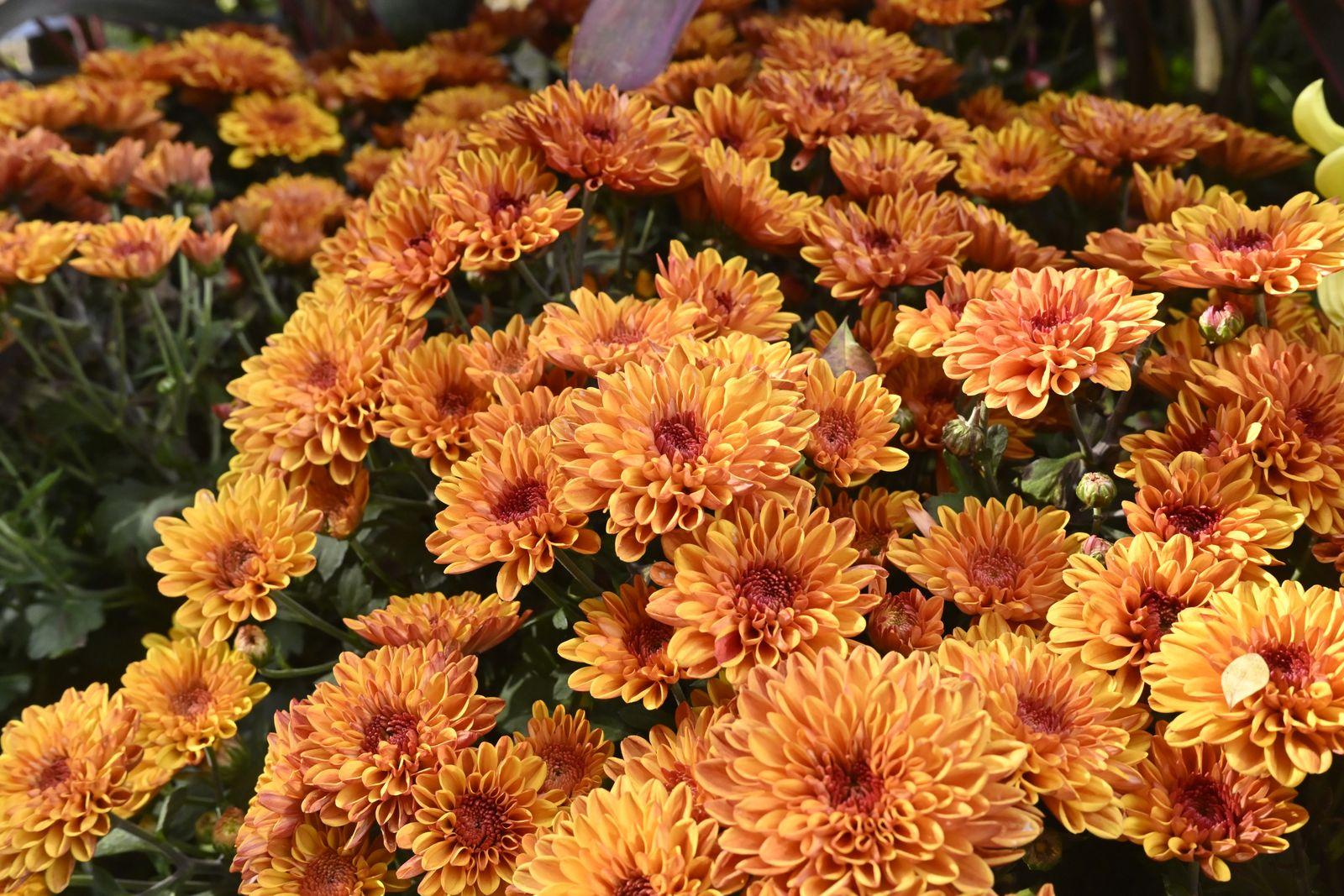
- Orange conveys enthusiasm, energy and desire, a warm, celebratory note that feels like a high-five in bloom.
- Purple suggests royalty, dignity, admiration and success; the purple iris in particular has long symbolized royalty and wisdom, and soft lavender reads as a gentler cousin.
- Blue points to calm, peace and serenity, part of why the colour feels so restful in a vase.
Notice how the warm colours lean celebratory and the cool ones lean calm. That instinct will steer you right more often than a dictionary will.
The Victorian roots of the language of flowers
The "language of flowers," or floriography, boomed in the 1800s, when Victorians sent coded bouquets to say what social manners forbade aloud. Historians of the custom trace its European roots to the Ottoman court in Constantinople, where "selam" object-messages assigned meanings to everyday things. The writer Lady Mary Wortley Montagu carried the idea to England around 1718.
Once flower dictionaries went into print, the game took off. The first widely popular one, Louise Cortambert's Le langage des Fleurs, appeared in 1819 — Joseph Hammer-Purgstall's Dictionnaire du language des fleurs had beaten it into print by a decade, in 1809 — and pocket editions soon followed everywhere. People traded small posies called nosegays or tussie-mussies, each stem standing in for a word or a feeling. For a courting couple who couldn't speak freely, a single bloom might carry a question, an answer, or a polite refusal. One catch has echoed down the years: because every dictionary disagreed a little, and meanings varied by culture, there was never a single official code. That's still true today.
Why can one colour carry opposite meanings?
Because context and history rewrite the code. The clearest example is the yellow rose. Today it signals friendship and warmth, but in strict Victorian floriography a yellow rose meant jealousy, infidelity or a "decrease of love." That meaning genuinely flipped over roughly a century, which is why intent and setting matter as much as the hue itself.
Shade tells its own story, too. A bright red rose says "I love you," yet a deep, dark crimson rose has traditionally signified mourning. Carnations run a whole code by colour: pink for "I'll never forget you," red for admiration, white for pure love and innocence, purple for capriciousness, and striped for refusal, according to Iowa State University Extension. Same flower, a different note for every colour. When in doubt, say the meaning out loud on the card so nothing gets lost in translation.
What is the rarest flower colour?
True blue is the rarest. The University of California Botanical Garden at Berkeley puts it flatly: "Fewer than 10% of flowers are blue, or even bluish." Most flowering plants simply never make a blue pigment. Where blue does appear, it usually comes from anthocyanin pigments bound up with metal ions — metalloanthocyanins — with the acidity of the cell sap nudging the final shade. Even delphinidin, the anthocyanin behind most blue petals, has to be biochemically altered by the plant's own enzymes before it reads blue rather than purple or red.
That scarcity is why a genuine blue rose doesn't occur in nature. Roses carry cyanidin, not the blue-making delphinidin, so every "blue rose" on the market is dyed or lab-engineered. Black is a myth as well: there are no truly black flowers, and blooms sold as "black" are really very deep purple or maroon-red. For a cool palette, florists usually reach for naturally blue stems like delphinium and hydrangea rather than dyed roses — both of which the ASPCA lists as toxic to dogs, cats and horses, so mention any pets at the delivery address when you order. If anything, rarity deepens a colour's meaning, and blue's hard-to-find quality only reinforces its message of calm.
Which flower colours suit which occasion?
Match the colour to the feeling and you rarely go wrong. Since there's no universal standard, use these pairings as a friendly starting point, then adjust for the person and the moment. Here's the quick version I reach for at the bench.
- Romance or date night: red, and the deeper the red, the more serious the intent.
- Sympathy or a funeral: white, sometimes with soft green, for calm and respect.
- Thank-you or a quiet apology: pink, which reads as grace and gratitude.
- Friendship or get-well: yellow, for an instant hit of cheer.
- Congratulations or a celebration: orange and other bright, warm tones for energy.
- Rest, calm or a new baby: blue and gentle lavender for a soothing note.
When two feelings overlap, say gratitude and celebration at once, a mixed bouquet lets you combine several colour meanings in one vase instead of forcing a single note.
Choosing colours with care: a Toronto florist's note
One safety note outranks any symbolism. If you're sending flowers to a home with a cat, skip the lilies. True lilies and daylilies are highly toxic to cats, and even a nibbled petal, a dusting of pollen, or a sip of the vase water can trigger kidney failure. That's the warning I give most often — but it isn't the only one, and a lily-free bouquet is not automatically a pet-proof one. Plenty of everyday florist stems sit on the ASPCA's toxic list too, including the delphinium and hydrangea above, plus carnation and iris (all listed for dogs, cats and horses). If there's a curious pet in the house, say so when you order and build the palette from stems the ASPCA lists as non-toxic — roses, alstroemeria, sunflowers, snapdragons and lilac cover a lot of colour between them.
White lilies remain a classic for sympathy and formal occasions, so they're worth knowing well — just never into a home with a cat. Alstroemeria, the Peruvian lily, gives you a similar silhouette and is on the ASPCA's non-toxic list for cats and dogs. Beyond that, colour meaning is a starting point, not a straitjacket. Someone's favourite shade almost always beats the "correct" one, and a heartfelt card clears up any ambiguity. In a Toronto summer the warm end of the palette is especially easy to source, so July gifts of orange and gold feel right on season. Cindy's Flowers hand-ties every arrangement in our Toronto studio and delivers same-day across the GTA when the order lands before 3 PM, so a last-minute colour change is rarely a problem.