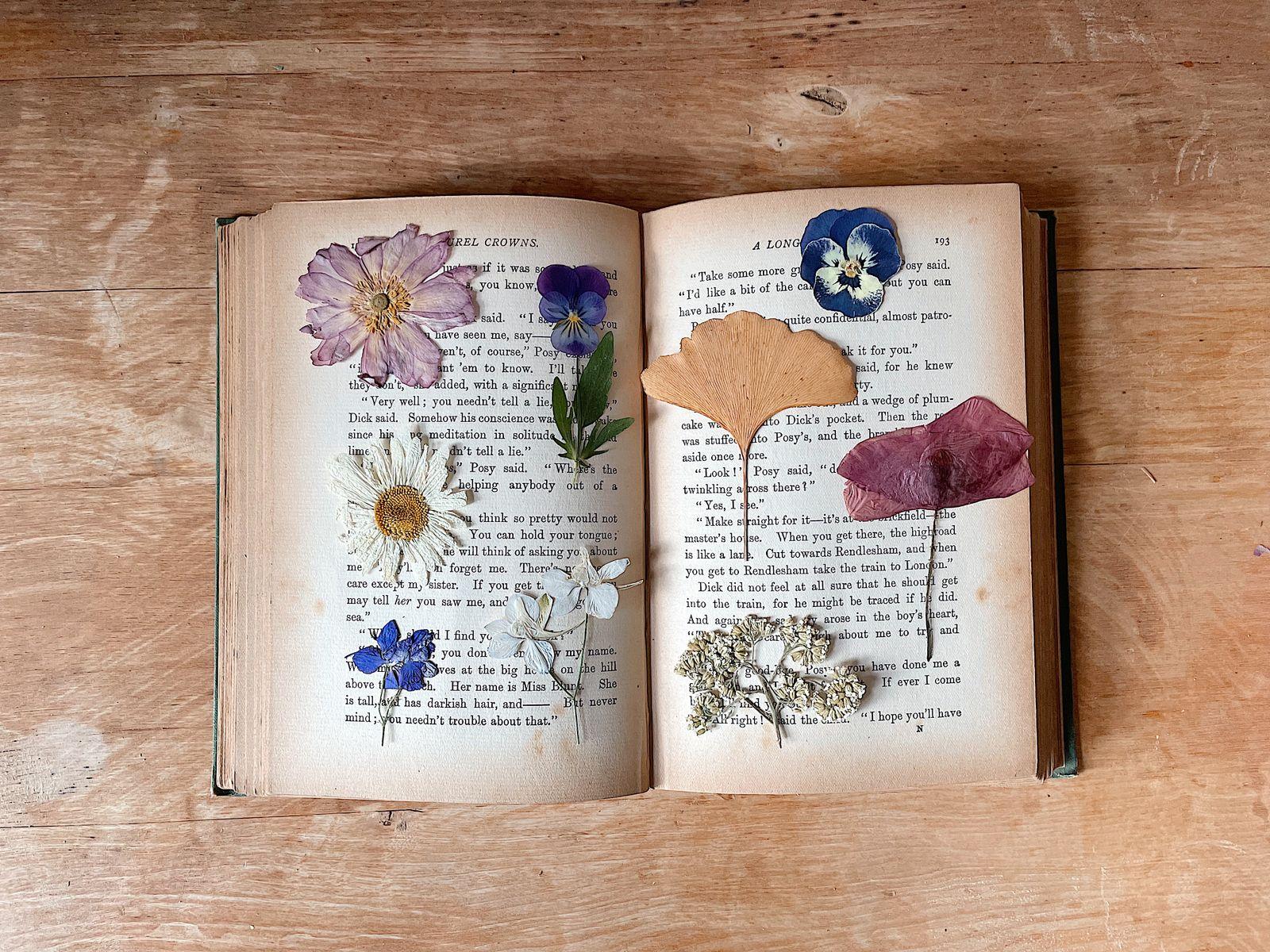
Floriography is the Victorian practice of assigning a fixed meaning to each flower so a bouquet could be read as a message. It reached English readers in the 1820s, after French flower dictionaries made the idea fashionable, and stayed in print for the rest of the century. Kate Greenaway's Language of Flowers, published in London by George Routledge and Sons in 1884, catalogues 713 flowers with a meaning attached to each. Most of those meanings are not the ones florists use now. When a bouquet needs to carry a specific idea, Cindy's Flowers builds it to a brief in our Toronto studio.
Where Did the Language of Flowers Come From?
The idea reached Britain from France. Charlotte de Latour's Le langage des fleurs, published in Paris in 1819, set the template of an alphabetical flower dictionary, and English adaptations followed through the 1820s and 1830s. The concept is usually traced further back to a 1718 letter by Lady Mary Wortley Montagu, writing from Constantinople, describing an Ottoman practice of attaching meanings to small objects so a message could be passed without writing anything down.
By the time Kate Greenaway put her name to an edition in 1884, the fashion was more than sixty years old and close to its end. Greenaway was one of the era's best-known children's illustrators, and her version sold on its pictures as much as on its dictionary. That matters for how you read it. This is a gift book from the tail of the trend, not a working codebook from the middle of it.
How Floriography Actually Worked
Floriography ran on printed dictionaries. A sender chose flowers whose listed meanings added up to a sentiment, tied them into a small hand-held posy known as a tussie-mussie, and trusted the recipient to own the same book. Greenaway's edition comes in three parts:
- A forward dictionary of 713 flowers, each carrying an assigned meaning, and 85 of them carrying two or three.
- A reverse index of 594 entries covering 528 distinct meanings, so a sender could look up an idea and find the flower for it.
- A closing anthology of flower poems by Burns, Carew, Spenser and others.
Counting straight through the full text is what produces those figures, and the second list is the tell. A code that ships with a composition index is a code built for writing, not for reading. The first list will give a meaning to anyone who can already name the exact stem, but nothing in the book helps a recipient who cannot tell a Carolina rose from a Damask one.
Nobody Could Actually Read a Victorian Bouquet
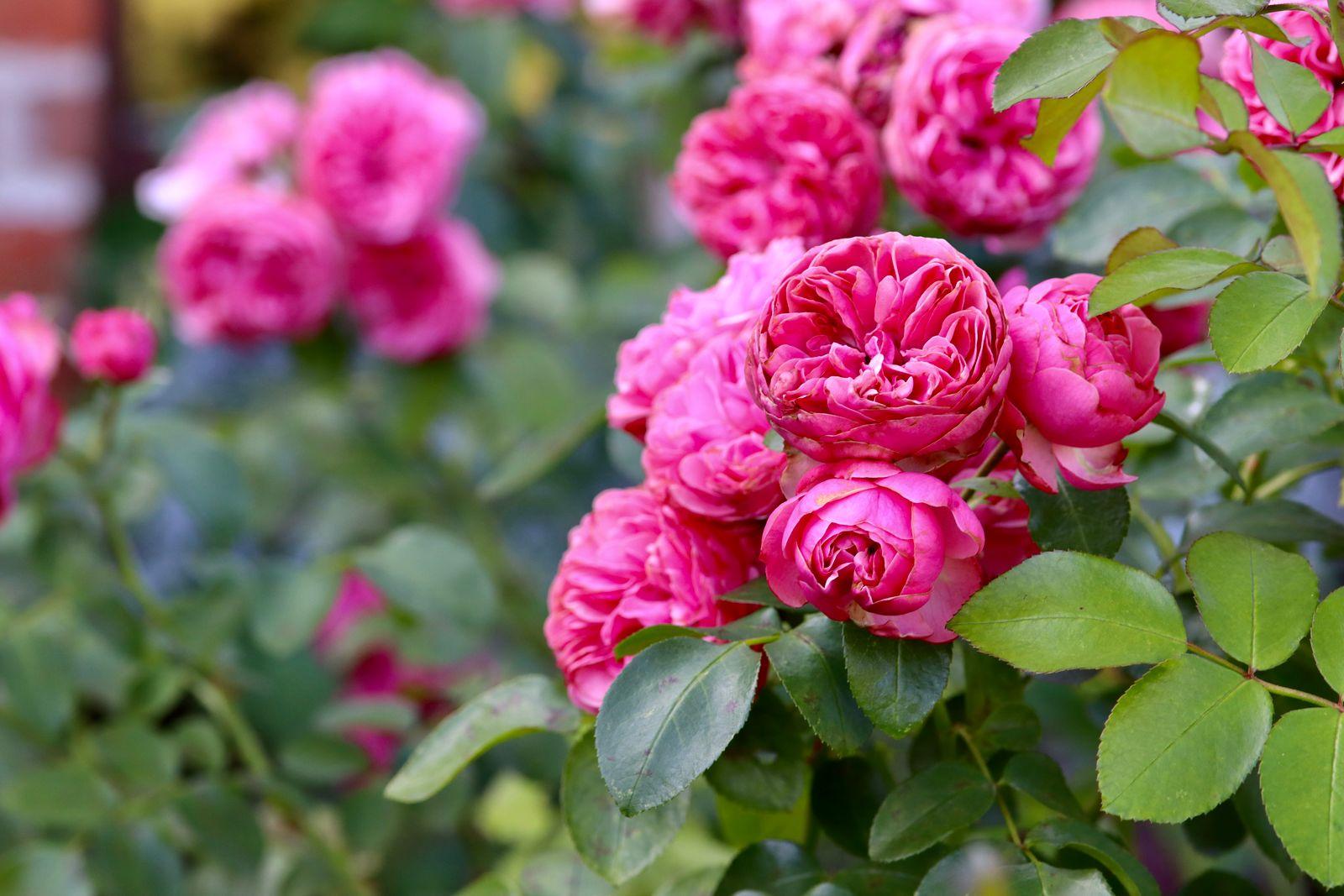
The rose alone breaks the system. Greenaway gives 31 separate rose entries, each with a different meaning, and separating them means identifying the exact variety in your hands, and at least four of the 31 are not roses at all (the Christmas rose is a hellebore, the guelder rose a viburnum, the rose campion a Lychnis and the Japan rose a camellia):
- Rose: Love
- Rose, Bridal: Happy love
- Rose, Cabbage: Ambassador of love
- Rose, Carolina: Love is dangerous
- Rose, Deep Red: Bashful shame
- Rose, Japan: Beauty is your only attraction
- Rose, Unique: Call me not beautiful
- Rose, York and Lancaster: War
The hundred-leaved rose meant pride. The single, unlayered rose meant simplicity. A full-blown rose placed over two buds meant secrecy. Greenaway even distinguishes a white rose from a white rose that has withered, which drops the reading from "I am worthy of you" to "Transient impressions". Choose the wrong variety and happy love becomes war. Rival flower dictionaries were also in circulation at the same time and did not agree with one another, so a bouquet composed from one book could be misread by anyone holding another. The roses we deliver across Toronto carry whatever the sender writes on the card, which has always been the more dependable method.
Which Victorian Flower Meanings Contradict Modern Florists?
Most of them, and the yellow rose is the clearest case. Greenaway's entry reads "Decrease of love. Jealously." That spelling is what both the printed text and the Project Gutenberg transcription carry. The Old Farmer's Almanac records the same Victorian reading as jealousy, decrease of love and infidelity. Friendship is a modern florist convention, not an inherited one. Reading the 1884 list beside a present-day florist's shorthand is mostly an exercise in disagreement:
- Sunflower: Greenaway splits it by height. The tall sunflower is haughtiness, and only the dwarf is adoration. The University of Missouri's IPM newsletter table lists sunflower as adoration with no size qualifier at all, collapsing a distinction the 1884 book insisted on.
- Marigold: nearly every entry is negative, the one exception being prophetic marigold, which means prediction. Marigold is grief, African marigold is "Vulgar minds", French marigold is jealousy, and marigold with cypress is despair.
- Peony: "Shame. Bashfulness." Hydrangea: "A boaster. Heartlessness."
- Narcissus is egotism, dahlia is instability, buttercup is ingratitude and childishness, and rue is disdain.
- Morning glory is affectation, not affection. One letter apart, an entirely different message.
- Tulip is fame. Only the red tulip is a declaration of love, and the yellow one is hopeless love.
For the colour readings florists actually use today, our guide to what flower colours mean covers the modern convention, and the sunflower's own story sits in our sunflower meaning and care guide.
What Did a Generous Victorian Bouquet Look Like?
Plenty of the book is warm, and some of it still reads well on a card. The white rose is "I am worthy of you". The thornless rose is early attachment, and a crown of roses is the reward of virtue. Daffodil is regard, snowdrop is hope (Pet Poison Helpline lists snowdrops as toxic to dogs and cats), fern is fascination (Boston fern is ASPCA non-toxic; the asparagus fern florists use is not), and hyacinth is listed as "Sport. Game. Play." China aster is "Variety. Afterthought." White and red roses together mean unity, which is the one entry in the whole dictionary I would still happily put in a wedding.
Two cautions before any of that reaches a real vase. Pets first: tulips, daffodils, hyacinths, peonies and hydrangeas all sit on the ASPCA's toxic list for dogs, cats and horses, and Greenaway's daylily, listed as coquetry, belongs to a group that causes fatal kidney failure in cats. True lilies and daylilies should not enter a home with a cat, because the pollen and the vase water are both hazards. Our post on whether lilies are poisonous to cats explains why moving the vase out of reach changes nothing. Roses, sunflowers and alstroemeria are on the ASPCA's non-toxic list and carry most of the same sentiment.
Second, nobody is decoding anything. An anniversary bouquet says what you meant because you wrote it on the card, not because the recipient keeps an 1884 dictionary by the door.
Does Floriography Still Mean Anything in a Flower Shop?
One thread came through intact: red as a romantic declaration, which Greenaway assigns to the red tulip and which still drives anniversary and Valentine's buying. Almost everything else drifted or flipped outright. What is worth keeping from the Victorians is the habit rather than the dictionary. They chose a specific flower for a specific person and expected it to say something particular.
That is still the better way to order. Pick the stem for the person, then write the sentence you want it to carry. Cindy's Flowers hand-ties every arrangement in our Toronto studio and delivers same-day across Toronto and the GTA on orders placed before 3 PM, Monday to Saturday, so a just-because bouquet can arrive the same afternoon the thought turns up. Browse what we have in season and start from the flower, the way a Victorian would have.