Every wedding anniversary comes with a flower attached. The traditional US list starts with carnation for the 1st, cosmos for the 2nd, sunflower for the 3rd, geranium for the 4th, and daisy for the 5th, then moves to milestones: daffodil at 10, rose at 15, aster at 20, iris at 25, lily at 30, gladiolus at 40, and yellow roses with violets at 50. It runs alongside the better-known materials list, paper, wood, silver, gold, and hands you a ready-made prompt for what to send. Once you know the year's flower, Cindy's Flowers can hand-tie it in our Toronto studio and have it delivered across the GTA the same day, on orders placed before 3 PM.
What are the anniversary flowers for each year?
The major florist references publish a flower for every year, and they line up most closely on the milestone years: the 1st, 5th, 10th, 15th, 20th, 25th, 30th, 40th, and 50th. Here is the traditional US set, the same one 1-800-Flowers, The Knot, and Bloom & Wild all publish.
- 1st, carnation
- 2nd, cosmos
- 3rd, sunflower
- 4th, geranium
- 5th, daisy
- 10th, daffodil
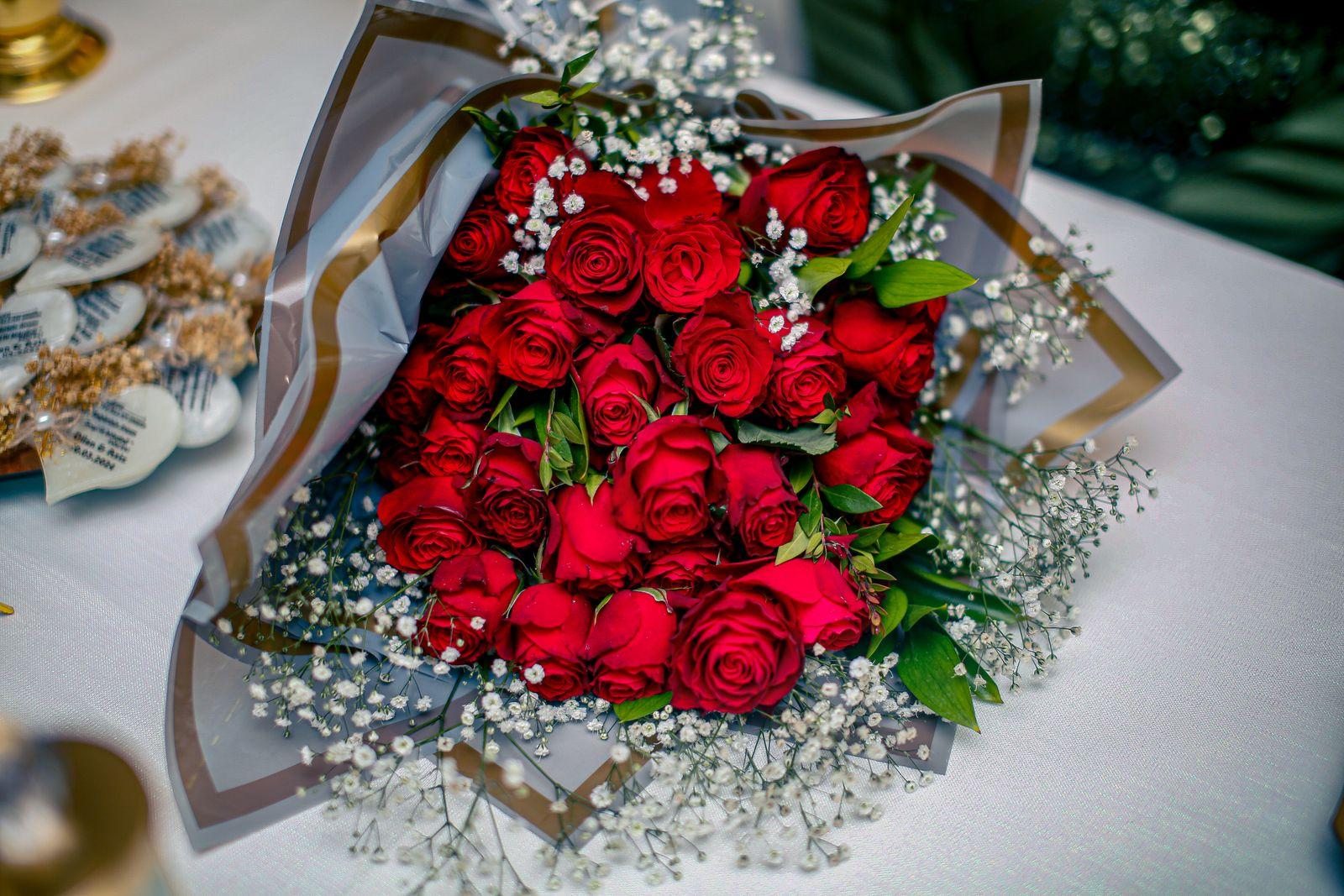
- 15th, rose
- 20th, aster
- 25th, iris (the silver anniversary)
- 30th, lily (toxic to cats — see the safety note below)
- 40th, gladiolus
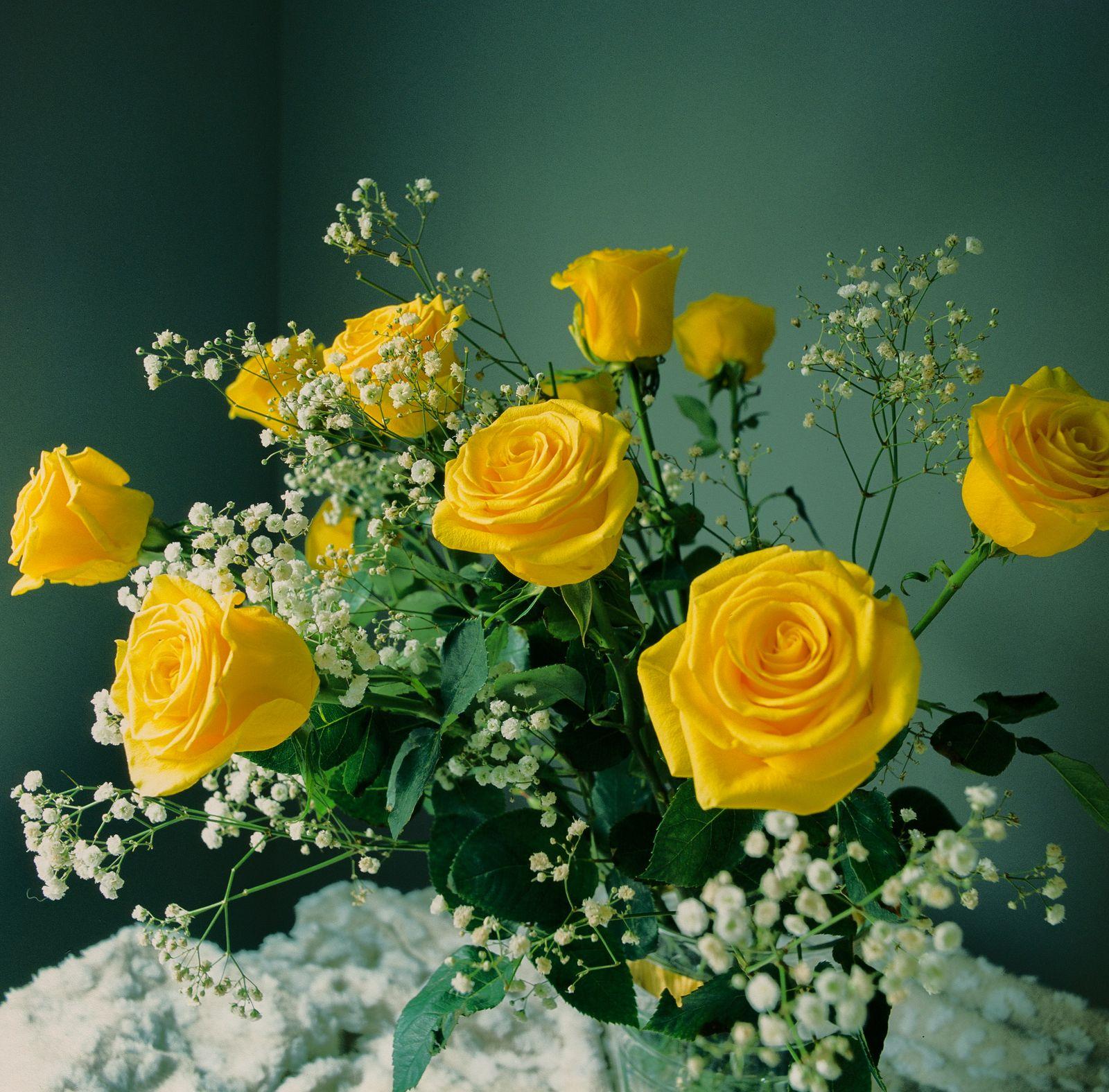
- 50th, yellow rose with violets (the gold anniversary)
Notice how the flowers shadow the materials tradition most people already know: paper at year one, wood at five, silver at twenty-five, gold at fifty. The pairing is no accident; the flower list is a modern florist convention mapped onto the much older materials tradition. If you would rather match the feeling than the exact year, our anniversary flower collection leans on the romantic staples that work at any number.
What the anniversary flowers actually mean
Most of these meanings trace to Victorian floriography, the 19th-century "language of flowers," so read them as romantic convention rather than botanical fact. In that tradition the red rose stands for true love, an association reaching back to antiquity, when the rose was tied to Aphrodite, the Greek goddess of love the Romans knew as Venus. Little wonder it lands at the 15th anniversary and returns, in yellow, at the 50th. When the rose is the whole message, our rose delivery across Toronto runs from classic reds to softer garden tones.
The rest carry their own shorthand. The carnation, the first-year flower, reads as love and admiration; Anna Jarvis sent 500 white carnations from Philadelphia to the first Mother's Day service in 1908, which helped cement it as a flower of devotion. The daisy at five signals innocence, and the sunflower at three stands for adoration and loyalty by modern florist convention. The iris at twenty-five is named for the Greek goddess Iris, who personified the rainbow and served as a messenger of the gods, a fitting name for a flower that blooms in nearly every colour. The 40th-anniversary gladiolus takes its name from the Latin for "little sword," which is why it is still nicknamed the sword lily.
The in-between years and their flowers
They do, and this is where the charts drift apart more than they do on the milestones. Past the milestones, the "every-year" charts fill the gaps: calla lily for the 6th, freesia for the 7th, clematis for the 8th, poppy for the 9th, peony for the 12th, and onward. These assignments are a modern convenience rather than an old canon, and the quieter years can differ from one florist's chart to the next, so treat any single version as one convention among several. At Cindy's Flowers we use them as a friendly nudge, not a rule. If someone loves peonies, we are not going to steer them off because a chart says year twelve.
Peonies earn a mention on their own merits. Lush, ruffled, and heavy with petals, they are a classic romantic flower, and our peony bouquets suit an anniversary at any number. Their local season is famously short, though, which brings us straight to timing.
Which anniversary flowers are in season in Toronto?
A handful of anniversary flowers grow locally for only a few weeks, so timing matters if Ontario-grown stems are the goal. Around Toronto, garden peonies bloom outdoors roughly late May through June, and that short window is all you get. Tulips and daffodils, the 10th-anniversary flower, open outdoors from late April into May. Sunflowers for the 3rd peak from late July into September, and asters for the 20th run from August into the fall.
So how does any florist sell roses in February? Most fresh cut flowers sold in North America are imported. U.S. Department of Agriculture figures put cut-flower and nursery-stock imports near $3.3 billion in fiscal 2022, with Colombia the largest single supplier by a wide margin; Ecuador, the other name you hear for roses, accounts for less than half Colombia's value in that dataset, which counts nursery stock too and so places Canada ahead of it. What matters for a vase in Toronto is that the high-altitude equatorial farms of Colombia and Ecuador grow roses and carnations all year. That global supply chain is why staples stay available any day you need them, while an Ontario-grown peony stays a late-spring treat. For same-day delivery across Toronto and the GTA, we build around what is genuinely fresh that week, which you can preview on our current bouquets page.
When the year-flower doesn't fit
Plenty of couples never track the official flower, and that is completely fine; the tradition is a prompt, not a test. When the chart flower feels wrong, fall back on three reliable moves. Go by colour and its usual associations: red for deep love, pink for affection and thanks, white for a fresh start. Go by their actual favourite, since a person who adores tulips will be happier with tulips than with the "correct" geranium. Or go universal with a mixed seasonal bouquet that layers several meanings at once.
Red roses remain the safest single choice; they read as romantic love in nearly every context and never look out of place at an anniversary. A close second is a generous mixed arrangement built around the season, which sidesteps the year question entirely. The year-by-year list exists to spark an idea, not to box you in, so let the recipient's taste win any tie.
How do you keep anniversary flowers fresh?
Cut flowers reward a little daily attention, and the method is simple. As soon as the arrangement arrives, pull off any foliage that would sit under the water, because submerged leaves rot and feed the bacteria that block stems. Recut each stem on an angle before it goes in the vase; university extension horticulturists note this clears the sealed, air-blocked base and exposes more surface for the flower to drink. Change the water every two or three days, top it up daily, and keep the vase cool, out of direct sun and heat.
One safety note matters for the 30th-anniversary lily: all true lilies (Lilium) and daylilies (Hemerocallis) are severely toxic to cats. The ASPCA warns that every part of the plant, pollen and even the vase water included, can cause acute kidney failure within one to three days; dogs that eat these two usually get no worse than stomach upset. Because the pollen and the vase water are hazard enough on their own, setting the vase up high is not a fix, so the advice is simply not to bring lilies into a home with a cat. Alstroemeria, sold as Peruvian lily, is the usual substitute: it carries the look and is not a true lily. Several other flowers on the year list are on the ASPCA's toxic list as well, among them carnation, daffodil, tulip, iris, gladiolus, peony, calla lily and poppy, listed for dogs, cats and horses and usually as stomach upset rather than the lily's kidney risk. If pets share the home, the picks the ASPCA lists as non-toxic to both dogs and cats are the rose at 15 and the sunflower at 3, with gerbera daisies as an easy addition. The cosmos at 2 the ASPCA does not list at all, so treat it as unverified rather than safe. For flower-by-flower detail, our guides go deeper on making roses last longer and getting the most from short-season peonies. Handled well, an anniversary bouquet stays lovely for the better part of a week, a small living marker of the day.