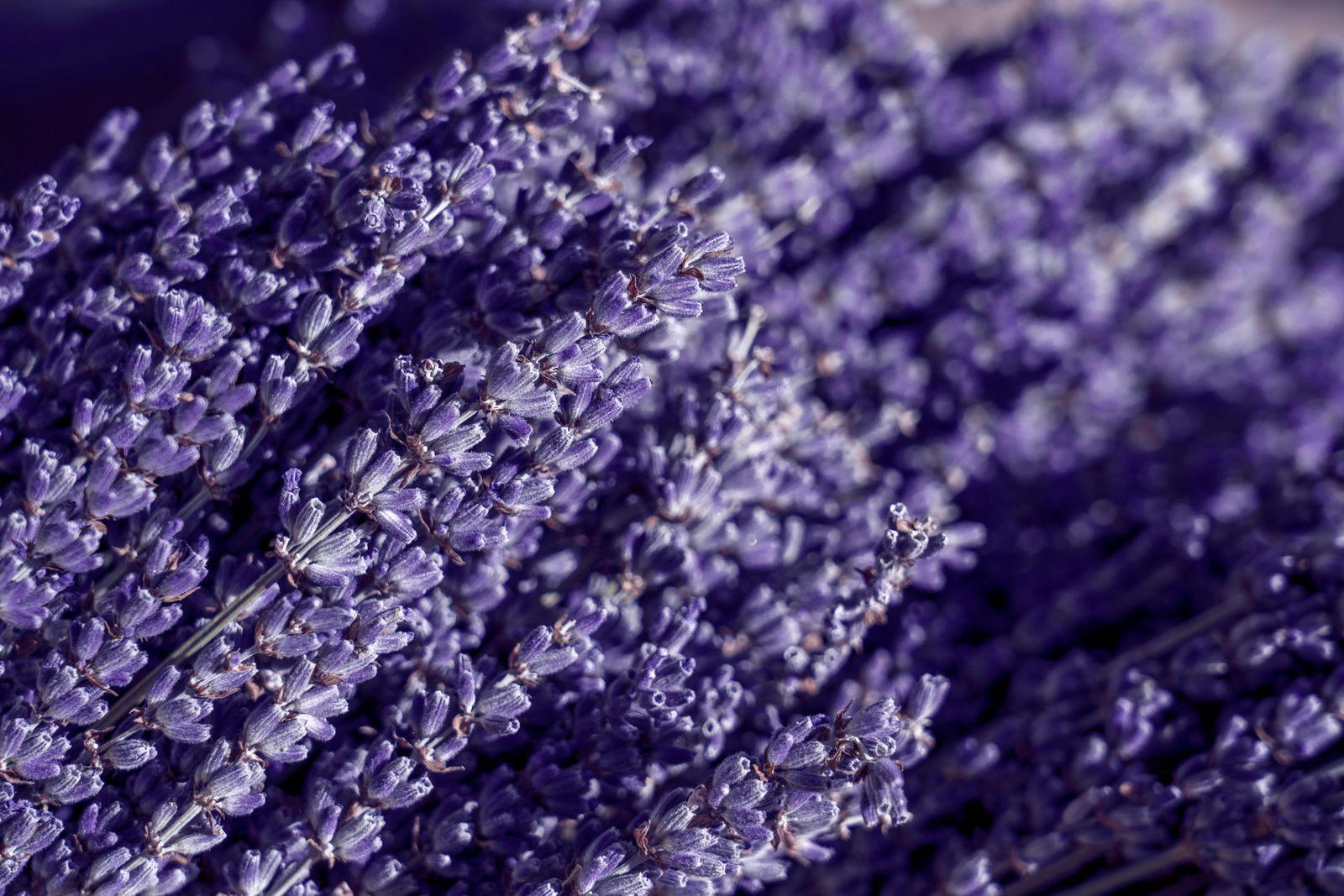
Lavender means devotion, serenity and calm, but only by modern florist convention. The Victorians read it the other way round: Kate Greenaway's Language of Flowers (1884) gives lavender one meaning, "Distrust". The name is older than either reading and is generally thought to come from the Latin lavare, "to wash", after the Greek and Roman habit of scenting bathwater with it. Lavender is also a herb, a close relative of mint and rosemary, with woody stems that let it dry instead of wilting. Cindy's Flowers hand-ties it into mixed bouquets in our Toronto studio for delivery across the GTA.
Does lavender really mean devotion?
By modern convention, yes. Florists and gift guides settle on devotion, serenity, grace and a general sense of calm, and that is what a recipient in Toronto will read off a bunch today. What almost every article on this gets wrong is the pedigree.
Kate Greenaway's Language of Flowers, published in 1884 and still the most-cited Victorian reference, indexes lavender in both directions, flower to meaning and meaning to flower. Both entries say the same thing: distrust. The Old Farmer's Almanac flower-meanings chart, which its own page describes as reflecting mainly Victorian flower language, lists lavender as distrust as well. Two references, one verdict, and it is the opposite of the modern one.
That does not make today's meaning wrong. The Almanac is candid that guidebook definitions shifted depending on the source, and flower language has always been a convention rather than a fact of nature. It does mean that "the Victorian language of flowers says lavender is devotion" is a sentence nobody should write. Want the older layer? It is suspicion. Want the current one? It is calm.
Where the word lavender comes from
The accepted account runs like this. The English word came into use in the 13th century, from Old French lavandre, and ultimately from the Latin lavare, to wash, referring to the blue infusions of the plant used for bathing. NC State Extension states the lavare derivation plainly and adds that lavender was a favourite ingredient in the herbal baths of both the Greeks and the Romans. The New York Botanical Garden puts it the same way, tying the root to the Roman habit of using lavender in washing and bathing.
There is a second derivation that the usual write-ups skip. Etymonline dates the word to about 1300, traces it through Anglo-French to Medieval Latin lavendula in the 10th century, and offers a different parent: "perhaps from Latin lividus 'bluish, livid'". If that is the real root, the washing story is an association rather than a descent. The plant got pulled toward French lavande and Italian lavanda, "a washing", because it was used to scent laundered fabric and perfume the bath.
Either way, lavender ends up in the bathwater. The argument is only over whether the colour or the soap came first, which is why the honest phrasing is "generally thought to come from lavare", not "comes from".
What does the colour lavender symbolize?
Pale purple reads as grace, refinement and quiet admiration in the flower trade, a softer version of what the deeper purples carry. Our guide to what flower colours mean walks through the rest of the spectrum.
The colour carries a second history that has nothing to do with florists at all. The New York Botanical Garden records that toward the end of the 19th century the public began associating the colour lavender with homosexuality, "as a blend of gender-associated blue and pink". Oscar Wilde often appeared in public wearing lavender-coloured clothing. In 1969 Betty Friedan called any association of the National Organization for Women with lesbians "the lavender menace", and that same year lavender sashes and armbands were distributed to a crowd of hundreds at a gay power march in New York City's West Village. NYBG's conclusion: lavender remains a symbol of LGBTQ+ resistance and empowerment. Worth knowing before anyone assigns the colour a single meaning.
English lavender, lavandin and the culinary kind
Lavandula is a genus of 47 known species of perennial flowering plants in Lamiaceae, the sage or mint family. It is native to the Iberian Peninsula and the Mediterranean coastline, including the Adriatic coast and coastal North Africa, through the Middle East and on to the Indian subcontinent. The New York Botanical Garden gives the same count, 47 species, and the same family.
That family placement is the most useful fact in this post. Lavender's closest kitchen relatives are rosemary, sage, thyme, basil and mint, which is why it behaves like a herb rather than a soft-petalled flower: woody stems, oil held in the leaf, and a bunch that dries hard instead of collapsing.
Three groups matter when you are buying.
- English lavender (Lavandula angustifolia, formerly named L. officinalis) is the most common form in cultivation and the one meant by "culinary lavender", usually a cultivar such as 'Munstead' or 'Hidcote'. Sweet, with lemon or citrus notes.
- Lavandin (Lavandula × intermedia), also sold as Dutch lavender, is a hybrid grown at scale for oil. It carries more camphor, which is why it turns medicinal on the tongue and belongs in a sachet rather than a scone.
- Ornamental species such as Lavandula stoechas, sold as Spanish or French lavender, carry small upright bracts like rabbit ears at the top of each spike. They are grown for the look of the plant.
In southern Ontario the fields are in full bloom from roughly late June until mid-August, which is when the province's lavender farms open their fields to visitors. Outside that window, the lavender in a Toronto shop is imported or dried.
What is lavender actually used for?
Four jobs, in rough order of how often they come up:
- Scent in cupboards and drawers. Dried buds in a linen bag, a direct descendant of the laundry habit the name may have come from in the first place.
- Dried bunches. Lavender is one of the few florist flowers that looks deliberate rather than defeated once it dries. The method lives in one place: our guide to drying and preserving flowers.
- Cooking. Culinary lavender means the buds of English lavender, used sparingly. It is a mint-family herb with a heavy oil, so it takes over a dish faster than any cook expects.
- Arrangement work. In a bouquet, lavender is a supporting stem: scent, a vertical line of colour and some structure against round-headed flowers. That is how it turns up in the hand-tied mixed bouquets we build.
One caution applies to all four. The ASPCA lists lavender, Lavandula angustifolia, as toxic to dogs, cats and horses, and a dried bunch left within reach of an animal counts. If the household has a cat or a dog with an interest in flowers, freesia and stock both bring real scent and both appear on the ASPCA's own pet-safe bouquet list.
When is lavender the right flower to send?
Lavender suits messages that want to lower the temperature rather than raise it. It is quiet, it smells like someone thought about it, and it does not read as a declaration.
- A new home. Scent is the first thing an empty room lacks, which is why lavender earns its place in housewarming flowers, provided you know the new home has no cat or dog. Our guide to housewarming flowers and plants covers what else travels well to a place with no vases unpacked yet.
- Thanks. Thank-you flowers land best when they are warm without being loaded, and lavender manages that where a dozen roses would not.
- A hard week. The calm reading is the modern one, and it is the one people actually respond to.
- Not a first Valentine's Day. Devotion is a long word for a short relationship. Roses carry that message better.
Cindy's Flowers hand-ties bouquets in our Toronto studio and delivers same-day across Toronto and the GTA, Monday to Saturday, on orders placed before 3 PM. The full bouquet lineup is online, and each product page lists exactly which stems go into it.