Three methods handle almost everything you'll want to dry at home. Air-drying, small bundles hung upside down, is the simplest and suits airy flowers like statice and yarrow. Silica gel keeps plump blooms such as roses in full three-dimensional shape. Pressing flattens delicate flowers between paper and heavy books for cards and frames. The thread running through all three: start with fresh, just-opened flowers, dry them somewhere dry, well ventilated and out of direct sun, and give them time. Here's how each method works, and which flowers suit which. Everything below rests on that first step, which is why Cindy's Flowers hand-ties bouquets in its Toronto studio for same-day delivery across Toronto and the GTA on orders placed before 3 PM: the stems can go up to dry the day they arrive.
When should you cut or buy flowers for drying?
The best dried flowers begin before the blooms peak. Harvest on a sunny day, once the overnight dew has dried, and cut the stems just before they reach full maturity, while the colour is at its brightest. That advice comes from Delaware State University's extension guide, and the reasoning is simple: however a flower looks when it dries is roughly how it stays.
Wait until the petals start to fade and you lock that tiredness in permanently. Buying rather than growing? The same rule holds. Choose the freshest stems you can find and start drying within a day or two, while everything is still firm and bright. Just-opened flowers from the Cindy's Flowers seasonal collection carry far more colour through drying than blooms that have already stood in a vase for a week.
In a humid Toronto summer, timing counts for even more, because damp GTA air slows every drying method down.
What's the easiest way to dry flowers at home?
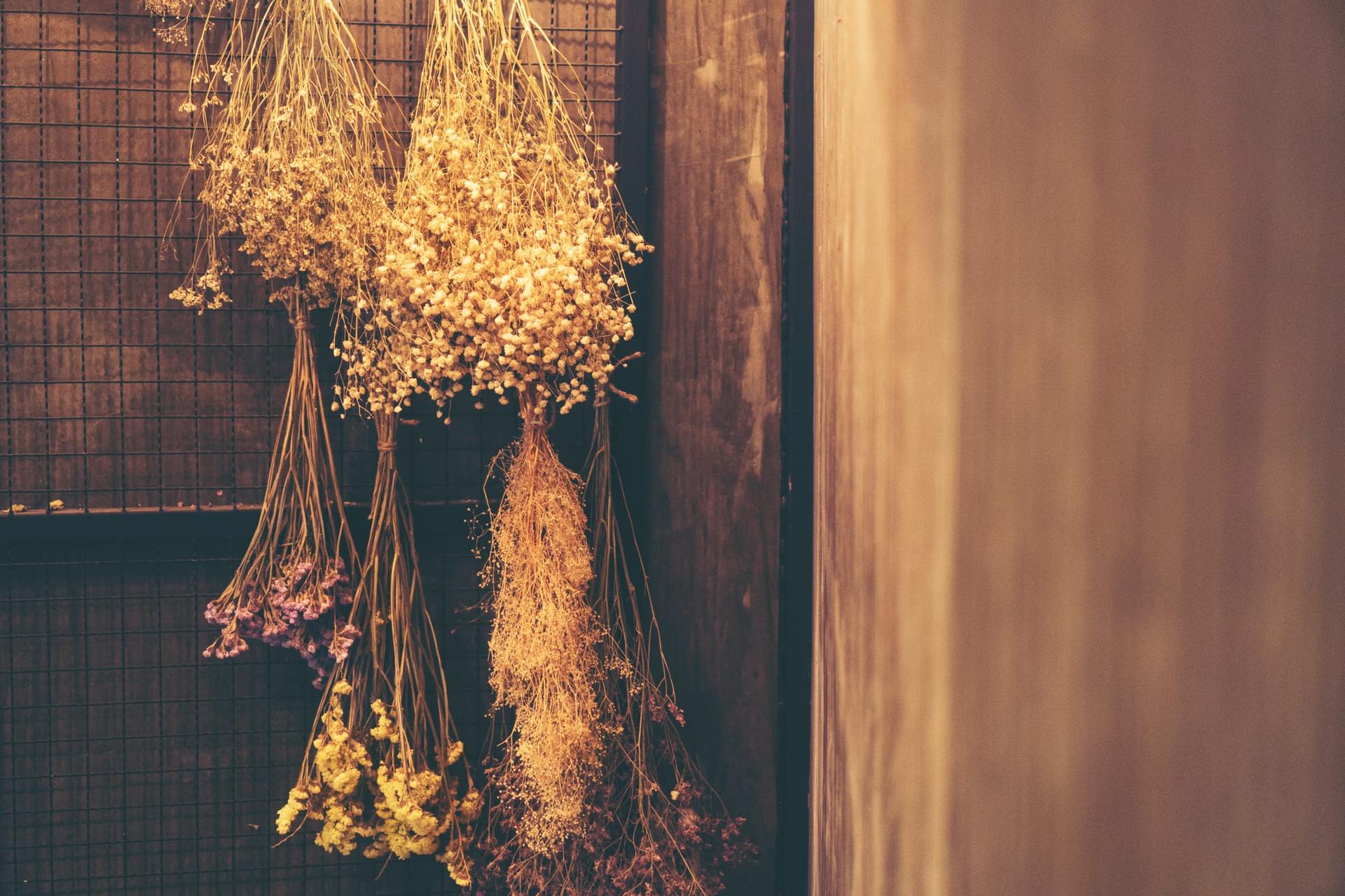
Air-drying is the simplest method, and it needs nothing you don't already own. Strip the lower leaves, gather three to five stems, and bind them with two rubber bands rather than string. Stems shrink as they dry and slide straight out of a string tie, so the elastic keeps the bundle honest. Hang it upside down somewhere dark, warm and well ventilated.
Most flowers are dry in about two to three weeks, according to the Royal Horticultural Society, though high-moisture material takes longer. In a cool, damp room the same bundle can take two months or more. Airflow is the variable that decides, not the name of the room: Delaware State's guide sends bundles to a shed, attic, basement or garage, any location with no humidity and good air circulation, and tells you not to use a closet. A stuffy cupboard is the one place to avoid.
Some flowers are built for this. The most reliable air-driers are the papery, low-moisture kinds:
- Statice and yarrow
- Ornamental grasses and poppy seedheads
- Strawflower (Xerochrysum bracteatum), the classic "everlasting" that barely changes
- Sunflowers, the odd one out here: the head sits on a thick, fleshy receptacle rather than papery petals, so while the RHS does list them as suitable for air-drying, the University of Missouri puts sunflowers in its silica gel table instead
A mixed bouquet often hides several of these among its filler stems, so it's a forgiving place to begin. You'll know the flowers are ready when the stems feel stiff and snap instead of bending.
How do you dry roses and round blooms with silica gel?
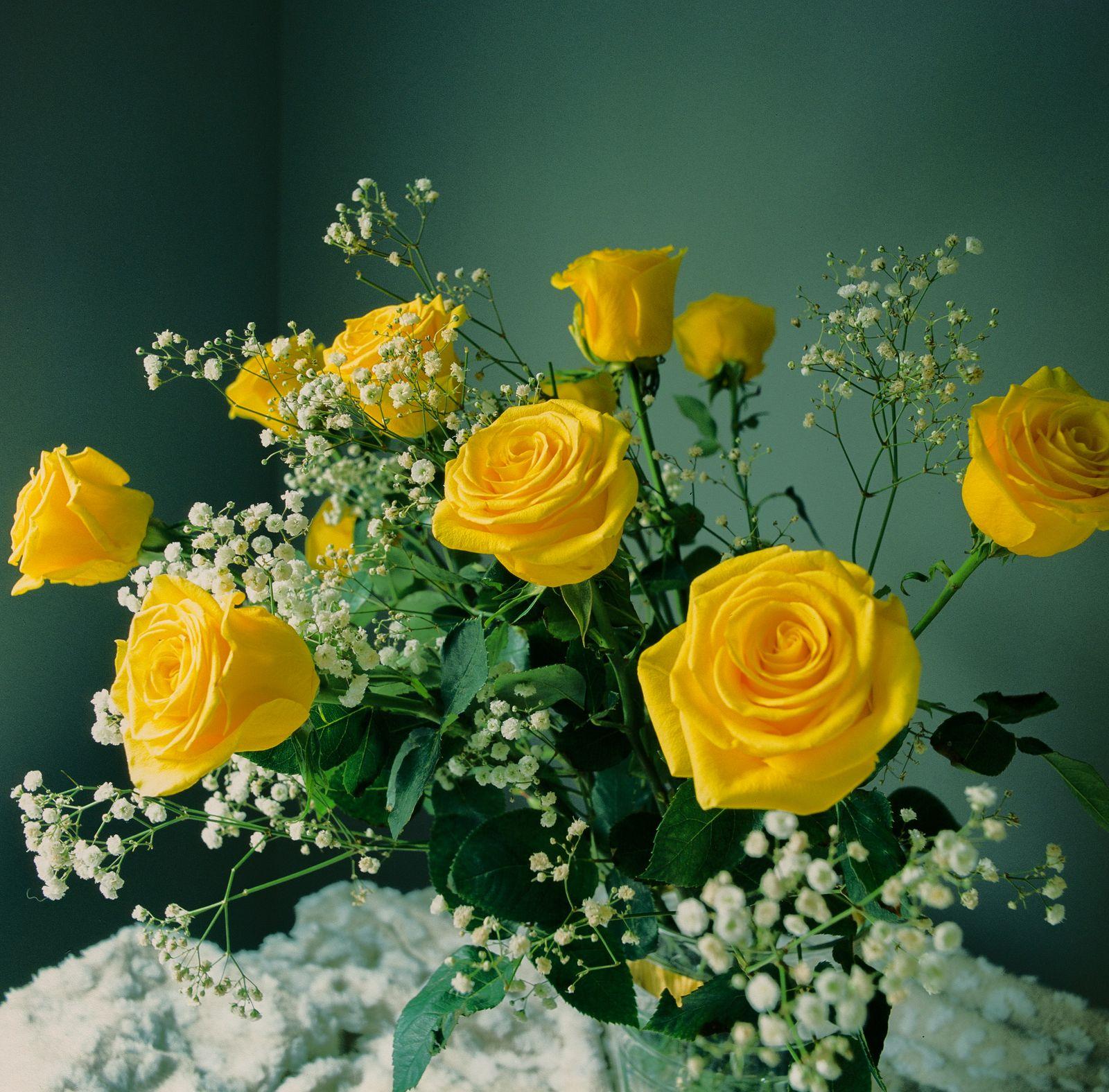
Roses air-dry perfectly well hung upside down, and the University of Vermont's extension notes they come out "very similar to their fresh shapes", so this is an upgrade rather than a rescue. Silica gel simply gives round, many-petalled blooms a fuller, more open result. This sandy desiccant draws moisture out while holding the flower's three-dimensional shape and much of its colour, which is why the RHS recommends it for roses, peonies and hellebores. Ontario peonies, at their brief best from late May into June, are worth saving this way at the end of their short season.
The method is straightforward:
- Snip each flower head off with a short stub of stem.
- Settle it upright in the container, then spoon gel gently between the petals until the bloom is buried.
- Seal the lid and check after a few days: the petals are ready when they feel dry and papery to the touch.
One rule matters most: the container has to be airtight, a tin, coffee can or sealed tub. Delaware State's guide warns that in an open container the gel just absorbs moisture from the room, and the flowers dry slowly or not at all.
Which gel you buy matters too. The familiar blue crystals that fade to pink are dyed with cobalt(II) chloride, and the RHS's own advice is to avoid gels with blue colouring. The US National Toxicology Program's Report on Carcinogens (15th edition) lists cobalt compounds that release cobalt ions in the body as reasonably anticipated to be human carcinogens, which is reason enough to choose plain non-indicating (white) gel or the orange-indicating kind and judge saturation by feel and weight instead of colour. Silica gel can be dried out and reused in a low oven, around 250°F, but if yours is the cobalt-dyed sort keep it well away from anything you cook with: use a tray or dish kept only for this job rather than your food bakeware, open a window, and don't lean over the crystals or breathe the dust.
Roses dry best when they go in fresh and firm, so treat them well in the vase first. Our guide to making roses last longer covers that groundwork. Short on patience? The University of Missouri extension describes a microwave version: bury the heads in gel in an uncovered heat-tolerant glass or microwave-safe container, stand a cup of water in the oven beside it, and run it once, roughly three minutes for dense flowers and about a minute for thin-petalled ones. It isn't instant, though. The flowers then have to sit in the gel for another 12 to 24 hours to cool and finish drying, and the method works poorly on thick petals. Think days rather than weeks, not minutes.
Can you press flowers to keep their colour?
Pressing is the method for flat, simple flowers you want for cards, frames or resin jewellery. Pansies and primroses press cleanly, and the RHS says pressed flowers are usually dry in about a week while holding their colours well. Blooms that are already nearly flat give the crispest results.
The Natural History Museum's approach is easy to copy at home. Line an open book with newspaper, which is absorbent and has natural anti-fungal properties, lay the flowers as flat as you can, then close the book and stack more heavy books on top. Check daily, and swap the paper if it feels damp. Depending on the flower and your conditions, pressing takes anywhere from a couple of days to a few weeks.
Speed is what protects colour. That same museum says pressed plants keep their colour if they are dried quickly enough, and that with appropriate care they can last for hundreds of years: its herbarium holds sheets dating from as far back as the late 1600s and early 1700s. A warm, dry corner helps. A steamy bathroom windowsill works against you.
How do you preserve a whole bouquet as a keepsake?
To keep a whole arrangement, a milestone bouquet or wedding flowers, you have two routes. Air-dry the entire bunch upside down for a soft, muted look, or dry the standout blooms individually in silica gel and rebuild the arrangement once each one is done. Label or photograph it first, so you can reassemble it the way you remember.
Sentimental flowers earn the extra effort. If you want to dry or press the anniversary bouquet someone gave you, begin while the blooms are still firm and richly coloured, not after they have started to droop, because tired petals never fully recover.
Foliage needs its own treatment, since leaves turn brittle when air-dried. The RHS suggests standing stems of beech, box or fern in a jar of glycerine mixed in equal parts with hot water, which leaves the greenery supple and leathery rather than crisp. Once everything is preserved, keep the finished pieces out of direct sunlight, which fades colour, and away from humid rooms where mould can take hold.
Which flowers don't dry well, and a note for cat owners
Not everything dries gracefully, and it pays to know the losers before you waste a stem. Bulky, high-moisture blooms lose water so slowly that they usually go mouldy first. Bluebells are a classic failure, and thick, fleshy flowers are hard to press cleanly, as the Natural History Museum points out. If a flower feels wet and heavy in the hand, it's a poor candidate, while papery, low-moisture flowers are the safe bets. When in doubt, dry a single test stem before committing the whole bunch.
One safety warning outweighs any drying tip. True lilies and daylilies are highly toxic to cats: every part of the plant, including the pollen and even the water in the vase, can trigger sudden and potentially fatal kidney failure. Keep any lily, fresh or drying, well out of a cat's reach, and think carefully before drying them at all in a home with curious pets.