The best housewarming gift is something that brightens a new place without adding to the unpacking. Usually that means fresh flowers or a hardy plant: a mixed bouquet for instant colour, a moth orchid that thrives on a little neglect, or a bloom with meaning, like white roses for a fresh start or tulips for the lift of a new season. Match the gift to the person and their space, keep it low-maintenance, and check for pets before you send anything. Here's how a Toronto florist thinks it through. That Toronto florist is Cindy's Flowers, and the two gifts we send most often to a new address are a seasonal hand-tied bouquet and a moth orchid, both delivered same-day across the GTA on orders placed before 3 PM.
What flowers do you give for a housewarming?
Flowers tied to new beginnings and warmth suit a new home best. Victorian floriography, the old "language of flowers," hands us a few fitting associations, though it's a gesture more than a science: the meanings shift by source and era, so lean on them lightly.
A few blooms that read "new beginning" by convention:
- White roses, for a fresh start (Old Farmer's Almanac)
- Tulips, for spring renewal — a modern seasonal association rather than an old floriography meaning; the flower dictionaries file the tulip under love and fame
- Iris, for faith, hope, and friendship (Iowa State University Extension)
- Peony, for a happy life and marriage (Iowa State University Extension)
One practical note before you order from that list: of the four, only the rose is clear on the ASPCA's toxicity database. Tulips, iris and peonies are all listed as toxic to cats and dogs, and tulips and peonies to horses as well, so if animals live in the new home, build around roses instead.
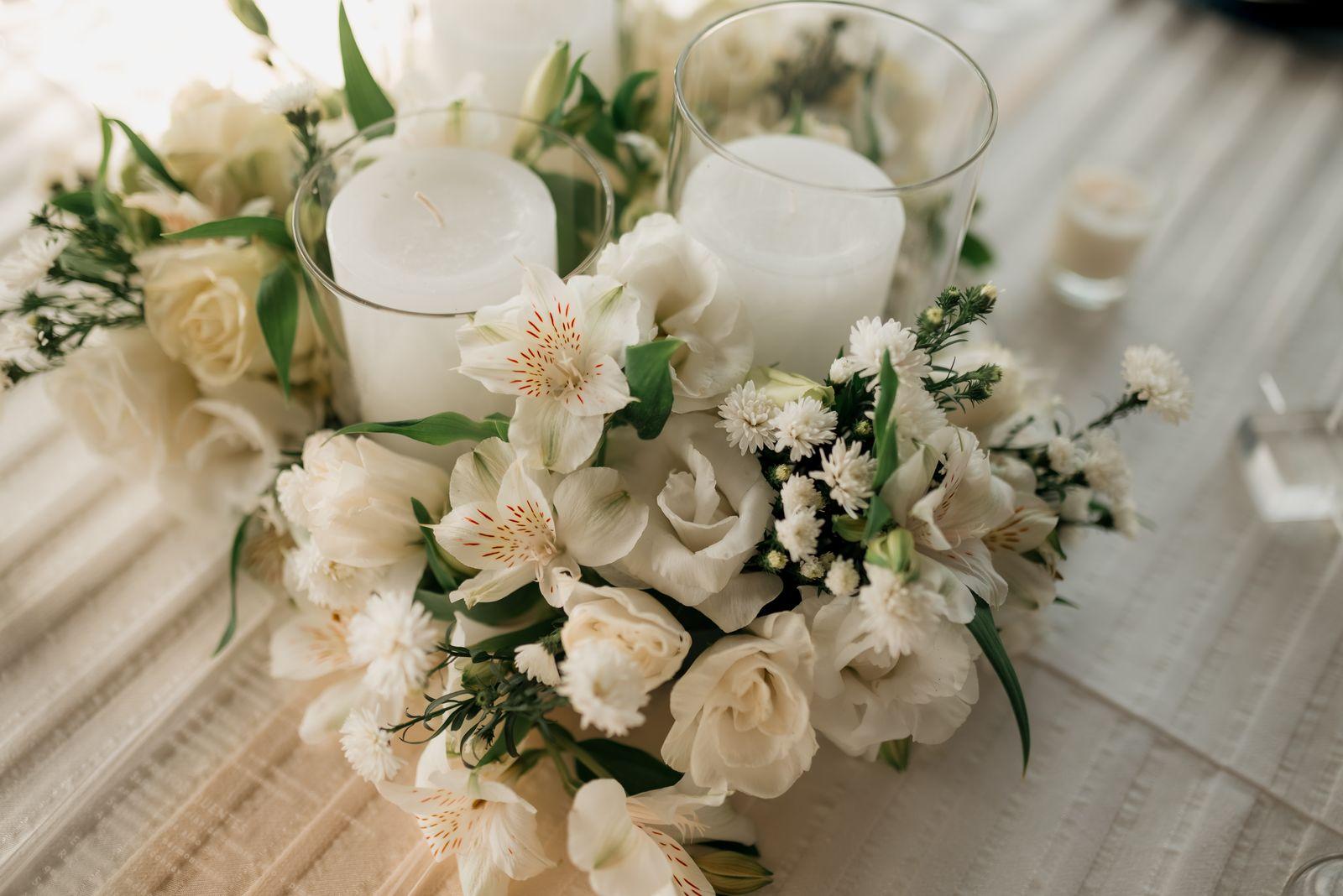
A new address is a real milestone, the sort of good news friends like to mark with congratulations flowers too. If you'd rather not decode symbolism, a generous mixed bouquet carries the day on its own: a spread of seasonal stems brings colour, scent, and enough variety to suit almost any room.
Colour is worth a thought. Warm, bright tones feel celebratory, while an all-white arrangement, elegant as it is, reads as mourning in some cultures, so match it to the household.
Tulips carry a lovely Canadian footnote. The Netherlands sent Ottawa 100,000 tulip bulbs in 1945, and still ships around 20,000 every year, in thanks for Canada sheltering the Dutch royal family and helping liberate the country during the Second World War. Ottawa marks it each May at the Canadian Tulip Festival, so a fistful of tulips quietly says friendship as much as spring.
Scale matters, too. For a first apartment or a downsized condo, a compact arrangement or one well-chosen orchid won't crowd a small Toronto kitchen the way a towering display can.
Which plants make the best new-home gifts?
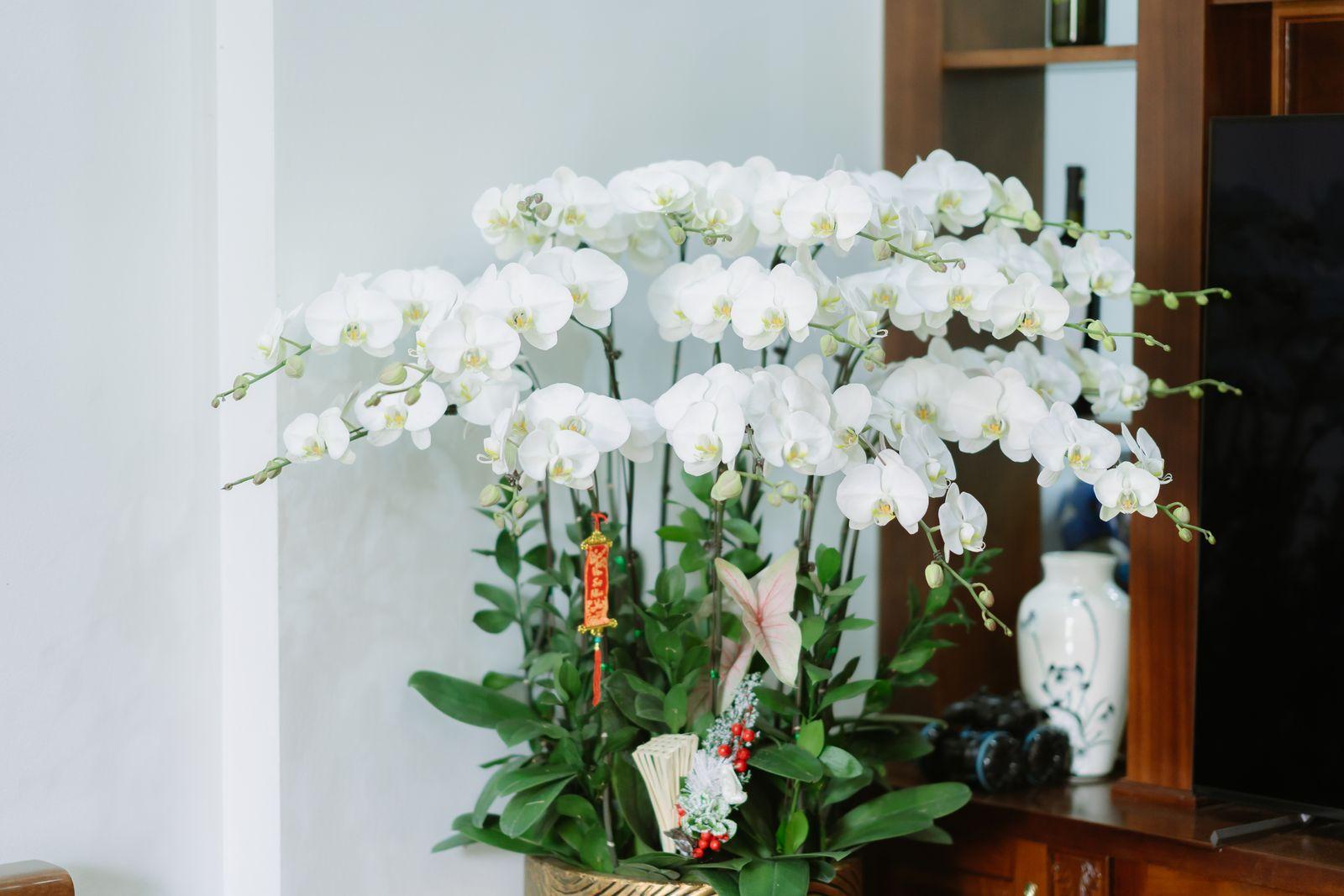
A good housewarming plant forgives a distracted owner and a half-unpacked house. The moth orchid (Phalaenopsis) is my usual pick: it flowers for weeks, wants only a splash of water about once a week, and looks far more high-maintenance than it is to keep alive. You'll find these among our orchids and indoor plants, and one potted orchid often outlasts a cut arrangement by a month or more. Our orchid care guide covers watering and light if you want the detail.
A plant also doubles as a keepsake, a small living marker of the move that a bouquet, for all its charm, can't quite be. Match it to the space: a bright windowsill suits a flowering orchid, while a dim apartment does better with something hardy like a snake plant, provided no cat or dog lives there.
Snake plants and golden pothos get recommended constantly, and fairly, since both shrug off low light and forgotten waterings. They're genuinely tough. There's one catch worth knowing before you pick either, and it has nothing to do with sunlight: the ASPCA lists both as toxic to cats and dogs. More on that next.
Are housewarming flowers and plants safe around pets?
Check for pets before you send anything green, because several favourite gifts are toxic to cats and dogs. This is the one place I won't soften the message. True lilies (Lilium species) and daylilies (Hemerocallis) are highly toxic to cats: the ASPCA warns that a nibbled petal or leaf, pollen groomed off the fur, or even a sip of the vase water can trigger fatal kidney failure within days. Never send lilies to a home with a cat.
Names cause half the trouble. A peace lily isn't a true lily and won't cause that kidney failure, yet the ASPCA still lists it as toxic to cats and dogs, since chewing it irritates the mouth and brings on drooling. Those easy-care stars from a moment ago, snake plant and golden pothos, are both on the ASPCA's toxic list for cats and dogs too. In a home with animals, the moth orchid is the plant I keep coming back to: the ASPCA lists Phalaenopsis orchids as non-toxic to cats and dogs. I'd still set it where a curious cat can't treat it as salad, since a chewed leaf of anything can upset a stomach.
Cut flowers are not automatically the safer half. The tulips, iris and peonies from earlier in this post are all on the ASPCA's toxic list for cats and dogs, and so are the chrysanthemums and carnations that fill out most mixed bouquets. Roses and alstroemeria are the two the ASPCA lists as non-toxic, so those are the ones to ask for when a bouquet is heading into a home with animals.
Do "air-purifying" plants really clean the air?
Not in a real room, no. The popular idea that a few houseplants scrub the air traces to a 1989 NASA experiment, which did pull chemicals like formaldehyde and benzene from the air, but inside small sealed chambers, nothing like a living room. Tested at household scale, the claim comes apart. A 2020 review in the Journal of Exposure Science and Environmental Epidemiology found potted plants don't meaningfully improve indoor air quality, because ordinary ventilation clears those compounds far faster. You'd need something like ten or more plants per square metre to keep pace with cracking a window open.
So give a plant because it's alive and cheerful, not as a health device. That's reason enough; greenery genuinely lifts a room and a mood, and that counts for plenty. A new owner facing bare walls will get more from one handsome orchid on the sill than from a dozen plants bought to filter air that a fan handles better.
Where the housewarming tradition comes from
The gift began literally: people warmed the house. Before central heating, guests at a new home brought firewood and lit fires in every hearth, partly for warmth and, by old custom, to drive out any lingering spirits. That's the root of the word "housewarming." Two older traditions still shadow the modern gift table.
Bread and salt is a classic pairing across Russian, German, and Jewish custom, offered as a wish for hospitality under the new roof. The tidy line about bread for plenty and salt for flavour is folk embroidery, but the gesture itself is genuinely old. The pineapple is the other one. Through the 18th century it stood for welcome and hospitality, an extravagant thing to present back when it was rare and costly, which is why carved pineapples still crown so many gateposts and doorways. Flowers fit that lineage neatly: a warm, generous, faintly ceremonial way to say welcome home.
Making it last, and getting it there
A little care keeps cut flowers looking their best. Arranging stems yourself? Trim half an inch to an inch off each one at a 45-degree angle before it goes in the vase, so the cut sits off the bottom and drinks freely, a tip straight from NC State Extension. Change the water every couple of days, and keep the vase out of direct sun and away from the fruit bowl, since ripening fruit gives off ethylene gas that makes blooms fade faster.
Prefer it to arrive ready to hand over? That part is easy in Toronto. A handwritten card helps, since a line of welcome turns a nice gift into a warm one. Cindy's Flowers hand-ties housewarming arrangements in our Toronto studio and delivers them same-day across the city and the wider GTA on orders placed before 3 PM, Monday through Saturday. Choose something that fits the person and their new place, tell us if there are pets so we can leave out the lilies and the other stems on the ASPCA's toxic list, and let the flowers do the welcoming.