Every month of the year has its own birth flower, a tradition that pairs your birth month with a bloom and a meaning. January belongs to the carnation, February to the violet, March to the daffodil, April to the daisy, May to lily of the valley, June to the rose, July to larkspur, August to gladiolus, September to the aster, October to the marigold, November to the chrysanthemum, and December to the narcissus. Most months carry a second flower too, and the meanings on modern charts come from the Old Farmer's Almanac, which attaches one reading to each month rather than to a single bloom. Cindy's Flowers hand-ties any month's bloom into a bouquet in our Toronto studio, with a non-toxic stand-in when there's a cat or dog in the house, delivered same-day across Toronto and the GTA on orders placed before 3 PM.
Birth flowers by month, with their meanings
Here's the month-by-month list florists work from, with each month's pair of blooms and the meaning attached to that month. One thing the printable charts obscure: the Almanac's table gives a single "Meaning / Symbolism" entry per month, covering both flowers together, not a separate reading for the primary bloom. Where a word plainly belongs to the second flower, we've said so. Your birth flower is set by the month you were born, not the exact day, so everyone born in the same month shares one, and the meanings are best read as modern florist convention rather than any fixed rule. Note the pet line on each entry too: ten of the twelve months name a flower the ASPCA lists as toxic.
- January: carnation and snowdrop for love, fascination, and hope, with hope belonging to the snowdrop. Both are ones to leave out where there are animals: the ASPCA lists carnation (Dianthus) as toxic to dogs, cats and horses, and the Pet Poison Helpline lists snowdrop as toxic as well.
- February: violet and primrose for modesty, loyalty, and youthfulness, and youthfulness is the primrose's word. Violet isn't on the ASPCA's toxic list; primrose is, for dogs, cats and horses.
- March: daffodil and jonquil for new beginnings, rebirth, and prosperity. Both are Narcissus, and the ASPCA lists daffodil, jonquil and narcissus separately as toxic to dogs, cats and horses, with the bulb the worst part.
- April: daisy and sweet pea for innocence, purity, and gratitude, with gratitude the sweet pea's. Sweet pea is on the ASPCA's non-toxic list for dogs and cats, though not for horses. "Daisy" is the trap: the ASPCA files that entry under Chrysanthemum and lists it toxic to dogs and cats. The gerbera daisy is the florist daisy the ASPCA lists as non-toxic to all three.
- May: lily of the valley and hawthorn for happiness, sweetness, and hope; hope is the hawthorn's, and Kate Greenaway's 1884 dictionary gives it that word outright. Hawthorn is on the ASPCA's non-toxic list. Lily of the valley is the most dangerous flower on this page, and the safety section below explains why.
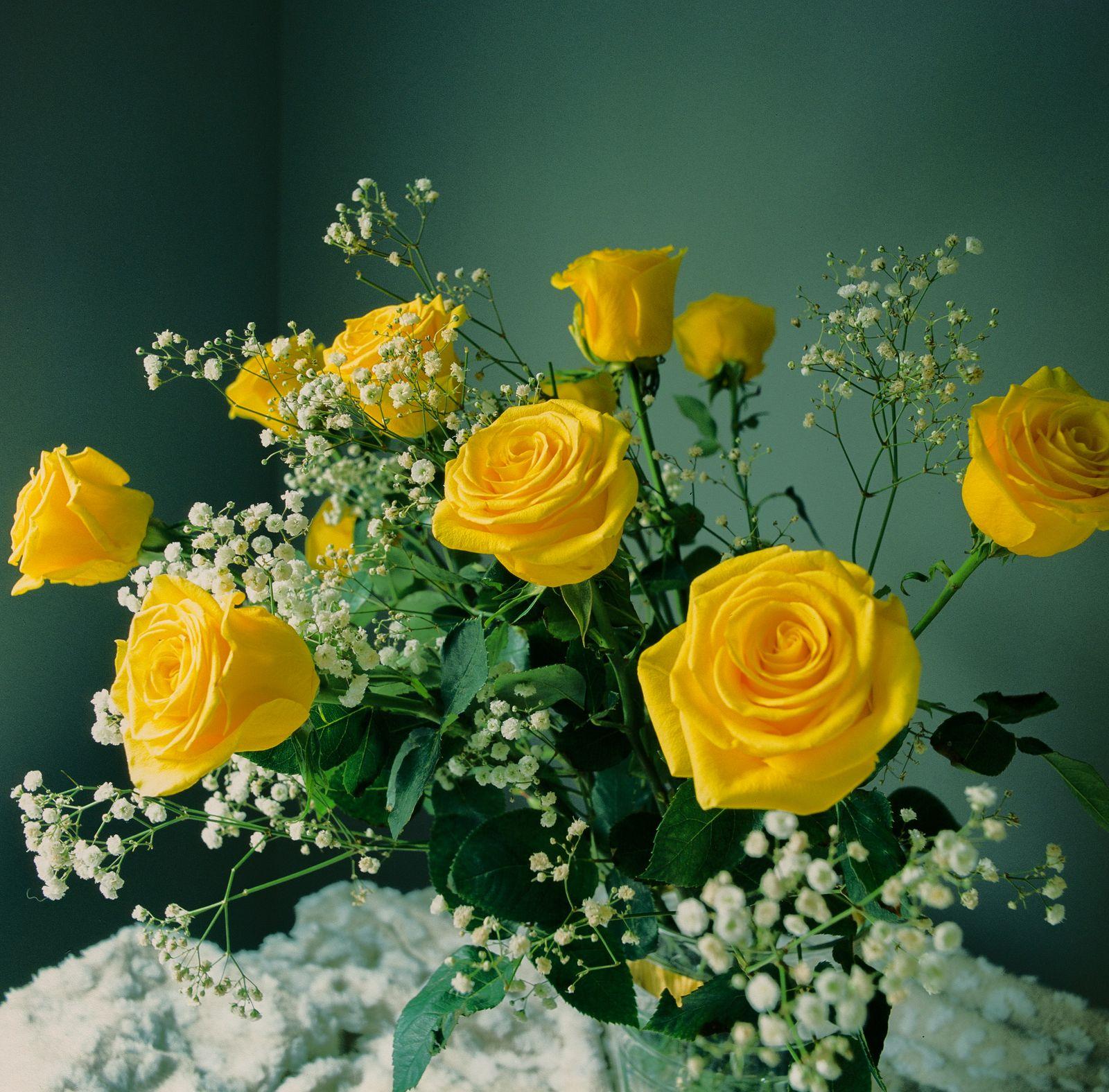
- June: rose and honeysuckle for love, passion, and affection. The rose is one of the few blooms here the ASPCA lists as non-toxic to dogs, cats and horses.
- July: larkspur and water lily for positivity, lightness, and purity, with purity the water lily's. Larkspur (Delphinium) is the most serious ASPCA listing on the chart after lily of the valley: its diterpene alkaloids are toxic to dogs, cats and horses, and the ASPCA's entry names cardiac failure and death from respiratory paralysis. The water lily is neither a true lily nor on the ASPCA's list.
- August: gladiolus and poppy for strength, remembrance, and peace, with remembrance and peace both the poppy's. The ASPCA lists gladiolus as toxic to dogs, cats and horses, and the Pet Poison Helpline lists Papaver poppies as toxic too.
- September: aster and morning glory for patience, love, and affection, with the love and affection belonging to the morning glory. China aster is ASPCA non-toxic to dogs, cats and horses; morning glory is toxic to all three.
- October: marigold and cosmos for creativity, passion, and joy. Cosmos is on the ASPCA's non-toxic list, and so is pot marigold (Calendula); the Tagetes marigolds sold as bedding plants are listed as mildly toxic by the Pet Poison Helpline.
- November: chrysanthemum for friendship, loyalty, and honesty, the one month most lists leave to a single flower, so this is the one meaning that really is the primary bloom's alone. The mum is also on the ASPCA's toxic list for dogs, cats and horses.
- December: narcissus and holly for rebirth, hope, and protection, with protection the holly's. Both are ASPCA-toxic to dogs, cats and horses.
One label worth retiring while you read them: this is the Almanac's list, and the Almanac never calls it Victorian. Kate Greenaway's Language of Flowers (1884), the book people mean by Victorian floriography, contains no birth-month scheme at all, and where the same flowers turn up it often reads them the other way round. Narcissus is egotism, marigold is grief, morning glory is affectation, the China aster is variety and afterthought, the yellow chrysanthemum is slighted love. Gladiolus isn't in the book. Only a handful survive the trip intact: rose is love, daisy innocence, larkspur lightness, and both snowdrop and hawthorn are hope. So take the month-by-month meanings for what they are, a modern convention florists and gift-givers have settled on.
Where the birth flower tradition comes from
Birth flowers grew out of floriography, the language of flowers, where each bloom stands in for a sentiment. People have attached meaning to flowers for thousands of years across Europe, Asia, and Africa, but the idea truly caught fire in the 1800s. In Victorian England, France, and North America, senders traded coded posies, small "talking bouquets" called tussie-mussies or nosegays, that let them say what manners would not allow out loud. Lady Mary Wortley Montagu is often credited with carrying the custom to England from Constantinople around 1717. What those Victorian dictionaries never did was assign flowers to months: they pair a bloom with a sentiment and stop there. The month-by-month chart is a later idea, and the version most florists use today is the Almanac's. Birth flowers sit beside birthstones as the botanical half of the same idea, a way to give a date something you can hold.
Why some months have two birth flowers
Because birth flowers are a tradition rather than an official standard, and traditions drift. Nearly every list agrees on the primary flower, then parts ways on the second. The Old Farmer's Almanac pairs February's violet with primrose, while plenty of florists swap in the iris, which the ASPCA also lists as toxic to dogs, cats and horses. Its July larkspur turns up elsewhere as delphinium, which is fair enough, since larkspur and delphinium are close botanical cousins used almost interchangeably.
March is a quieter version of the same thing. The daffodil and the jonquil get counted as two flowers, but the jonquil is a distinct species, Narcissus jonquilla, inside the same genus as every other daffodil, so they're one genus wearing two names. The Almanac itself notes that cultures don't all agree on which flowers match which months, and that regional availability shapes the lists. November is the tidy exception, with the chrysanthemum standing alone on most charts.
Birth flowers and the Toronto growing season
Here's a nuance the printable charts skip: your calendar birth flower and what's actually blooming in an Ontario garden can sit a month apart. Take March. Its flower is the daffodil, yet in Toronto, March is still winter, and daffodils don't open outdoors until April on Landscape Ontario's bloom calendar. That lag runs right through the early spring flowers. It's one reason Cindy's Flowers leans on greenhouse-grown and imported stems, since it lets us tie a March daffodil bouquet while the ground outside is frozen solid. If you'd rather follow the season than the calendar, you can see what's fresh in the studio right now and choose from there.
How to give a birth flower as a gift
A birth flower turns an ordinary bouquet into something that feels chosen. You don't need a dozen stems of the exact bloom, either. A single birth flower set into a mixed arrangement, or echoed in the colour of the wrapping, is often the more graceful move, especially when the flower itself is small or only briefly in season. A few ways we work them in:
- Build the whole bouquet around the birth flower when it's a showpiece, like June's rose. August's gladiolus works the same way, though it's one to skip if there's a dog, cat or horse in the house.
- Use it as a quiet accent when it's delicate, such as April's sweet pea. May's lily of the valley is the one exception: with an animal in the house we'd steer you to a different flower entirely, for the reason below.
- Follow the meaning rather than the exact flower, grouping blooms that share a sentiment.
- Match the colour to the person when the birth flower is out of season.
Because they're tied to a birth month, birth flowers are a natural fit for a birthday delivery, and they're just as lovely sent just because to someone who's been on your mind.
The safety and etiquette notes worth knowing
Most of this list comes with fine print, and it isn't the fine print people expect. Ten of the twelve months name a flower the ASPCA lists as toxic: January's carnation, February's primrose, March's daffodil and jonquil, April's daisy (the ASPCA files that entry under chrysanthemum), July's larkspur, August's gladiolus, September's morning glory, November's chrysanthemum, and December's narcissus and holly. All of those cover dogs, cats and horses except the daisy entry, which lists dogs and cats. Add snowdrop, Papaver poppies and Tagetes marigolds, which the Pet Poison Helpline lists, and June is the only month where neither bloom turns up on a toxic list at all. Most of them mean vomiting and stomach upset rather than an emergency, but two do not.
Larkspur is the first. Its diterpene alkaloids are toxic to dogs, cats and horses, and the ASPCA's own entry names cardiac failure and death from respiratory paralysis, which is a long way from an upset stomach. May's lily of the valley is the second and the most dangerous flower on the page. Despite the name, it isn't a true lily, and its hazard isn't the kidney failure true lilies cause in cats. It's cardiac: the ASPCA lists Convallaria as toxic to dogs, cats and horses, with an irregular heartbeat, low blood pressure, vomiting, disorientation, seizures and coma among the signs. It is not a cat-only problem and it is not a mild one, so in a home with any animal, build the May bouquet from something else.
True lilies never appear on the birth-flower chart at all, but they come up so often in summer bouquets that they're worth the same sentence. True lilies (Lilium species, meaning the Asiatic, Oriental, Stargazer, and Easter types) and daylilies (Hemerocallis) are highly toxic to cats and cause severe kidney injury. Every part of the plant is dangerous. Even drinking the vase water or grooming pollen from their fur can poison a cat, and it's often fatal if treatment waits beyond 18 hours. Setting the vase up high doesn't fix it, because the pollen and the water are the hazard; where there's a cat, the answer is not to bring them into the house. July's water lily isn't a true lily either, and isn't on the toxic list. "Lily" is a word that stretches across several unrelated plants.
There's a reassuring half to this. The blooms on this chart the ASPCA lists as non-toxic are the rose, the China aster, hawthorn and pot marigold, plus sweet pea for dogs and cats. Cosmos it does not list at all, so treat that one as unverified rather than safe. Alstroemeria, sold as Peruvian lily, is the ASPCA-non-toxic stand-in when someone wants the shape of a lily where a cat lives. Tell us there's an animal at home when you order and we'll build the arrangement from those rather than the month's default.
The last note is cultural. In Canada, November's chrysanthemum reads as friendship and autumn warmth. Across Italy, Poland, and much of Europe, mums are funeral flowers, carried to graves around All Saints' Day in early November, so they're a kind gesture to reconsider if your recipient holds those traditions. Match the flower to the person and the household, and a birth-flower bouquet, hand-tied in our Toronto studio and delivered same-day across the GTA, becomes one of the most personal gifts going.