At a wedding, flowers go to everyone with a role or a front-row relationship: the couple, the wedding party, both sets of parents and grandparents, the flower girl and ring bearer, plus the helpers, meaning the officiant, ushers and readers. Bouquets are carried down the aisle, boutonnieres are pinned to anyone in a suit, and corsages go, by long convention, to mothers and grandmothers. The quickest test we give Toronto couples: if a person will stand in the processional or appear in the family photos, they should be holding or wearing something. Here is the full count, role by role. Count your own list against it, then Cindy's Flowers can price it piece by piece and send back a written line-by-line quote within one business day.
Sort the list by how each piece is worn
Ask who gets flowers at a wedding and the answer organizes itself once you sort by how the flowers are worn rather than by family tree. Florists group all of these pieces under one name, "personal flowers"; the wedding flower checklist at Brides uses the term for anything the couple, wedding party or close family will carry or wear, as opposed to the ceremony and reception decor.
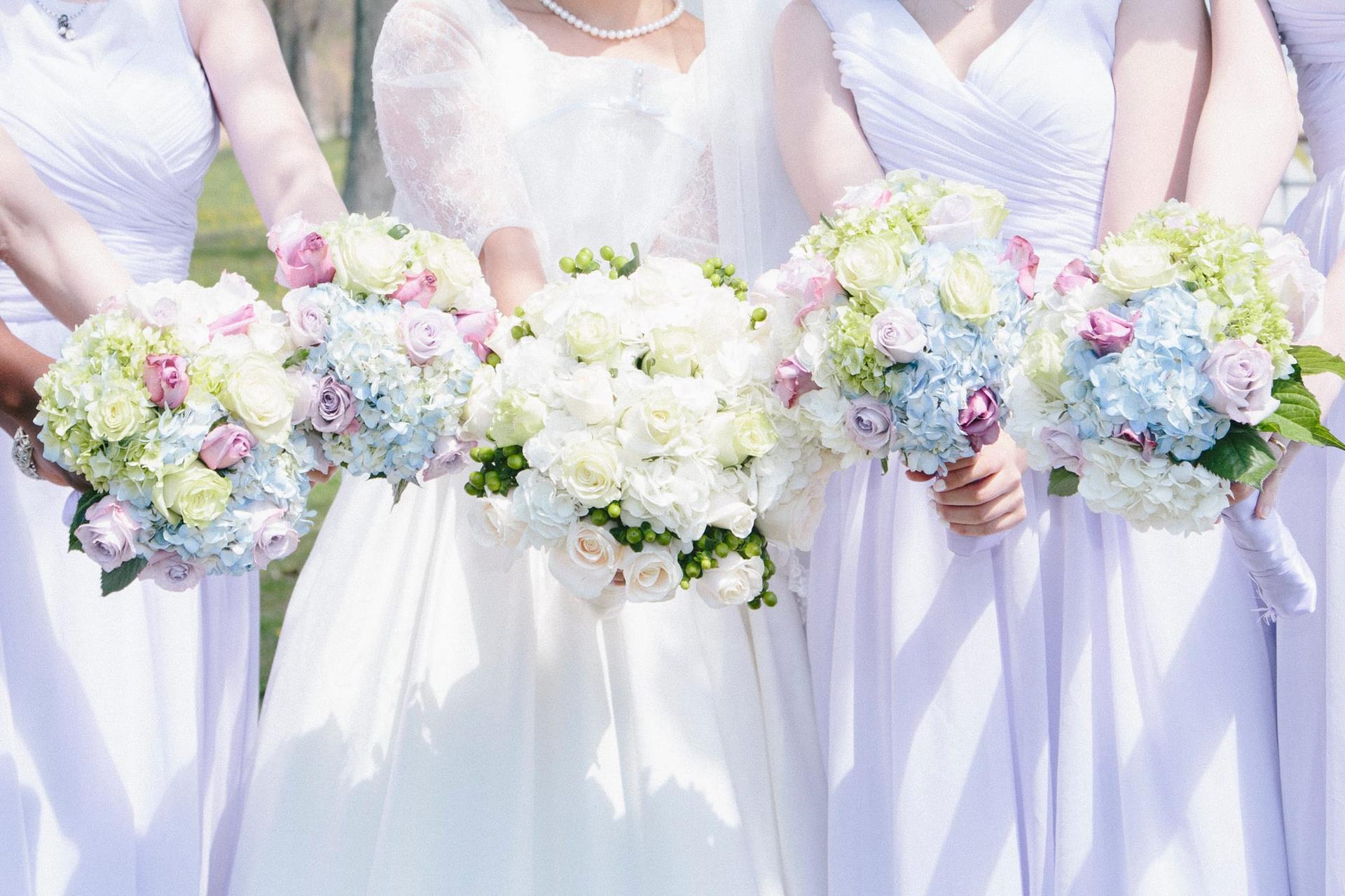
- Carried: the bridal bouquet, one bouquet per bridesmaid, and an optional toss bouquet if you would rather not throw the real thing.
- Pinned: boutonnieres for the groom or any partner not carrying a bouquet, the groomsmen, fathers and stepfathers, grandfathers, the ring bearer, the ushers and, if they accept, the officiant.
- Worn: corsages for mothers and stepmothers, grandmothers, and honoured guests with a part to play, a cousin doing a reading, a favourite aunt.
- Scattered: petals for the flower girl, or a stand-in if the venue forbids them. More on that below.
Write a name beside every line before you order anything. In our experience, the piece that gets left out is never the bridal bouquet; it is the buttonhole nobody claimed on paper.
Boutonnieres: count the suits
Boutonniere is simply French for "buttonhole". Traditionally the stem slipped through the buttonhole of the left lapel, the same side as a pocket handkerchief; today it is far more often pinned to the front of the lapel, which holds better through a long day of hugs.
The Knot's etiquette guide draws the recipient list wide: the groom or grooms, fathers of both partners, stepfathers, grandfathers, the wedding party (traditionally groomsmen, though anyone wearing a suit can wear one), ring bearers, ushers or greeters, the officiant, and any other VIP you want visibly marked as family.
The tradition runs deep. Pinning flowers to wedding clothes traces back through a 16th-century custom of wearing blooms to ward off bad luck, and further still to ancient Greece, where small bunches of fragrant flowers and herbs were worn to keep evil spirits at bay. Folklore, of course, but it captures what the piece still does: it tells everyone this person belongs to the day.
It is also the least expensive way to do that. In the 2026 Wedding Flower Price Study, boutonnieres average $31 in Canada (CAD, n=170) and $27 in the United States (USD, n=270) among published florist prices. You can see how we build ours, and what each style costs, on our boutonnieres and corsages page.
Corsages: mothers and grandmothers first
The word comes from the French bouquet de corsage, a bouquet worn on the bodice, and for most of its history a corsage was pinned at the shoulder. As dress styles changed, wrist corsages became the norm, and the wrist is now the default unless the wearer asks otherwise. Ask early, not the week of the wedding.
By custom, corsages go to the mothers and grandmothers of both partners. The Knot extends the list to stepmothers, female ushers or greeters, and honoured guests. Bridesmaids do not normally wear corsages, they carry bouquets; a corsage is a common alternative for a junior bridesmaid.
In the 2026 Wedding Flower Price Study, corsages average $49 in Canada (CAD, n=142) and $46 in the United States (USD, n=236) among published florist prices; our own corsages start at $45, priced per piece like everything else we make for weddings.
The five people everyone forgets
- The officiant. Ask before the wedding day, never on it. The Knot's guidance: officiants who are not wearing religious garb are typically offered a boutonniere, and a female officiant should be offered the choice of pin-on or wrist, because many officiants use their hands a lot during the ceremony and a wrist corsage may get in the way.
- Stepparents. On both sides. A stepfather wears a boutonniere and a stepmother a corsage, either matching the other parents' pieces or deliberately distinct. Both approaches work; absent does not.
- The other grandparents. Couples reliably count one set and miss the other. Count by household, not from memory.
- Greeters and ushers. Anyone directing guests at the door is half in the wedding, and a small buttonhole or corsage says so for very little money.
- Readers. The cousin delivering a poem mid-ceremony belongs on the VIP list, not in the audience.
Flower girls, ring bearers and the petal question
A flower girl is usually somewhere between three and eight years old, walking ahead of the bride and scattering petals down the aisle. Check with your venue before you commit: plenty of them do not allow loose petals. The usual stand-ins are a single stem to carry, a pomander (a ball of flowers on a ribbon loop), wrapped candies, confetti where permitted, or bubbles.
Where petals are allowed, we sell fresh rose petals by the bag, and to our eye they photograph far better underfoot than silk ones. If she is wearing flowers in her hair instead, our step-by-step guide to making a flower crown shows exactly what goes into one.
The ring bearer gets the smallest boutonniere of the day, pinned high enough that curious fingers cannot reach the pin.
Count it out, then price it line by line
Here is the arithmetic for a typical Toronto wedding: two partners, three attendants a side, both sets of parents, three living grandparents, an officiant who said yes, one flower girl and one ring bearer.
- Carried: 1 bridal bouquet, 3 bridesmaid bouquets, 1 toss bouquet if you want one.
- Pinned: the groom, 3 groomsmen, 2 fathers, 1 grandfather, the officiant and the ring bearer. That is 9 boutonnieres, and we would order a 10th: pins slip, lapels vary, and a spare costs far less than a gap in the photos.
- Worn: 2 mothers and 2 grandmothers, so 4 corsages.
- Scattered: 1 bag of petals.
Hand the pinned pieces out before the ceremony begins so they are on for the processional. The Knot is blunt that boutonnieres can be tricky to pin and suggests the planner, venue coordinator or floral designer help; on our full-service tier, that is us.
Once the list is settled, you can price it yourself. Cindy's Flowers publishes every wedding price, which is rarer than it should be: fewer than half of florists publish any wedding pricing at all; our corrected estimate is 47% in both countries, a finding we dig into in our look at how many florists publish their wedding prices. Put your exact count into the build-your-package page and the total assembles line by line, with no consultation fee. Everything else we make, from bridal bouquets to arch florals, lives on our Toronto wedding flowers page, and if your date falls in high summer, our guide to summer wedding flowers in Toronto covers which blooms shrug off the heat.