Summer wedding flowers in Toronto follow a clear calendar. Early summer, roughly late May through June, belongs to garden peonies at their fragrant peak. From July into September, dahlias and sunflowers carry the season, both blooming until the first frost. Roses stay available year-round because most are greenhouse-grown or imported. So a June wedding can lean on local peonies, while an August date is better built around dahlias, sunflowers and roses. What follows is a month-by-month look at the blooms that are genuinely in season here. Whichever month your date lands in, Cindy's Flowers hand-ties wedding flowers to order in our Toronto studio and publishes the price of every piece up front, so a June palette and an August one can be compared before anything is booked.
What counts as a summer wedding flower in Toronto?
Two calendars matter here. Meteorological summer covers June, July and August, while astronomical summer starts at the June solstice, around June 20. For locally grown flowers, though, the real boundary is frost, not the calendar. The Old Farmer's Almanac puts Toronto's average last spring frost near May 4 and the first fall frost around October 13, a frost-free stretch of roughly 161 days. That window is when Ontario field flowers are genuinely available, and it shapes every honest summer palette.
The practical takeaway for couples is simple: ask whether a flower is local or flown in. In-season Ontario stems usually travel a shorter distance from field to studio, which shows up as fresher petals and better staying power in July heat. A bloom that needs warm soil to get going, like a dahlia, is not ready in early June, no matter how much you want it on the table.
Here is the summer bloom map for the GTA at a glance:
- June: peonies and garden roses at their peak.
- July: early dahlias, the first sunflowers, and roses throughout.
- August: dahlias and sunflowers at full strength, roses steady, local peonies finished.
Are peonies in season for a summer wedding?
For an early-summer wedding, yes. In southern Ontario, garden peonies bloom from late spring into early summer and peak in June; the Royal Botanical Gardens in Burlington lists their peony peak interest as June. Any single plant flowers for only about one to two weeks, but growers stagger early, mid and late varieties to stretch the overall display to roughly four to six weeks across late May and June.
Here is the catch couples miss. Locally grown Ontario peonies are essentially a late-May to early-July flower. The full, ruffled peonies some florists show later in the summer are imported, often from Alaska, whose season stretches into August, or from Southern Hemisphere growers who cover our off-season. If your date lands in June or the very start of July, our seasonal peony arrangements can lean on local stems at their peak. Book deeper into summer, and you are looking at flown-in blooms.
One field note worth knowing: peonies arrive tight, almost like hard little marbles, then open fast once they warm up. In a hot room they can blow wide open within a day, so timing delivery close to the ceremony really matters.
One more thing to weigh before you commit: the ASPCA lists peonies as toxic to dogs, cats and horses. That is a real consideration for centrepieces guests take home, or for arrangements heading to a house with animals. Garden roses give you a similar full, layered look, and alstroemeria covers much of the same soft colour range; both sit on the ASPCA's non-toxic list.
By floral convention, peonies symbolize romance, prosperity and a happy marriage, which is a good part of why they became a wedding classic in the first place.
The blooms that carry a July or August wedding
Once peonies finish, dahlias and sunflowers take over, and both peak exactly when Toronto weddings cluster. Dahlias bloom from midsummer, around July, until the first autumn frost, with August and September their strongest months, according to The Old Farmer's Almanac. They come in dinner-plate sizes and deep jewel tones that photograph beautifully at golden hour. One caveat: dahlias are frost-tender, and their foliage blackens at the first cold snap, so the season closes quickly in October. A second one, if animals will be near the arrangements: the ASPCA lists dahlias as toxic to dogs, cats and horses, so keep dahlia pieces away from pets and send guests with a cat or dog home with something else.
Sunflowers are the other late-summer anchor. As warm-season annuals, they open from mid-July through late August and keep going until frost, which makes them a truly in-season Ontario bloom rather than an import. They are also one of the few stems in this guide that the ASPCA lists as non-toxic to dogs and cats, which is useful if the arrangements are going home with guests. By convention they symbolize adoration, loyalty and devotion, associations tied to the way their heads follow the sun across the sky.
Texture is where these two shine together. Pair the spiky faces of dahlias with the broad heads of sunflowers, add some greenery or a little wheat, and you get a bouquet that feels like an Ontario August rather than a florist's cooler in any month.
Where roses fit a summer palette
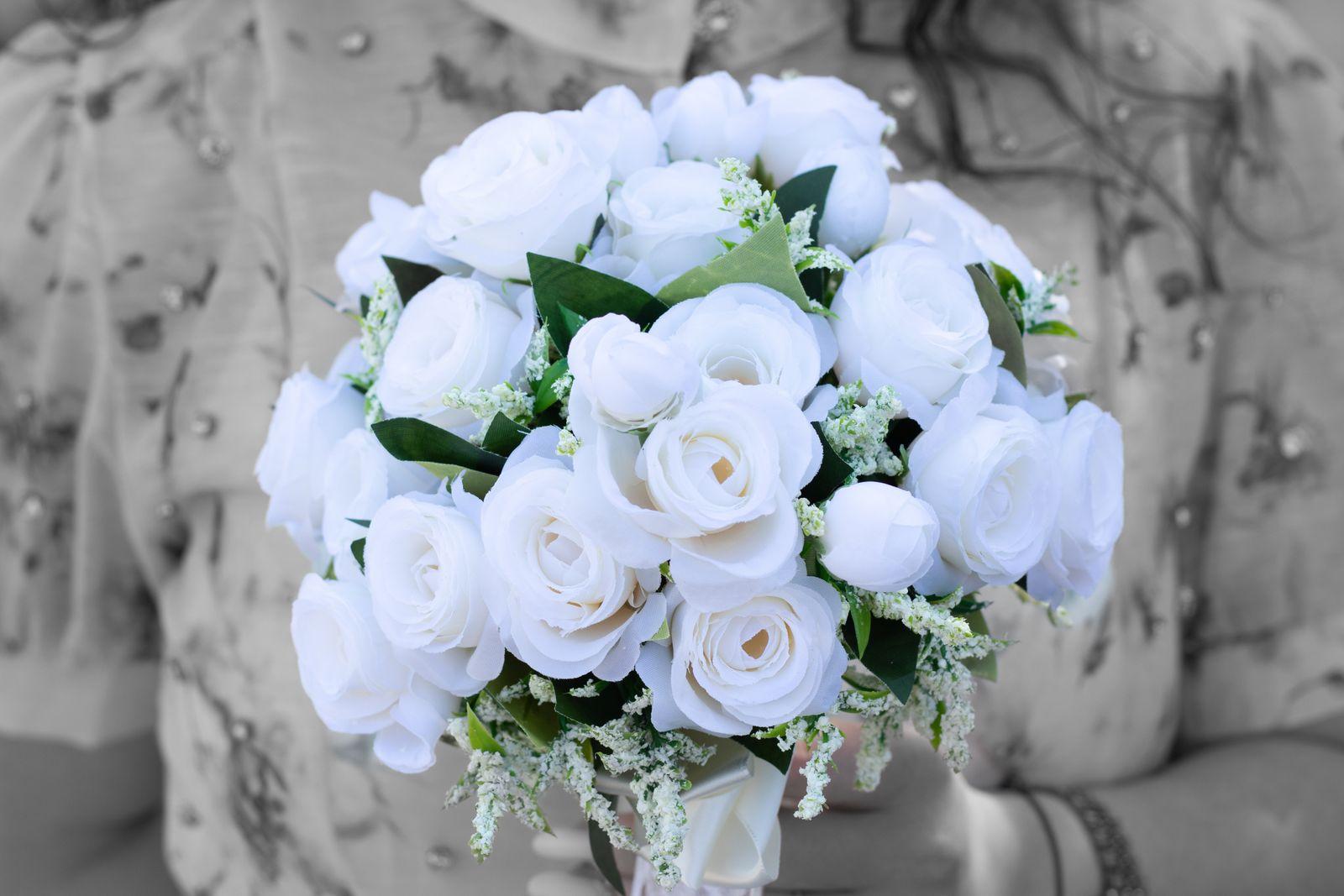
Roses are the dependable backbone of a summer arrangement. Unlike field-grown peonies, roses are cultivated commercially year-round in greenhouses and shipped globally, so they are available in nearly any season and any colour you need. That reliability is why they anchor so many bridal palettes: you can plan around them months ahead without gambling on the weather. They also happen to be June's birth-month flower, according to The Old Farmer's Almanac, a quiet bonus for early-summer couples. Blush and garden-style roses blend naturally with peonies in June, then shift toward warm corals and butter yellows beside dahlias later on. For a garden ceremony in the Toronto heat, sturdy spray roses also hold up better than many delicate spring blooms. If you want to see the tones we work with, our summer rose collections show the range across the season.
A quick birth-flower guide to June, July and August
If you like the idea of a bloom that matches your wedding month, the traditional birth-month flowers offer a nice thread to pull. These assignments follow standard references such as The Old Farmer's Almanac:
- June: the rose, with honeysuckle as the secondary flower.
- July: larkspur, with the water lily as secondary.
- August: gladiolus, with the poppy as secondary.
Larkspur adds tall spires of blue and white to a July table, and gladiolus brings dramatic height to an August aisle. None of these has to headline the bouquet. Even a few stems tucked in as a nod to your month is a thoughtful detail that guests rarely expect.
Before you order any of them, though, check whether pets will be around the flowers. The ASPCA lists both larkspur and gladiolus as toxic to dogs, cats and horses, and the Pet Poison Helpline lists poppies as toxic too. Larkspur is the serious one: its diterpene alkaloids act on the neuromuscular system, and severe poisoning can end in death from respiratory paralysis, so it does not belong in an arrangement heading to a home with animals. June's rose is the one bloom on this list the ASPCA rates non-toxic, so if you want the month-flower nod without that worry, a rose, a gerbera daisy or a few stems of alstroemeria are all on the ASPCA's non-toxic list.
How do you keep summer wedding flowers from wilting?
Heat is hard on cut flowers, so a summer plan needs a cooling strategy. Flowers wilt when water lost through their petals and leaves, a process called transpiration, outpaces what the stems can drink up, and warmth speeds that loss along. University extension research is blunt about the fix: keep them cool. Florists store most stems just above freezing, around 1 to 3 degrees Celsius, and even a few extra degrees at an outdoor event will noticeably shorten vase life.
A few habits protect your blooms on the day:
- Keep arrangements out of direct sun and away from heat sources until the last possible moment.
- Condition stems in the cool of the morning, in clean, cool water.
- Refresh the water regularly; most well-kept summer flowers hold for about a week.
- Set out the most heat-sensitive blooms as close to the ceremony as you can.
One last safety note if lilies are anywhere in your palette: true lilies (Lilium) and daylilies (Hemerocallis) both count, and daylilies catch people out precisely because they assume the warning does not apply to them. Every part of the plant, including the pollen and even the vase water, can cause fatal kidney failure in cats; dogs usually get off with an upset stomach. Putting them out of reach or pulling the anthers does not fix it, so the only real answer is not to send them to a house with a cat at all. Alstroemeria, sold as Peruvian lily, sits on the ASPCA's non-toxic list and is the usual swap when someone wants that look. When you are ready to match flowers to your date, you can see what is in season right now across our current bouquets. Cindy's Flowers hand-ties wedding and event flowers in our Toronto studio, and you can reach the team at hello@cindysflowers.ca to plan a palette around the season.