Flowering plants run to hundreds of thousands of species, but a working florist handles maybe forty of them in a given week. We group them by the job each stem does rather than by botanical family: focal flowers that carry the eye, line flowers that set height and direction, mass and filler flowers that build the body, and foliage that frames the whole thing. Roses, tulips, lilies, orchids, carnations, chrysanthemums and sunflowers do most of the work in everyday floristry. Here's how each type behaves, and where the popular myths go wrong. Knowing which bucket a stem falls into is also the quickest way to order well: name the job you want the bouquet to do and Cindy's Flowers hand-ties it that way in our Toronto studio, same-day across Toronto and the GTA on orders placed before 3 PM.
How do florists sort the types of flowers?
Ask a botanist and you get families, genera and species. Ask a florist and you get four buckets, because what matters at the bench is what a stem contributes to the shape of an arrangement.
- Focal flowers. Big, round, eye-catching heads: roses, lilies, gerberas, peonies, sunflowers, hydrangea. One to five of these set the tone of the whole bouquet. Three of them are pet hazards — lilies, peonies and hydrangea all sit on the ASPCA's toxic list for dogs, cats and horses, while roses, gerberas and sunflowers do not.
- Line or spike flowers. Tall stems with florets running up them: snapdragon, delphinium, gladiolus, stock. Growers cut spike types when a quarter to a half of the florets have opened, following the harvest convention UMass Extension documents, so the rest open in your vase rather than in a truck. Delphinium and gladiolus are ASPCA-toxic to dogs, cats and horses; snapdragon and stock are the two here the ASPCA names pet-safe, in its bouquet guidance rather than its searchable database.
- Mass and filler flowers. Carnations, chrysanthemums, alstroemeria, waxflower, statice. They fill the volume between focal blooms, and they're usually the last stems standing. Carnations and chrysanthemums are both on the ASPCA's toxic list for dogs, cats and horses; alstroemeria is the one in that group it lists as non-toxic.
- Foliage. Eucalyptus, ruscus, salal. Structure, colour contrast, and something for the heavy heads to lean against. Eucalyptus is worth flagging twice over: the ASPCA lists it as toxic to dogs, cats and horses, and NC State rates it a high-severity contact irritant for the hands that arrange it.
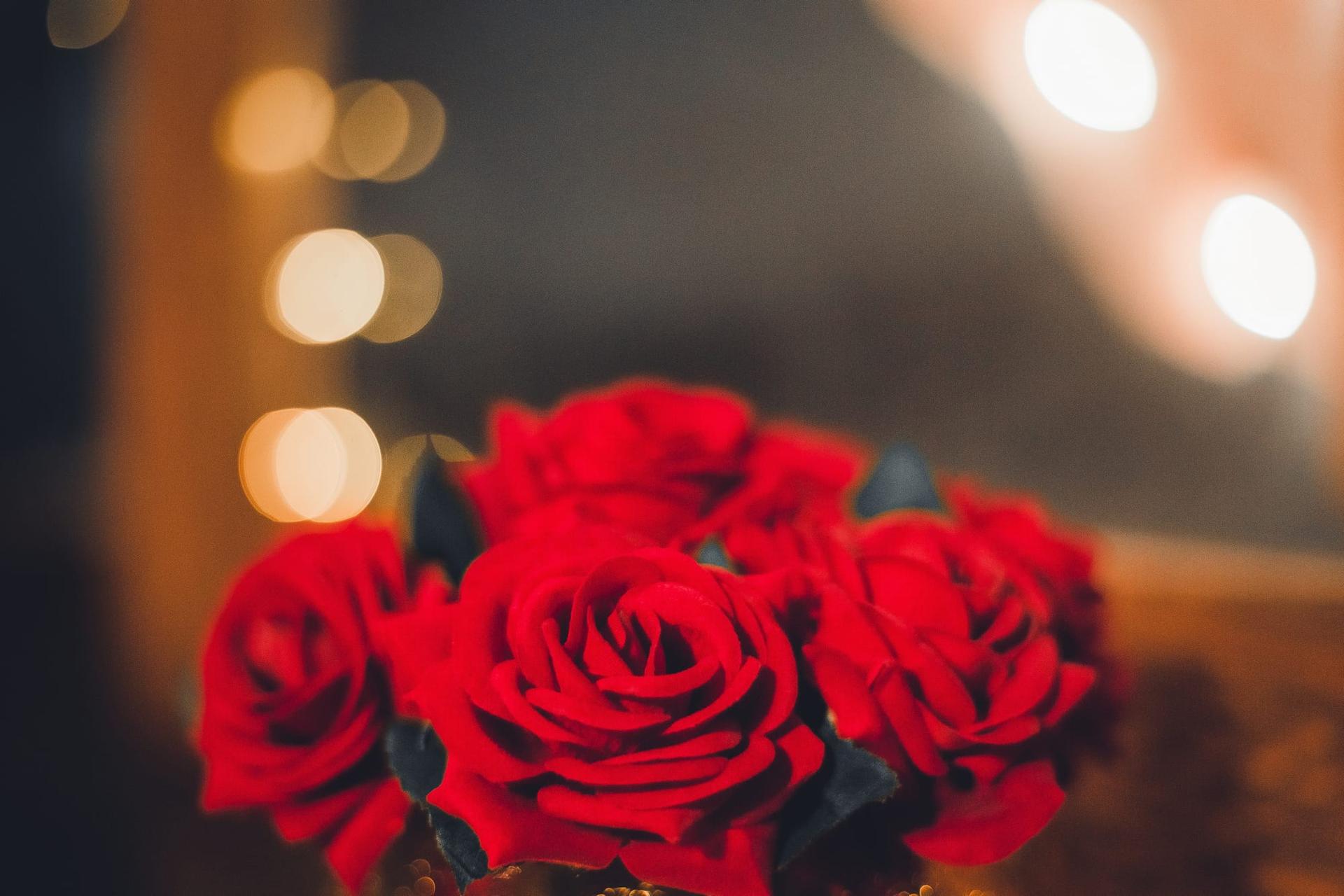
That's why a dozen long-stemmed red roses reads so differently from a loose garden-style mix. The first is all focal flower, one note held confidently. The second balances all four categories. Neither is better; they're built to do different jobs.
Which flower families are the largest?
Two families compete for the title, and the answer honestly depends on who's counting. Botanists currently accept roughly 28,000 orchid species spread across about 700 genera, which puts Orchidaceae among the two largest families of flowering plants. The other contender is Asteraceae, the daisy and aster family, which Britannica puts at more than 1,620 genera and around 25,000 species.
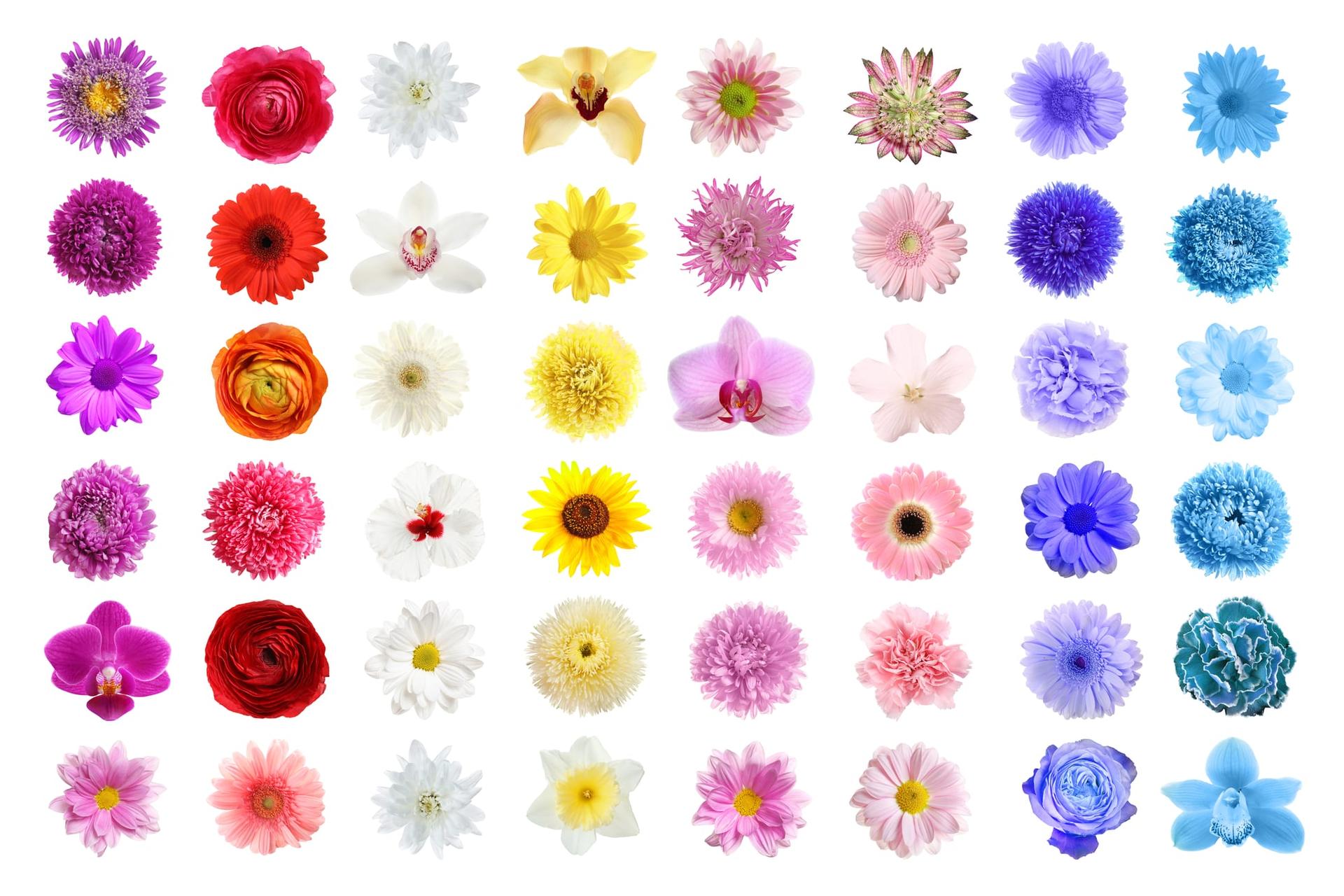
Asteraceae matters more at the bench than the name suggests, because it quietly supplies a big share of any mixed bouquet. Chrysanthemums, gerberas, sunflowers, asters, zinnias, dahlias and marigolds all belong to it. Pull apart a supermarket bunch and half the stems may turn out to be cousins.
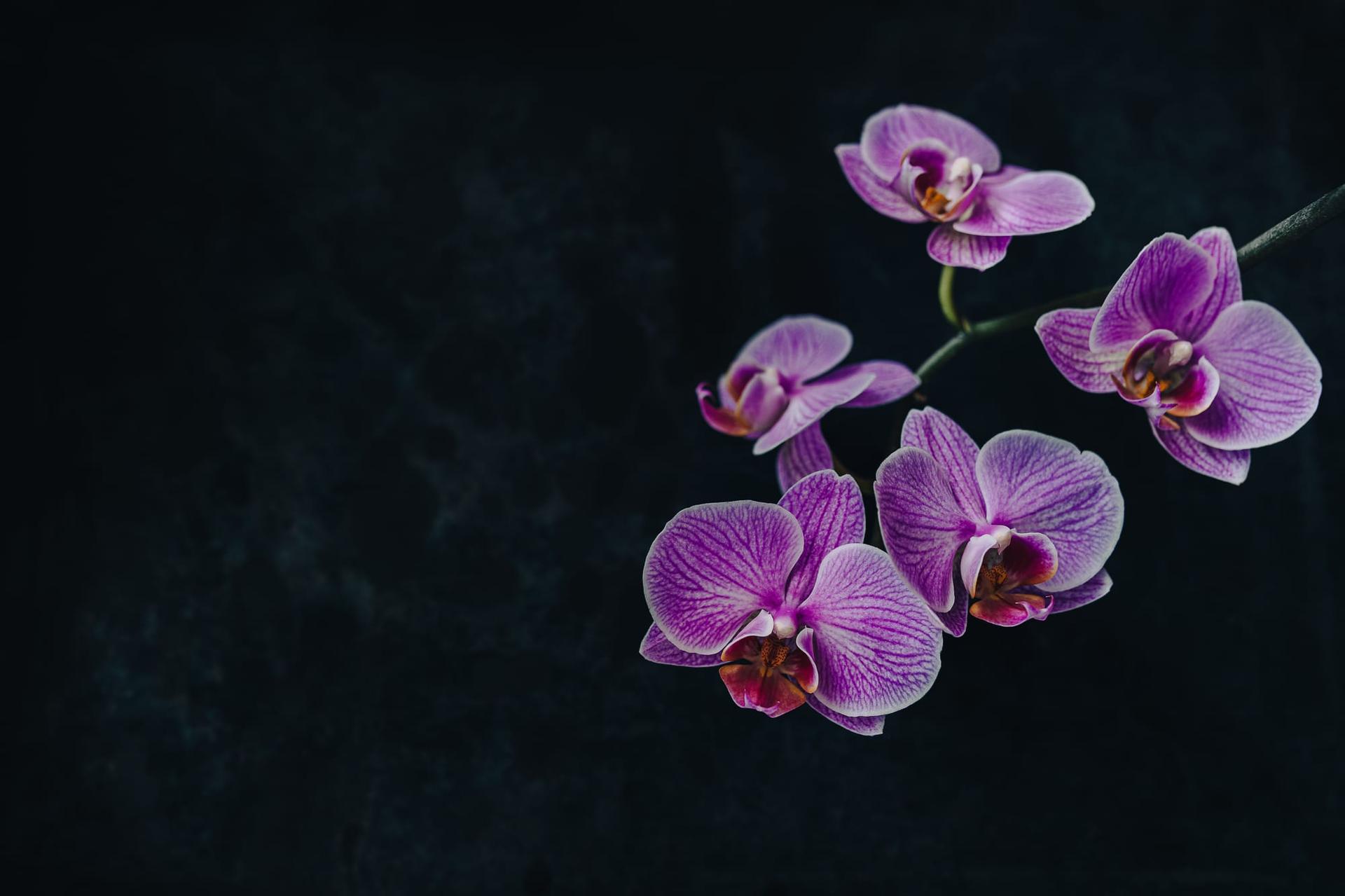
Orchids run the opposite way: enormous diversity, but only a few genera (phalaenopsis, cymbidium, dendrobium) reach shops, and mostly as potted plants, since an orchid in a pot outlasts an orchid in a vase by weeks.
Which types of flowers turn up in bouquets most often?
A short list of blooms carries most of the world's floristry, and they earn the place through vase life, shipping toughness and steady supply rather than rarity.
- Roses. The default focal flower, available in every colour convention has a use for, and firm enough to travel.
- Tulips. Spring's signature. They peak locally in Ontario in May, though imported stems reach Toronto right through the winter. Tulips also keep growing after cutting and lean toward the light, which is either a nuisance or the entire charm. Turn the vase daily if you want tulip bouquets standing straight. The ASPCA lists tulips as toxic to dogs, cats and horses, so they aren't the stem for a home with animals.
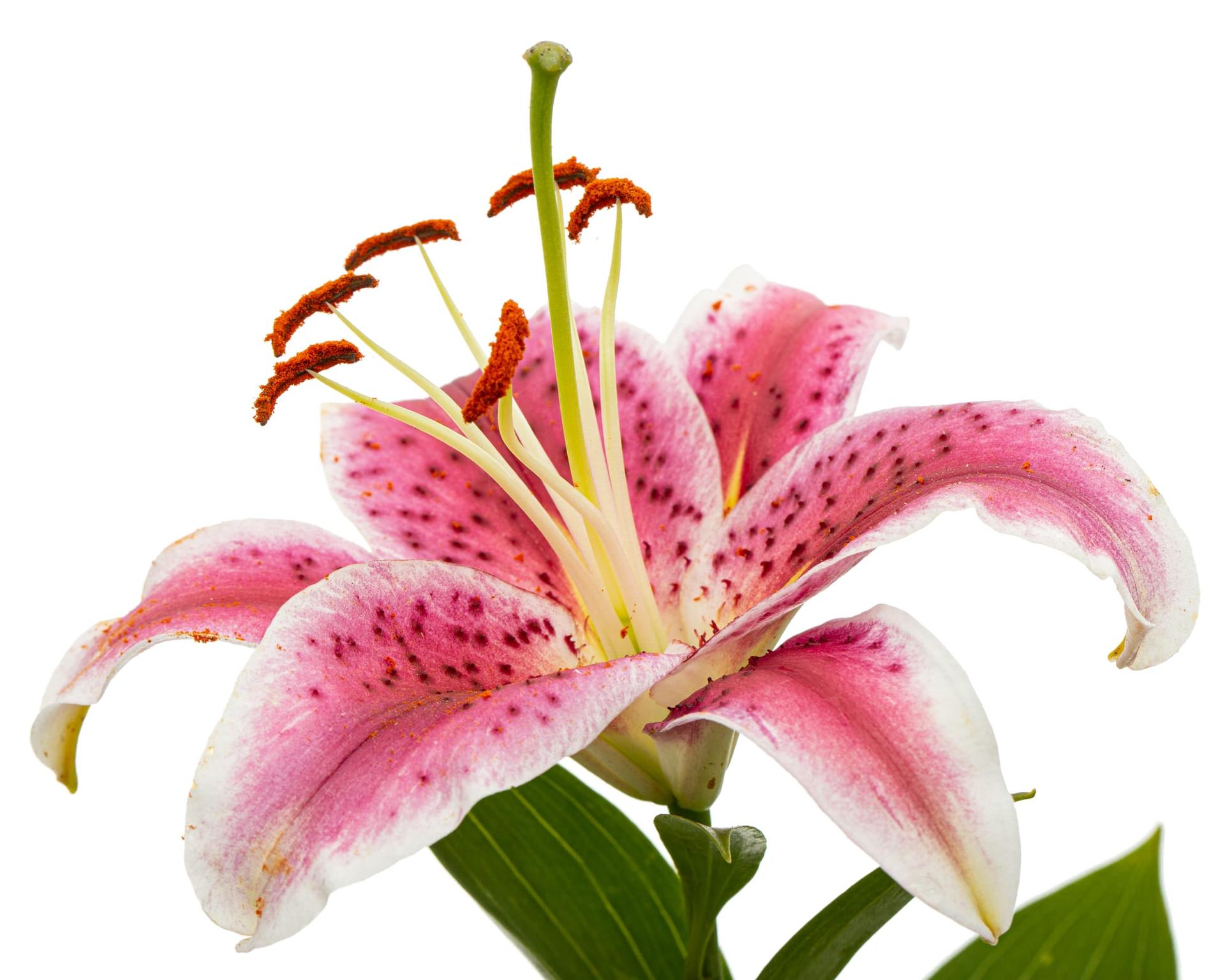
- Lilies. One stem carries several buds that open in sequence, so three stems fill a vase. Oriental types are heavily perfumed; Asiatic types barely smell at all, and Asiatic lilies sit near the top of the ethylene-sensitive list. One firm rule before you send lily arrangements: true lilies and daylilies are both highly toxic to cats — pollen, a dropped petal or a sip of vase water is enough to cause fatal kidney failure, so keeping them out of reach is not a fix. Skip them entirely in a home with a cat. Dogs get off more lightly, with stomach upset rather than kidney damage.
- Carnations and chrysanthemums. The workhorses. Dense petals, thick-walled stems, and a fortnight of life if the water stays clean. Both are ASPCA-toxic to dogs, cats and horses, and chrysanthemum foliage gives some people contact dermatitis.
- Sunflowers. Height, weight and a face. They need a deep drink and a sturdy vase.
- Gerberas. Cheerful and thirsty, with hollow stems that flop if the water goes stale. Gerbera daisies and sunflowers are two of the few common cut flowers the ASPCA lists as non-toxic to dogs and cats, which is why they do so much work in a bouquet headed to a home with pets.
- Peonies. Short and glorious. Southern Ontario fields give them up from about late May into June; the rest of the year, they're imported. They're also on the ASPCA's toxic list for dogs, cats and horses.
Three things people get wrong about common flowers
Some of the most repeated flower facts are simply not true, and two of them change how you handle the stems.
- A rose has prickles, not thorns. Botanically, those sharp outgrowths connect only to the bark, which is why a rose prickle snaps off cleanly under your thumb without tearing the wood. True thorns are modified stems and spines are modified leaves, both wired into the plant's vascular tissue. A 2021 paper in Horticulture Research traced rose prickles to the ground meristem beneath the protoderm, overturning the older textbook account that had them originating in the epidermis.
- Sunflowers don't follow the sun for life. Only the immature bud is heliotropic, tracking east to west through the day and resetting eastward overnight on a circadian rhythm. Once the flower opens, the mature head stops tracking and settles facing east permanently. That's why a field of open sunflowers all stares the same direction.
- Peonies don't need ants to open. The buds secrete nectar on the outside, which draws ants as early-season food, and the ants may repay it by deterring aphids and thrips. Kansas State University Extension horticulturist Cynthia Domenghini is clear that the blooms open perfectly well on their own. Shake the ants off outdoors and bring the stems in.
Why doesn't a florist store every type the same way?
Because the types split again by temperature, and getting that wrong destroys the flower. UMass Extension's cut-flower guidance holds most stems near 33°F (about 1°C), zinnias and gerberas a little warmer at 41 to 43°F, and chilling-sensitive tropicals above 50°F (about 10°C). Anthurium, bird of paradise, heliconia and certain orchids fall in that last group: too cold and their petals darken, go water-soaked and die.
Two more sensitivities cut across all four categories.
- Ethylene. A colourless, odourless plant hormone released by ageing flowers and by ripening fruit and vegetables. UMass Extension notes that levels as low as 20 parts per billion can damage sensitive blooms, and that concentration is common in supermarkets and big-city air. Delphinium, Asiatic lilies, snapdragons, aconitum and sweet peas feel it first, which is the real reason a vase should never share a counter with the fruit bowl. Two of those five carry a warning that outweighs their vase life: aconitum, better known as monkshood, is rated a high-severity poison by NC State, its aconitine acting on the heart and nerves and present in every part of the plant, and delphinium's diterpene alkaloids are serious enough that the ASPCA warns cardiac failure may occur, as can death from respiratory paralysis, in dogs, cats and horses. Neither belongs in a home with animals or small children.
- Water chemistry. Fluoride in fluoridated municipal tap water is very toxic to gerbera, gladiolus and freesia and cuts their vase life short. Softened water, and water high in sodium or iron, causes trouble for some flowers too.
Whatever the type, two habits apply to every stem in the bunch. Recut about an inch off the end under water, so no air bubble is drawn into the xylem to block uptake, and strip any leaf that would sit below the waterline, because submerged foliage decays and feeds bacteria. Researchers have found a strong inverse relationship between the number of microbes in vase water and how long cut flowers last. That's also the quiet work of the little packet: an acidifier (flowers drink best between pH 3.0 and 5.5), a biocide, and a bit of sugar. And a drooping stem is rarely a dead one. Most wilted flowers come back if you recut them and stand them in a warm rehydration solution.
Which type should you actually send?
Start with the message, then pick the type that carries it. A single focal flower repeated says something formal and deliberate. A balanced mix of focal, line, mass and foliage says something warmer and more generous. If the recipient keeps animals, part of that decision is made for you. Lilies and daylilies are the absolute no in a home with a cat — pollen and vase water alone can cause fatal kidney failure — and the ASPCA's toxic list also covers tulips, chrysanthemums, carnations, peonies, hydrangea, gladiolus, delphinium and eucalyptus, every one of them toxic to dogs, cats and horses. Roses, alstroemeria, gerbera daisies, sunflowers and Phalaenopsis orchids are the ones that list calls non-toxic to dogs and cats, so name the pet when you order and ask us to build from those.
A January bouquet in Toronto is almost entirely imported, which is normal and no mark against it. Cindy's Flowers hand-ties every arrangement in its Toronto studio, whatever the season, and delivers same-day across Toronto and the GTA on orders placed before 3 PM, Monday to Saturday. If you'd rather browse than decide, the full flower collection is the quickest way to see what's available right now.