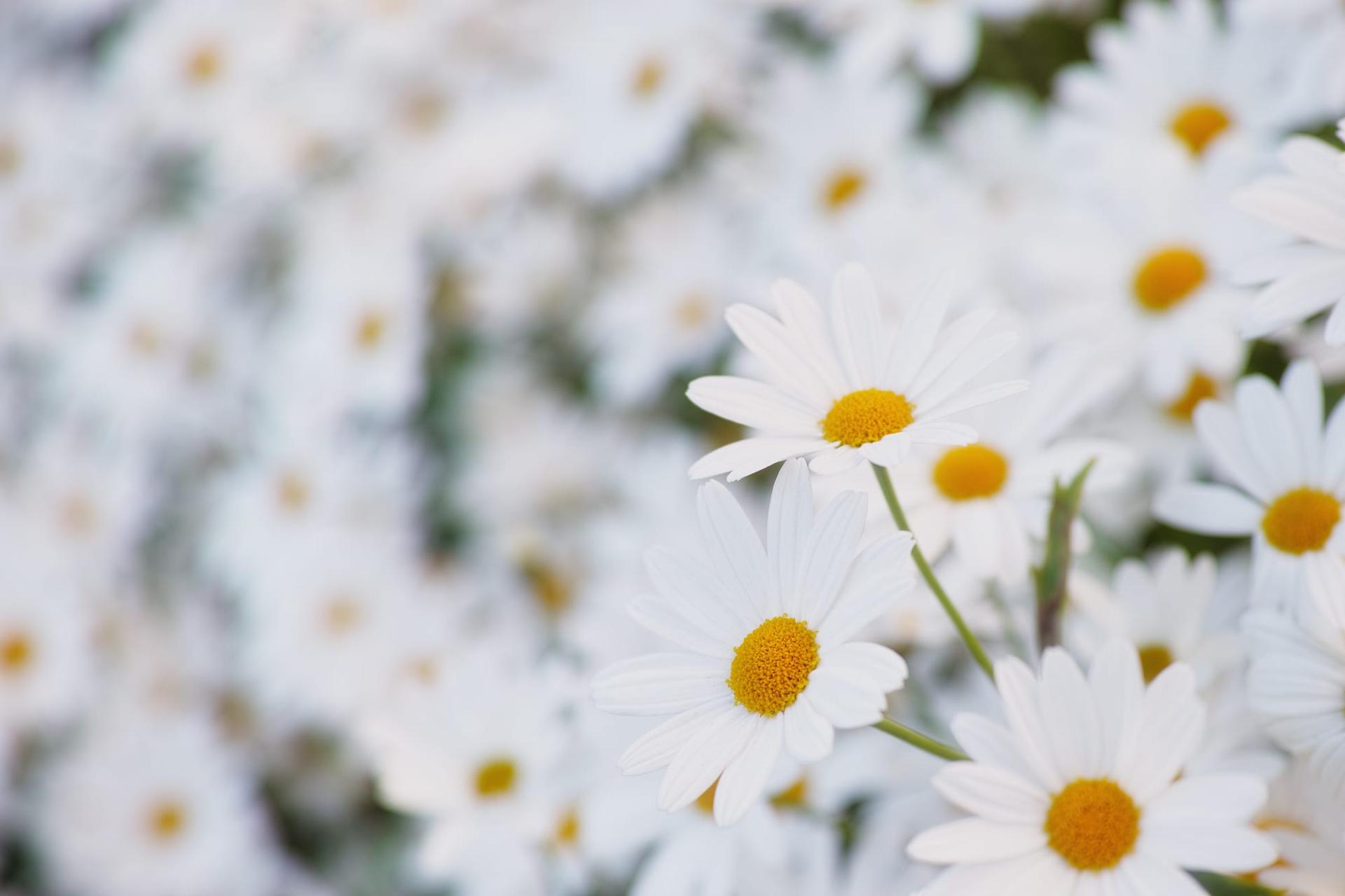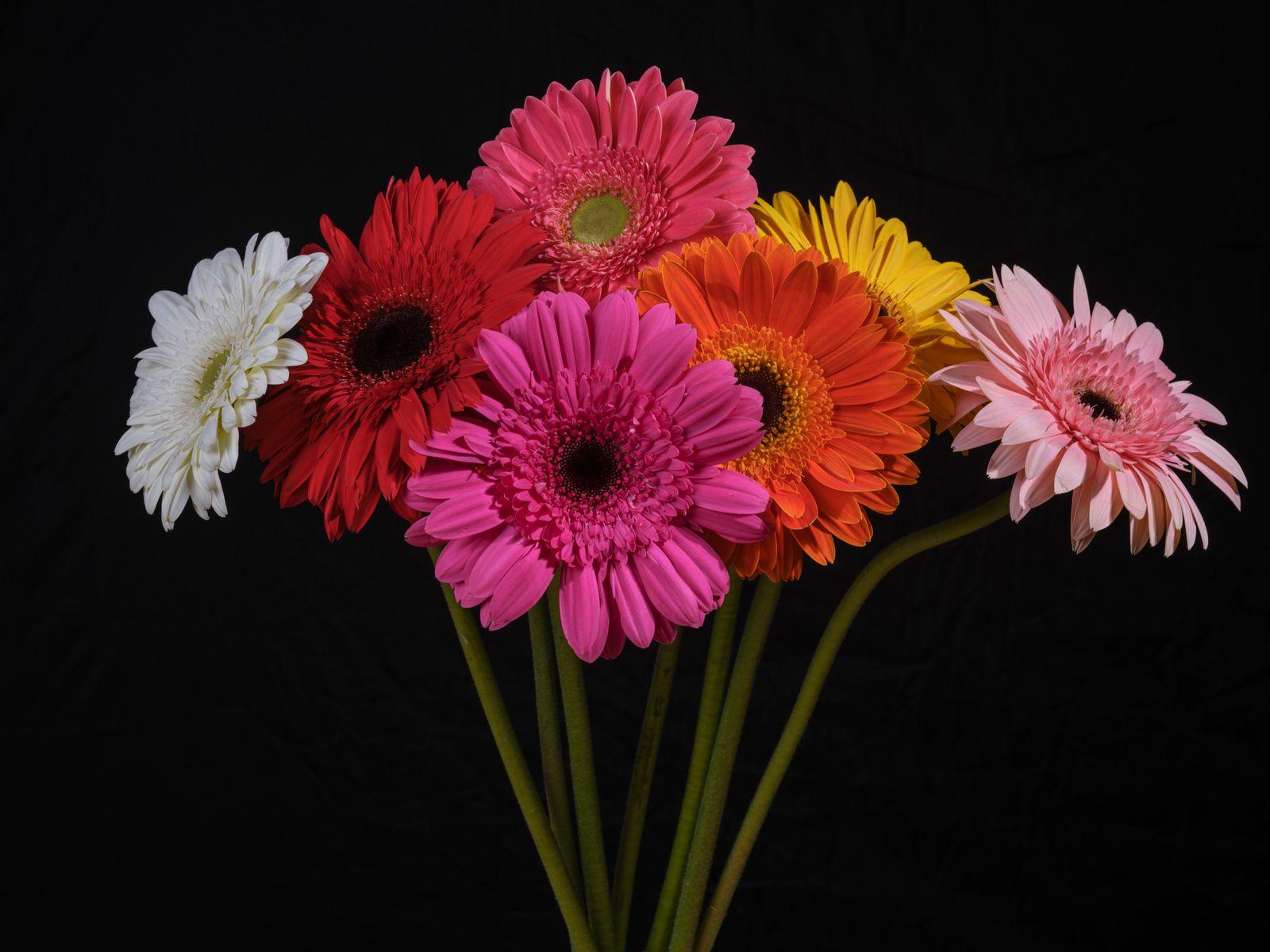
A gerbera daisy means cheerfulness. That's the modern florist reading, with joy and innocence close behind, and colour shades it further: red for love, yellow for friendship, pink for admiration. The plant is a South African wildflower, Gerbera jamesonii, and its hybrids are now the fifth most used cut flower in the world. Their weak point is the stem. Gerbera stems droop just below the head when bacteria or air block the water supply, and curve if the bunch lies flat too long, so florists keep them upright in shallow, clean water changed every day or two. For a cheerful gift without the homework, Cindy's Flowers hand-ties bouquets in our Toronto studio and delivers them same-day across the GTA on orders placed before 3 PM, Monday to Saturday.
A South African wildflower with two borrowed names
The gerbera daisy grows wild in South Africa. The South African National Biodiversity Institute (SANBI) places Gerbera jamesonii, also called the Barberton or Transvaal daisy, in grassland on sandy, well-drained soils in Mpumalanga, Gauteng and Limpopo. Kew's Plants of the World Online adds Eswatini. Mpumalanga thinks enough of the flower to put it on its provincial flag and coat of arms.
Both halves of the name honour people, and only one of them ever saw the plant. The genus is named for Traugott Gerber (1710 to 1743), a German botanist and doctor and a friend of Carl Linnaeus. The species honours Robert Jameson, who collected live plants on a prospecting trip to the Barberton district in 1884, although SANBI notes three earlier collections by other people. Its full name, Gerbera jamesonii Bolus ex Adlam, credits R.W. Adlam's 1888 description in Gardeners' Chronicle.
The gerbera in a florist's bucket is usually a hybrid, though. Breeding began in Cambridge, England, at the end of the 19th century, when Richard Lynch crossed G. jamesonii with G. viridifolia. Most commercial varieties, sold as Gerbera × hybrida, descend from that cross. Kew counts about two dozen species in the wider genus, native from Africa and Madagascar to China and Indo-China. None is native to South America, whatever some care pages say.
Commercially, the cross was a triumph. Only roses, carnations, chrysanthemums and tulips are used more as cut flowers worldwide. Canadian growers produced about 85 million gerbera stems in 2024, according to Agriculture and Agri-Food Canada's overview of Statistics Canada data. That was 20.3 per cent of Canada's greenhouse cut-flower production, second only to tulips, and up from 73.2 million in 2020.
What does a gerbera daisy mean?
By modern florist convention, a gerbera daisy means cheerfulness. Thursd, the floral trade publication, says gerbera symbolism "is about joy, innocence, and purity" and that its reading everywhere centres on cheerfulness. That reading is recent, and the flower's own timeline shows why.
Kate Greenaway's Language of Flowers came out in 1884, the year Jameson was collecting near Barberton and four years before living plants were sent to Kew. It has no gerbera entry. It lists daisies, giving the plain daisy as "Innocence", but nothing for a flower European botany was only just meeting. Any "Victorian gerbera meaning" is a modern one in costume. The ancient Egyptian and Celtic meanings repeated online fare worse: they rarely cite a source, and the plant grows wild at the far end of Africa from Egypt.
Colour does most of the talking. Thursd's colour conventions run like this:
- Red: love and passion
- Pink: admiration and affection
- Yellow: friendship and cheerfulness
- Orange: warmth and energy
- White: innocence and purity
- Purple: elegance
That's close to the wider code in our guide to flower colour meanings, with one welcome difference: a yellow gerbera carries none of the jealousy that Victorian dictionaries pinned on the yellow rose.
Gerberas suit any gift that wants a lift rather than a declaration. A bright, mixed handful makes cheerful birthday flowers, and because gerberas carry very little scent, they're an easy choice for get-well flowers headed to a small room.
Why do gerbera stems bend and droop?
Gerbera stems bend because water stops reaching the top of the stem. Floralife, which makes post-harvest flower treatments, traces it to the stem losing more water than it takes up, made worse when microbes plug the stem. Its gerbera guides also flag the flower as prone to stem blockage, with a vase life of anywhere from 4 to 14 days.
Why just below the flower? Blame the build. A gerbera's stem is a scape, a single leafless stalk that grows up to 75 cm in wild G. jamesonii, carrying one heavy head. That head is a capitulum, a crowd of tiny florets rather than one bloom, the daisy-family design our guide to daisy meaning and botany explains. The bare stalk depends heavily on water pressure to stay stiff, so when the supply falters, it softens a short way below the head, and the head tips.
Four things usually set it off:
- Bacteria. Gerberas drink from the same water for days, and bacteria multiplying in it clog the stem's water channels.
- Air. A stem cut in open air can draw a bubble into those channels.
- Lying flat. UMass Extension lists gerbera among the flowers that bend upward when laid horizontally, a gravity response called geotropism, so a bunch left on its side stands up curved. Its advice: "These flowers should be handled upright whenever possible."
- Fluoride. UMass Extension also warns that fluoride in fluoridated municipal water is very toxic to gerberas and significantly reduces their vase life. Toronto fluoridates its tap water, so a gerbera here starts slightly behind.
Here's the hopeful part: a bent gerbera's head is often still perfectly fresh. The droop is a plumbing failure, not old age, and plumbing can sometimes be fixed.
How florists keep gerbera stems straight
Most of the fix is hygiene and posture. Floralife recommends changing a gerbera's water every one to two days, more often than most bouquets need. The rest is a routine that translates easily to a kitchen:
- Stand them up straight away. Unwrap the bunch and get it into water upright, rather than leaving it on the counter while you hunt for a vase.
- Pair a tall vase with shallow water. Florists conventionally give gerberas just a few centimetres of water, on the reasoning that less submerged stem gives bacteria less to work on. A tall cylinder with a shallow pour does two jobs: its walls hold the stems straight, and the water is quick to change.
- Keep the water clean. Scrub the vase, add the flower-food sachet and refresh the water every day or two. Our guide to making cut flowers last longer covers the clean cut and the other basics.
- Support heavy heads. Growers commonly pack gerberas with each head held in a small plastic cup or collar, which keeps the heads flat in transit, and florists may slide a fine wire into a stem to hold a head where it's placed.
Rescuing a stem that has already bent
A curve can often be coaxed straight; a sharp crease rarely can. For a curve, recut the stem, wrap the bunch snugly in paper up to the base of the heads, and stand it in a few centimetres of fresh water somewhere cool for a few hours. As water climbs back up, the stem firms in the shape the paper holds.
A stem that has folded flat seldom carries water well past the fold again. Cut the head off with a short stub and float it in a shallow bowl of clean water instead.
Are gerbera daisies toxic to cats and dogs?
No. The ASPCA's entry for "Gerber Daisy" (Gerbera jamesonii, also listed as Transvaal, Barberton and African daisy) reads non-toxic to dogs, cats and horses, and the flower also appears on the ASPCA's separate non-toxic plant lists for each animal.
Two qualifications come with that. The listing is for the wild species, and florist stems are its hybrids. The ASPCA also adds a general warning: "be advised that the consumption of any plant material may cause vomiting and gastrointestinal upset for dogs and cats." Not poisonous isn't the same as harmless to every stomach.
So can a gerbera bouquet go to a home with a cat or dog? Not on the gerbera's word alone. In the ASPCA's database, the plain name "Daisy" points to the chrysanthemum, which it lists as toxic to dogs, cats and horses, so "daisies are safe" is the wrong lesson. And a gerbera's status covers one flower, not the vase it arrives in. Mixed arrangements often carry other stems and greenery the ASPCA lists as toxic, eucalyptus among them, and their make-up shifts with the market.
Where a dog or cat lives, the gift Cindy's Flowers points people to is a potted Phalaenopsis orchid, such as the white Phalaenopsis, which the ASPCA lists as non-toxic to dogs and cats.
Can gerberas survive an Ontario winter?
Not outdoors. Clemson Cooperative Extension says gerberas are typically grown as annuals, and that even gardeners in USDA zone 8 keep them as perennials only with mulch and protection from freezing. Most people, it adds, plant them as annuals or overwinter them indoors.
An Ontario winter is far colder than zone 8, so treat a garden gerbera as a summer annual, or pot it up and bring it indoors before frost.
In a vase, gerberas ask for two things: clean water and an upright stem. To leave the choosing to someone else, browse the current bouquets, hand-tied by Cindy's Flowers in our Toronto studio from whatever the market brings in that week. Some weeks, that includes gerberas.