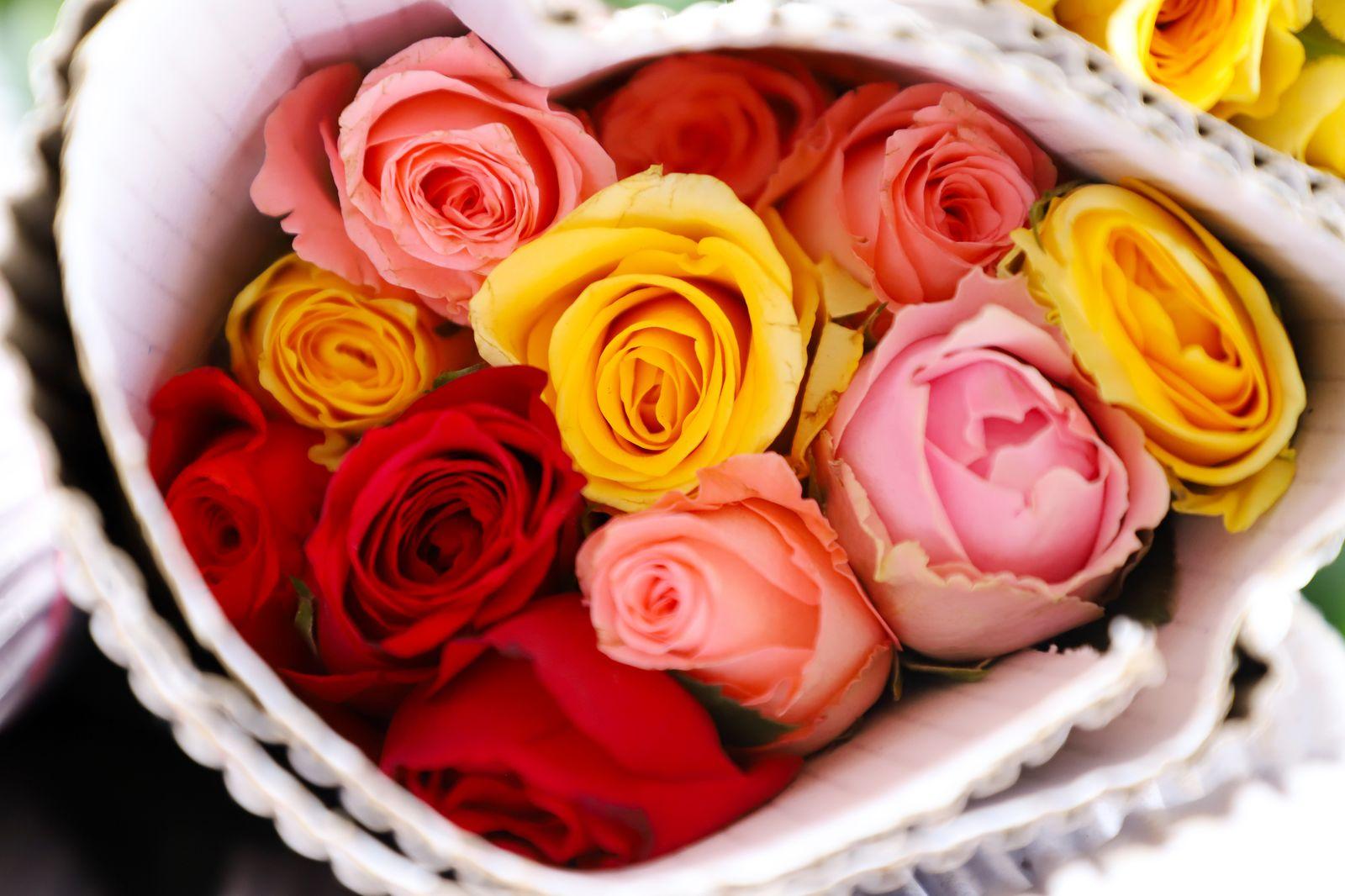
Rose colour meanings are conventions, not rules, and the core of them fits in one breath. The Old Farmer's Almanac gives the red rose love, white purity and a fresh start, pink grace and happiness, orange desire and enthusiasm, lavender love at first sight and coral friendship. Yellow switched sides. It meant jealousy in Kate Greenaway's 1884 dictionary and means friendship today, while burgundy has no settled meaning at all. Counting stems is newer still: by modern florist convention one rose signals love at first sight and a dozen the classic declaration, though no Victorian dictionary numbered them. Cindy's Flowers hand-ties rose bouquets in our Toronto studio and delivers them same-day across the GTA on orders placed before 3 PM.
What does each rose colour mean?
Each colour carries a conventional message, and the bold readings below come from the Old Farmer's Almanac's language-of-flowers page. Its own FAQ admits the meanings vary "among cultures, historical periods, and sources." Where Kate Greenaway's 1884 Language of Flowers has an entry, I've set it beside the modern reading, because the two often disagree.
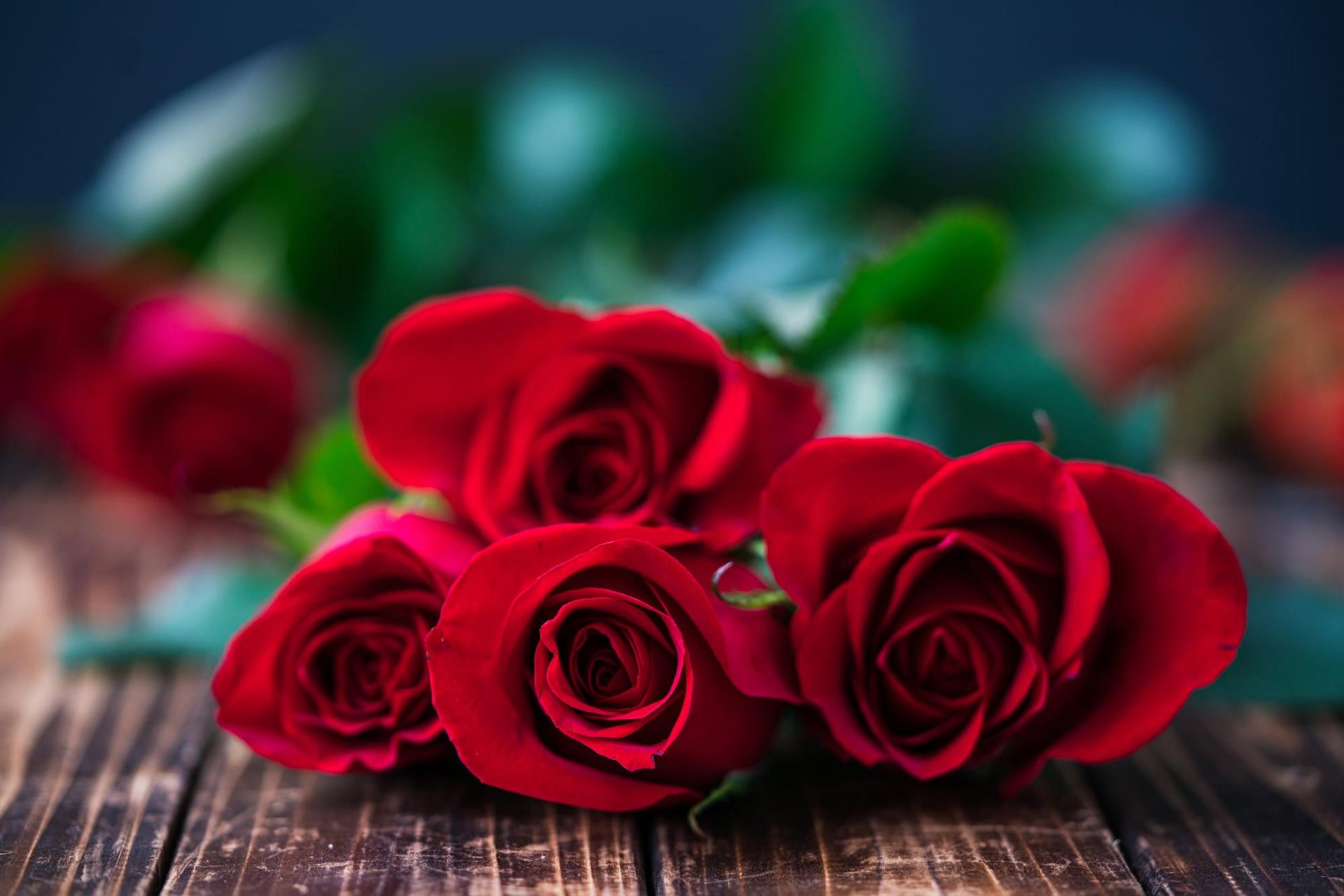
- Red: love. The full entry is "love; I love you." In the 1884 dictionary the plain "Rose" is simply "Love," though Greenaway never ties it to red. It's the steadiest reading from old sources to new, which is why classic red roses rarely need a card to explain themselves.
- White: purity, reverence, a fresh start. The full entry runs "purity, innocence, reverence, a new beginning, a fresh start." "I am worthy of you" is Greenaway's more personal line. That range lets white roses sit as easily at a wedding as at a funeral, so pure white roses work for sympathy and anniversaries alike.
- Pink: grace, happiness, gentleness. The 1884 book has no plain pink rose. Its nearest is "Rose, Maiden Blush: If you love me, you will find it out," named for an old variety the Royal Horticultural Society calls a "rose of antiquity," pale blush pink and dating to the 15th century or earlier.
- Yellow: jealousy, then friendship. In 1884 it meant "Decrease of love. Jealously." (as printed; the book's own index has "Jealousy"), and the Almanac's chart adds infidelity. A separate Almanac list gives the yellow rose "Friendship in modern flower symbolism." Our guide to flowers that mean friendship traces the flip.
- Orange: desire and enthusiasm. The Victorian dictionary has no entry for it. It reads as energy more than devotion.
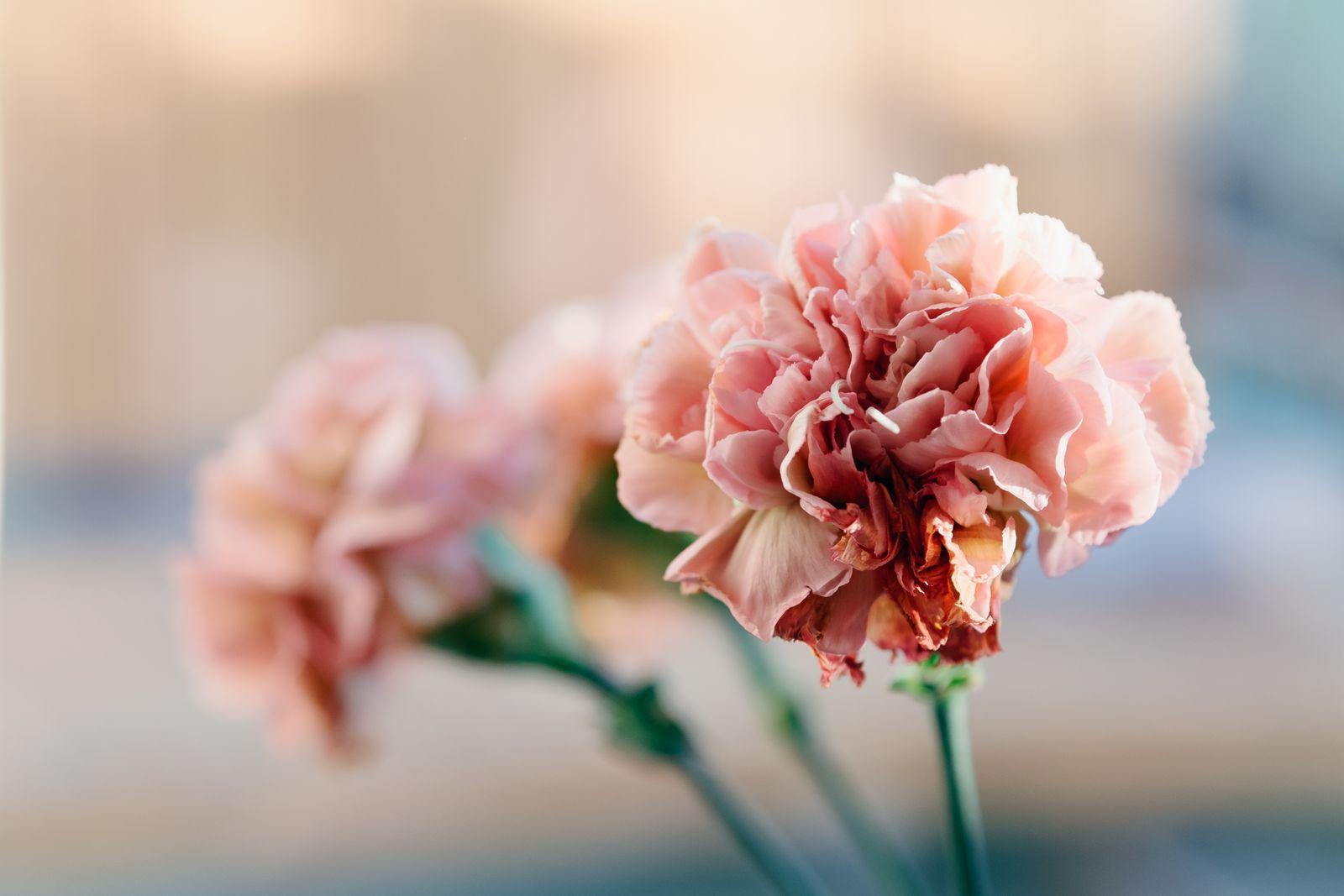
- Coral: friendship, modesty, sympathy. Also missing from Greenaway. That sympathy note makes coral a kind choice for a friend having a hard month, when red says too much and white too little.
- Lavender: love at first sight. Greenaway's only "Lavender" entry, "Distrust," belongs to the herb, so any chart giving lavender roses distrust has borrowed the wrong line.
Burgundy gets a section of its own below. For the same palette across every flower, not just roses, see our guide to what flower colours mean.
Which rose colour meanings go back to the Victorians?
Far fewer than most charts suggest. Search the Project Gutenberg text of Greenaway's 1884 dictionary and you'll find no entry for a pink, orange, coral, peach or lavender rose, and nothing that makes dark red a colour of mourning. What the book does hold is a short run of rose readings, most of them odder than the modern list:
- A red rosebud: "Pure and lovely."
- A thornless rose: "Early attachment," where modern lists often read love at first sight.
- A full-blown rose placed over two buds: "Secrecy."
The "Rose" heading alone runs to 31 entries, plus three for rosebuds, most tied to named varieties or forms rather than colours, and our guide to floriography, the Victorian language of flowers explains why almost nobody could read them. The entry "Rose, Single: Simplicity" sits among the form names, so it most likely describes a kind of flower, not a one-stem gift.
Why the newer colours arrived without a history
Breeding history explains part of the gap. Europe had no native yellow roses: Rosa foetida came in from Persia, the botanist Carolus Clusius described it in 1583, and it became the source of yellow in modern hybrids. Its most famous descendant, 'Soleil d'Or', bred by Joseph Pernet-Ducher, was introduced in 1900, sixteen years after Greenaway's book. Lavender hybrid teas came later still. 'Sterling Silver', one of the best-known early ones, went on sale in the United States in 1957.
The Victorians weren't short of orange roses, though. 'Austrian Copper', an orange-red form of that same Persian rose, has been known since before 1590. Greenaway even lists "Rose, Austrian: Thou art all that is lovely," most likely that species under its old name of Austrian briar, but the reading follows the variety, not its colour. The orange and lavender readings on today's charts are modern florist convention. That's no reason to ignore them, only a reason not to call them Victorian.
Burgundy roses: the meaning nobody can pin down
Burgundy is the least settled colour on any rose chart. The 1884 dictionary does list "Rose, Burgundy: Unconscious beauty," and modern charts repeat it as a colour meaning. Yet the Royal Horticultural Society records the Burgundy rose as a named variety, Rosa 'Burgundiaca', a "small, compact, dainty rose of antiquity" with rosy-claret to purple pompon blooms, of unknown origin before 1664.
Since Burgundy was also the name of that old variety, "unconscious beauty" most probably belonged to the rose rather than the shade, and later charts mistook a name for a colour. I can't prove it, but it's enough to stop me quoting the line as a colour meaning.
The older dark-red entries lean away from romance. The Almanac reads a deep, dark crimson rose as mourning, and Greenaway's deep red rose means "Bashful shame." House Beautiful's rose-colour guide gives maroon roses "Loyalty, love, and eternal beauty," a modern magazine convention rather than an inherited one.
No source here supports the idea that darker red means deeper love. In the studio I treat burgundy as a palette colour rather than a message: it looks right in a winter arrangement or beside white in a sympathy piece. When the point is romance, bright red says it without a footnote.
What does the number of roses mean?
By modern florist convention, one rose signals love at first sight, three stand for the three words of I love you, and twelve make the classic declaration. None of it is old. Not one stem-count entry appears in Greenaway's 1884 dictionary, and as our guide to what flowers mean love points out, no two stem-count charts agree. So who wrote the rules? Nobody you could cite.
Here's how the charts usually read six common counts:
- One: love at first sight, or quiet devotion. It's the most deliberate gift on this list, and best handed over in person.
- Three: I love you, a stem for each word. Small enough to carry onto a TTC streetcar without crushing anything.
- Six: I want to be yours, on many charts.
- Twelve: be mine, with gratitude added on some charts. It's the classic declaration and the count nobody needs explained, which is exactly why a dozen in a less expected colour, white or coral, gets noticed.
- Twenty-four: forever yours, or thinking of you around the clock, one rose for each hour. Two dozen needs a proper vase and room on the table.
- Fifty: unconditional love, and a delivery rather than a hand-off.
If a number means something private to the two of you, send that many and explain it on the card. No chart competes with that.
Putting colour and count together
Start from the message and let colour carry most of it. Red and white together have one of the few old readings behind them, "Unity" in Greenaway's 1884 list, which makes the pair a natural fit for a wedding anniversary. Most other pairings are modern, so read these as florist's shorthand:
- Romance: bright red, by the dozen for the classic reading. Leave out yellow, which still reads as jealousy to anyone who knows the old charts, and skip the darkest reds too, since the Almanac files deep crimson under mourning.
- Sympathy: white, plus deep crimson for mourning.
- Thanks, or a gift for a mother: pink in any count, since grace and gentleness rarely land wrong.
- A friend's good news: orange or yellow for enthusiasm and friendship, or coral when the news is mixed.
- A first date: one stem or three. A dozen on a first date says more than most people mean.
A note for homes with pets. The rose itself is on the ASPCA's non-toxic list for dogs and cats, but a rose bouquet is rarely roses alone. Its greenery and filler change with the market, and some common choices, eucalyptus among them, are on the ASPCA's toxic list for dogs, cats and horses. Where a dog or cat lives, a potted Phalaenopsis orchid is the one kind of gift in our range the ASPCA clears whole.
Cut roses are imported year-round, so an order in any month is a question of message, not season. Cindy's Flowers ties each bouquet in our rose collection by hand at our Toronto studio and delivers Monday to Saturday across Toronto and the GTA. Pick the colour, settle the count, then write the sentence on the card. It's the one part of the code everyone can read.