An orchid means luxury, refinement, strength and rare beauty, at least by the floral conventions most gift-givers share. Part of that is cultural: Chinese painters have ranked the orchid among the "Four Gentlemen" since the Song dynasty, and Victorian collectors paid extravagant sums for new species at London auctions. Part of it is pure biology. Orchid seeds are nearly microscopic, and most carry no food store and cannot germinate in the wild without a fungal partner. Here's what the flower signals, how the meaning shifts by colour, and when an orchid is the right thing to send. For a gift that will still be standing next month, Cindy's Flowers delivers potted orchids across Toronto and the GTA same-day on orders placed before 3 PM.
What do orchids symbolize?
Refinement, admiration, strength and rare beauty, by long floral convention. What separates orchid symbolism from most flower meanings is the paper trail behind it. Rose and tulip colour codes largely trace to Victorian floriography, a couple of centuries deep. The orchid was already carrying meaning in classical Chinese painting well before that.
In Chinese art the orchid is one of the Four Gentlemen, alongside plum blossom, bamboo and chrysanthemum. The four have been painted together since the Song dynasty (960 to 1279), each standing for a season and for the virtues of the Confucian junzi, the cultivated person: uprightness, purity, humility, perseverance. The orchid represents spring. Korean folk painting reads its native wild orchid, the Nancho, along similar lines, as a symbol of nobility, loyalty and fidelity.
That is the strength half of the meaning, and it's the half most gift guides skip. In the tradition that has honoured the flower longest, an orchid isn't a luxury object at all. It stands for quiet integrity: the person who holds their shape without making noise about it.
Where the word "orchid" comes from
The name is blunter than the flower. It descends from the type genus Orchis, from the Ancient Greek órkhis, literally "testicle", after the paired underground tubers some Orchis species produce. Middle English called certain orchids "bollockwort". The tidier modern word is surprisingly recent: the botanist John Lindley shortened Orchidaceae to "orchid" in his 1845 *School Botany*. The old association with fertility and virility follows straight from those twin tubers, which is one more reason the flower has never read as merely decorative.
Why does an orchid read as luxury?
Because for the better part of a century it genuinely was a luxury good. Orchidelirium, the Victorian mania for collecting and discovering orchids, sent hunters to nearly every part of the world, and the finds were auctioned in London at extravagant prices, in a frenzy historians compare to Dutch tulip mania. Rarity, difficulty and fashion converged, and the association never came off.
Trade rules are the modern echo. Almost every orchid species sits in Appendix II of CITES, so international trade runs through a permit system, and a smaller group including the slipper orchids of the genus *Paphiopedilum* sits in Appendix I, where commercial trade in wild-collected plants is prohibited outright. Few plant groups on earth are watched that closely.
None of which makes the moth orchid on a windowsill contraband. Modern *Phalaenopsis* are propagated commercially at enormous scale, which is exactly why the orchid became an affordable luxury instead of a collector's trophy. What survived the price drop is the meaning. Sending a potted orchid still reads as deliberate and a little formal, the floral equivalent of good stationery.
What makes an orchid genuinely rare?
The family is vast and the individual plants are difficult, which sounds contradictory until you look at how they reproduce. Orchidaceae is one of the two largest families of flowering plants: roughly 28,000 accepted species across about 700 genera, somewhere between six and eleven per cent of all seed plant species. Diversity isn't the bottleneck. Germination is.
Orchid seeds are almost microscopic, and a single capsule in some species holds over a million of them. They come in those numbers because so few ever make it. Most orchid seeds carry no endosperm, no packed lunch of stored starch to fund germination, so a seed has to meet a mycorrhizal fungus and enter a symbiotic partnership that feeds it until it can feed itself. Almost all orchid species are mycoheterotrophic while germinating, reliant on fungi to complete their life cycle.
So "rare beauty" isn't florist flattery. The plant's own reproductive strategy is a lottery with a million tickets and almost no winners.
One cheerful footnote: you have almost certainly eaten an orchid. The dried seed pods of *Vanilla planifolia* are the source of vanilla flavouring, commercially important in baking and in perfumery.
What do orchid colours mean?
Colour narrows the message. These readings are convention rather than botany, handed down by florists and gift-givers, but they're understood widely enough to be worth knowing before you write the card.
- White orchids: purity, reverence and elegance. The safest choice for a formal gift, a new home, or a sympathy arrangement.
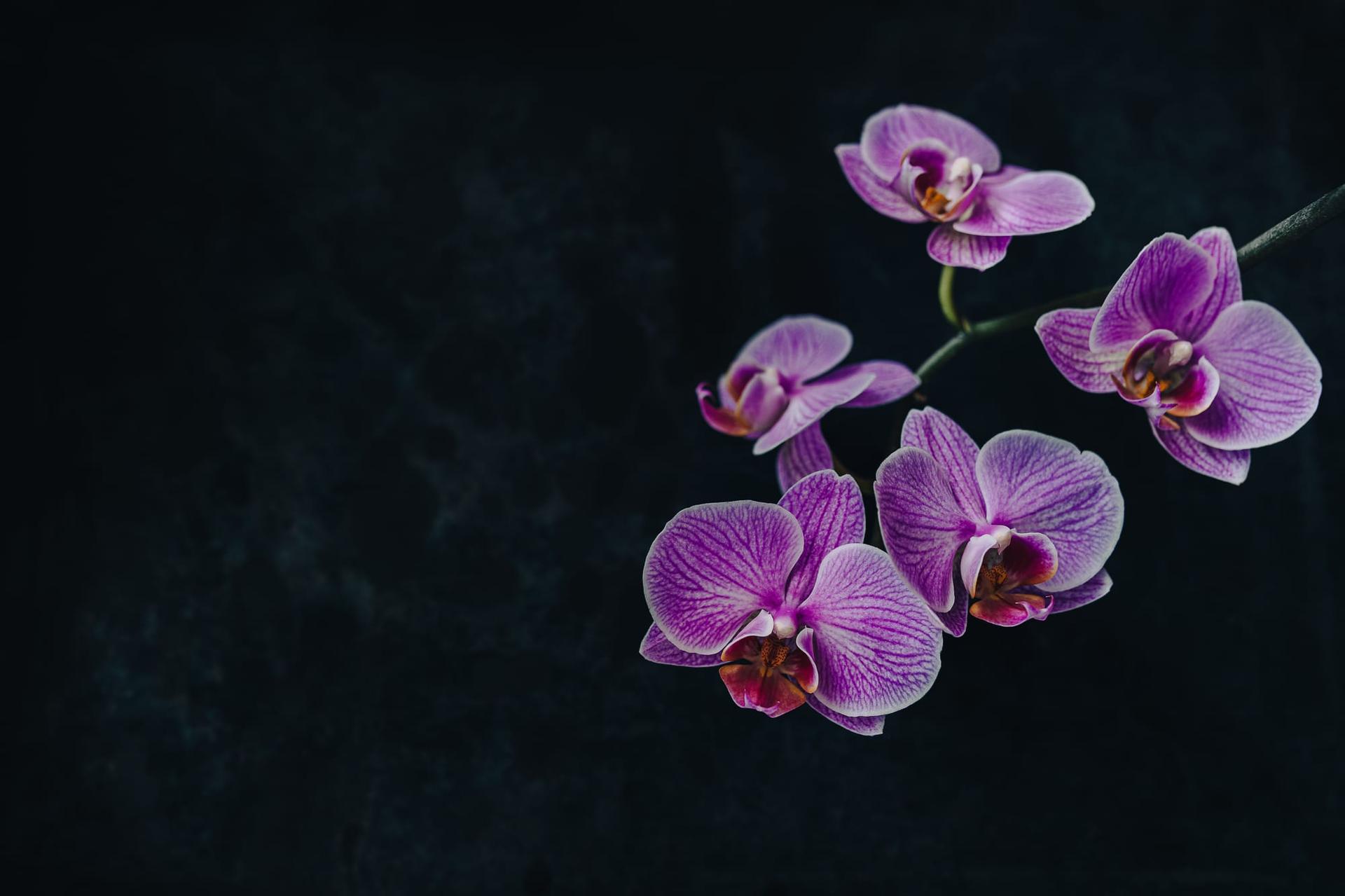
- Purple orchids: admiration, dignity and respect, carried along by the colour's old royal associations.
- Pink orchids: affection, grace and gentleness, the warmest end of the range.
- Yellow and gold orchids: friendship, optimism and new beginnings.
Blue deserves a warning. Naturally blue orchids are vanishingly rare, and nearly every "blue" moth orchid on a shelf is a white plant that has been dyed. It's a real, healthy plant and a perfectly good gift. It will simply bloom white next time, so if the blue is the whole point, say so on the card.
Gold is the shade I reach for when the occasion is an achievement, which is why warm-toned stems turn up so often in our congratulations flowers. A promotion, a thesis defence, a first apartment: that colour reads as beginning rather than tribute.
Is an orchid the right gift?
An orchid beats a bouquet on the measure people quietly care about most, which is how long the gift stays in the room. Kept in the home, *Phalaenopsis* flowers may last two to three months, after which the plant needs to conserve energy for new leaves, buds and roots. Cut stems measure their life in days.
The moth orchid is the one you'll usually meet. *Phalaenopsis* is a genus of about seventy species, epiphytes and lithophytes native to Asia, New Guinea and Australia and mostly occurring in Indonesia and the Philippines. Carl Ludwig Blume described the genus in 1825 and built the name from the Greek *phalaina*, a kind of moth, plus *-opsis*, "having the appearance of". See a spike side-on in low light and the name explains itself.
Tropical origin is a feature in a Toronto home. An orchid lives indoors here all year, indifferent to a February that would flatten anything from an Ontario garden, and a bright window out of direct sun is most of what it asks for.
Two things worth checking before you send:
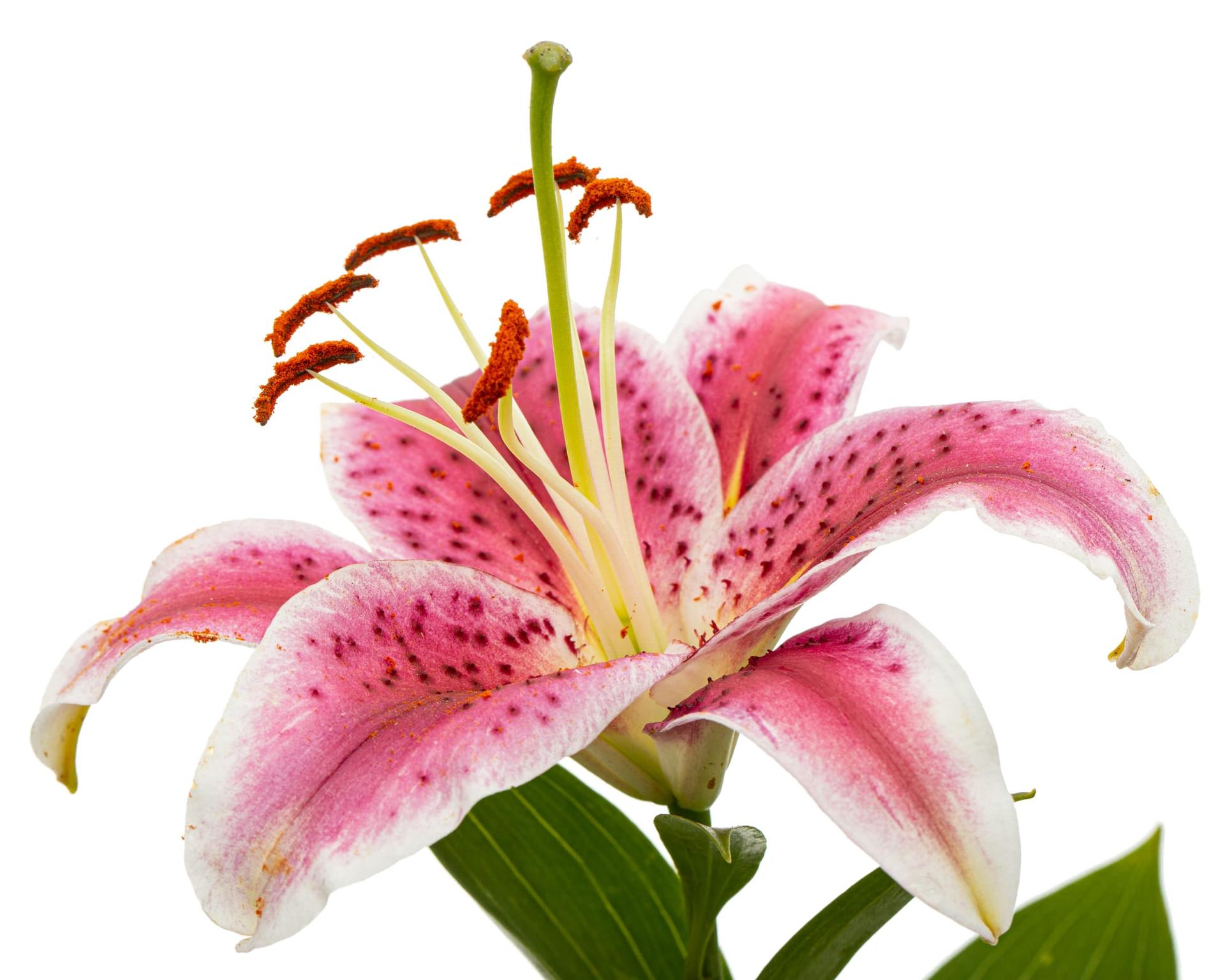
- Pets. The ASPCA lists the *Phalaenopsis* orchid as non-toxic to cats, dogs and horses, making it one of very few genuinely luxurious gifts that's safe in a house with animals. The contrast matters: the ASPCA lists true lilies (*Lilium* species) as toxic to cats, with kidney failure as the clinical sign, so lilies are the one bloom to leave out entirely when a cat lives there.
- Occasion. Anniversaries, promotions, housewarmings, and thank-yous with real weight behind them. Anywhere you'd like the gift still standing a month later.
Torn between a plant and cut stems? Our current collection shows both with live pricing, so you can compare before you commit. Cindy's Flowers ties bouquets by hand in our Toronto studio, and same-day delivery runs Monday to Saturday across Toronto and the GTA on orders placed before 3 PM.