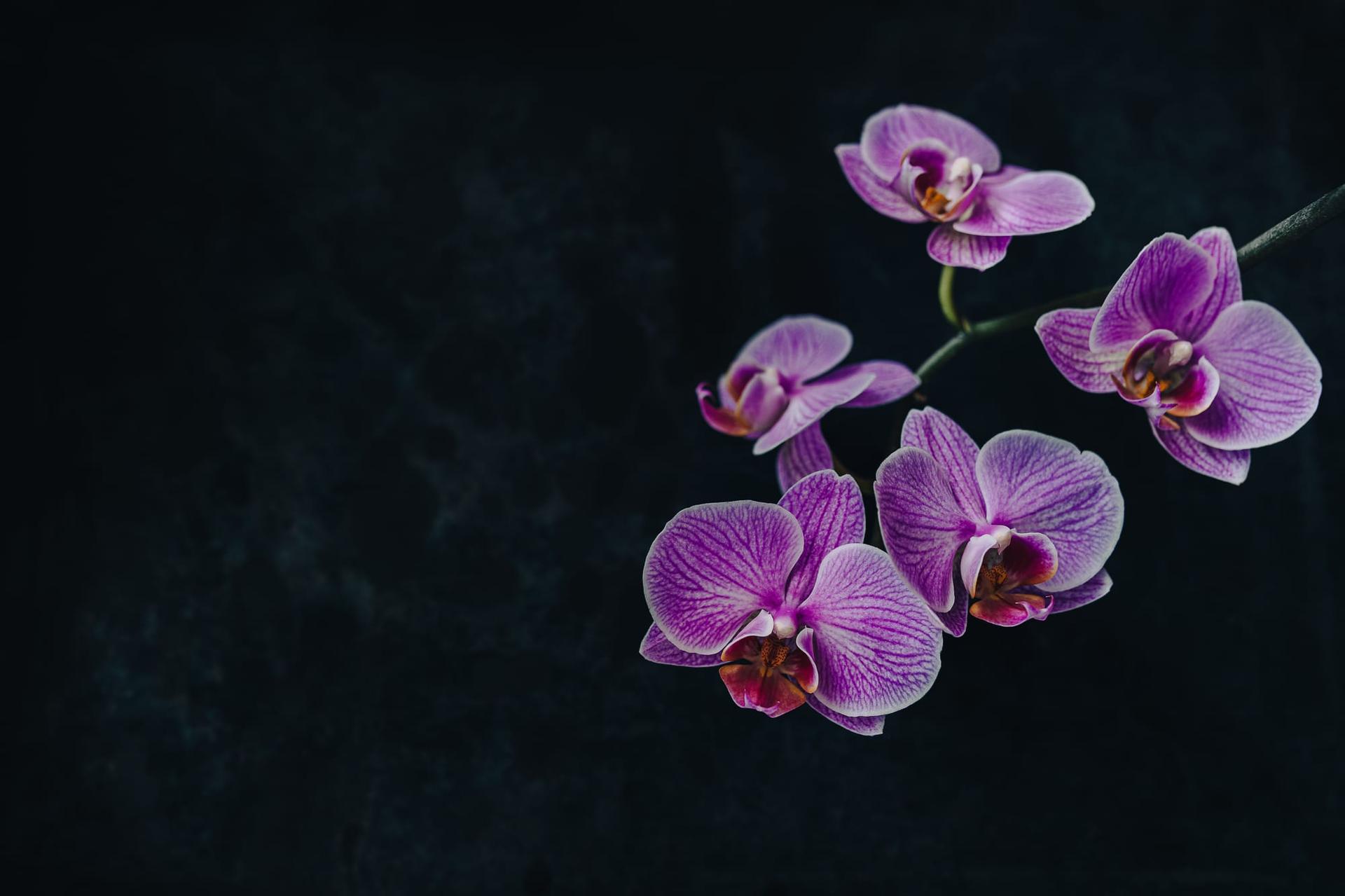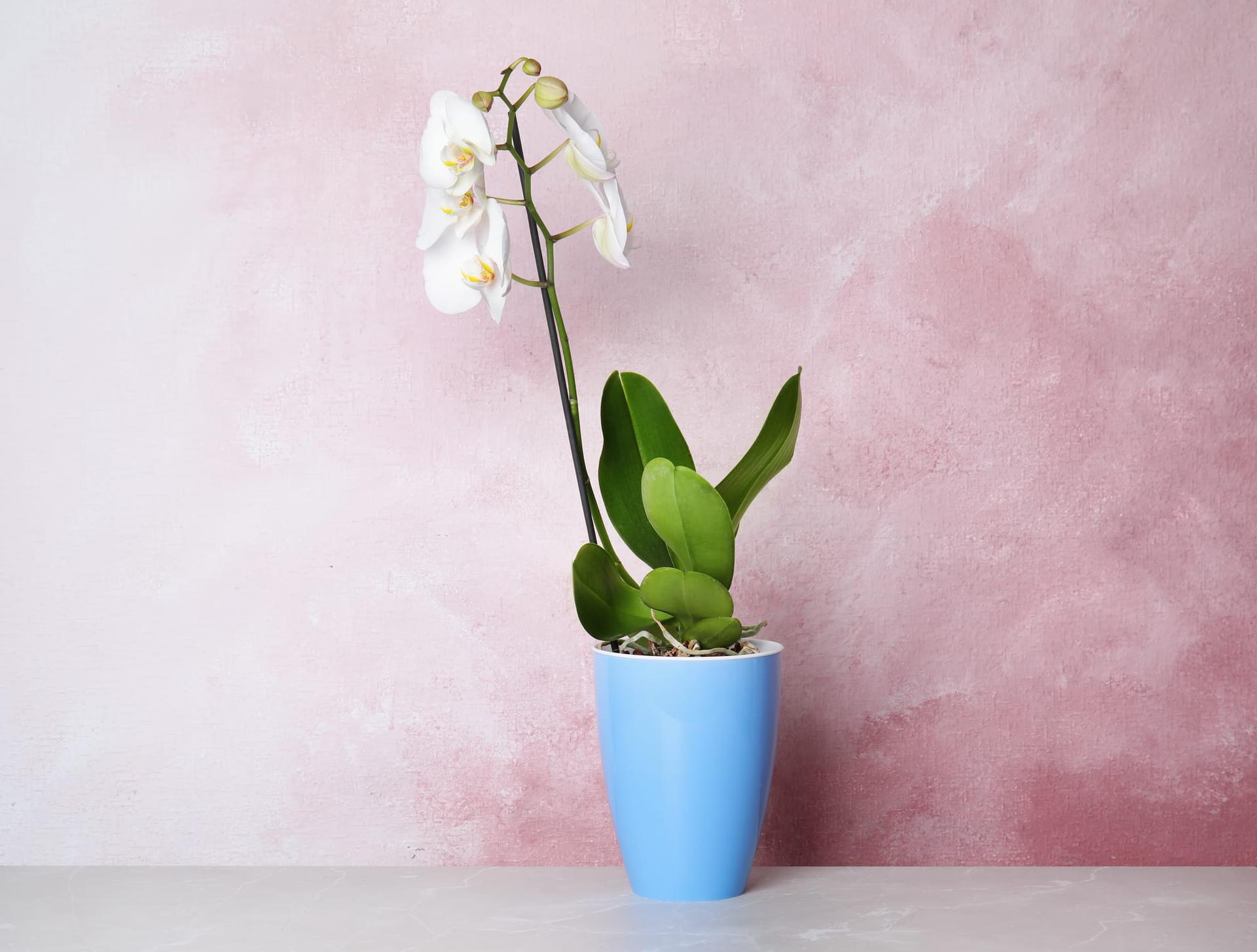
How long a bloom lasts depends on which orchid you're holding. Moth orchids, the Phalaenopsis sold in almost every shop, hold their flowers for two to six months, according to Missouri Botanical Garden. Cattleyas manage two to six weeks and dendrobiums three to four, says Clemson Extension. There's no fixed indoor season either: the Royal Horticultural Society notes that moth orchid flower stems can be produced at any time of year. And when the last petal drops, the plant isn't finished. It's between performances. Cindy's Flowers delivers orchid plants same-day across Toronto and the GTA on orders placed before 3 PM, and a spike still tight with unopened buds is the one that hands you that whole run.
Which orchids bloom the longest?
Moth orchids win on duration, and it isn't close. Missouri Botanical Garden calls Phalaenopsis one of the longest-blooming orchid genera, with blooms lasting two to six months, typically from late winter to spring. Clemson Extension's orchid factsheet backs that up, and shows how far behind the other shop favourites sit.
- Phalaenopsis (moth orchid): flowers remain fresh for several months, usually in winter or early spring.
- Cattleya: two to six weeks of flower, and generally one flowering a year, in spring or fall.
- Dendrobium: blooms may remain open three to four weeks, mostly through fall and winter.
So how long do orchids bloom on a bookshelf rather than in a greenhouse? Aim for the middle of that range, not the top. University of Maryland Extension is the more conservative voice, putting the flowers at a month or longer given proper care, and Missouri Botanical Garden's own plant database says four months or more for a well-grown plant. Several weeks at full display and two to three months of flowers overall is a good result on a windowsill, after which the plant needs to put its energy into new leaves, buds and roots instead. If bloom length is the point of the gift, that's the genus to look for when you're browsing orchids and flowering plants.
When do orchids bloom, and how many times a year?
Once a year is the norm, and a moth orchid can beat it. Clemson Extension notes that cattleyas generally flower only once annually, in spring or fall, and that dendrobiums keep to fall and winter. Phalaenopsis breaks the pattern: RHS says its flower stems can appear at any time of year, so an indoor plant has no calendar to keep.
That's why shops have orchids in bloom in February and again in August. Commercial plants are brought into flower under controlled greenhouse conditions and sold when they're ready. Yours, sitting by a window, takes its cue from the temperature of the room. A second flowering in one year usually means a strong plant pushed a side-shoot from an existing spike, which brings us to the cut.
What do you do with an orchid after the blooms fall off?
Cut the spike. Where you cut it is not a fight between sources, though it is often written up as one — it's a trade-off, and every major source describes the same one. Cutting back to a node keeps the old stem working and buys you a faster second flush. Cutting near the base retires the stem and puts the plant's energy into rebuilding for a full display next time.
RHS advises trimming the old stalk back to just above the second node beneath the spent flowers, where a new flowering side-shoot will often form; University of Maryland Extension puts that cut about half an inch above the node. Missouri Botanical Garden gives the same technique with its cost attached: you can initiate lateral flower buds on the old spike by cutting it above the second node, it writes, "however, this weakens and stresses the orchid." It recommends a cut near the base instead, which encourages the plant to rebloom within a year.
The American Orchid Society supplies the missing variable, which is the plant rather than the method. A second flush "might stress the plant and the flowering is typically smaller and not as strong as the original," AOS writes, "so you'd only want to do this if the plant is strong and healthy enough to carry a second blooming. Giving the plant a chance to recover and strengthen itself for the next regular blooming is often a better option."
So read the plant in front of you, then choose:
- Spike still green and plump, several firm leaves? Take the second-node cut, placing it below any dried or brown part of the stem — that, says AOS, gives the best chance of a strong secondary branch. Expect a quicker but smaller second flush off the same stem.
- Few leaves, or a plant that just carried a heavy spike? Cut near the base and let it rebuild. This is the recovery route AOS leans toward and the one Missouri Botanical Garden makes its default. The next display comes later and comes back stronger.
- Cut spike turning pale, dry and hollow, with no plump unused node left? That stem is done. AOS is direct about it: with no unused nodes, cut the spike as close to the bottom as possible.
Keep watering and feeding through the gap. Nothing appears to be happening, but leaves and roots are being built, and those become the next flower spike. Our orchid plant care guide covers the watering and potting side in more detail.
How do you get an orchid to rebloom?
Cool it down. Missouri Botanical Garden is specific: "Night temperatures to 55°F for several weeks in autumn initiate flower spikes." RHS reaches the same place from the other direction, suggesting you move a large, healthy plant that hasn't flowered in a while to a cooler spot and reduce the temperature by about 5°C (8°F) for a month or so. One gives an absolute night temperature, the other a relative drop, but start from a normal night of 18°C and RHS's five degrees lands you near 13°C, which is 55°F.
Toronto makes this easy. From late September into October, a spare room with the radiator off, an enclosed porch, or a sill well away from a heat vent drifts into that range overnight on its own, while the days stay mild.
Two cautions. This is a treatment, not a new address: Phalaenopsis are warm growers that prefer nights in the 60s Fahrenheit and days of 70 to 80°F, with 50°F and 95°F as the outer limits. And minimum night temperature depends on the genus. Clemson Extension lists 65°F for phalaenopsis, 60°F for cattleya and 52°F for dendrobium, with daytime temperatures 10 to 15 degrees warmer being best. A day-to-night swing is normal orchid culture, not only a rebloom trick.
Why do the buds drop before they open?
That's bud blast, and it's usually the room rather than the plant. The American Orchid Society lists the triggers: under- or overwatering, watering with cold water, temperature extremes or rapid changes, drafts from windows, air-conditioning or heating vents, inadequate or excessive light, aphids and thrips, over-application of fertilizer or pesticide, and low or fluctuating humidity. Cattleyas, phalaenopsis and dendrobiums are all particularly susceptible.
Then there's the cause nobody guesses: ethylene. AOS points at ripening fruit, gas leaks, inefficient burning of gas stoves or heaters, engine exhaust, cigarette and cigar smoke, open fires and smog, any of which can blast buds and age or distort flowers that are already open. The worst spot in the house for a spiking orchid is the kitchen counter next to the fruit bowl.
Missouri Botanical Garden puts the other half plainly: rapid changes in temperature and drafts cause bud drop. RHS approaches it from the care side, advising you keep plants away from radiators and heaters and out of drafts because they dislike fluctuating temperatures, with everyday indoor comfort at 19 to 30°C by day and 16 to 19°C at night. In a Toronto winter, the two places that break that rule are a forced-air vent and a leaky window, and orchids somehow end up near both.
Sending an orchid that's still blooming in three months
Buy one in bud, not in full flower. A spike carrying several tight, unopened buds at the tip still has most of its run ahead of it, while a plant that has opened everything at once is already partway through. Check the leaves too: firm and evenly green beats limp or wrinkled, which tends to signal a watering problem that will cost buds later.
That staying power is what makes an orchid such a good housewarming gift. It needs no vase, which may still be taped inside a box, it forgives a chaotic first month, and it's often still flowering when the last picture goes up. It also travels well into a home with animals: the ASPCA lists Phalaenopsis, and the Cattleya it lists as cocktail orchid, as non-toxic to dogs, cats and horses. Place the order before the 3 PM cutoff and Cindy's Flowers delivers it the same day, Monday through Saturday, anywhere in Toronto and the GTA. If cut stems suit the moment better, browse the current bouquets instead. One choice makes a big first impression for a week. The other quietly holds the room for a season.