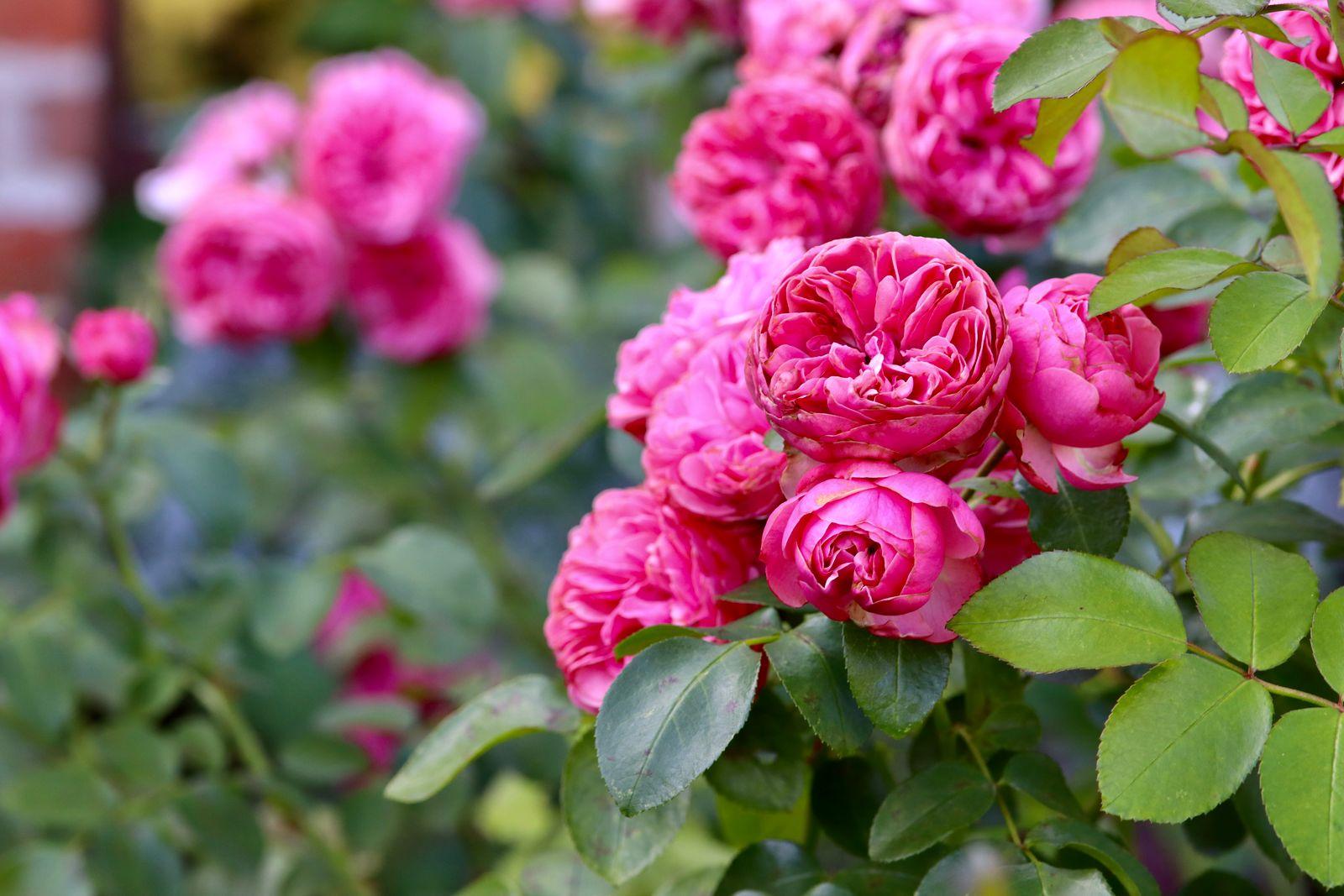
Growing roses comes down to a variety hardy enough for your winters, sun, drainage, the right planting depth, steady water, and pruning and winter care timed to your seasons. Where winters are cold, a grafted rose's bud union is buried and mounded with soil each winter; where they are mild, it sits at soil level.
Choose a rose rated for your winters
Check the label's hardiness rating and its system. Encyclopaedia Britannica calls the US Department of Agriculture's zone map the most widely used. Britain's Royal Horticultural Society instead rates plants from H1a to H7 by the lowest temperature they are likely to withstand.
Examples bred for hard winters in more than one country:
- Canada's Explorer and Parkland series, from its federal rose-breeding programme. University of Minnesota Extension calls the Explorers "exceptionally hardy (Zone 3)", a USDA zone; 'John Cabot' and 'William Baffin' are Explorer climbers.
- The Canadian Artist Series, a later group from the same programme that includes 'Félix Leclerc'.
- Griffith Buck roses from Iowa State University in the United States, described by the university's Reiman Gardens as easy to grow, disease resistant and winter hardy; 'Carefree Beauty' is one.
Is it grafted? Hybrid teas, grandifloras and floribundas typically are, notes Iowa State University Extension, and the knobby bud union where the variety meets its rootstock is particularly sensitive to cold. An own-root rose has no union to lose.
How deep should you plant a rose?
Iowa State sets a minimum of six hours of direct sun and Purdue University Extension says six hours of sun daily will do; Clemson University's Home & Garden Information Center asks for six to eight, while the RHS, writing for Britain, accepts four. Drainage matters too: Illinois Extension notes that roses in poorly drained soil often don't survive the winter.
Timing follows the climate. Where winters are cold, Purdue says roses are best planted in spring, though fall planting can succeed with proper winter protection. Where winters are mild, Clemson and the RHS plant bare-root roses in late fall or from late winter to early spring.
So does depth. Oregon State University Extension sets a grafted rose's bud union 5 to 10 cm (2 to 4 in) deep in USDA zones 3 to 6 and at soil level in zones 7 to 11. Clemson sets it just above the soil and the RHS at soil level, noting that burying it is reported to raise the risk of rose dieback. Own-root roses go in with the crown 2.5 to 5 cm (1 to 2 in) down (Colorado State).
After planting a bare-root rose, Purdue mounds soil 25 cm (10 in) high over the bud union and canes and leaves it until the buds swell and frost danger has passed.
Water, feeding and pets
Illinois Extension's rule of thumb is about 2.5 cm (1 in) of water a week in the growing season, ideally through a soaker hose that keeps the leaves dry. If you must water overhead, Iowa State says to do it in the morning.
Clemson feeds established roses as they leaf out and after each flush of bloom, stops six weeks before the earliest frost date in its warm South Carolina climate (Illinois Extension, for colder winters, stops in late summer and may feed again once plants are dormant), and waits for a new rose's first blooms before using chemical fertilizer. Skip the Epsom salt: Washington State University's Linda Chalker-Scott found no published scientific research on its effects on roses, and says the science behind it applies only to intensive crop production where magnesium is known to be deficient.
The roses themselves aren't the concern: the ASPCA lists them as non-toxic to dogs, cats and horses. The feeding is. The ASPCA warns that fertilizer can cause vomiting, diarrhea, weakness, unsteadiness and tremors, calls the bone meal, blood meal, bat guano and manures in many fertilizers "delicacies to the canine palate", and advises fencing off fertilized plots and locking bags away. Skip cocoa bean mulch too; the pets question below explains why.
When should you prune roses?
Prune in early spring, once the hard frosts are over; Oregon State warns that earlier pruning can cause dieback. The New York Botanical Garden's library advises pruning hybrid teas when about half the buds have swollen but before the leaves expand, and many growers use forsythia bloom as the cue (Illinois Extension).
Remove dead, damaged and diseased canes first, then cut about 6 mm (¼ in) above an outward-facing bud, slanting away from it (Illinois). After that:
- Hybrid teas, floribundas and grandifloras: prune hard, taking one-third to two-thirds off each cane and keeping three to six canes (NYBG).
- Repeat-flowering shrub roses: prune lightly; Illinois notes that severe pruning reduces their flowering.
- Once-blooming roses and ramblers: they flower on old wood, so prune right after they bloom (Illinois).
Wear gloves, long sleeves and long pants, as the US Centers for Disease Control and Prevention recommends when touching plant matter: the Sporothrix fungus, which causes the skin infection sporotrichosis, can enter through a rose-thorn prick. See a doctor if a scratch becomes a small red, pink or purple bump that grows or spreads, up to 12 weeks later and even if it doesn't hurt.
In summer, deadhead repeat bloomers back to an outward-facing bud above a five- or seven-leaflet leaf (Illinois); our guide to making cut roses last longer covers stems cut for a vase. Iowa State University Extension, writing for cold Iowa winters, stops deadheading in early fall, because developing hips slow growth and help the rose prepare for winter.
Winter protection in cold regions
Where winters are cold, Iowa State says most hybrid teas, grandifloras and floribundas need protection, while most shrub, species and old garden roses need no extra work. New roses need help either way: the Canadian Rose Society protects every newly planted rose, hardy ones included, for its first winter or two in its zones 5 and 6.
- Water until the ground freezes if fall rain is short (Purdue).
- Once hard frosts have killed the leaves and the plant is dormant, clear away fallen leaves, which harbour disease (University of New Hampshire Extension, Purdue).
- Mound 25 to 30 cm (10 to 12 in) of loose soil over the base, the depth Illinois, Iowa State and New Hampshire give. Bring it from elsewhere in the garden: scraping it up around the plant can injure the roots (Illinois).
- Once the mound freezes, cover it with evergreen boughs, leaves or straw (Illinois). Avoid yew, holly, boxwood and Podocarpus boughs, which the ASPCA lists as toxic to dogs, cats and horses, and keep animals from chewing any boughs. Uncover in spring after the harsh cold has passed but before the plant breaks bud (Iowa State).
Potted roses are more exposed: Iowa State warns that one left on a deck or patio over winter "may be destroyed". Sink the pot in the ground and mound soil over the lower canes, or store the dormant plant in a garage or shed kept between −1 and 7 °C (30 and 45 °F).
Black spot, Japanese beetles and aphids
- Black spot starts as black spots with fringed borders, then the leaves yellow and drop (University of Maine Cooperative Extension). Its spores need at least seven hours of wet leaves and splash onto new growth, and the fungus overwinters in fallen leaves and on infected canes, so keep foliage dry, rake up leaves in fall and prune out spotted canes in spring.
- Japanese beetles skeletonize leaves in midsummer. Native to Japan, they are a pest across much of the eastern and central United States, according to the USDA, and in parts of eastern Canada; the European plant-protection body EPPO also records them in parts of Europe, including the Azores, northern Italy and Switzerland, where they are under official control. University of Minnesota Extension advises knocking them into soapy water in the morning or evening, when they are cool and sluggish, and skipping traps: "They attract more beetles than they catch."
- Aphids crowd onto soft new growth. A strong spray from the hose knocks most off, and lady beetles eat many more (University of Minnesota Extension).
If aphids persist, use insecticidal soap; Michigan State University Extension advises spraying pollinator-attractive plants at dawn or dusk, when pollinators are absent, and the ASPCA says to keep pets out until liquid products dry. Avoid granular "rose care" products that combine a systemic insecticide with fertilizer: an ASPCA Animal Poison Control toxicology brief calls one such insecticide, disulfoton, a deadly threat to pets and notes that the fertilizer attracts dogs to it. Pesticide rules differ between countries, states, provinces and municipalities, so check what is permitted where you live. Our bee-friendly garden guide and eco-friendly gardening tips cover gardening with fewer sprays.
The rose year at a glance
- Early spring, after the last hard frost: uncover winter mounds, prune as the buds swell, and plant bare-root roses where winters are cold.
- As the first leaves open: give established roses their first feed.
- Summer: water about 2.5 cm (1 in) a week at the base, feed after each flush of bloom, deadhead, and watch for black spot, aphids and, in North America and parts of Europe, Japanese beetles.
- About six weeks before your first frost, earlier where winters are cold: stop feeding.
- Late summer into fall: stop deadheading so hips form.
- Late fall, after hard frosts: where winters are cold, hill grafted roses, and any rose in its first winter or two, with 25 to 30 cm (10 to 12 in) of soil brought from elsewhere. In mild regions, plant bare-root roses.