Flowers cost more in a Canadian winter for one blunt reason: the country barely grows any in January. Canada produced 345.1 million greenhouse cut-flower stems in 2023 and still imported $209.2 million of cut flowers against $147.4 million exported, a trade deficit of $61.8 million, according to Agriculture and Agri-Food Canada. Everything else either flies in or comes out of heated glass, and Canadian greenhouse operating expenses rose 4.3% to $4.2 billion in 2025 (Statistics Canada). Cindy's Flowers hand-ties every bouquet in our Toronto studio and shows the current price on each one, so you can see where the season has landed before you order.
Why are flowers so expensive in Canada to begin with?
Winter is an amplifier, not the cause. The base cost is structural, and it starts with the fact that most of what sits in a Toronto cooler began its life somewhere warmer. Agriculture and Agri-Food Canada put total floriculture and nursery imports at $728.4 million in 2023, led by the United States at $330.1 million (45.3%), Colombia at $123.4 million (16.9%), the Netherlands at $92.1 million (12.6%) and Ecuador at $54.3 million (7.5%).
Ontario absorbs most of that freight. Of the $728.4 million, $419.3 million landed here, 57.6% of the national total and comfortably ahead of British Columbia at 21.5%. Cut flowers are $209.2 million of that total, and every one of those stems has been cut, graded, boxed, chilled, flown, trucked and cleared before a florist has touched it. That chain gets paid whether the bouquet sells or not, and it is already priced into a bunch of roses in June. Winter only adds to it.
Winter adds heat, light and a longer supply line
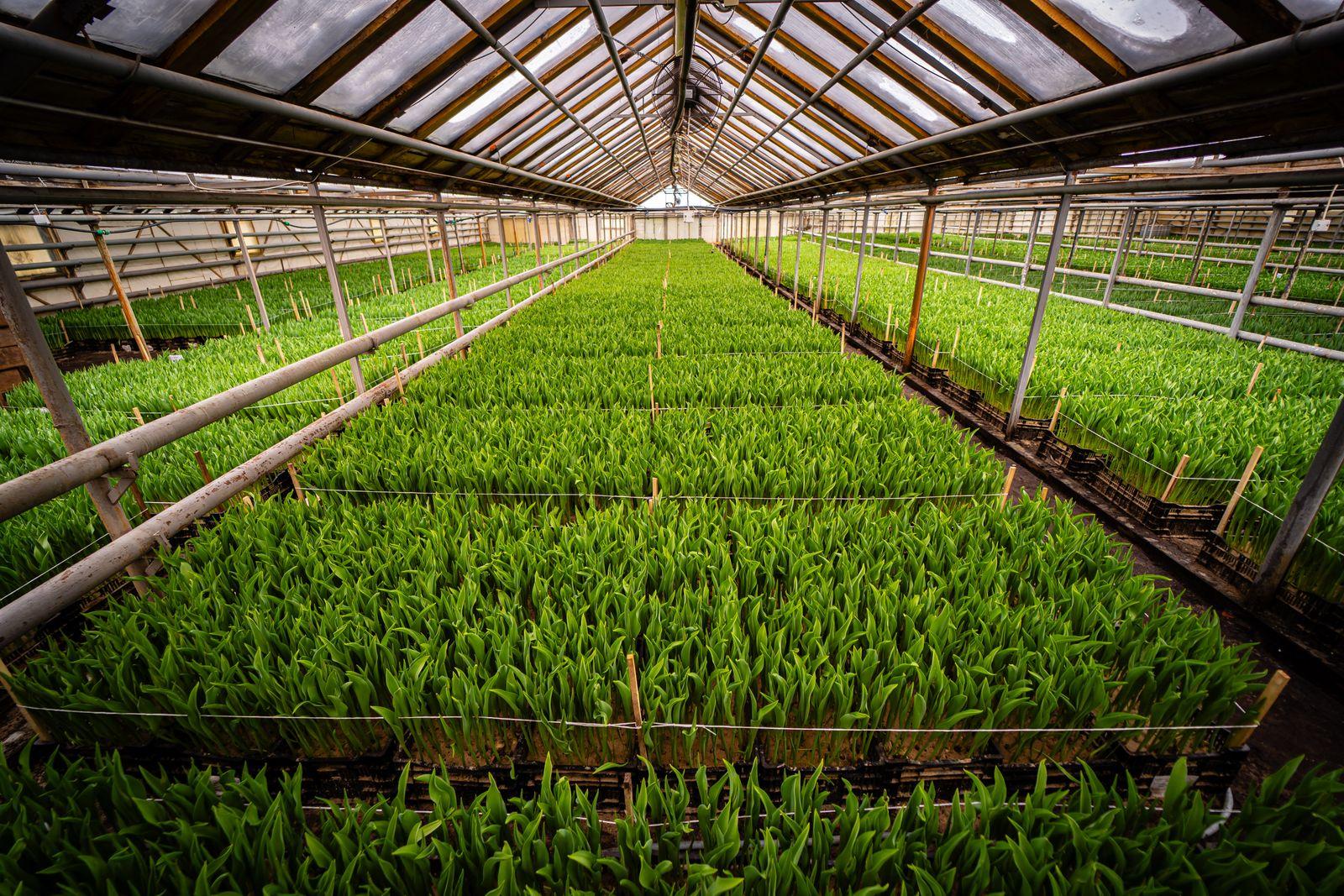
Canada's own flower crop is an indoor one, and indoors costs real money in February. Greenhouse cut-flower sales were $192.3 million in 2023 against just $34.3 million from field-grown, outdoor cut flowers, per Agriculture and Agri-Food Canada. Ontario had 161 hectares of field-grown flowers that year, 35.5% of the national 454 hectares, worth $19.6 million in sales. Field-grown means outdoors, which in this province means the frost-free part of the calendar and nothing else. If you have ever wondered why the Ontario peony disappears after June, our guide to peony season in Ontario walks through that same calendar from the growing side.
Then the heating bill arrives. Statistics Canada reported in April 2026 that total greenhouse operating expenses rose 4.3% to $4.2 billion in 2025, with natural gas costs up 4.7% to $265.4 million, electricity up 21.2% to $181.9 million, heating oil up 11.0% and other fuels up 12.2%. Those are all-greenhouse figures, vegetable growers included, so read them as the weather every Canadian grower is standing in rather than a flower-only number. The physics does not discriminate: a rose in a February greenhouse wants the same warmth as a tomato, plus supplementary light on a day that runs about ten hours.
Ontario ran 64.9% of Canada's total greenhouse area in 2025, and, on the latest provincial split from 2024, about half of the area given specifically to flowers and plants, so the province growing your flowers is also the province paying most of that bill. Farm Credit Canada said it plainly in July 2026: "Electricity and natural gas are essential for heating, lighting and operating greenhouse systems." Its published cost breakdown covers greenhouses specialized in fruit and vegetable rather than flowers, and there it puts labour and energy together at 44% of operating costs in Ontario, 47% in British Columbia and 55% in Quebec.
Why do roses cost the most in February?
Because Canada hardly grows one. Of the 345.1 million greenhouse cut-flower stems produced in Canada in 2023, roses accounted for 2.86 million, or 0.8% of the crop, according to Agriculture and Agri-Food Canada's 2024 overview, which revised the 2023 count upward. Tulips were the giant at 158.5 million stems (45.9%), followed by gerberas at 76.3 million (22.1%), snapdragons at 27.9 million (8.1%) and chrysanthemums at 24.4 million (7.1%). Read that list twice. Canada is very good at growing the flowers people buy on ordinary weeks, and almost entirely absent from the one flower a whole country wants on a single day in February.
So a February rose is an imported rose. Colombia and Ecuador, the second and fourth largest sources of Canada's floriculture and nursery imports, are the two origins the entire northern hemisphere is bidding for at exactly the same moment. Growers plan that crop months ahead and time the cut to the week. Freight capacity tightens, every hand in the chain is working a peak, and none of that is markup invented at a shop counter. It is why roses delivered in Toronto read differently on February 12 than they do on March 12.
Where this lands on a Toronto florist's price
Every week. A florist buys at wholesale, and wholesale is where the heating, the freight and the February scramble get settled long before anyone thinks about a vase. In our experience the winter difference is not only the number on the invoice: stems that spend longer in transit arrive with less runway, so a January bouquet can be a slightly smaller window of good flower at a higher cost.
There is an honest answer to that, and it is not a trick. Mixed bouquets let a florist build around what is genuinely excellent and genuinely available that week instead of paying peak for one named variety in a bad week for it. Cindy's Flowers hand-ties those in our Toronto studio, with same-day delivery across Toronto and the GTA Monday to Saturday on orders placed before 3 PM. Prices sit on the product cards, so the fastest way to see where winter has actually landed is to look at what we have in the studio right now rather than to guess from last year.
How do you get more flowers for your money in winter?
- Buy the crop Canada actually grows. Volume is the cheapest thing in floristry, and Canadian greenhouses grow tulips and gerberas in serious volume. One caution before tulips go into a home with animals: the ASPCA lists tulips as toxic to dogs, cats and horses, as it does chrysanthemums. Gerbera daisies, roses, snapdragons and alstroemeria sit on its non-toxic list.
- Pay for vase life, not for drama. A stem that holds for two weeks beats a showier one that collapses in four days, especially at winter prices. Our roundup of the longest-lasting cut flowers ranks the varieties that earn their keep.
- Move the date if the date can move. Demand concentrates hard around February 14 and Mother's Day, and concentrated demand is expensive demand. The same budget goes further on an ordinary Tuesday.
- Name a colour, not a species. Asking a florist for something warm and white gives the shop room to buy well that week. Naming one variety in its worst week does the opposite.
- Then look after them properly. Recutting stems and changing the water is the cheapest price cut available to anyone, and our guide to making cut flowers last longer has the whole routine.
Winter pricing is not a mood or a marketing decision. It is a heating bill, a plane ticket and a crop calendar, and it shows up on the tag in Toronto the same way it shows up in Calgary or Halifax. Once you can see the mechanism, a January bouquet stops looking like a mystery and starts looking like what it is: a flower that travelled a very long way, or one that was kept warm through a Canadian night.