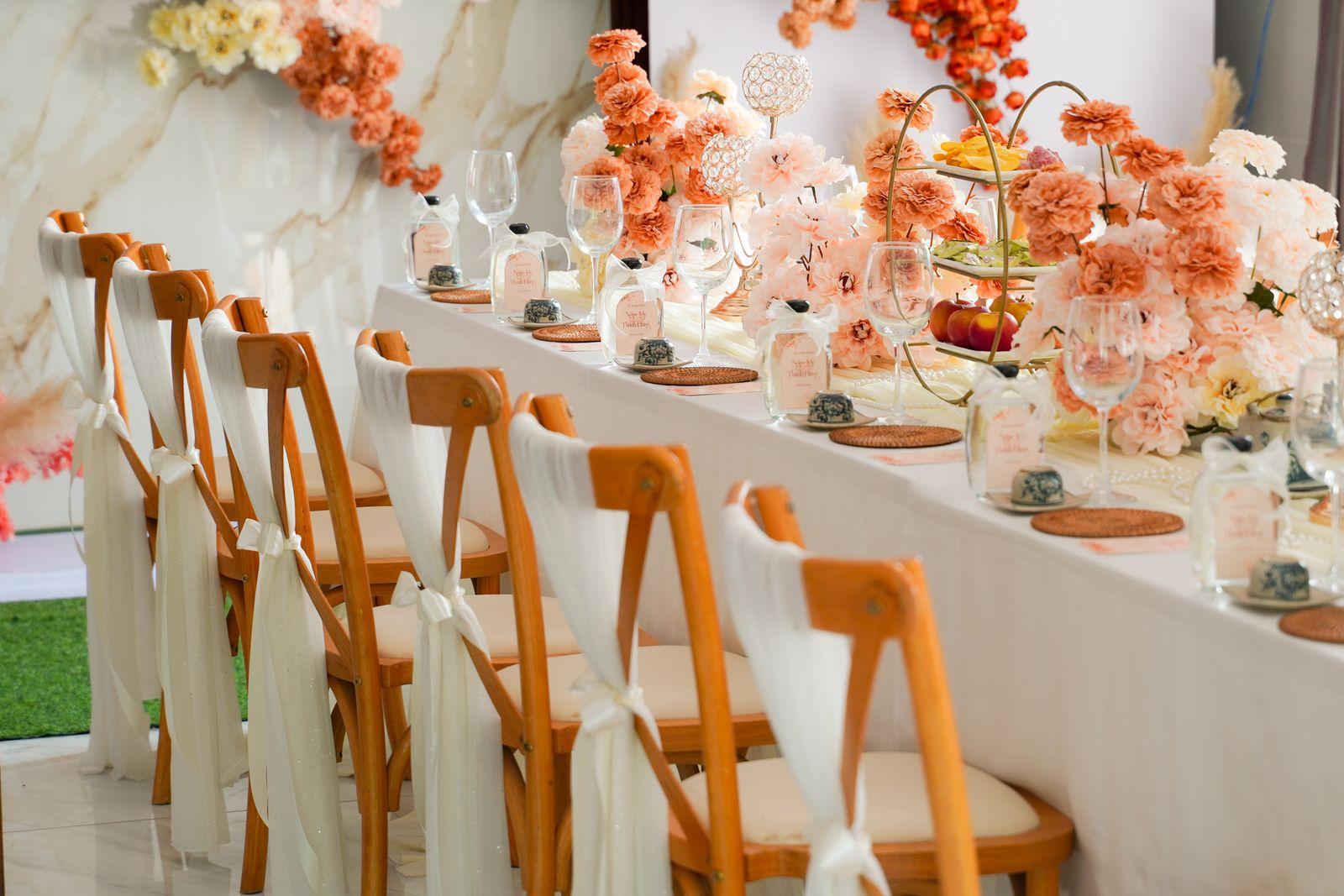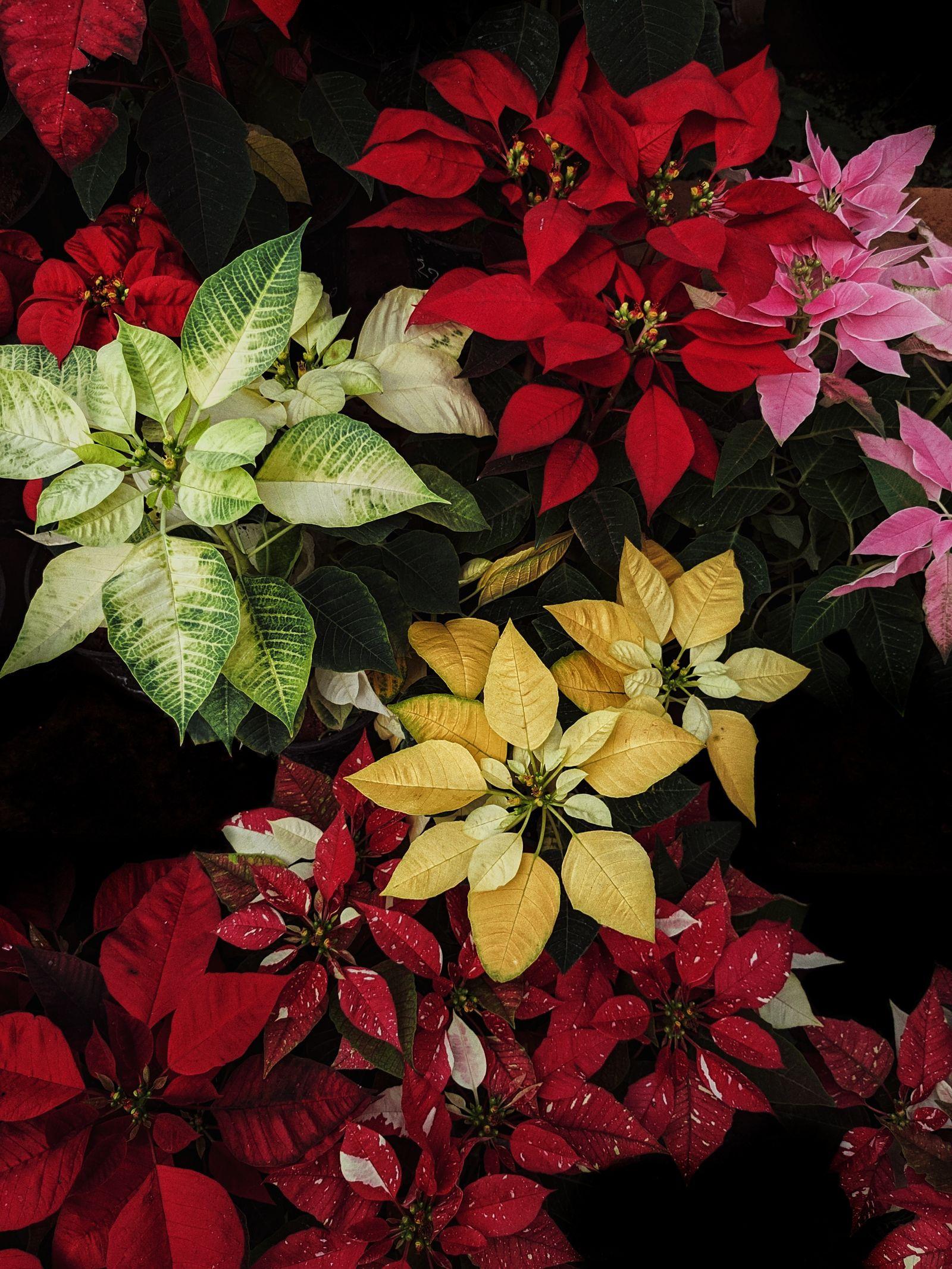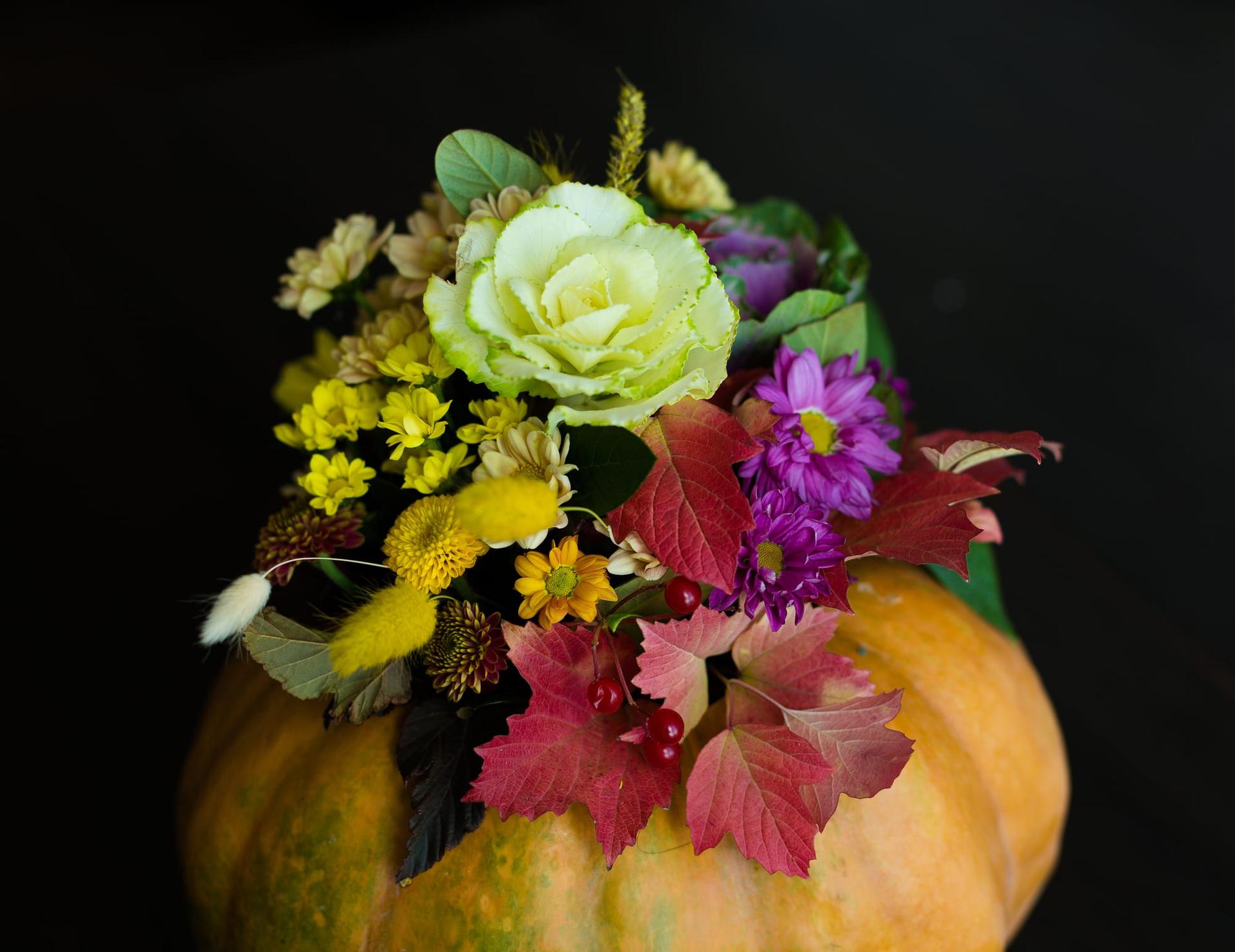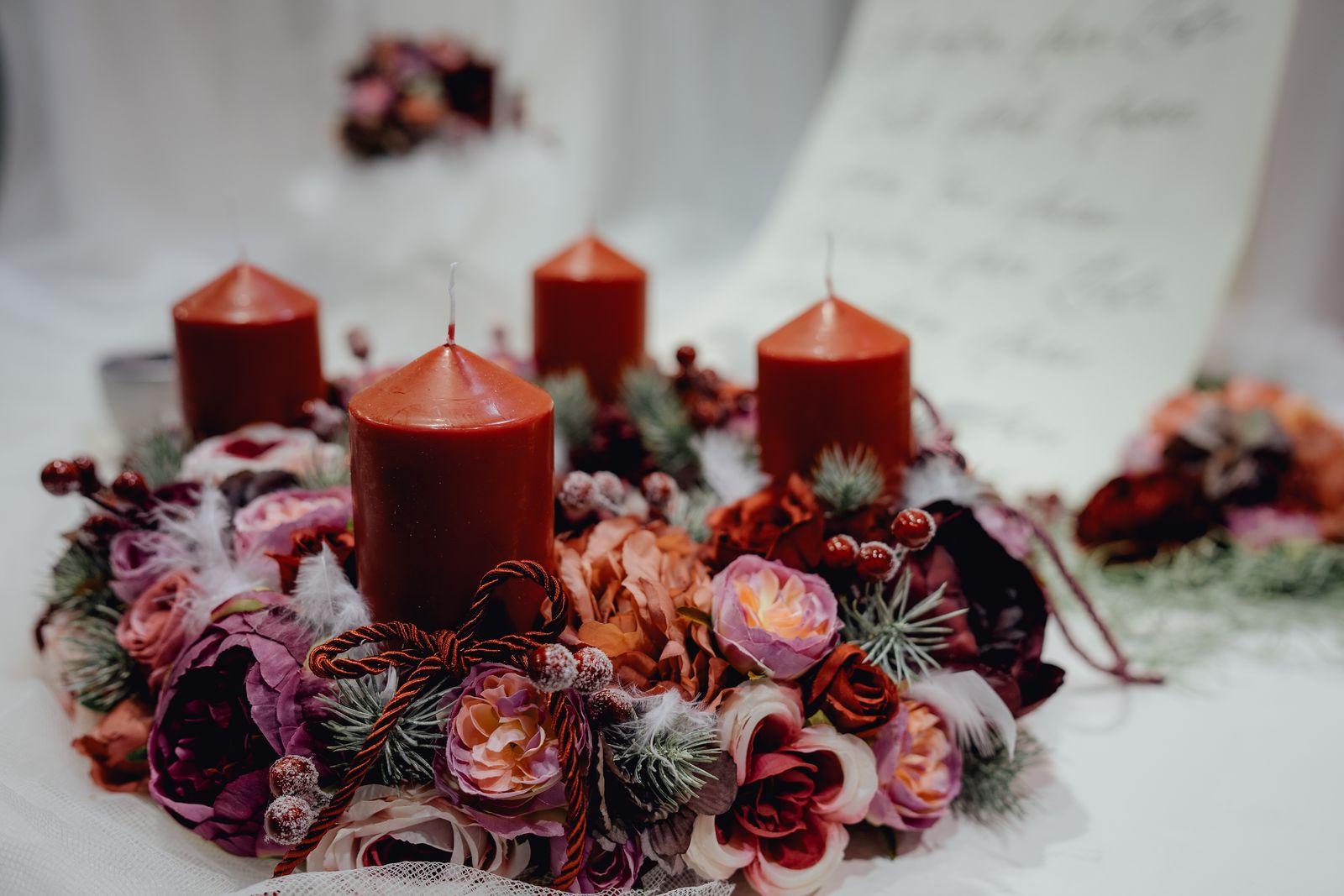
A Christmas centrepiece works on a real dinner table when it is low, quiet and standing in water. Keep it under about 30 cm (12 inches) so people can see each other across it. Choose flowers with little scent, so dinner smells like dinner. Build on pine or fir, which University of New Hampshire (UNH) Extension says hold up longest, and keep candles at least 30 cm from the greenery, as the US National Fire Protection Association (NFPA) advises, or go flameless. Then plan one fresh-flower swap before Christmas Eve. Cindy's Flowers builds low Christmas centrepieces to exactly that brief in its Toronto studio.
Low, quiet and liftable: what Christmas dinner asks of a centrepiece
Height is the rule people break most, because Christmas flower arrangements get photographed by someone standing up. On a standard 30-inch (76 cm) table, seated eye level sits roughly 13 to 23 inches above the tabletop, about 33 to 58 cm, as our wedding centrepiece guide works out. Stay under about 30 cm and you clear it.
A home table adds two demands a banquet table never makes. The food needs the middle: platters, gravy boat and bird, so build long and narrow rather than round and wide. And the piece has to move. A centrepiece in one container goes to the sideboard in a single lift when the roast comes out; scattered pine cones and tealights make that a cleanup.
Three checks:
- Sit down and look across. If flowers cross the face opposite, take them down.
- Set two platters beside it. If they don't fit, go narrower.
- Lift it. Need a helper? Too big.
Which flowers belong on the Christmas table, and which in the hallway?
Faint-scented flowers belong at the table; perfumed ones belong somewhere you walk past, away from the roast and the wine. Red and white roses carry the traditional palette, and most florist roses have far less scent than a garden rose. Alstroemeria is close to scentless, lasts well and comes in both Christmas colours.
Move these to the front hall or a side table. That fixes the scent, not the risk: in a home with a dog or cat, leave paperwhites and hyacinths out.
- Paperwhites. Their musky perfume fills a room alone. The ASPCA lists narcissus, paperwhites included, as toxic to dogs, cats and horses, the bulbs most of all.
- Hyacinths. Just as heavy, and ASPCA-listed as toxic to dogs, cats and horses, the bulb most of all.
- Oriental lilies, Stargazer and Casablanca among them. Snipping the anthers keeps pollen off the tablecloth and fixes nothing else. True lilies and daylilies are highly toxic to cats: they can cause fatal kidney failure, the pollen and vase water included, so don't bring them into a cat's home at all. Here's why lilies and cats don't mix.
The ASPCA also lists holly, American mistletoe and eucalyptus, a fixture in December florist greens, as toxic to dogs, cats and horses, and that short list is no all-clear for every other bough and berry. Sending flowers to a home with a dog or cat? A potted white moth orchid for the sideboard is the simpler gift; the ASPCA lists Phalaenopsis as non-toxic to dogs and cats, and our guide to Christmas plants that last covers the other December pots.
Which evergreens last longest indoors?
Pine and fir. UNH Extension puts it plainly: "Pine and fir boughs are the most commonly used because they hold up the longest. Hemlock and spruce drop their needles quickly, especially indoors." The University of Minnesota Extension adds that Fraser fir and balsam "tend to stay fresh longer." Even those belong well away from fireplaces and radiators: the NFPA says half of decoration fires start with decorations too close to a heat source.
Cedar is where the authorities split. It's also the local one: Ontario's most widespread native cedar is eastern white cedar, Thuja occidentalis, also known as arborvitae. UNH says to skip arborvitae for anything but a short display, because it "tends to discolor rather quickly both indoors and out." Minnesota calls cedar and pine "perfect for tabletop arrangements, which generally have a vase filled with water and/or floral foam," kept in cooler rooms. Illinois Extension names arborvitae among its long-lasting favourites. Our take: use it in water, somewhere cool.
Two cautions:
- Holly: berry colour, but poisonous to people as well as pets. US Poison Control reports symptoms in children after as few as two berries, and the ASPCA lists holly as toxic to dogs, cats and horses.
- Yew: leave it out. Illinois Extension counts it among long-lasting cut evergreens, but the ASPCA lists yew as toxic to dogs, cats and horses, naming sudden death from cardiac failure among the signs.
Candles and dry greenery: the 30 cm rule
The NFPA's candle tip sheet is blunt: "Keep candles at least 1 foot (30 centimeters) away from anything that can burn." It also calls December "the peak month for home candle fires." In NFPA research, candles start 49% of December home decoration fires, against 33% across the year. Those figures are American, but Health Canada and the City of Toronto both say to keep candles away from decorations.
So where do the candles go? Not into the fir, which rules out one of the most copied centrepiece ideas: tapers rising out of the greenery. Minnesota's extension warns that greens brought inside "can quickly dry out, turn brown and become brittle," and the NFPA ranks January just behind December for candle fires, 10% against 12%, with Christmas the peak day. The greenery is at its driest while candle season is still running.
What works instead:
- Candles beside the arrangement, never inside it, in "stable, non-tip candle holders," as the City of Toronto puts it, with 30 cm clear to greenery, ribbon, napkins and crackers.
- Trimmed wicks. Health Canada says 5 to 7 mm (1/4 inch) before lighting, and again every two to three hours.
- No one in the room, no flame. That's Health Canada's rule; the City of Toronto adds keeping candles out of reach of pets and small children.
- Flameless inside the greens, behind a child-resistant battery door. Health Canada notes many run on button batteries, which "can be very harmful if swallowed."
Can one centrepiece last from early December to New Year?
The greens can, if they stand in water. The flowers can't. House Beautiful UK sets the ceiling for dry greenery: "two weeks is probably the limit for garlands and decorations which aren't in water." So a month on the table takes a water-fed base and one flower swap, roughly halfway.
Here's the schedule we'd follow:
- First week of December: fresh-cut fir and pine into a low container of water.
- Daily: top up the water.
- Every couple of days: mist the greens and replace anything wilting from spare stems kept in a vase somewhere cool.
- Around December 20: new flowers. Cut roses last about a week with basic care, so an early-December set is spent before Christmas Eve. Keep the base, swap the blooms, and give the new stems the routine in our guide to making cut flowers last longer.
- Christmas to New Year: bend a sprig. Fresh greens flex; dry ones snap. Replace whatever snaps and keep flame well clear of the rest.
Minnesota's extension puts cedar and pine in cooler spots, away from heat sources and vents. Spare boughs can wait in the garage, misted often, as Illinois Extension suggests.
Should you make your own Christmas centrepiece or order one?
Make it if you can get evergreens and a free afternoon; order it if the afternoon is worth more. Illinois Extension advises waiting for a hard frost, when the plant is dormant and the greens "will retain their needles longer," never cutting more than 25% of a plant, and asking before you cut from a neighbour's hedge.
A simple build:
- Pick a low container that holds water, longer than it's wide for a rectangular table.
- Lay in fir and pine first, angled low and outward so the container disappears.
- Add cedar for texture, then berries for colour. Use faux ones if small children or pets will be near the table: holly berries are poisonous to both.
- Set the flowers last, in two or three clusters rather than dotted evenly.
- Sit down and check the height.
Vary the flowers or container for three Christmas table decorations:
- Red and white: roses of both colours in two clusters.
- All white: white roses and alstroemeria over fir, for a quieter table.
- Round table: one small, low bowl of red roses inside a cedar collar.
Ordering makes sense when the time is better spent cooking, or when the table isn't yours. Cindy's Flowers builds its Holiday Red & White Centrepiece low and long: red and white roses over cedar, pine and fir. It sits in our Christmas flower delivery collection: order before 3 PM, Monday to Saturday, for same-day delivery in Toronto and the GTA. For a home with a dog or cat, send the potted moth orchid instead. The centrepiece's greens include eucalyptus, which the ASPCA lists as toxic to dogs, cats and horses. Its berries are hypericum; the ASPCA has no entry for the florist species but lists its relative, St. John's wort, as toxic to dogs, cats and horses. Its stems can also be substituted.
If it's for someone else's table, send it the day before; our hostess gift guide explains why flowers that arrive early beat flowers carried through the door. Then sit down, look across, and check where the candles are.