Hydrangea care splits in two. A cut hydrangea wilts because air and bacteria block its stem, so the fix is a fresh angled cut made under water, a clean vase, and frequent water changes. A potted hydrangea is a shrub, not a houseplant: it wants bright indirect light, soil that never dries out, and a spot outdoors once frost season passes. Get both right and the flower that flopped in an afternoon can still be holding your table two weeks later. Cindy's Flowers hand-ties hydrangeas in our Toronto studio and delivers them same-day across the GTA on orders placed before 3 PM, so those two weeks start on your table rather than after a rescue.
Why does a cut hydrangea wilt so fast?
Because the stem stops drinking, not because the bloom ran out of enthusiasm. A 2025 review in the journal Agronomy puts it flatly: cut hydrangeas have a shortened vase life primarily due to blockages in their vascular system, caused by air embolisms and microbial activity, and that lost absorption is what drives the rapid wilting and browning of the petals.
Postharvest guidance from the New South Wales Department of Primary Industries splits the blockage into three culprits, and hydrangeas manage to collect all three. Air gets pulled into the cut end the moment the stem meets air. The plant then seals its own wound, a process called physiological plugging, using substances that also block water flow. And woody stems, which is exactly what a hydrangea shrub gives you, are more prone to bacterial plugging than soft ones.
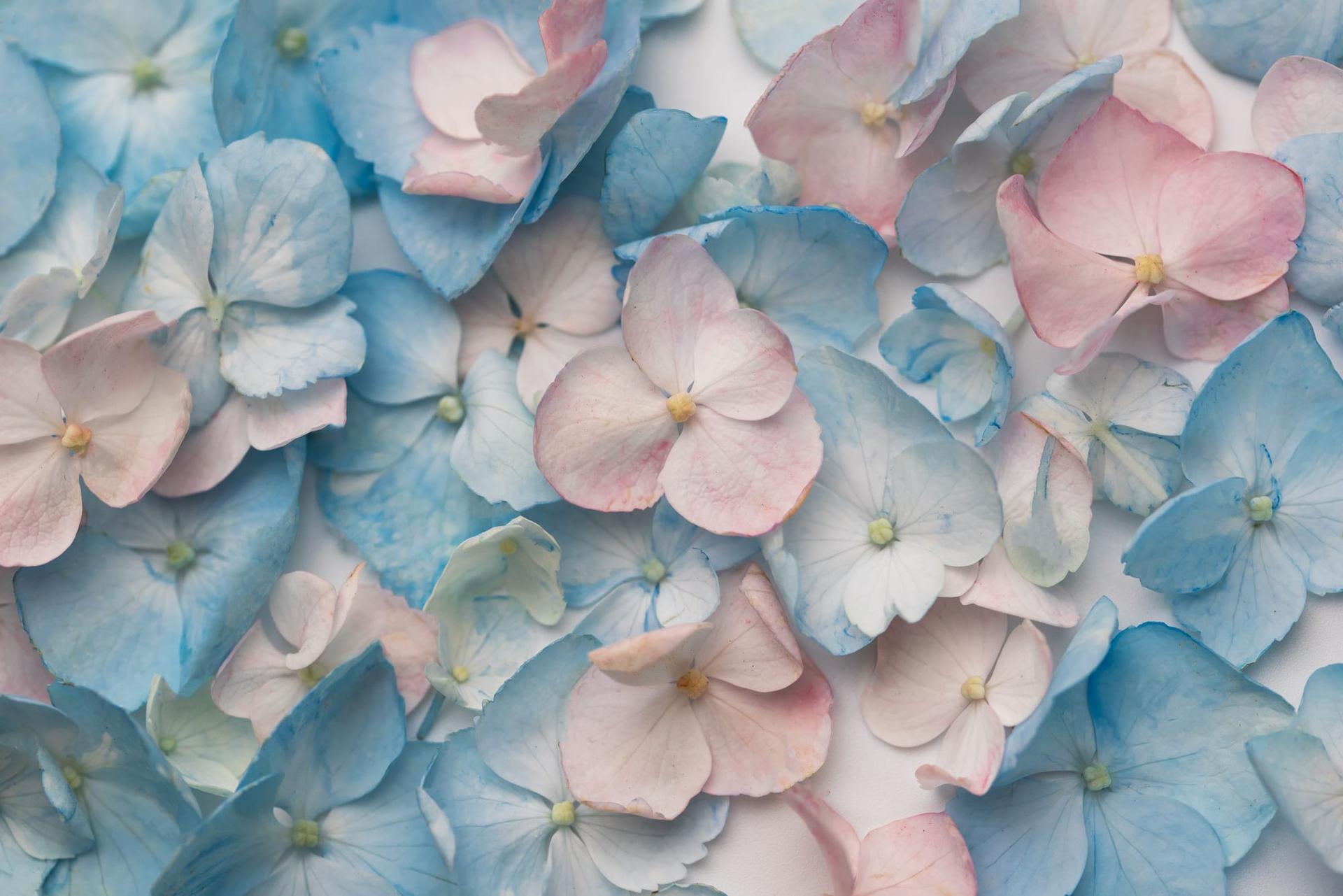
The flowerhead makes it worse. Those big "petals" are not petals at all: they are enlarged sepals on sterile flowers, surrounding the small fertile ones that do the actual reproductive work. That is the difference between a mophead, a globe of showy sterile florets, and a lacecap, a flat head with a core of tiny fertile flowers ringed by showy ones.
A trial published in The Horticulture Journal measured how those sepals behave and found stomatal conductivity of just 2.7 to 3.3 mmol per square metre per second, with only about 6% of stomata open, meaning most water leaving the sepals goes straight out through the cuticle. So the head is mostly a water-loss surface, and a big one. That does not mean it is a one-way street: the Chicago Botanic Garden finds that submerging a wilted head reintroduces water through the flower as well as through the cut stem. In the same trial, defoliated stems carrying small heads of 189 decorative florets transpired 7 grams a day and lasted 15 days, while stems with 422-floret heads lost more water and gave up sooner. Showy heads flop first, and now you know why.
One more myth while we are here. The name Hydrangea does come from the Greek for "water vessel", but it describes the shape of the seed capsules, not the plant's thirst. The Toronto Master Gardeners still use it as a memory aid for watering, which is fair enough. It just is not the etymology.
How do you revive a droopy hydrangea?
Recut the stem under water. The NSW postharvest guidance is specific: you can remove embolisms by cutting off, at an angle, the lower 3 cm of the stem while the stem remains under water, and the water must then be replaced frequently. The same source notes that acidic water and warm water at 40°C also reduce embolisms.
The full rescue, in order:
- Fill a sink or bowl with warm water, around 40°C, which feels comfortably warm on the wrist rather than hot.
- Hold the stem under the surface and slice 3 cm off the base at a sharp angle, so the fresh cut never touches air.
- Pull off any leaf that will end up under water.
- Move the stem into a scrubbed vase of fresh water. A cloudy vase reseeds the bacteria you just cut away.
- Park it somewhere cool and out of the sun for a few hours before you judge the result.
Colour is your prognosis. A head that has gone limp but held its colour usually comes back. Once the sepals brown and turn papery at the edges, no amount of water will refill them, and the honest move is to pull that stem before it fouls the water for the rest of the bunch.
Two florist habits are better documented than their viral reputation suggests. The Chicago Botanic Garden recommends both: recutting into boiling water to clear the resin the plant secretes over its own wound, and submerging a wilted head in tepid water for half an hour, after which it inflates like a balloon. FloraLife's postharvest lab tested submersion too and found a two-hour cold soak the best of the hydration treatments it tried. The stem still does most of the work, and the figure NSW documents for reducing embolisms is warm water at 40°C.
Can you change a hydrangea's colour?
Only in the ground, and only on some varieties. Colour comes down to how much aluminium the roots can take up, which is governed by soil pH. The Toronto Master Gardeners' guide to growing hydrangeas gives the bands: flowers will be pink in soil with pH greater than 6.5, mauve at 5.5 to 6.5, or blue below 5.5, and colour on bigleaf and mountain types can be steered with a fertilizer for acid-loving plants such as aluminum sulfate.
Three limits people skip past:
- White cultivars, panicle hydrangeas and smooth hydrangeas do not respond to pH at all. They are white or they are not.
- It is a root process. Nothing you add to vase water will turn a cut stem blue.
- It is not one and done. Holding a colour means applying the amendment annually.
Toronto's older streets demonstrate this in public every July: two bigleafs three houses apart, one blue, one pink, identical weather, different dirt. As for the kitchen-cupboard shortcuts, baking soda is alkaline, so it points toward the pink end in theory — but the National Garden Bureau's expert panel is unanimous that it will not move soil pH in any realistic quantity, and being a salt it accumulates in the soil. Use a purpose-made amendment. Spent coffee grounds sit far closer to neutral than their reputation suggests, so treat them as compost rather than a blueing agent. Acid alone is not the trigger. Available aluminium is.
How do you keep a potted hydrangea alive indoors?
Think of it as a shrub taking a short holiday inside. Florist hydrangeas are usually bigleaf types, Hydrangea macrophylla, sometimes sold as hortensia, forced into bloom under glass. Indoors they want bright indirect light, a cool room rather than a warm one, and soil kept evenly moist. This is where that water-vessel mnemonic earns its keep: let the rootball dry out once and the whole plant collapses at speed.
Water until it runs from the drainage holes, then empty the saucer so the roots never stand in it. Keep the pot away from radiators and forced-air vents, which dry soil from underneath while you are not looking. And keep it off the floor if you have pets, because hydrangeas appear on the ASPCA's list of plants toxic to dogs, cats and horses.
Inside or outside? Outside, long term. A potted hydrangea limps along indoors for the length of its bloom and then wants real light and real weather, which in the GTA means hardening it off and planting out once frost risk passes. Manage your expectations on flowers, though. Bigleafs bloom on old wood, and a Toronto winter regularly kills those buds even when the plant itself sails through, which is why panicle and smooth hydrangeas are the dependable garden performers here.
If the gift has to live indoors permanently, a flowering houseplant is the better structural choice, which is why we steer people toward orchids and long-lived plants when the brief is "something that keeps going".
How long do cut hydrangeas last in a vase?
Longer than their reputation, if the stem stays clear. In that Horticulture Journal trial, defoliated stems with the smallest heads ran 15 days, while the largest-headed stems transpired far more and faded sooner. At home your number lands somewhere in between, set mostly by room temperature and how clean you keep the water.
The upkeep is unglamorous and it works:
- Recut the stems and swap the water every two days, under water each time if you can manage it.
- Strip all foliage below the waterline. Leaves sitting in water are a bacteria farm.
- Cool room, no direct sun, and never on top of the fridge.
- Move the fruit bowl. Ripening fruit releases ethylene, which ages plenty of cut flowers early.
- Top up daily. Hydrangeas drink hard, and a vase that runs dry overnight undoes everything.
When you are choosing stems, press a head gently. It should feel dense and crisp, not dry and rustling. One good hydrangea head does the visual work of a dozen small stems, which is why five stems make a whole arrangement in our hydrangea collection, and why the same water discipline that keeps a mixed arrangement going covers a single-variety bunch too.
To have one arrive rather than build it yourself, see what is fresh right now. Cindy's Flowers hand-ties every bunch in our Toronto studio, with same-day delivery across the GTA Monday through Saturday on orders placed before 3 PM.