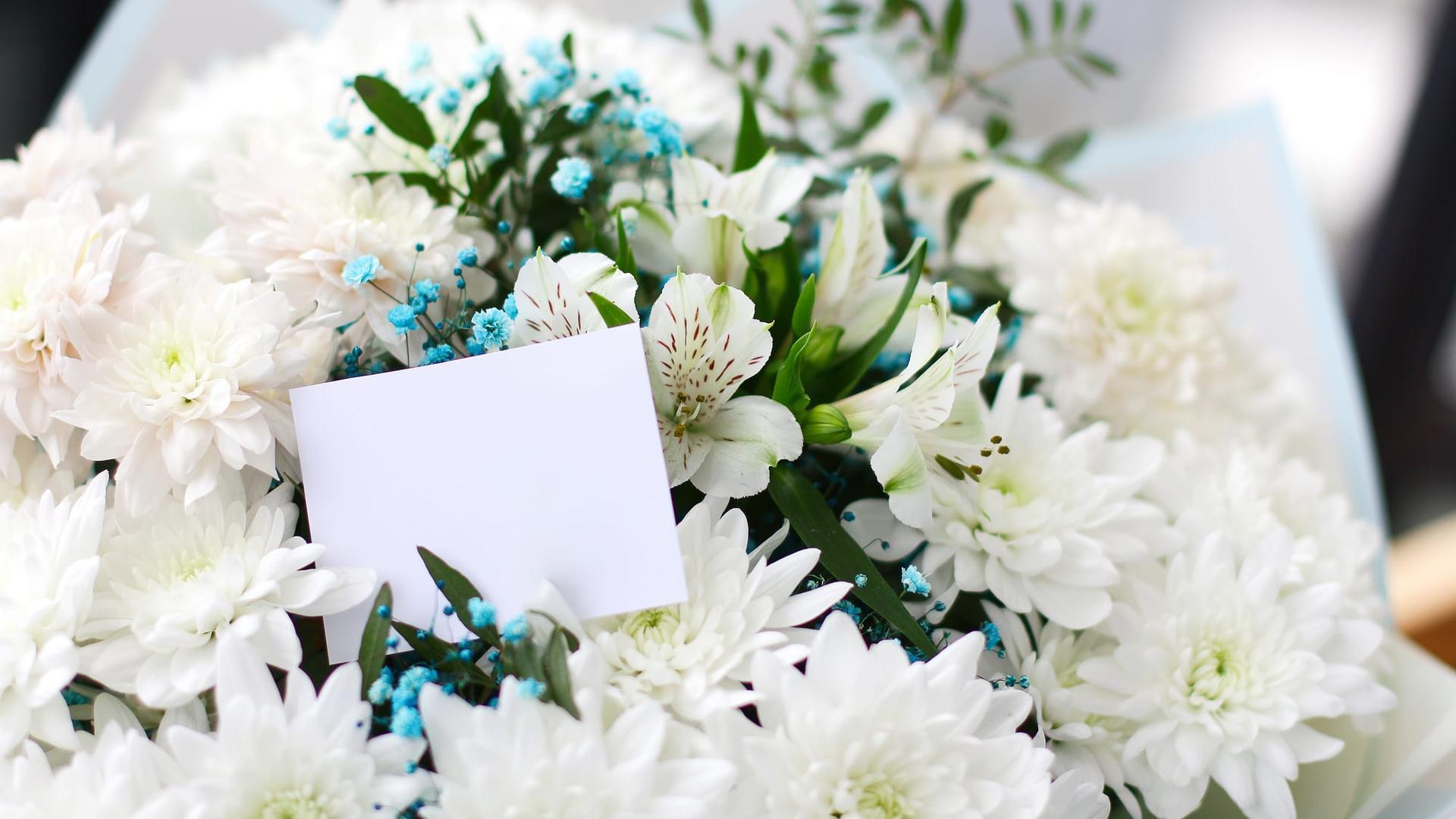
Name the death, name the person who died, say plainly that it hurts, then offer one specific thing you will do and put a day on it. That is a finished sympathy card. Two or three sentences carry it, and the Emily Post Institute's position is that a single sincere line about the person you lost is enough on its own. What changes from card to card is the relationship. A friend wants your memory of her mother. A coworker wants Thursday's meeting quietly cancelled. Someone whose dog died wants to read the dog's name. The card carries the personal part; where flowers travel with it, Cindy's Flowers ties them by hand in our Toronto studio for same-day delivery across the GTA on orders placed before 3 PM.
The four moves inside every good condolence note
Four moves carry a condolence note, and they hold across every relationship in this post: acknowledge the death directly, use the name of the person who died, validate the pain instead of brightening it, and close with an offer you have already decided to keep. Speaking Grief, the public-media project from WPSU at Penn State, backs two of those directly — say their name, and build an offer of help out of what you can do plus when you can do it, ending with "is that ok?"
- Acknowledge it. Name the death rather than writing around it.
- Be specific. Use the name of the person who died. If you never met them, take a detail from the obituary and use that one.
- Validate, don't fix. No silver linings. The loss is the entire point of the card.
- Offer something concrete. "I'll bring dinner Tuesday at six, is that ok?" beats "let me know if you need anything," which asks a person at their worst to hand you an assignment.
Lines worth retiring
"I know how you feel" sits on Speaking Grief's list of phrases to avoid, since it overlooks how unique each grief experience is. It rejects religious platitudes outright — "everything happens for a reason," "they're in a better place now" — not merely when the recipient's beliefs differ from yours, and it warns against formal phrasing you would never say out loud. Emily Post adds two more: don't dwell on the illness or the manner of death, and never suggest the loss was a blessing in disguise. If "sorry for your loss" feels worn through, replace it with a sentence only you could have written. "I'm so sorry Marion died." "I've thought about you every day this week."
What do you write when someone's mother or father dies?
Say the parent's name and one true thing about them. Specificity is the difference between a card that gets kept and a card that gets recycled along with the flowers, and Emily Post treats a shared memory as a welcome, entirely optional addition to an otherwise short note.
For a mother:
- "I'm so sorry your mum died. She used to answer the door mid-sentence, like we'd been talking all week. I'll call Sunday, and you don't have to pick up."
- "There's no fair version of this. Your mother was the first person who made me feel at home in this city."
For a father:
- "I'm so sorry about your dad. He taught half our street how to change a tire, mine included."
- "I didn't know your father well. The obituary said he coached minor hockey for thirty years, which explains a great deal about you."
Flowers can travel with any of those lines, and the card carries the personal part. Our sympathy flower delivery arrangements favour white lilies, soft roses and gentle pastels for that reason.
What should you write to a coworker?
Something short, plus one thing you have already taken off their plate. Under Ontario's Employment Standards Act, most employees are entitled to up to two days of unpaid, job-protected bereavement leave per calendar year, available once they have worked for the employer for at least two consecutive weeks. Two days. Your colleague will be back at their desk long before the grief is finished with them.
The leave covers a defined family circle, and it counts those relatives on the employee's spouse's side as well as their own: the employee's spouse; a parent, step-parent or foster parent, child, step-child or foster child, grandparent, step-grandparent, grandchild or step-grandchild of the employee or the employee's spouse; the spouse of the employee's child; the employee's brother or sister; and a relative who depended on the employee for care. A father-in-law or a stepmother-in-law counts, which is the part people assume it doesn't cover. The days don't have to be taken consecutively, and they can be used later, to attend a funeral or memorial service or to deal with estate matters. That detail should change how you time a card. A note arriving in week three isn't late. It may land on the exact afternoon your colleague is sitting in a lawyer's office. Ontario treats the death of a child under 18 separately, with its own leave of up to 104 weeks, which tells you plenty about which losses the two-day version was written for.
Two lines that work at work:
- "I'm sorry about your father, Dave. I've taken Thursday's client call off your calendar and covered it."
- "No reply needed. I'm around if you want company at lunch, and I'm fine if you don't."
If you manage the person, name what is actually covered instead of saying "take all the time you need" when you can't authorize it.
What do you say when someone loses a pet?
Use the animal's name, and skip the arithmetic. "He had a good long life" is a fact, not a comfort, and "you can always get another one" reads as a suggestion to replace a family member. Ontario's bereavement leave lists relatives, not animals, which is part of why a pet death so often passes unmarked. A card fills a gap nothing else is filling.
- "I'm so sorry about Biscuit. Fifteen years is a long time to have someone follow you from room to room."
- "The house must be unbearably quiet. Millie greeted me like a returning relative, every single time."
- "You gave that cat a very good eighteen years, and I know that isn't the point today."
How do you sign a sympathy card?
Match the closing to how close you were, then sign with a name the family will recognize. "With sympathy," "With love," "Thinking of you" and "With you in this" all read as sincere. The Emily Post Institute is more prescriptive about the address than the sign-off: if you knew the person who died but not their family, write to the closest relative, usually the widow, widower or eldest child, adding "and Family" if you like. If you knew a relative rather than the deceased, write to that relative instead.
Three things people get wrong:
- Sign your full name, with context if it helps. "Priya, from the Tuesday choir." Grief scrambles recall, and a first name alone becomes a puzzle.
- Print the names on a group card. Nobody identifies a colleague by handwriting.
- Keep a florist's card short. A note tucked into an arrangement is more public than a sealed envelope, so save the longer letter for the post.
Emily Post also allows an emailed condolence as a first contact, when email is how you and the person normally correspond, followed by a handwritten note.
What if the family's traditions aren't yours?
Then send what their custom welcomes, and let the words do more of the work. Toronto funerals run through synagogues, mosques, temples, chapels and churches, sometimes within the same few blocks, and the conventions differ in ways that matter.
In Jewish practice, flowers are traditionally not sent to the funeral or the grave, a custom that emphasizes simplicity and reflection over adornment. Families customarily ask for tzedakah, a charitable donation, often to a cause the person favoured. Shiva is Hebrew for "seven" and names the seven-day mourning period that begins after burial. The traditional Ashkenazi line said to mourners is "HaMakom yenachem etchem betoch she'ar aveilei Tzion v'Yerushalayim," meaning "May the Omnipresent comfort you among the mourners of Zion and Jerusalem." Practice varies by family and by denomination, so ask someone close to them when you're unsure.
Muslim families commonly meet news of a death with the Istirja, "inna lillahi wa inna ilayhi raji'un," meaning "To God we belong and to Him we shall return," from Quran 2:156. Borrow a religious phrase only when it's genuinely shared. Otherwise plain words are both safer and kinder.
Where flowers are welcome, the white lily is the Western funeral convention, and our lily arrangements follow it. One safety check before you send: true lilies and daylilies are highly toxic to cats, so choose a lily-free bouquet for any household with a cat.
Cindy's Flowers ties sympathy flowers by hand in our Toronto studio and delivers same-day across the GTA, Monday to Saturday, on orders placed before 3 PM, so a card written this morning can be on a doorstep tonight. Current bouquets are the place to start. The note doesn't have to be eloquent. It has to arrive.