An Orchid Is a Plant, Not a Bouquet
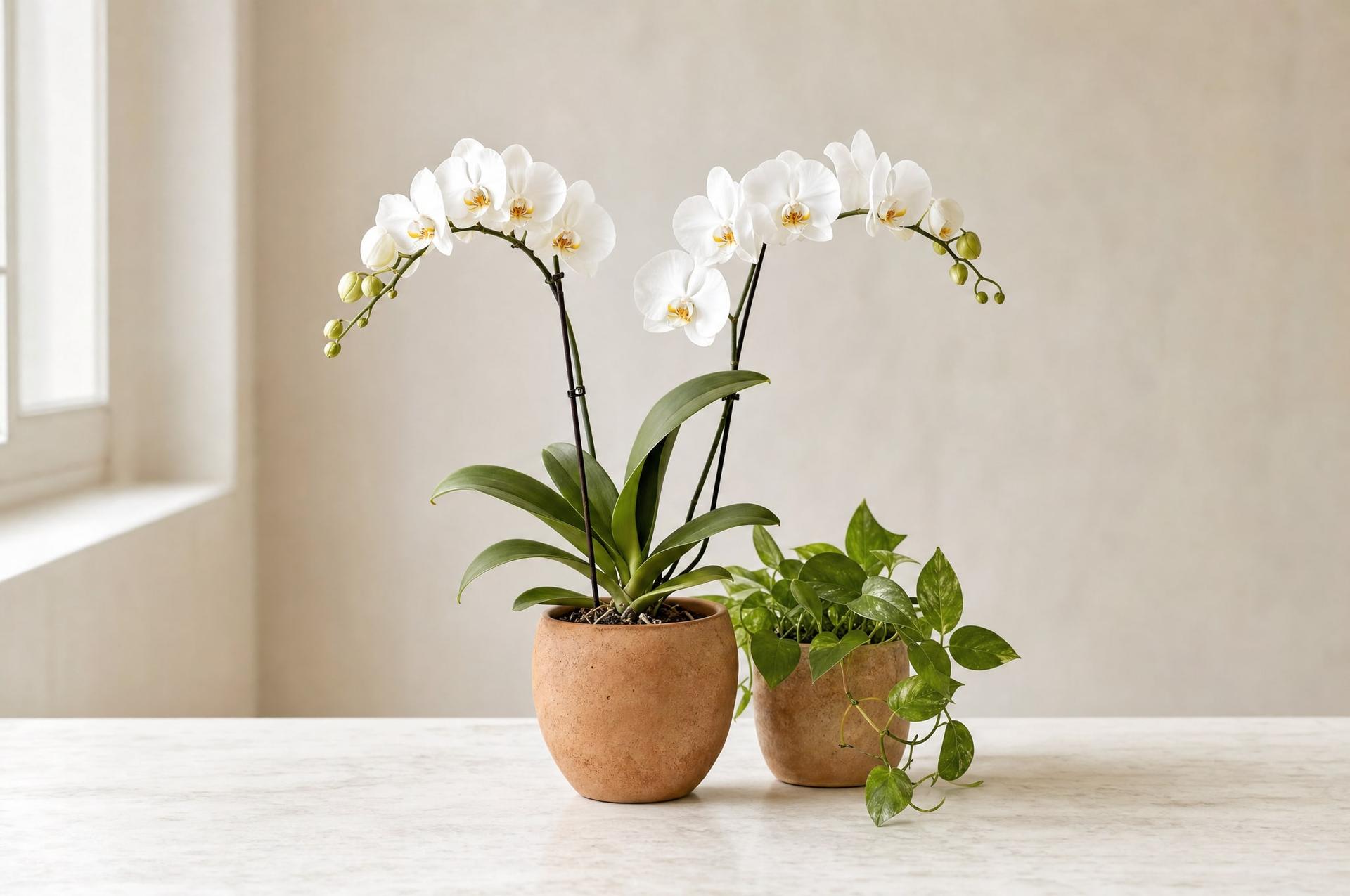
Most gift orchid plants are phalaenopsis, the moth orchid, and a potted one needs no trimming on arrival. Instead, remove any decorative sleeve or foil completely so air reaches the roots and water can drain. Check the potting medium next: chunky bark dries faster than sphagnum moss, and that difference sets your watering rhythm. Then read the roots. Healthy roots are firm and silvery-white, turning green when hydrated; silver roots plus dry bark mean the plant wants its first drink. One rule above all: never repot a blooming orchid. Let it settle in for a day.
How Often Should You Water a Phalaenopsis?
About once a week at normal room temperatures, and always by drenching rather than sipping. University of Maryland Extension recommends setting the pot in a sink and running warm, never cold, water through the bark and roots in three or four passes over roughly ten minutes, then letting it drain completely. Phalaenopsis store no water in pseudobulbs, so they want even moisture, yet overwatering is the single most common cause of death. Water when the bark is approaching dry and the roots have faded back to silvery-white, and never leave water in the saucer or pooled in the crown. Feed growing plants every third or fourth watering with orchid fertilizer at label strength, and skip feeding in winter.
Ice Cubes or a Tepid Soak?
Both camps can cite a source, so who's right? The American Orchid Society advises against ice, listing cold water as a bud-drop trigger, and recommends tepid water about a day before the bark dries out completely. Yet a 2017 HortScience study from Ohio State University and the University of Georgia found that bark-potted phalaenopsis given three ice cubes a week held their flowers as long as plants given the same volume of room-temperature water. Our reading: the tepid morning drench is the safer default, and three cubes weekly on the bark surface, never touching leaves or crown, is a documented shortcut for bark-potted plants. Skip ice entirely for moss-potted orchids.
Where Should Your Orchid Sit?
In bright, indirect light: an east or west window is ideal, and a south window works during short winter days. The leaves are your light meter, per UMD Extension. Light green means correct. Dark green, stiff leaves mean too little light, the most common reason a phalaenopsis refuses to reflower, while reddish margins mean too much. Kitchens fail this plant twice: ripening fruit and gas stoves both give off ethylene, which the AOS names as a cause of bud blast, along with smoke, drafts from vents and windows, and abrupt temperature swings. A quiet, bright spot away from the fruit bowl wins. For pet owners, the ASPCA classifies phalaenopsis as non-toxic to cats and dogs.
How Long Will the Blooms Last?
By horticultural convention, a single phalaenopsis stem holds its blooms for about two to three months, often longer in a cool room. That's the display life of the flowers, not the plant, which lives for years and can rebloom repeatedly. The more flowers already open on arrival, the shorter the remaining show, and cool, stable temperatures stretch it. That staying power is why a potted orchid makes such a dependable housewarming gift: it's still in flower months after cut bouquets have come and gone.
How Do You Get an Orchid to Rebloom?
Don't toss the plant when the last flower drops. If the spike stays green, wait and watch for swelling nodes; a new flowering branch often grows from the old stem. If it yellows or browns, UMD Extension and the AOS both advise cutting it back to about half an inch above the second node, the small triangular bump above the foliage, using a sterilized tool. A fresh spike is best triggered by bright light plus several autumn weeks with nights roughly 10 F, about 5 C, cooler than days. Expect the second flush to be smaller, and only push a healthy plant.
The Four Mistakes That End Most Orchids
1. Standing water. Roots rot when they sit wet; drain fully and empty the saucer every single time. 2. A dim corner. Dark green, floppy leaves and no new spike almost always trace back to too little light. 3. Bad neighbours. A fruit bowl, gas stove, cigarette smoke, or an AC vent can blast the buds off a healthy plant; the fix is relocation, not treatment. 4. Repotting in bloom. Wait until flowering finishes before you disturb the roots.