Want a gift that's still going strong months from now? Give a living plant instead of a bouquet. Cut flowers fade in about 10 to 14 days, but a moth orchid can stay in bloom for months and then rebloom for years. Snake plants and ZZ plants survive on near-total neglect. A holiday cactus can outlive the person who unwrapped it. The best long-lasting plant gifts pair real beauty with staying power, and most of the tropical favourites thrive indoors, which suits a Toronto home perfectly. Cindy's Flowers sends flowering orchids and other plants same-day across Toronto and the GTA on orders placed before 3 PM, so the gift arrives with months of bloom still ahead of it.
Why do living plants outlast a vase of cut flowers?
Here's the honest florist math. Even perfectly kept cut flowers last only about 10 to 14 days in a vase, while a healthy houseplant is measured in months and years. That gap is the entire case for gifting a plant when longevity is the goal.
Cut flowers still earn their place, and a few habits stretch every bouquet:
- Recut each stem at a 45-degree angle before it goes in water.
- Strip any leaves that would sit below the waterline, since they rot and breed stem-clogging bacteria.
- Use the floral preservative, then refresh the water every two to three days.
- Keep the vase cool, away from heat vents and drafts.
None of that effort is wasted; a bouquet's short life is part of its charm. But if you want the gift to still be there at the one-month mark, a plant wins on arithmetic alone.
Are orchids the best long-lasting plant gift?
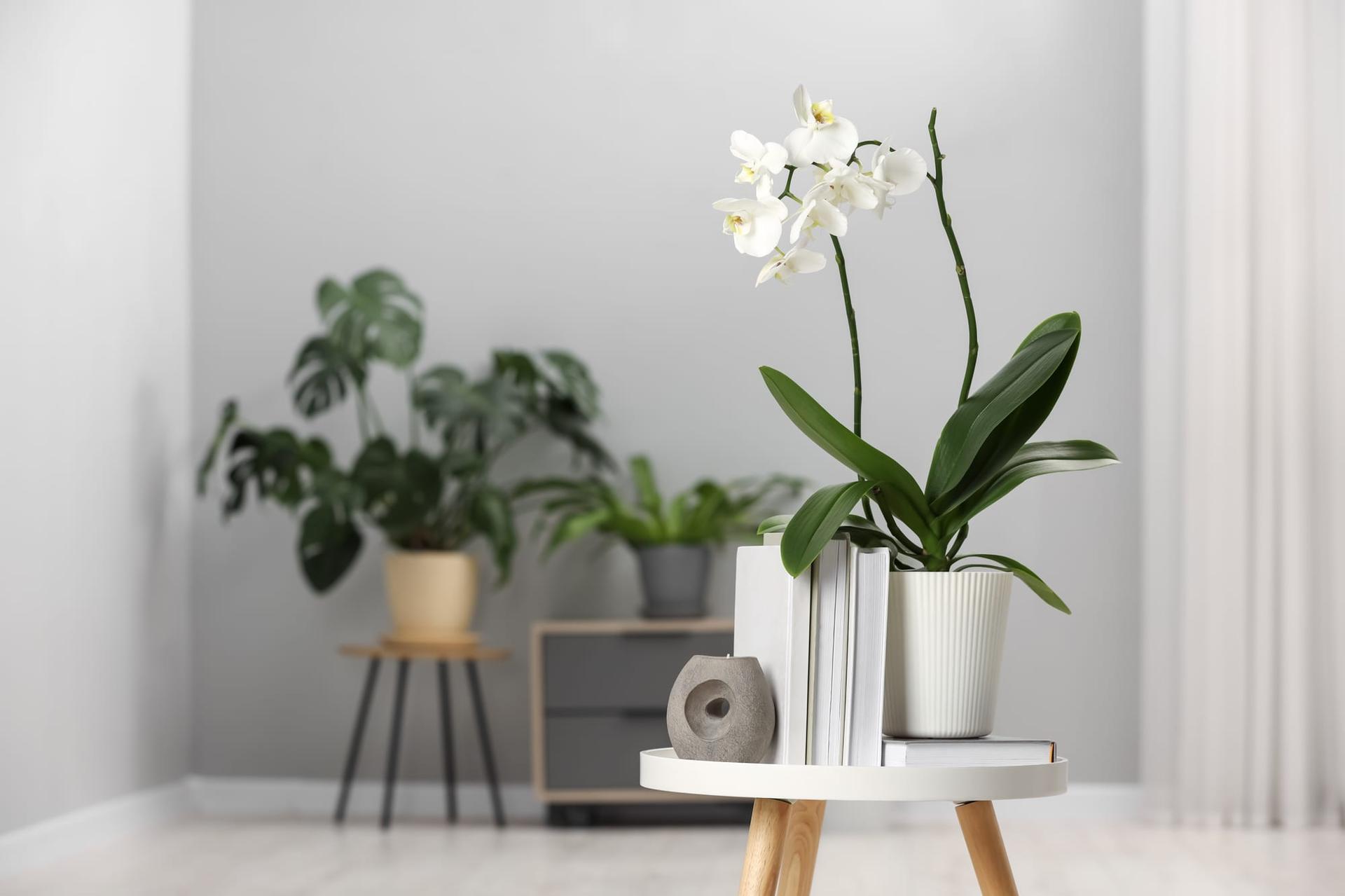
For sheer bloom time, the moth orchid is hard to beat. Each individual flower on a Phalaenopsis lasts at least a month, and because every spike carries a whole row of buds and can branch off the main stem, one well-kept plant stays in flower for months. That's a different league from cut stems.
The real trick is that a moth orchid is built to rebloom, not to be discarded. Leave a spike that stays green alone — new flowering branches often grow from it on their own. Once it yellows or browns, UMD Extension and the American Orchid Society advise cutting it back to about half an inch above the second node, and that cut can push out a fresh flowering branch. The AOS adds the condition worth knowing: a second flowering off the old spike is typically smaller and weaker than the first, so it's the right call only when the plant itself looks strong. A tired plant does better with the spike taken near the base, putting its energy into recovering for the next proper bloom.
Care is simpler than the plant's fussy reputation suggests. In the wild these orchids are epiphytes: they grow on tree bark, not in soil. So they arrive potted in a chunky bark mix, want a drink only about once a week at normal room temperature, and need any water pooling in the pot poured off. It's a plant that punishes kindness in the form of too much water and rewards a little restraint.
An orchid carries the right message too. By floral convention it stands for love, beauty, luxury, and refinement, a reputation that traces to the Victorian collecting frenzy nicknamed orchidelirium, when wealthy hobbyists prized rare tropical orchids as status symbols. If you'd like one delivered, our orchids and flowering plants suit anniversaries and milestone thank-yous.
The houseplants that survive a forgetful owner
Some plants seem engineered to forgive neglect, and two names come up again and again: the snake plant and the ZZ plant. Both handle low light, a patchy watering schedule, and an owner who travels. A new home brings a hundred small tasks, and a plant that demands weekly attention can become one more thing to forget, so resilience is the real kindness here.
The snake plant, botanically Dracaena trifasciata (you may know the old name, Sansevieria trifasciata), sends up stiff, sculptural leaves and asks for almost nothing. The ZZ plant, Zamioculcas zamiifolia, stores water in fat underground rhizomes, which keeps it drought-tolerant and cuts watering to about once a month in winter.
That toughness is exactly why they make such thoughtful housewarming gifts: the recipient can ignore the plant for a while and it'll still look sharp once the last box is unpacked. One caution for homes with pets. The ASPCA lists the snake plant as toxic to cats and dogs, since its saponins can trigger nausea, vomiting, and diarrhea if a leaf gets chewed. The ZZ plant's calcium oxalate crystals do much the same, and NC State Extension grades it medium toxicity; the ASPCA doesn't publish severity grades at all, only a toxic or non-toxic verdict. Both belong on a high shelf, not on the floor beside a curious kitten.
Which plant gifts bloom again every year?
If longevity means blooms that come back, not just leaves that hang on, choose a plant that reflowers on a yearly rhythm. Two winter classics deliver.
The holiday cactus, genus Schlumbergera, is one of the longest-lived houseplants you can give. A single plant can thrive for decades, and with steady care, well past a hundred years, which is why so many are handed down as family heirlooms. Give one and you might be starting a small tradition.
Amaryllis takes the faster, showier route. This South American bulb, botanically Hippeastrum, sends up its huge trumpet flowers about four to eight weeks after planting. Better still, it isn't disposable: kept and rested properly, an amaryllis reblooms year after year rather than heading for the compost. It does carry a pet caveat the holiday cactus doesn't: the ASPCA lists amaryllis as toxic to cats and dogs, and the bulb is the most toxic part of the plant, which matters because an amaryllis is usually gifted as a bare bulb sitting at table or floor height. In a home with a cat or a chewy dog, that bulb needs to be somewhere the animal genuinely cannot get to, or the gift should be the holiday cactus instead, which sits on the ASPCA's non-toxic list. One rewards patience, the other rewards a few weeks of anticipation, and both give the recipient something to tend long after a cut arrangement would be gone.
Are any long-lasting plant gifts unsafe for pets?
Before a plant gift heads to a home with animals, it's worth a two-minute toxicity check, because a few popular picks are genuinely risky. What follows is not a full list, and it isn't the whole story for this guide either: the snake plant, the ZZ plant, amaryllis, monstera, and pothos all appear here as good gifts and all are toxic to cats and dogs, each flagged where it comes up. Look up anything you're unsure of on the ASPCA's toxic and non-toxic plant list before you send it.
True lilies matter most. Both true lilies (the Lilium species) and daylilies (Hemerocallis) are highly toxic to cats: even a tiny exposure, a nibbled petal, pollen licked off the fur, or a sip of vase water, can cause fatal kidney failure. Dogs escape with a mild stomach upset, but for a cat it's an emergency. If a cat lives in the home, skip lilies altogether.
The peace lily is a different hazard despite the name, and it isn't a true lily at all. Its insoluble calcium oxalate crystals irritate a cat or dog's mouth, tongue, and throat and bring on drooling and vomiting. Those crystals are an irritant, not a kidney toxin, so a peace lily does not cause the kidney failure that true lilies do, ever. It is still on the ASPCA's toxic list, though, so it isn't the swap to reach for when a cat rules the house.
And the plant everyone frets about at the holidays? The poinsettia's poisonous reputation is largely a myth. University of Missouri Extension traces it to an unverified anecdote from the early 1900s, and a 1971 Ohio State University study found no toxicity in rats even at enormous doses, the human equivalent of eating several pounds of leaves. The sap can still bother people with a latex allergy, so it's no snack, but it's far tamer than the legend. Pets are the part worth stating plainly: the ASPCA does list poinsettia as toxic to cats and dogs, so a check there returns a hit. What that hit means is mild and self-limiting, irritation of the mouth and stomach and sometimes vomiting, rarely anything that needs a vet. That's the thing to keep in mind whenever you run a plant past the ASPCA's toxic and non-toxic list, which is still the fastest check going: a listing tells you an animal will be made sick, not how sick, and the range runs from poinsettia at one end to true lilies at the other.
A Toronto note on plant gifting
Toronto's climate quietly shapes what a plant gift can be. The city sits in Canadian plant hardiness zone 7a — bumped up in Natural Resources Canada's 2025 map from its older zone 6 rating — with the Lake Ontario shoreline among the region's mildest pockets. So the tropical favourites, orchids, monstera, and pothos, aren't frost-hardy outdoors here and grow as indoor houseplants all year, which is precisely why they make such dependable gifts in a Toronto condo or house. Two of those three come with the pet caveat from earlier: the ASPCA lists monstera and pothos as toxic to cats and dogs, both on the same insoluble calcium oxalate crystals, while the moth orchid sits on its non-toxic list. For a darker, north-facing space, the low-light champions from earlier, the snake plant and the ZZ plant, are the dependable picks, again on a shelf the cat can't reach.
Timing helps as well. One of the year's biggest flower-and-plant gifting days, Mother's Day, falls on Sunday, May 10 in 2026, and a blooming orchid or a fresh bouquet both fit the occasion.
Cindy's Flowers hand-ties every arrangement in our Toronto studio and delivers same-day across Toronto and the GTA on orders placed before 3 PM, Monday through Saturday. If you're weighing a plant against a bouquet, our full flower and plant collection lays the options side by side, so you can match the gift to the person, and to the season.