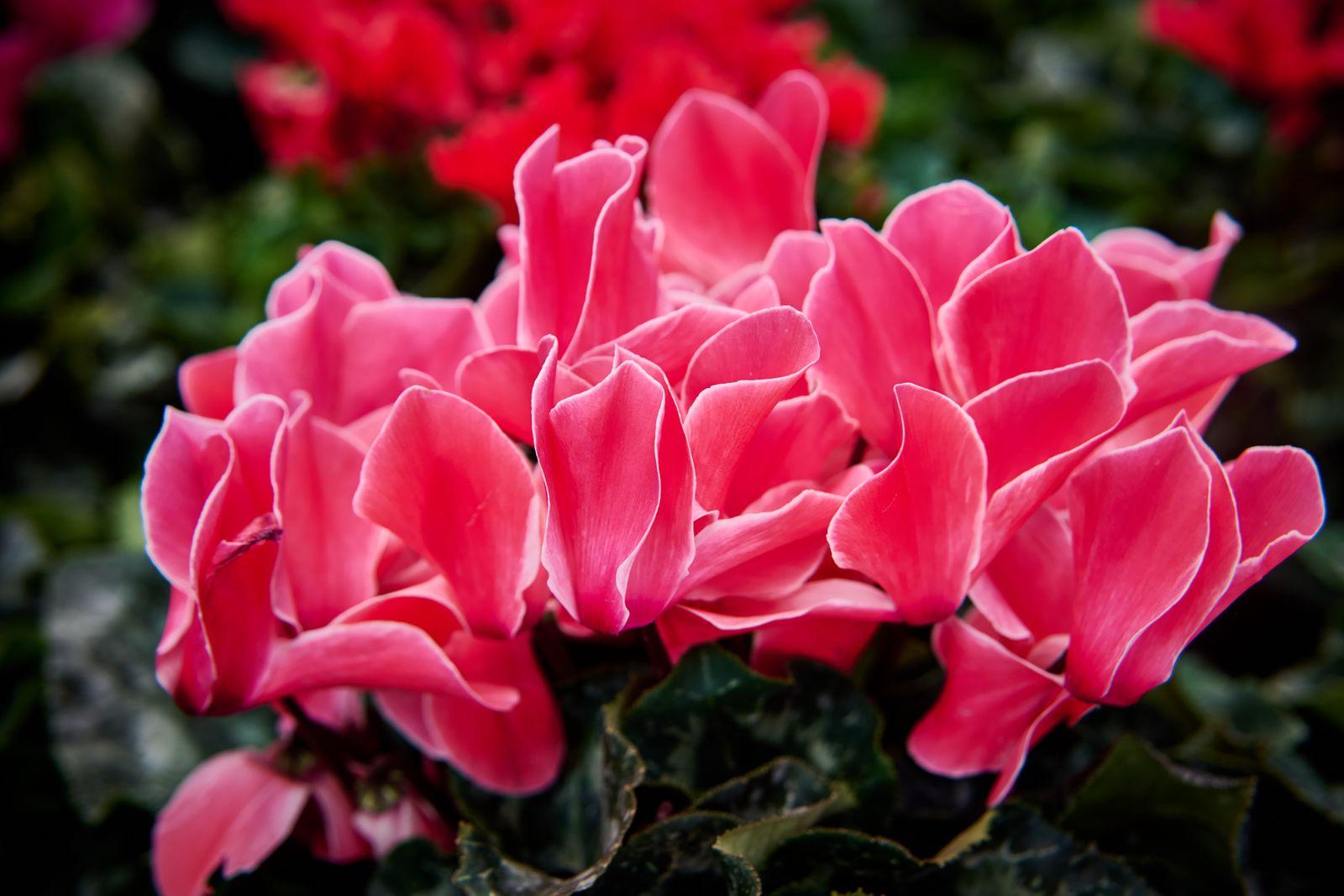
Good cyclamen care means a cold, bright room and a dry crown, and the reward is flowers all winter. Clemson Cooperative Extension sets the ideal at about 16 to 18°C by day and 10°C at night, and warns that above 21°C buds fail to develop. Water from below so the tuber never sits wet, twist spent flowers off at the base, and let the plant go dormant in summer. The ASPCA lists cyclamen as toxic to dogs, cats and horses, so where a pet shares the house, Cindy's Flowers delivers a potted pink Phalaenopsis orchid across Toronto and the GTA instead.
Why does cyclamen care start with a cold room?
Because the florist cyclamen is a Mediterranean winter plant, not a tropical one. Cyclamen persicum grows wild on rocky hillsides, shrubland and woodland from south-central Turkey to the Levant, and despite its name it isn't from Persia. Its growing season is the cool half of the year. To a cyclamen, warmth means that season is ending.
The New York Botanical Garden (NYBG) asks for about 13 to 18°C by day, dipping to 10 to 13°C overnight, and puts the consequence plainly: "Short lived cyclamen are often the result of warm growing conditions." University of Wisconsin Extension adds the good news: "Individual flowers as well as the blooming season will be extended if the plants can be kept cool."
Cyclamen care indoors: finding a cool spot in a Toronto apartment
Most of us heat our homes to what a cyclamen would call summer. Still, nearly every apartment has a cooler patch:
- A bedroom windowsill, near the glass but not touching it.
- An enclosed sunroom or porch that holds near 10°C overnight. The florist cyclamen is frost-tender, so an open November balcony is out.
- The far side of the room from the radiator, in bright indirect light. Clemson and the NYBG both warn against heat vents.
- A thermostat set lower overnight, which gives the plant its cool night for free.
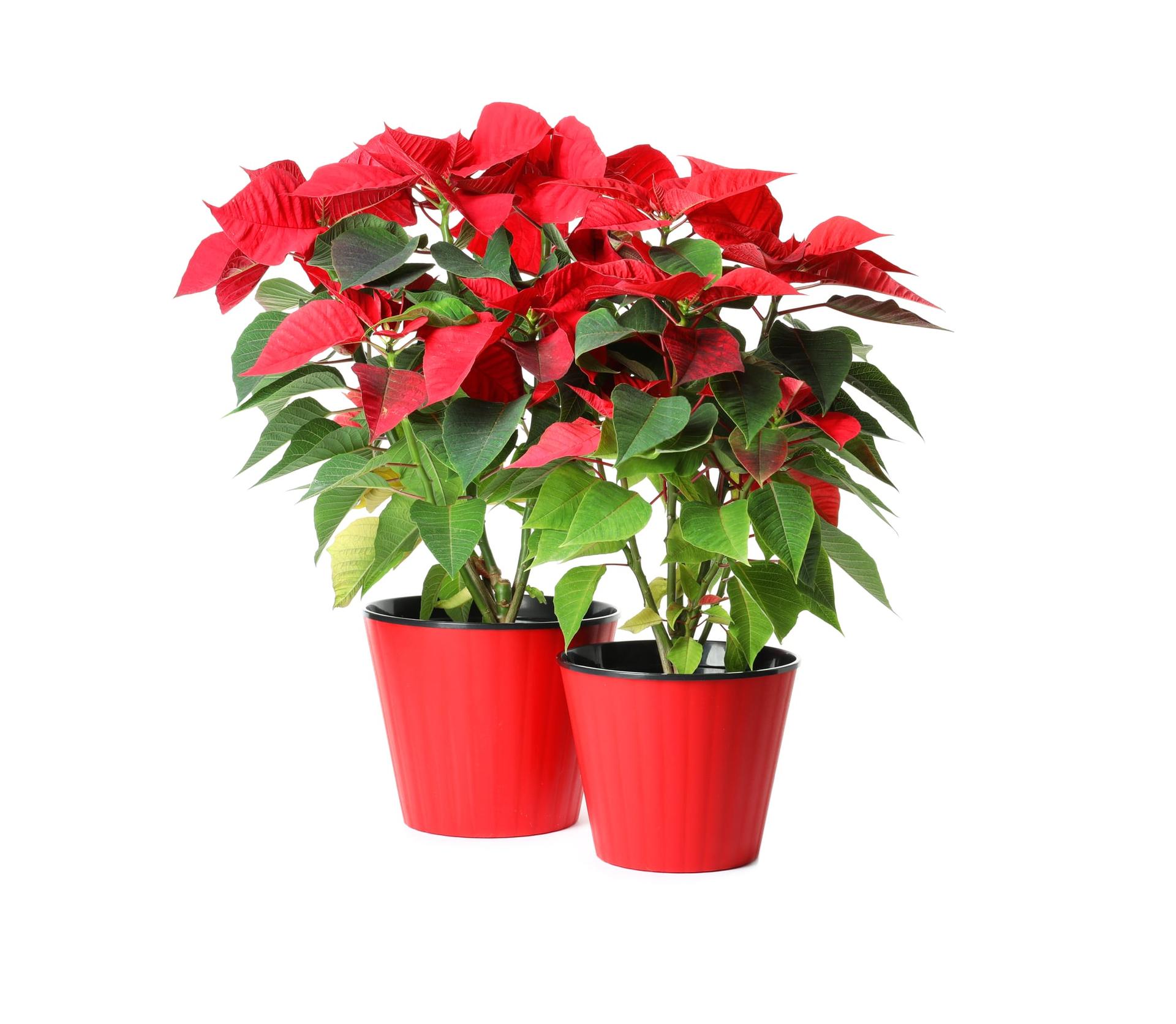
Don't simply park it beside the poinsettia. Our poinsettia care guide treats 10°C as a floor that plant must never drop below, and 10°C is roughly the cyclamen's ideal night. A room that settles near 13°C overnight suits both. When it drifts, though, they fail in opposite directions: the cyclamen when it's too warm, the poinsettia when it's too cold.
How should you water a cyclamen?
From below, whenever the surface of the mix is dry, never on a fixed day. Clemson's instruction is to "always water along the edge of the pot or from below to avoid causing the tuber to rot." Lift a leaf and you'll see why: a round tuber, its top crowded with leaf and flower stalks, its roots growing from the underside.
It's often called a corm, but botanists class it as a tuber. Water poured onto the crown pools where the stalks join the tuber, and that is the rot Clemson warns about. Water from underneath, and the roots drink while the crown stays dry.
- Lift the pot. One that needs water feels light, and the top of the mix is dry to the touch.
- Stand it in a bowl or the sink with a few centimetres of room-temperature water until the surface of the mix darkens.
- Lift it out, let it drain, and tip out anything left in the saucer or foil sleeve.
How often? The room decides. A cool room dries a pot slowly, and a plant that's thirsty every other day is often telling you the room is too hot.
A collapsed cyclamen, its flower stalks flopped over the rim, looks thirsty. The NYBG warns that this "cyclamen faint" usually "indicates that the plant has been kept too wet", so lift the pot before you water. If it feels light, water from below and it usually stands back up. If it feels heavy, don't water; press the crown gently instead.
A soft, mushy tuber has rotted, and there's no saving it.
Twist, don't snip: deadheading and yellow leaves
Pull each faded flower out whole, stalk and all, with a twist at the base. Snipping partway leaves a stub on the crown, and a stub on a damp crown tends to rot. Yellow leaves come out the same way. Wear gloves: NC State Extension notes that handling the plant can irritate skin.
- Follow the spent flower's stalk down to where it meets the tuber.
- Grip it low, twist a quarter turn and give a short, firm tug. It should come away cleanly.
One or two yellow leaves at a time is ordinary turnover. A whole plant yellowing in December points to the causes the NYBG lists: a room that's too warm, too little light, or soil kept too wet or too dry. The same yellowing in late spring is usually the plant beginning its summer rest.
What does a cyclamen do in summer?
It goes dormant, which looks like dying and isn't. In its native range, summer heat and drought kill the parts above ground; the plant survives as a shallow tuber and resumes growth as the colder season begins. A potted cyclamen does the same indoors once its spring flowering winds down.
Can it flower again? Clemson is candid that reblooming one at home is difficult, because indoor light levels are usually too low. Our roundup of Christmas plants that last past the holidays files cyclamen with the short-lived ones. It can be done, though, and the routine is mostly restraint:
- As flowering stops and the leaves yellow in late spring, water less and let the foliage die back.
- Once the leaves are gone, keep the mix almost dry. The wild plant's summer is a drought, and a wet, leafless tuber rots easily.
- Store the pot somewhere shaded and cool. A basement shelf works, behind a closed door if you have pets or small children.
- In late summer or early autumn, watch for new leaves pushing up from the top of the tuber.
- Repot into fresh mix with the upper half of the tuber above the surface, then resume watering from below in your coolest bright spot.
Our honest read: in a warm condo with no cool room, enjoy one season and let it go without guilt. Just keep the spent tuber off any open compost heap a dog can dig into.
Is cyclamen poisonous to cats and dogs?
Yes, and the tuber is the worst of it. The ASPCA lists cyclamen (Cyclamen spp., also called sowbread) as toxic to dogs, cats and horses, naming terpenoid saponins as the toxic principle. The clinical signs it lists are salivation, vomiting and diarrhea, and, following large ingestions of tubers, "heart rhythm abnormalities, seizures, death."
Pet Poison Helpline puts the saponins at their strongest in the roots, and says eating the root or tuber can cause abnormal heart rhythms and convulsions. Those, it adds, are possible with large ingestions but uncommon. By its account, leaves or flowers can cause mild stomach upset, though cats have been known to develop blood in the vomit and diarrhea.
That can make summer the riskier season in a home with a dog, not December. A dormant pot is a bare tuber in dry mix, and a dog that digs into it has found the part both organizations tie to the most serious signs. Keep toddlers away too: NC State Extension rates cyclamen low-severity for people but flags it as a problem for children.
If a pet eats any part of a cyclamen, call your veterinarian or the ASPCA Animal Poison Control Center at (888) 426-4435. The ASPCA notes a consultation fee may apply.
Where a dog or cat lives, choose a different plant, and not the poinsettia, which the ASPCA also lists as toxic to all three. The ASPCA's non-toxic listing for Christmas cactus names Schlumbergera bridgesii (dogs, cats and horses), though Pet Poison Helpline notes that chewed Christmas cactus leaves can still cause vomiting and diarrhea. Our Christmas cactus care guide covers getting one into bud. From our own catalogue, the pick is the potted pink Phalaenopsis: the ASPCA lists Phalaenopsis as non-toxic to dogs and cats.
Choosing a cyclamen to give in December
Clemson calls cyclamen a popular Valentine's Day plant and notes that the bright red, pink and white forms are becoming increasingly popular for Christmas.
"Cyclamen" goes back, via Latin, to the Greek kyklos, circle, after either the coiled fruit stalks or the round tuber. Kate Greenaway's Language of Flowers (1884) gives cyclamen as "Diffidence", which makes it an odd host gift and a sweet thank-you from someone shy.
Before you buy one to give:
- Look under the leaves for plenty of unopened buds.
- Check that the crown is firm, with no soft or grey patches where the stalks meet the tuber.
- Skip it for any household with a dog or cat.
- Carry it straight home in a sleeve. It likes cool, but it's frost-tender, and a parked car in a Toronto cold snap is not cool.
For a friend whose warm apartment would defeat any cyclamen care routine, flowers are the kinder gift. Cindy's Flowers hand-ties Christmas flowers in our Toronto studio and delivers them across the GTA, same-day Monday to Saturday on orders placed before 3 PM. That solves a warm room, not a pet: holiday bouquets often carry stems the ASPCA lists as toxic, so for a home with a dog or cat, the orchid is still the one to send.