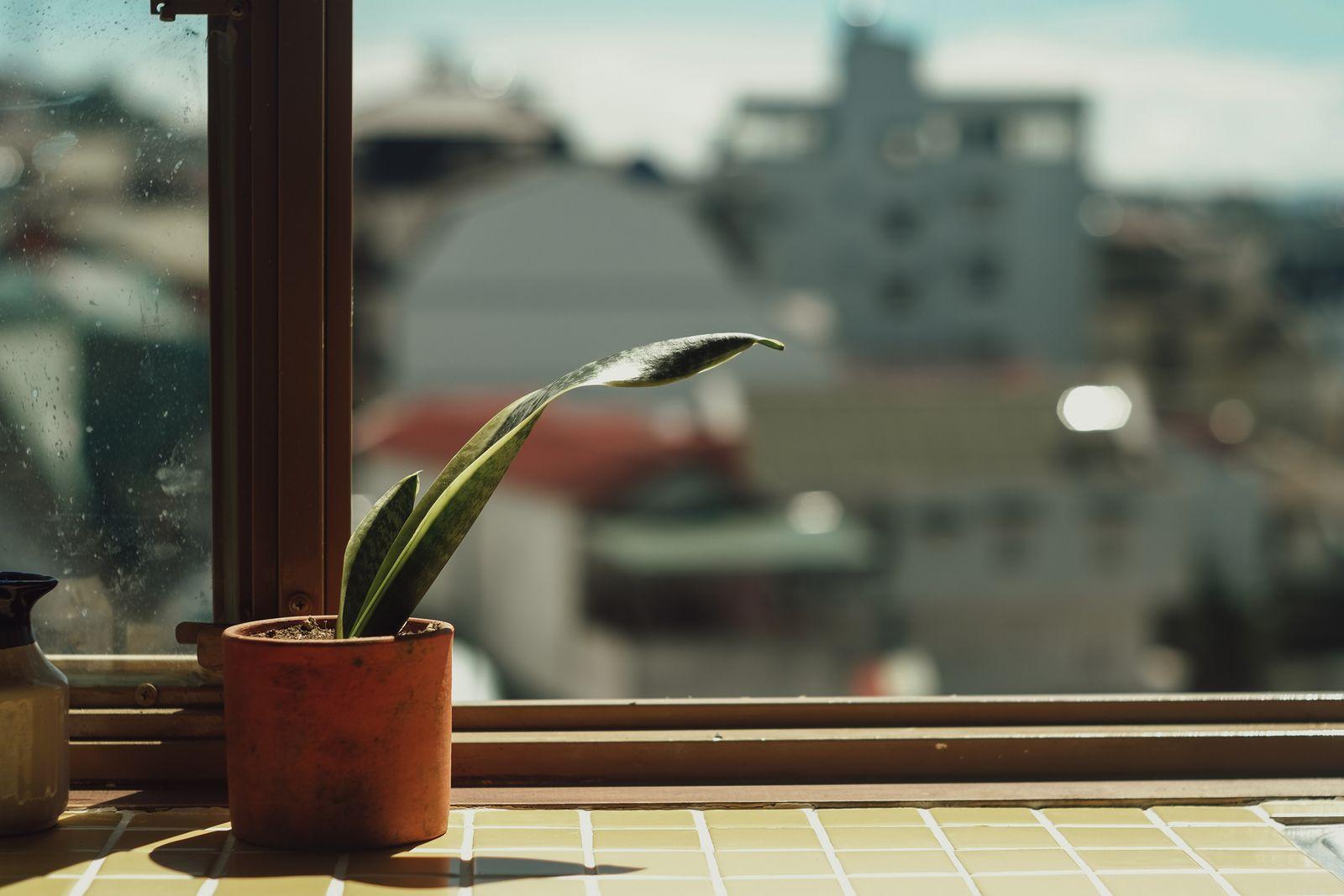
Snake plant care is mostly a matter of holding back. Water only when the soil is dry to the bottom of the pot, which through a Toronto winter means about once a month or less; NC State Extension says every one to two months. Give it bright, indirect light to grow, though it will tolerate a dim corner, and keep it above roughly 13°C, out of cold drafts. Most snake plants that fail are drowned, not neglected. If you're starting fresh, Cindy's Flowers delivers a potted snake plant across Toronto and the GTA, with one warning that belongs right here: the ASPCA lists it as toxic to dogs, cats and horses.
Why does overwatering kill so many snake plants?
Because the plant is built to hoard water, not to drink it. Its thick leaves store moisture, so it uses very little, and soil that stays wet for weeks starves the roots of air until they rot. The New York Botanical Garden (NYBG) is blunt: "Too much water is the most frequent cause of failure in caring for snake plant." Penn State Extension adds, "Due to overwatering, root rot is a common affliction of snake plants."
Read the leaves before you reach for the watering can:
- Thirsty: the leaves pucker or wrinkle and the pot feels light. NYBG treats that puckering as the cue to water.
- Overwatered or underlit: the leaves fold, flop or lean out of the pot, which NYBG links to too much water or too little sun while the plant is growing.
- Rotting: the base of a leaf goes soft, dark and mushy, and the leaf may topple at the soil line.
Caught early, rot can be cut out: trim soft rhizome and roots back to firm tissue, let the cuts dry for a day, and repot in fresh, dry cactus mix. A leaf that has collapsed at the base won't stand again, but its firm upper half can become a cutting.
When you do water, NYBG says to water moderately, check back after 15 minutes and empty the saucer. The general checks for any overwatered houseplant are in our guide to indoor plants for Canadian homes.
How often should you water a snake plant in a heated Toronto apartment?
Through a Toronto winter, about once a month or less, and only when the soil is dry all the way down. NC State Extension: "In winter only water every one to two months." NYBG says to water from October through February only as often as it takes to keep the leaves from puckering, and "no more than every two weeks." Read that as a ceiling, not a schedule.
Heated apartments are where people slip. A radiator or forced-air vent dries the top few centimetres in days, and a dry surface looks like a thirsty plant. It usually isn't. Growth stalls in low light, a stalled plant barely drinks, and Toronto gets just under nine hours of daylight at the December solstice. Test the bottom of the pot, not the top.
Dry furnace air doesn't bother it: NC State notes "It tolerates low humidity," so leave the mister in the cupboard.
Keep it back from the cold glass
Cold does more harm than dry air. NYBG calls a warm household between 65 and 80°F (about 18 to 27°C) ideal, says not to keep the plant below 55°F (roughly 13°C), and warns that "Cold winter drafts will also cause rot and sudden plant death." NC State puts its tolerance lower, around 10°C, so we work to the cautious figure. That rules out a leaf pressed to a January window or a spot beside the balcony door.
Low light or bright light: what does a snake plant need?
Less light than most houseplants to survive, and more than a dark corner to grow. NYBG: "Though they can survive poor light conditions, they will not grow without moderate sunlight and will not flower without more generous sun exposure." Penn State Extension says it enjoys bright indirect light and tolerates low light very well, but should stay out of direct sun, which can burn it. NC State Extension is more generous and suggests 2 to 6 hours of direct sun a day.
So a north-facing room is fine for parking one: it keeps its shape and stops getting bigger, and it drinks even less, nudging its winter rhythm toward NC State's two-month end. For growth, try an east or west window with a sheer curtain softening the glare.
Spring has one trap. NYBG warns that moving a snake plant from shade straight into bright sun will scorch it, so when the sun strengthens, shift it toward the window in stages over a couple of weeks. Window-by-window light levels for the common houseplants are in that same indoor plants guide.
Dracaena or Sansevieria? What the name change tells you
Kew's Plants of the World Online now files the snake plant as Dracaena trifasciata, a name first published in 2017; Sansevieria trifasciata, its name since 1903, is now a synonym. DNA studies published in 2014 and 2018 found Sansevieria nested inside Dracaena. Not every authority has switched: the RHS still lists Sansevieria trifasciata as the correct name, and the ASPCA files it there too.
Kew gives its native range as southern Nigeria to west-central tropical Africa and Tanzania, mostly in the seasonally dry tropics. It runs crassulacean acid metabolism (CAM): its stomata open at night, when cooler air means less water lost, and stay shut through the day. It's built to wait out a dry season, which is why NYBG's winter advice amounts to letting it rest.
CAM also undoes a popular myth. Snake plants get sold as bedroom plants that release oxygen at night, but a CAM plant takes in carbon dioxide at night and stores it; the oxygen comes in daylight.
The air-purifier claim fares no better. NASA's 1989 Clean Air Study tested the snake plant in small sealed chambers, and a 2020 review by Drexel engineers Bryan Cummings and Michael Waring found that potted plants in general, not snake plants alone, would take 10 to 1,000 plants per square metre of floor space to match the VOC removal that ordinary outdoor-to-indoor air exchange already provides. Our housewarming guide touches on the study too. Buy one for its looks and its patience, and open a window for the air.
Repotting, dividing and growing new plants from a leaf
Snake plants grow slowly and tolerate a snug pot, so repotting is an every-few-years job, done in spring or summer while it is growing, never during its winter rest. It's time when roots coil out of the drainage hole, a plastic pot bulges out of shape, or new shoots jam against the rim.
Go up only a few centimetres. A much bigger pot holds wet soil the roots can't reach, which is the rot problem again. Penn State Extension recommends cactus potting mix or a mix with perlite, and only containers with drainage holes.
Dividing the rhizomes
Each leaf cluster grows from an underground rhizome, so division is the quickest route to a second plant. Put on gloves first, since NC State notes the sap can irritate skin. Tip the plant out and cut through the rhizome with a clean knife so each piece keeps its own leaves and roots. Pot the pieces in dry mix and wait a few days before the first watering. Division also keeps the yellow edge on a variegated plant such as 'Laurentii'.
Rooting leaf cuttings
- With gloves on, cut a firm, healthy leaf at the soil line and slice it across into pieces about 5 to 8 cm long.
- Mark the bottom of each piece as you go. Planted upside down, it won't root.
- Leave the pieces to dry for a day or two so the cut ends seal.
- Push each one, bottom down, a couple of centimetres into barely damp cactus mix or perlite, somewhere warm with bright, indirect light.
- Water sparingly and wait: roots take several weeks, and a new shoot can take months.
Cuttings from a yellow-edged plant usually come up plain green. Save this project for spring; in a dark December, cuttings mostly just sit there.
Who shouldn't bring home a snake plant?
The ASPCA's Snake Plant entry lists Sansevieria trifasciata as toxic to dogs and cats, and its separate Golden Bird's Nest entry for the same species adds horses. The toxic principle is saponins, and the listed signs are nausea, vomiting and diarrhea. So anyone sharing a home with a cat or dog should pass. NC State Extension also rates it poisonous to people, at low severity, and tags it a problem for children: keep it out of a toddler's reach.
For a home with a dog or cat, the plant Cindy's Flowers points to in its own catalogue is a potted white Phalaenopsis orchid, which the ASPCA lists as non-toxic to cats and dogs. It needs a bright window but little or no direct sun (east suits it), and a drink about once a week.
In a home without pets or toddlers, few gifts are more forgiving. A snake plant makes a sensible housewarming present for a new place with dim corners and someone away half the month, and our guide to long-lasting plant gifts weighs it against orchids and holiday cacti. Cindy's Flowers delivers the snake plant same-day across Toronto and the GTA on orders placed before 3 PM, Monday to Saturday. Ask about pets first; if there's a cat or dog in the house, send the orchid.