The best-known flowers that bloom at night are moonflower, the queen of the night cactus, tuberose, evening primrose, night-scented stock and flowering tobacco. They open at dusk instead of dawn because their pollinators work the night shift, mostly long-tongued hawkmoths. Two things follow from that. The petals are nearly always white or pale yellow, so they catch whatever light is left, and the perfume peaks after dark rather than at noon. Here is which ones are real, which are misnamed, and what any of it means for a Toronto garden or a vase. For the vase half of that, Cindy's Flowers hand-ties fragrant bouquets in our Toronto studio and delivers them across the GTA the same day when the order lands before 3 PM.
Which flowers actually bloom at night?
Night-blooming plants open their flowers in the evening, through the night or in the early morning, then close them during the day. It is an adaptation with two payoffs: it attracts nocturnal pollinators, and it sidesteps competition with every day-blooming plant in the neighbourhood. These are the ones people mean when they ask the question.
- Moonflower (Ipomoea alba). A night-blooming morning glory from tropical and subtropical parts of the Americas. The fragrant white or pink trumpets are 8 to 14 cm (3 to 6 in) across, open quickly in the evening, and stay open all night until morning dew touches them. On cool, overcast days they hold on longer.
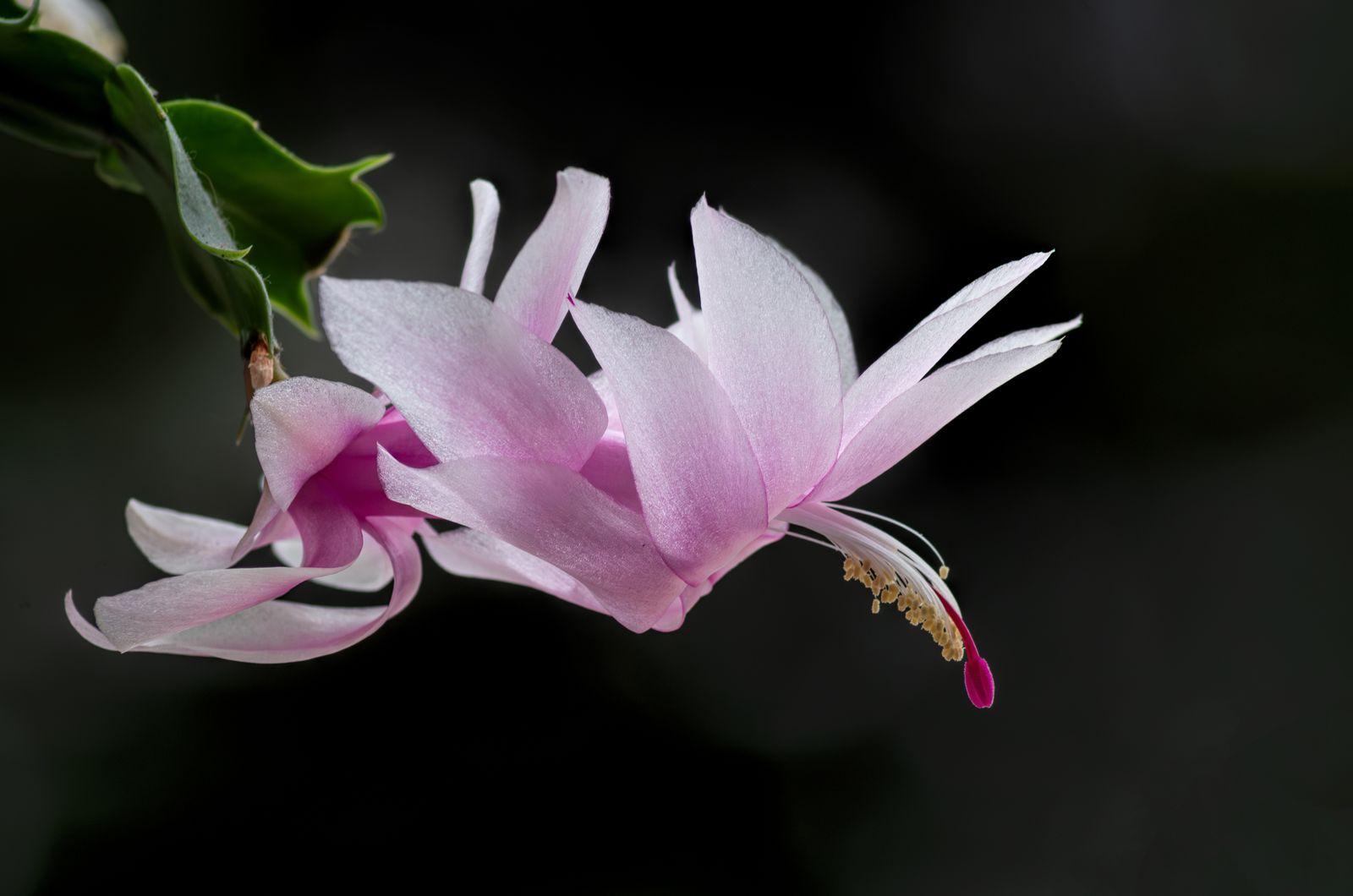
- Queen of the night (Epiphyllum oxypetalum). A cactus native from Mexico to Nicaragua, also sold as princess of the night or Dutchman's pipe cactus. Its flowers reach 30 cm (12 in) long and 17 cm (7 in) wide, are very fragrant, and wilt before dawn.
- Tuberose (Polianthes tuberosa, also published as Agave amica). The night-scented flower that perfumers built an entire genre on. Its fragrance really is much stronger after dark, and the reason is mechanical.
- Evening primrose (Oenothera biennis). Four broad yellow petals that open toward evening. A biennial or short-lived perennial that spreads only by seed, it already grows across Ontario on roadsides, waste ground and pasture, and the province's weed identification guide for Ontario crops lists it as yellow evening primrose.
- Night-scented stock (Matthiola longipetala). Scruffy and half-shut in daylight, then unmistakable at dusk. It is grown for the scent alone.
- Flowering tobacco (Nicotiana). Long tubular flowers that open toward evening, shaped for a moth's tongue rather than a bee's.
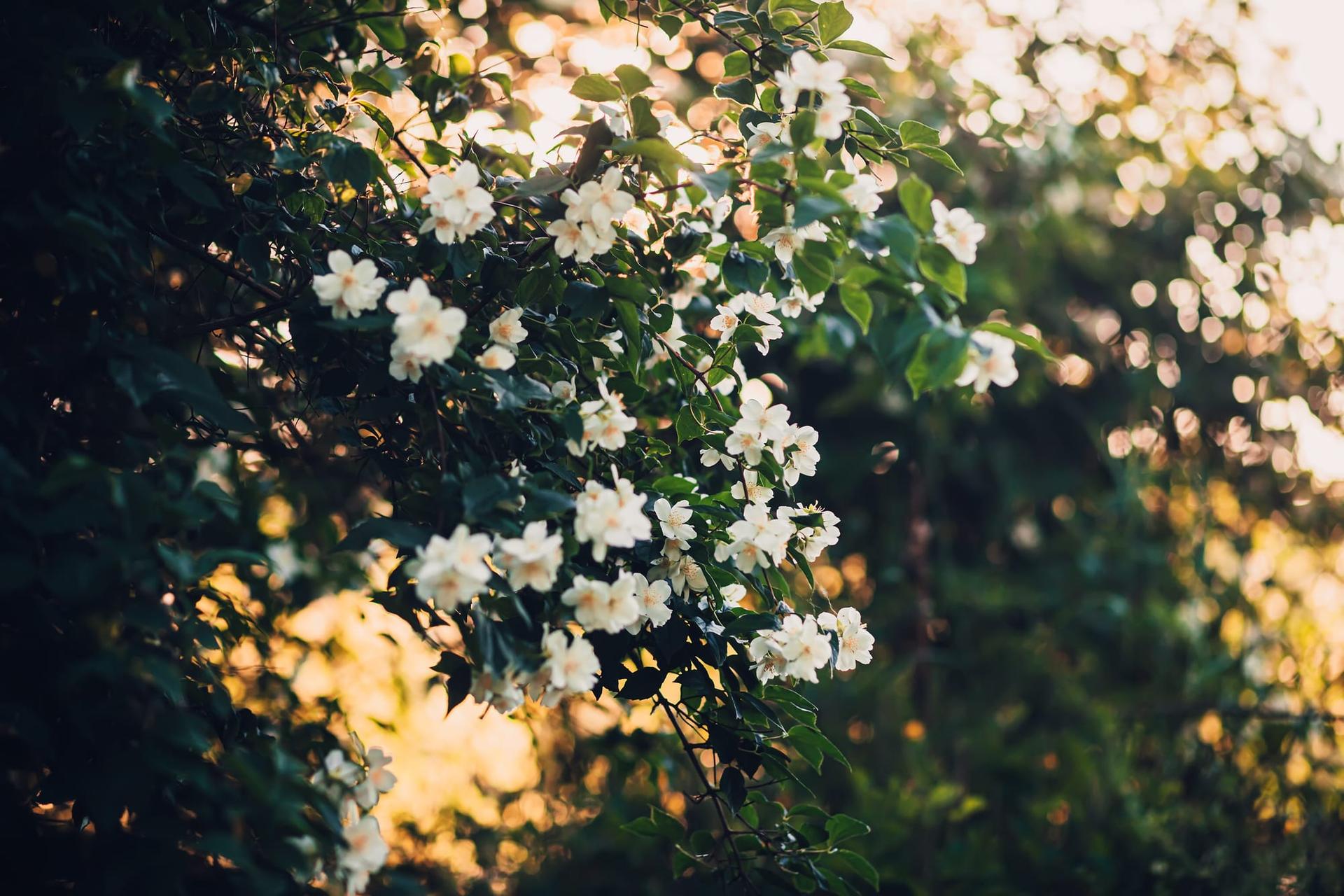
- Night-blooming jasmine (Cestrum nocturnum). Not a jasmine at all. It sits in the nightshade family, and in this climate it lives in a pot that comes indoors.
Why does the scent get stronger after dark?
Because the flower makes more scent at night. In tuberose, emission is rhythmic and nocturnal: the scent-making enzymes and the genes behind them peak in the hours just before release, so output climbs after dark on an internal daily clock rather than in response to the weather. The volatiles leave through stomata, microscopic pores crowded on the tepal surface, which researchers believe are the main exit route. Your quieter house helps you notice it, but the change is happening in the flower.
The scent is also built to travel. Night bloomers tend to smell sweet or fruity and to project, because a moth has to find them from some distance in the dark.
Their main customer is the hawkmoth, family Sphingidae, among the most important night pollinators there are. Hawkmoths do not hunt by smell alone. They read several cues at once: floral scent, colour, and even the carbon dioxide a flower gives off. That is also why so many night bloomers carry big trumpet-shaped or tubular corollas. The tube keeps nectar at the far end, where only a long tongue reaches.
In the tropics the night shift includes bats, which pollinate agaves and columnar cacti. Those flowers run pale and bell-shaped, pouring out large volumes of dilute nectar under a strong fermenting smell. Nothing like that happens in an Ontario garden. Here it is moths.
Why are night-blooming flowers almost always white?
Colour has one job after sunset: be visible. Night bloomers are mostly white, cream or pale yellow because those shades reflect moonlight and starlight easily, which keeps them findable once everything else has gone grey. Deep reds and purples vanish at dusk. Pale petals hold the last of the light.
One thing to clear up, because it circulates constantly: these flowers reflect light. They do not glow. Nothing in a moon garden produces light of its own, and any photo suggesting otherwise has been edited.
Gardeners use the effect deliberately. A planting of fragrant white flowers reads as a moon garden precisely because pale blooms are the last thing your eye loses on a summer evening.
Is the queen of the night really a once-a-year flower?
No, and that is the most repeated myth in the category. Epiphyllum oxypetalum flowers from late spring through late summer, and a large, well-grown plant can produce several crops of flowers in a single season. What lasts one night is each individual flower: it opens after dark, holds through the small hours, and wilts before dawn. The bloom is rationed, not the plant.
The naming is muddled too. Epiphyllum oxypetalum is endlessly sold as a night-blooming cereus, yet it is not closely related to the species in the tribe Cereeae that properly carry that name. Every Cereus blooms at night and grows in the ground, while Epiphyllum species are usually epiphytes living on trees. Night-blooming cereus is a loose common name stretched across several unrelated cacti, so buy by the botanical name if you want a specific plant.
Can you grow a moon garden in Toronto?
Yes, with one seasonal caveat that catches people out. Moonflower cannot survive an Ontario winter, so it grows here as an annual only. It also flowers best under short summer days, which means that at our latitude it often refuses to set buds until early autumn, when daylight drops back toward twelve hours. Plan for a September show, not a July one.
The rest of the category is easier. Evening primrose is already a wild Ontario plant, at home along roadsides and field edges, so it asks almost nothing of you. Night-scented stock is a cheap annual you can sow in a container and park beside a door. Scent also pools: a fenced back garden, a courtyard, or a balcony out of the wind will hold fragrance that an open front yard loses in a minute.
A safety note on moonflower
Moonflower is one of the most ambiguously used names in gardening. It usually means Ipomoea alba, but the same name gets applied to Ipomoea muricata, Datura candida, Brugmansia suaveolens and Selenicereus wittii, and the Datura and Brugmansia plants sold under it are highly toxic. Even the true moonflower is not harmless: the leaves, flowers and seeds of Ipomoea alba are toxic to humans, cats, dogs and livestock. Buy by botanical name, and keep it away from a dog that eats the garden.
Which night-scented flowers can you actually put in a vase?
Almost none of the famous ones, which is the honest answer. A queen of the night flower wilts before dawn and a moonflower shuts at the first touch of dew, so neither survives a trip in a box. Tuberose is the exception: a genuine night-scented flower that also behaves as a cut stem, and the reason one modest bunch can scent a whole room by nine at night.
For an evening-fragrant bouquet, build around scent rather than around nightfall. Stock, freesia and oriental lilies all carry a room after dark, and lilies add the weight of a few very large blooms. One caution that never changes: true lilies are highly toxic to cats, so send a lily-free design to a home with one. In our experience a mixed bouquet built around a single strongly scented stem beats an arrangement where three perfumes argue with each other.
Temperature is the lever most people miss. Fragrance is volatile, so a cool room releases it slowly and stretches it over days, while a warm room spends it in one evening. That is useful if the flowers are meant for a dinner at home: warm them up an hour before, then move them somewhere cooler overnight.
Cindy's Flowers hand-ties every bouquet in our Toronto studio and delivers same-day across Toronto and the GTA, Monday to Saturday, on orders placed before 3 PM. Have a look at what is fresh this week before you choose your stems.