The best spring flowers to send in Toronto are tulips, daffodils, lilac, sweet peas, iris, and, once the weather warms from late May, peonies. Tulips lead the season and travel well, which is why they anchor so many spring bouquets. Daffodils bring the first real colour after a grey winter, while peonies close out the season as early summer arrives. Want the short version? Send tulips through April and May, then switch to peonies as June rolls in. One thing to settle first: with animals in the house, the ASPCA lists tulips, daffodils, irises and peonies as toxic to dogs, cats and horses, while lilac and sweet peas are not. Here's how to choose each one, and when it's at its best. Cindy's Flowers hand-ties that April-to-June progression in its Toronto studio, tulips first and peonies as June arrives, and delivers same-day across Toronto and the GTA on orders placed before 3 PM.
When do spring flowers bloom in Toronto?
Spring in Toronto arrives in waves, not all at once. The Toronto Botanical Garden's what's-in-bloom calendar lists hellebores, crocus, iris, daffodils, tulips, and magnolias through April. May fills the beds with thousands of bulbs, plus viburnum, bleeding hearts, pasque flowers, and fern-leaf peonies. By June, garden peonies hit their peak alongside shrub roses, clematis, and iris. Each flower gets a fairly short window, so the "spring" bouquet keeps changing character from April to June.
That timeline matters when you're choosing a gift. Field-grown Ontario peonies are a late-spring and early-summer crop, so a truly local peony bouquet peaks around June, not March. Florists bridge the earlier weeks with imported stems, which is how tulips, ranunculus, and iris stay available before the local beds catch up. If you'd rather see what's actually in the cooler this week, browse our current spring range and work backward from there.
Why tulips define a Toronto spring
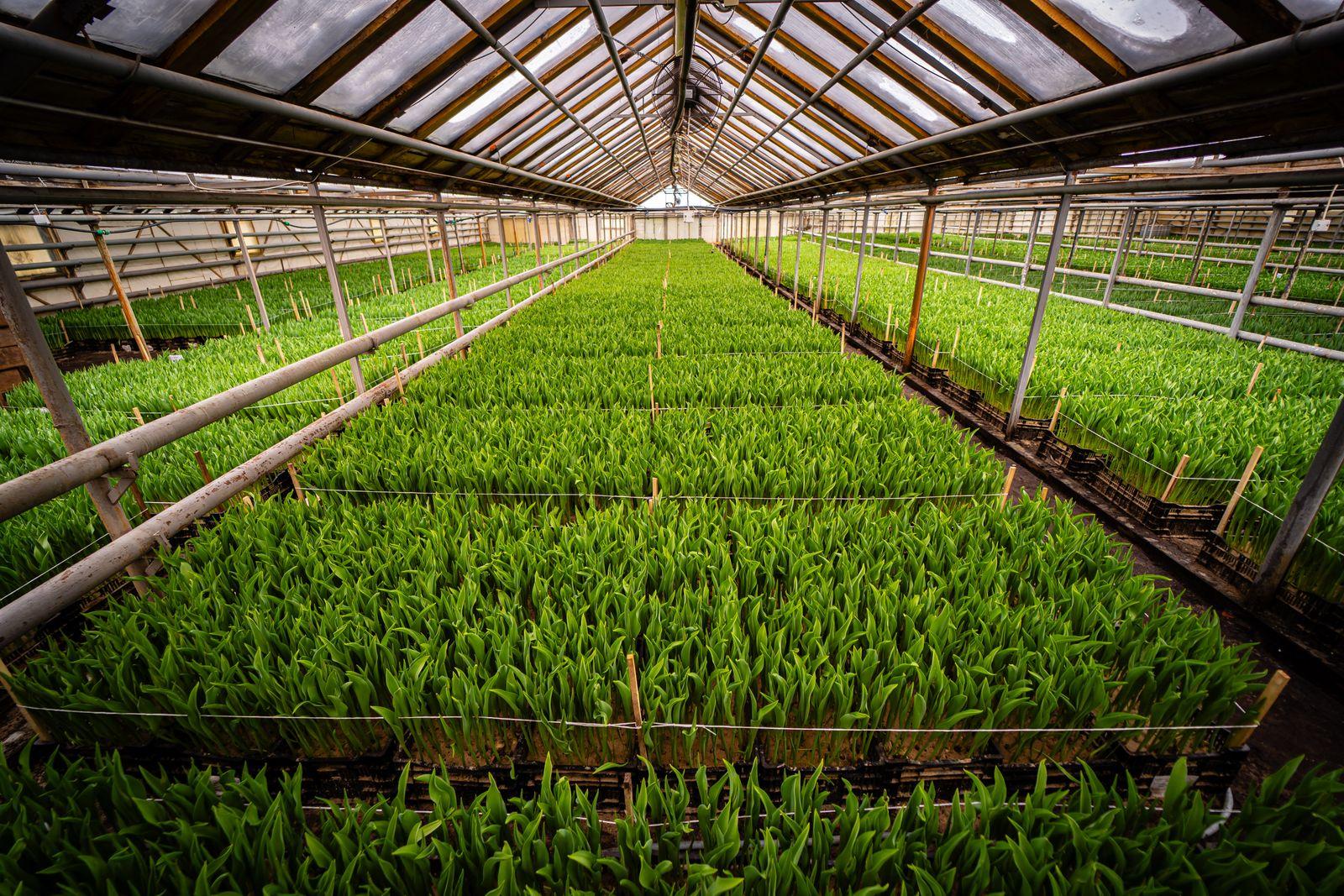
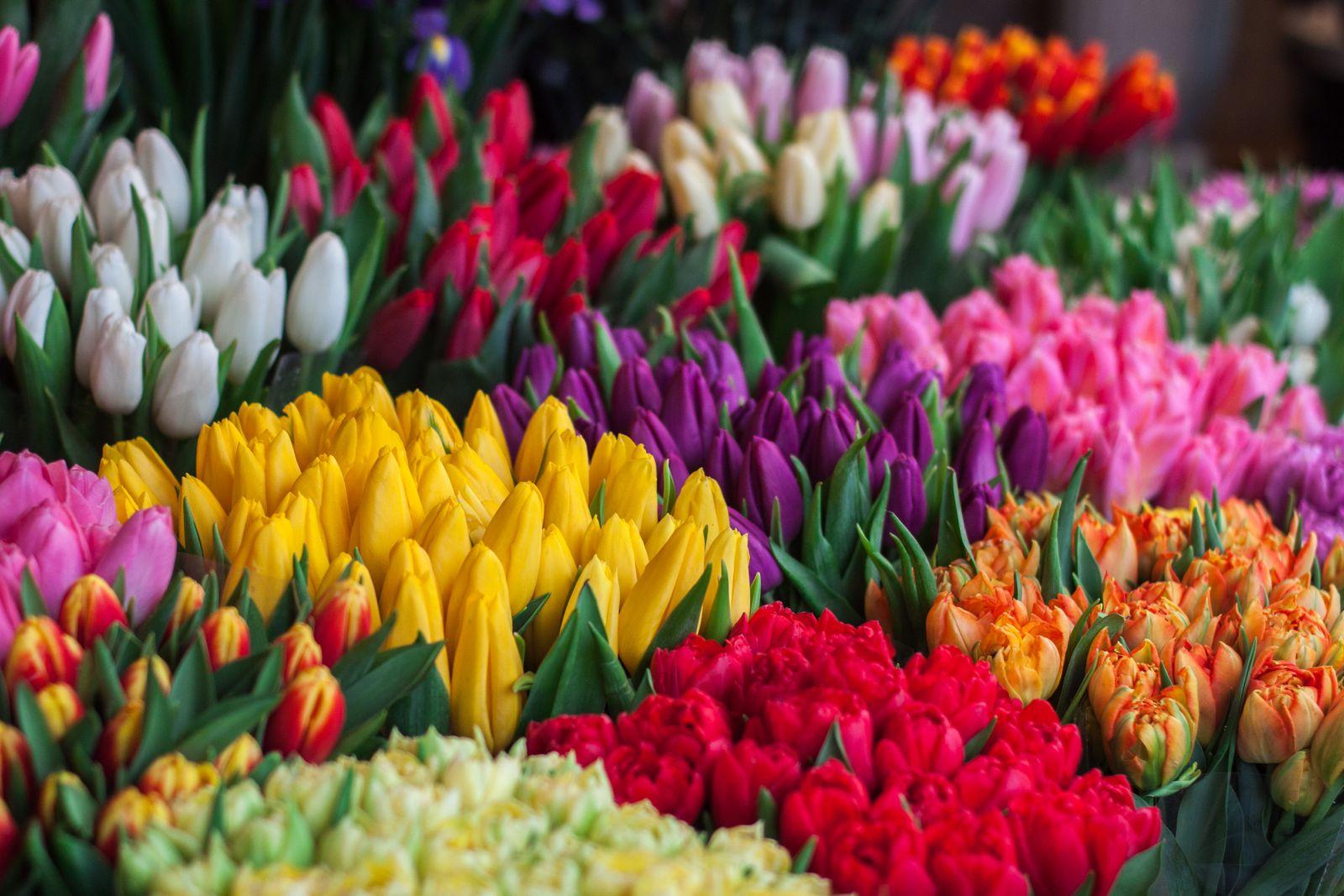
Tulips are the flower most people picture when they think of spring, and they earn the spot. In the traditional language of flowers, a red tulip is a declaration of love; The Old Farmer's Almanac pairs tulips more generally with passion rather than love itself. They come in nearly every colour except true blue, from soft butter yellow to near-black purple. Doubles look like small peonies, fringed types add texture, and parrot tulips ruffle and streak, so one word covers a surprising range.
Here's a quirk worth knowing. Cut tulips keep growing after they leave the field, and they bend toward light, a habit botanists call phototropism. A tulip arrangement will visibly shift and stretch over its first few days in the vase, which is part of their charm, not a defect. Rotate the vase daily to keep the stems upright, and give them a trim if they outgrow the glass. Our tulip care guide covers the rest.
Tulips also carry a little Canadian history. The Canadian Tulip Festival has been held in Ottawa each May since 1953, apart from a virtual 2020. It grew out of the 100,000 bulbs Princess Juliana sent in 1945 as a post-war thank-you for Canada's wartime shelter and for Canadian troops' role in liberating the Netherlands. So a spring bunch of tulips delivered across the city carries more meaning than colour alone — worth flagging any pets when you order: the ASPCA lists tulips as toxic to dogs, cats and horses.
Peonies and the fragrant late-spring window
Peonies are the reward for waiting out the season. In Toronto, field-grown peonies reach their peak in June, which the Toronto Botanical Garden lists alongside iris, shrub roses, and clematis. In the Victorian language of flowers, the peony stood for bashfulness; the warmer reading of prosperity and a happy marriage comes from Chinese tradition, and that's the one florists lean on for weddings, graduations, and milestone birthdays.
Peonies arrive as tight round buds and open into full, ruffled blooms, so a little patience pays off. Coral, blush, and creamy white are the classic peony shades, and many keep opening wider each day until they're nearly the size of your hand.
They share the late-spring stage with lilac, one of the most fragrant stems of the whole year, and one of the few spring stems the ASPCA lists as non-toxic to dogs and cats — where peonies are on its toxic list for dogs, cats and horses. In floriography, lilac speaks to the joy of youth and first love. The local peony window is genuinely short, so order early in June if you have a date in mind, and browse our peony bouquets while they're at their seasonal best.
Which spring flowers should you keep away from pets?
More than most spring guides admit, so it's worth checking flower by flower. Start with lily of the valley, the May birth flower: it is poisonous in every part, from leaf to bell, because it contains cardiac glycosides such as convallatoxin. The ASPCA lists it as toxic to dogs, cats and horses, with an irregular heart beat, low blood pressure, disorientation, coma and seizures among the clinical signs, and it's poisonous to people too. Its scent is gorgeous, but a high shelf isn't much of a plan around a climbing cat or a curious toddler — better to leave it out of the bouquet.
True lilies (Lilium) and daylilies (Hemerocallis) are the more serious hazard, and a daylily isn't a true lily at all — which is exactly why it slips past people, and it is just as lethal. The ASPCA warns that every part, including the pollen and even the vase water, can cause fatal kidney failure in cats. Out of reach is not a fix, and neither is pulling the anthers: a cat only has to brush pollen onto its fur and groom it off. The advice is not to bring either flower into a home with a cat. Alstroemeria, sold as Peruvian lily, is the standard substitute — despite the name it isn't a true lily, and the ASPCA lists it as non-toxic to dogs and cats.
The rest of the spring shortlist needs the same look, because a lily-only warning makes everything beside it read as cleared. The ASPCA lists tulips, daffodils, irises, ranunculus and peonies as toxic to dogs, cats and horses — mostly drooling and stomach upset rather than the lily's kidney emergency, though daffodils are the sharper one, with convulsions, low blood pressure, tremors and cardiac arrhythmias after a large ingestion. That still leaves a real spring palette: lilac, sweet peas, roses and alstroemeria all sit on the ASPCA's non-toxic list for dogs and cats. Tell us there are animals in the house when you order and we can build from those instead.
Spring birth flowers, month by month
Spring spans four birth-flower months, which makes matching a bouquet to a birthday easy. March belongs to the daffodil, a traditional symbol of rebirth and good fortune, fitting for the first flower up after winter. April pairs the cheerful daisy with the sweet pea. May claims lily of the valley and hawthorn, and June brings the rose and honeysuckle. That's a lot of built-in meaning to work with.
Here's the quick gifting translation, drawn from The Old Farmer's Almanac:
- Daffodil (March): new beginnings and good fortune, ideal for a fresh start or a new home — though the ASPCA lists daffodils as toxic to dogs, cats and horses.
- Sweet pea (April): blissful pleasure and a warm "thank you for a lovely time," lovely as a fond goodbye, and non-toxic to dogs and cats.
- Lily of the valley (May): the fragrant May birth flower, poisonous in all parts and listed by the ASPCA as toxic to dogs, cats and horses, so it's a poor fit for a home with pets or small children.
- Rose (June): love and affection, the all-purpose classic that never reads wrong, and the one flower here on the ASPCA's non-toxic list.
How do you make spring flowers last longer?
Spring stems reward a little extra care, and one rule tends to surprise people. Daffodils release a sap from their cut stems that shortens the vase life of other flowers sitting with them. The fix is easy: condition daffodils on their own in water for several hours, or overnight, then add them to a mixed vase without re-cutting the stems. Skip that step and your tulips fade early.
The basics carry most of the season from there. Use a clean vase, cool water, and fresh flower food, then keep the arrangement out of direct sun and away from the fruit bowl, since ripening fruit releases ethylene that ages blooms faster. Change the water once it clouds, because bacteria are what clog stems and cut the show short. Recut stems on an angle every couple of days, and remember that tulips keep growing, so a quick trim keeps a leaning bunch in line.
How do you send spring flowers across Toronto?
Timing matters most with spring flowers, because the best stems sell through fast. Cindy's Flowers hand-ties every arrangement in our Toronto studio and delivers same-day across Toronto and the GTA, from downtown out to the suburbs, when you order before 3 PM, Monday through Saturday. May is the busiest stretch of the season, with Mother's Day landing on the tenth in 2026 and Victoria Day, the traditional start of the Ontario gardening season, on the eighteenth.
Not every bouquet needs a calendar reason, though. Spring's longer days and first real colour are often reason enough to send flowers just because, and a handful of tulips can turn an ordinary Tuesday around for someone across town. Order before the afternoon cutoff for same-day arrival, and if you're unsure what's freshest, email hello@cindysflowers.ca and we'll point you to the season's best.