Start with the Bud: The Marshmallow Stage
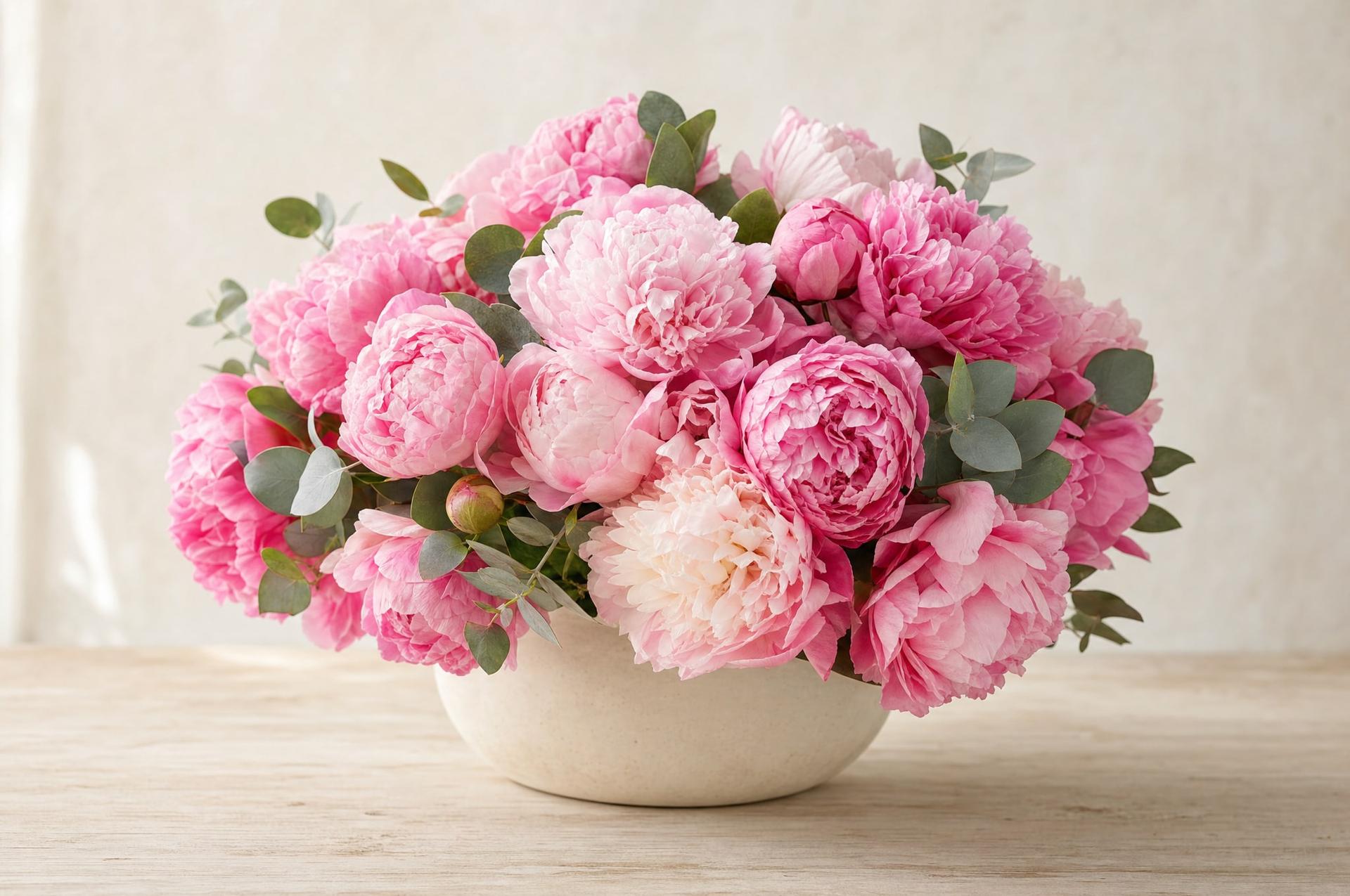
The best peony decision happens before the vase. Buy peonies in bud, at what the trade calls the marshmallow stage: the bud shows colour and yields like a fresh marshmallow when squeezed. That's soft enough to open reliably, firm enough to have its whole vase life ahead of it.
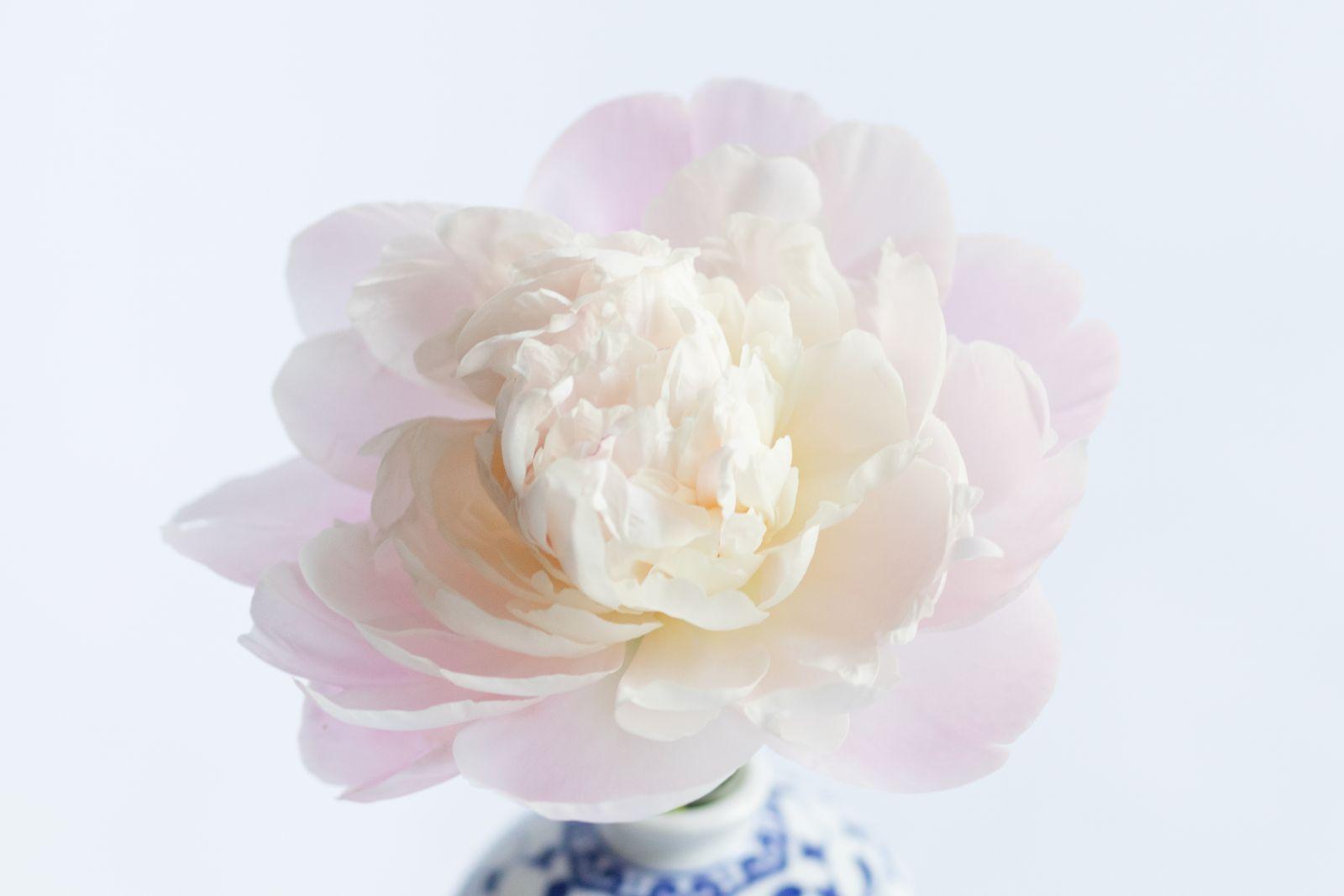
Marshmallow buds typically open within 24-48 hours in the vase, faster in a warm, bright room and slower in a cool one, then hold for roughly another five days. Tighter golf-ball buds take about 4-6 days to open fully, while buds hard as a marble may never open at all. A bloom already fully open has about 2-3 days left.
Why Is the Ontario Peony Season So Short?
Local peonies bloom in June, roughly late May to mid-June around Toronto, and the local cut-flower window lasts about three to four weeks. The season opens just after Mother's Day, so buy promptly when stems appear.
Growers stretch the calendar with cold storage; buds cut soft, wrapped, and held dry near 0°C can keep for eight weeks or more, per the American Peony Society. Still, June is typically the only month for local stems. Outside it, see what's currently in season.
Arrival Care: The First Hour Matters Most
Peonies are heavy drinkers and dehydrate quickly, so get them into water as soon as they arrive. Unwrap the sleeve , since peony petals bruise easily, and leave any florist-tied binding in place to hold the bouquet's shape.
Wash the vase with hot soapy water first; bacteria are the main enemy of peony vase life. Choose glass or ceramic over metal, which can alter water pH. Fill it about two-thirds with lukewarm water (about 37-40°C) and dissolve the flower-food sachet fully. Re-cut each stem 3-5 cm at a 45-degree angle and strip every leaf below the waterline. Dry-packed or limp stems benefit from a few hours in deep, cool water in a cool, dark spot first, per American Peony Society guidance.
How Often Should You Change Peony Water?
Completely, every one to two days: daily in hot or dry rooms, every second day in cool, humid ones. Peonies drink more than most cut flowers, so top up daily as well; a large arrangement can visibly drop its water level overnight.
At each change, rinse away the bacterial film and add fresh flower food, the sugar source a cut stem no longer has the plant plus a biocide that suppresses stem-clogging bacteria. Never let foliage sit in the water; submerged leaves rot and measurably shorten vase life.
Trim at Every Water Change
Stem ends seal over and dry out in the vase, so re-trim a little at a 45-degree angle each time you change the water. The angle adds uptake surface and keeps the stem off the vase bottom. Use sharp, clean floristry scissors; dull blades crush the water channels. Growers such as Adelman Peony Gardens recommend cutting under running water or with the stem submerged, so air can't be drawn in to block uptake. Any stem that has been out of water needs a fresh cut before it can rehydrate.
Where Should Peonies Sit in Your Home?
Somewhere cool, out of direct sun. Florists treat temperature as the biggest lever on peony longevity, so avoid radiators, sunny sills, and drafty spots near vents or doors. Keep the vase away from the fruit bowl too; ripening fruit releases ethylene gas, which speeds petal aging. A grower's trick: park the arrangement in a fruit-free refrigerator overnight to slow the blooms down.
A pet note: the ASPCA lists peony as toxic to dogs, cats, and horses. Signs are usually mild, but keep stems out of reach, and treat true lilies in any mixed bouquet as a far more serious danger to cats.
How Long Do Cut Peonies Last?
Roughly 5-10 days by horticultural convention. Florists and growers typically quote 5-7 days as the standard with proper care, while marshmallow-stage buds opened in the vase commonly reach 7-10 days. Heat, sun, drafts, dirty water, and nearby fruit shorten the run; bud-stage buying, regular changes with food, re-trims, and a cool spot extend it.
What Are the Most Common Peony Mistakes?
Expecting a week from a fully open bloom tops the list; an open peony has about 2-3 days left. Next is leaving foliage below the waterline and skipping water changes, since rotting leaves breed the stem-clogging bacteria behind most early wilting.
Drooping heads on day three usually mean thirst, not death. Re-cut on the angle and, for badly wilted stems, submerge the entire stem in lukewarm water for 30-60 minutes, a florist revival method that works surprisingly often. One non-mistake: ants on peony buds are harmless nectar feeders. Shake the stems and rinse the blooms outdoors rather than spraying anything.