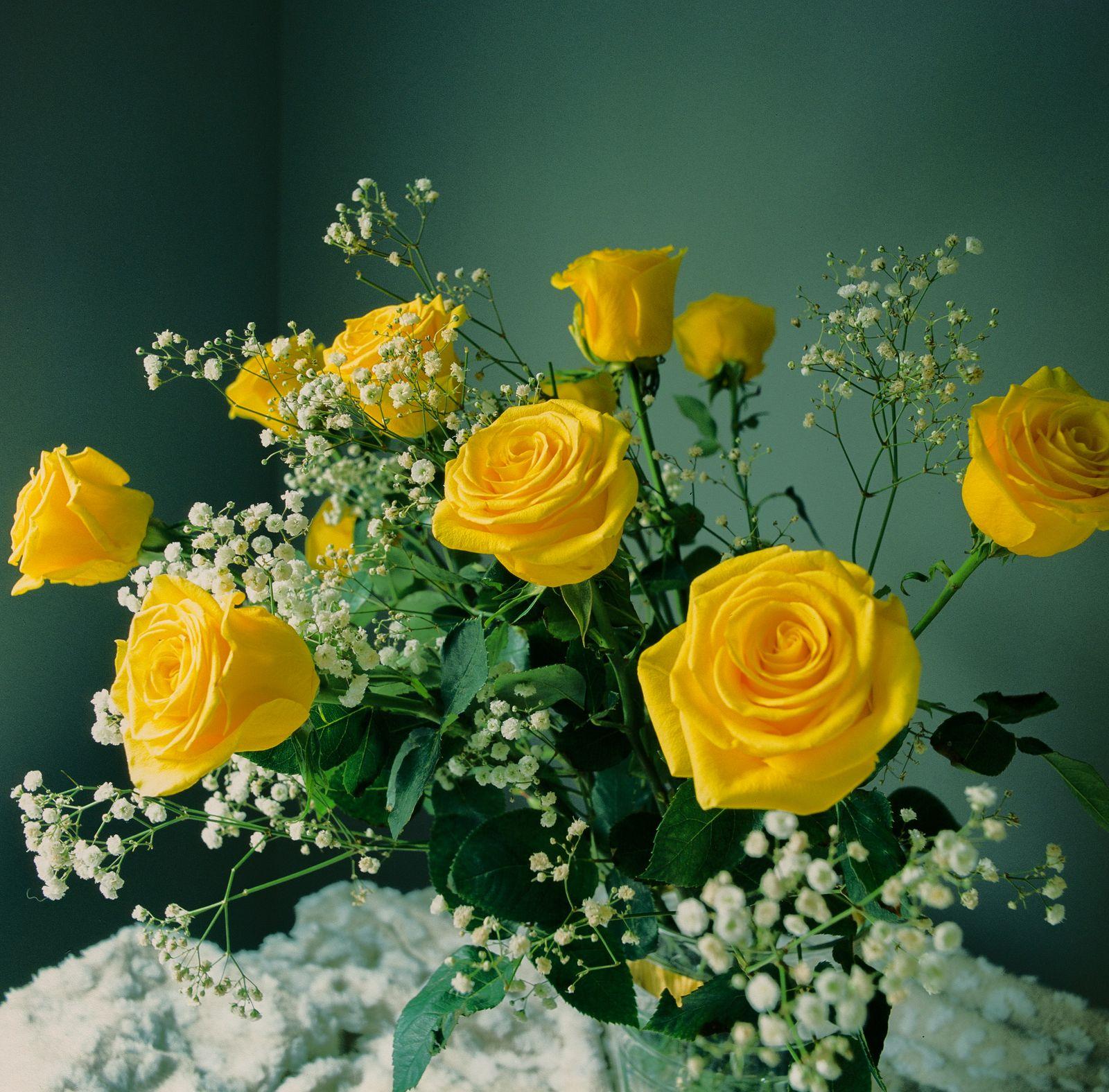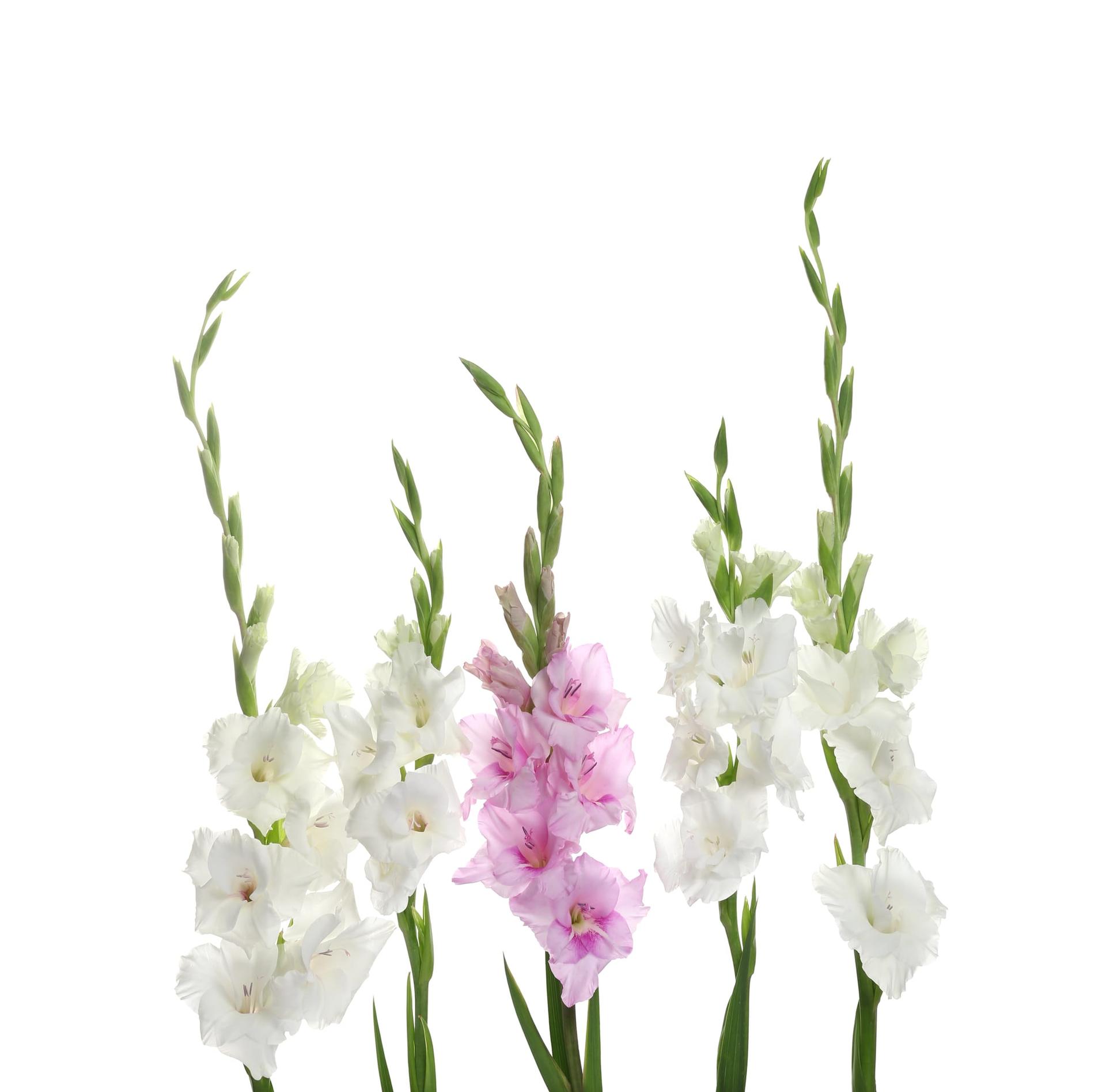
Gladiolus is the flower most often named for strength, and the name is the evidence: the genus is Latin, a diminutive of gladius, meaning sword, given for the plant's blade-shaped leaves. Three others round out the shortlist, each carrying a different version of the idea. King protea regrows after wildfire. The mature sunflower holds one fixed position instead of chasing light. The peony is named, most likely, after a healer. Choosing between them is really a question of which kind of strength you mean. Tell Cindy's Flowers which of those readings you are after and we will hand-tie the bouquet in our Toronto studio, with same-day delivery across Toronto and the GTA on orders placed before 3 PM.
Which flower actually means strength?
The gladiolus, and not by a stretch of interpretation. Botanists took the genus name from Latin, the diminutive of gladius, a sword, because of the plant's sword-shaped leaves, which is also where the old nickname sword lily comes from. Floral convention has run with that image for a long time. The stem stands for strength, victory, healing and honour, with a second layer of meaning around moral character, remembrance and intelligence.
The shape backs up the symbolism. One gladiolus carries a column of florets that open from the bottom up over several days, so an arrangement built on them reads upright and formal rather than soft. Height plus remembrance is why gladioli have long been standard in sympathy and funeral flowers, where the arrangement has to hold a room.
Two footnotes worth having. Gladiolus is one of August's two birth flowers, shared with the poppy, so it doubles as a precise late-summer birthday gift. And despite the sword lily nickname, it is not a Lilium. That distinction matters in a house with cats, because true lilies are highly toxic to them, though no cut stem should be left anywhere a cat can chew it.
The flower that comes back after a fire
For strength as biology rather than metaphor, the king protea has the stronger claim. Protea cynaroides is the national flower of South Africa, and it survives wildfire through a thick underground stem holding many dormant buds. Once the burn passes, those buds produce the new growth. The plant does not resist fire so much as outlast it underground.
The genus name suits it. Carl Linnaeus named Protea in 1735 after Proteus, the Greek god who could change his form at will, a nod to how wildly the group varies from species to species. Roughly 92% of them grow only in South Africa's Cape Floristic Region, the same botanical hotspot that is the centre of diversity for wild gladiolus.
In the Canadian trade, protea arrives as an import and behaves like a specialty stem rather than a staple, so it comes and goes. When it is around, one head can carry an entire arrangement.
Do sunflowers really follow the sun?
Not the mature ones, and the truth makes a better story. A young sunflower is heliotropic: at dawn the head faces east, then moves west across the day. That tracking stops at full maturity, and the open flower stays fixed to the east from then on. The payoff is heat. An east-facing head warms rapidly in the morning, and that increase brings more pollinator visits.
So the accurate sunflower metaphor is not devotion to the light. It is a plant that spends its youth searching and its maturity holding one position on purpose, because that is where the returns are. For someone rebuilding after a hard year, that reads truer than the greeting-card version.
Helianthus annuus is a North American native too, at home from southern Canada through the central and western United States into northern Mexico, and it commonly stands about three metres tall in a field. Nothing about it is delicate.
Which flowers mean healing rather than endurance?
Peonies, and the name carries the claim. Peony descends through Late Latin peonia from the Greek paionia, and the word is generally traced to Paion, physician of the gods, so called for the plant's healing qualities. One reading of the name is "one who heals by a touch". The etymology is probable rather than proven, but it is why peony sits in the recovery column instead of the endurance one.
The plant argues the same case more quietly. A peony blooms for only seven to ten days a season, yet an established plant flowers every year for decades. Short performance, very long life.
Ontario timing is strict about this. At the Royal Botanical Gardens in Burlington, peak peony bloom has landed in the week of June 8 in 2022, June 12 in 2023 and June 4 in 2024, and the RBG is careful to note that bloom dates vary drastically from year to year. Late May to mid June is the local window. Outside it, peonies stay available through imported stems, which is normal for cut flowers and not a downgrade.
That pattern of a short bloom and a long life is why peonies work so well as flowers for someone recovering. One caution before you send to a hospital room: some units do not allow fresh flowers, so it is worth a phone call to the ward first.
The strongest symbol you cannot order
The lotus, and honesty requires saying it plainly. Nelumbo nucifera is not grown as a cut-flower crop in Canada, and fresh stems reach this market only as an occasional specialty import, so it is not a flower a Toronto florist can reliably put in a hand-tied bouquet. The meaning is still worth borrowing. The plant is adapted to the flood plains of slow-moving rivers and delta areas, rooting in pond and river-bottom soil and pushing its bloom up clean above the water. The lotus is sacred in both Hinduism and Buddhism. In Hindu tradition, roots intertwined in mud represent the cycle of life and death while the flower above symbolises the serene, blissful state of moksha. Rising out of the mud is not a slogan here. It is the plant's actual habit.
A correction, since this one turns up constantly: a lotus is not a water lily. Nelumbo only outwardly resembles the water lily family and sits in its own family, Nelumbonaceae, in the order Proteales, the same order that contains protea.
Then there are the seeds. A lotus seed dated at roughly 1,300 years old, give or take 270 years, was germinated successfully in 1994. If you want one flower that means "still here", that is the one.
How do you choose one for a real situation?
Symbolism is a starting point, not a rule. The bouquet still has to suit the person and the room it lands in.
- Recovery or a hospital discharge: peony in season, softer garden-style stems outside it. Keep it low and light enough for a crowded bedside table.
- Grief and remembrance: gladiolus, usually white or deep red, tall enough to read from across a room.
- Starting over after a job loss, a move or a separation: sunflowers. Cheerful without being sentimental, and almost impossible to misread.
- Someone who claims not to like flowers: protea, when we can get it. Architectural, unfussy, and it dries well rather than collapsing.
If you are undecided, look at what is fresh this week and build from what is genuinely in the studio rather than from a list of meanings. Cindy's Flowers hand-ties everything in our Toronto studio, and orders placed before 3 PM go out for same-day delivery across Toronto and the GTA, Monday to Saturday. The meaning is the easy part. Timing is what people get wrong.