Congratulations flowers celebrate an achievement: a graduation, a promotion, a new job, a first apartment, or a new baby. By florist convention, the blooms that say "well done" are the cheerful, warm ones, sunflowers, gerbera daisies, gladioli, and pink or yellow roses, usually in a bold palette of yellow, orange, and pink. Gladiolus is the one on that list the ASPCA lists as toxic to cats, dogs and horses, so it comes out for a household with pets. The right choice depends on the milestone and how well you know the person. At Cindy's Flowers, we hand-tie ours in our Toronto studio and deliver same-day across the GTA on orders placed before 3 PM.
What flowers say "congratulations"?
The flowers we reach for at a celebration are the upbeat ones, and their meanings come from florist convention, not botany. A handful earn a place at almost any "well done":
- Sunflowers stand for adoration, loyalty, and warmth in modern florist usage. It is a recent reading rather than an old one — the Victorian flower dictionaries gave the tall sunflower haughtiness, and reserved adoration for the dwarf. Big, sunny, impossible to misread, and non-toxic to cats and dogs.
- Gerbera daisies conventionally symbolize cheerfulness, so a gerbera-forward bunch reads as pure celebration. Gerbera jamesonii is also one of the few florist staples the ASPCA lists as non-toxic, worth knowing if there is a cat or dog at the other end.
- Gladiolus takes its name from gladiolus, the Latin diminutive of gladius — "small sword" — a name Pliny applied to its sword-shaped leaves. By convention it stands for strength of character, an apt "you did it." One caveat: the ASPCA lists gladiolus as toxic to cats, dogs, and horses, so leave it out of a bouquet headed for a home with pets.
- Pink roses express appreciation, admiration, joy, and pride in modern florist usage, the exact sentiments behind a promotion or a diploma. Roses are also non-toxic to cats and dogs.
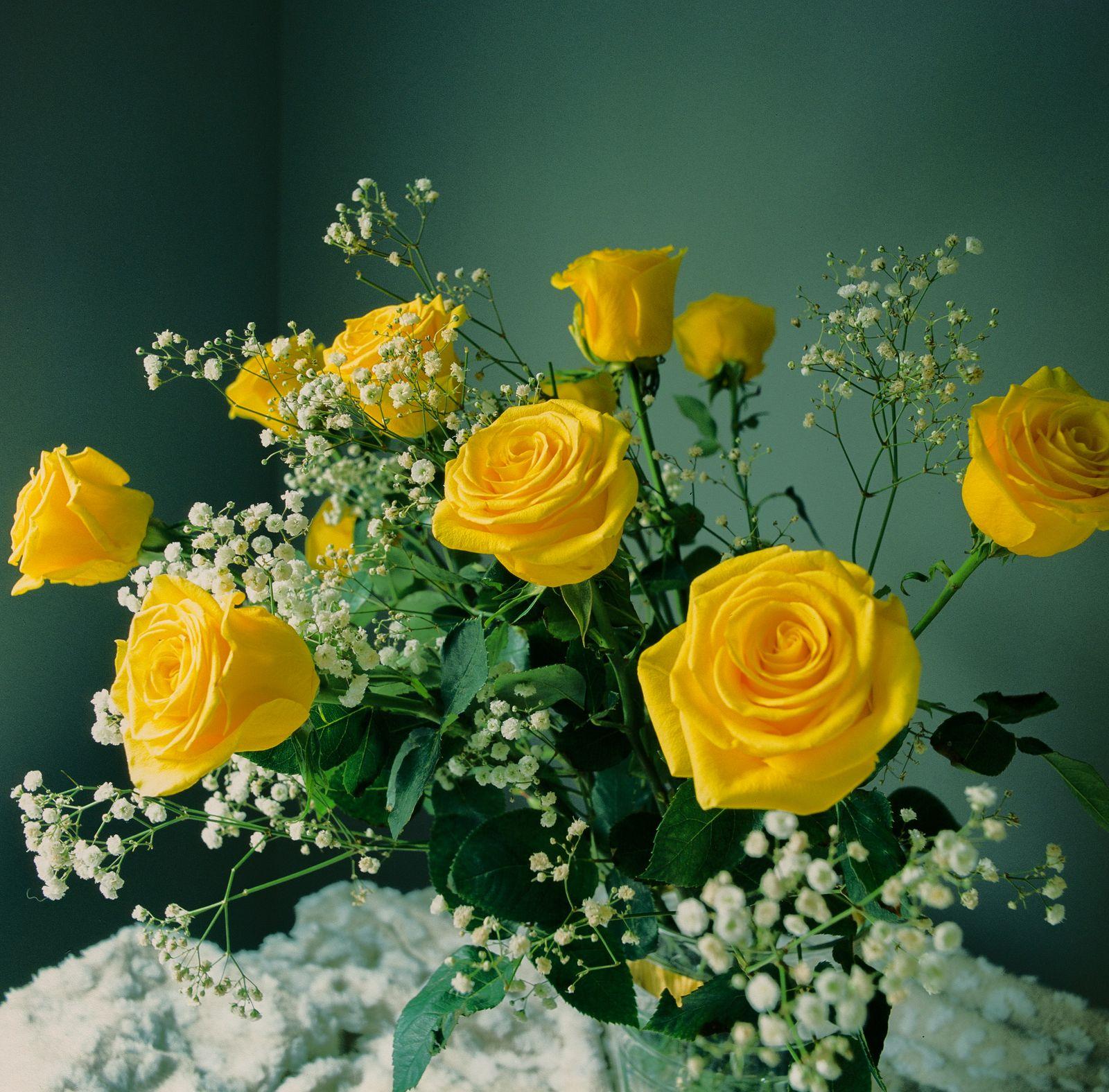
- Yellow roses read as friendship and joy rather than romance, which makes them a non-romantic rose for a colleague, friend, or relative. That meaning is a modern one — Victorian dictionaries actually filed the yellow rose under jealousy and decrease of love — but it is the reading almost everyone brings to a bouquet today.
- Orchids read as elegance, luxury, and accomplishment by florist convention, which is why they suit a marquee win like a big promotion. The common gift orchid, Phalaenopsis, is non-toxic to cats and dogs.
Tulips and irises belong here too, and standard florist etiquette names both as excellent congratulations flowers. Both are on the ASPCA's toxic list for cats, dogs and horses, though, so they are choices for a pet-free home. If you'd rather not pick just one, a generous mixed bouquet lets you gather several of these into a single celebratory armful.
What colour should congratulations flowers be?
Reach for bold and warm. Yellow, orange, and pink form the conventional congratulations palette, and they read instantly as upbeat. White and purple feel more elegant and formal, which helps when the moment calls for a little polish.
Colour sets the tone before the recipient even reads the card. A sunny yellow-and-orange mix suits a close friend who just aced their finals. A refined white or deep-purple arrangement fits a manager's promotion or a client's milestone. No rule is written in stone, so let your relationship with the person and the formality of the occasion guide you. When you're genuinely unsure, a warm multi-colour mix flatters almost any "congratulations." If the achievement is romantic-adjacent, say a new engagement, red roses change the message, so keep congratulations roses in the pink or yellow range to keep things celebratory rather than romantic.
How do you match the bouquet to the occasion?
Different wins call for different flowers, and tailoring the bouquet is what turns a nice gesture into a memorable one. A grad, a promotion, and a newborn each suit a different mood, even if all three deserve something bright. Here is how the common milestones tend to break down.
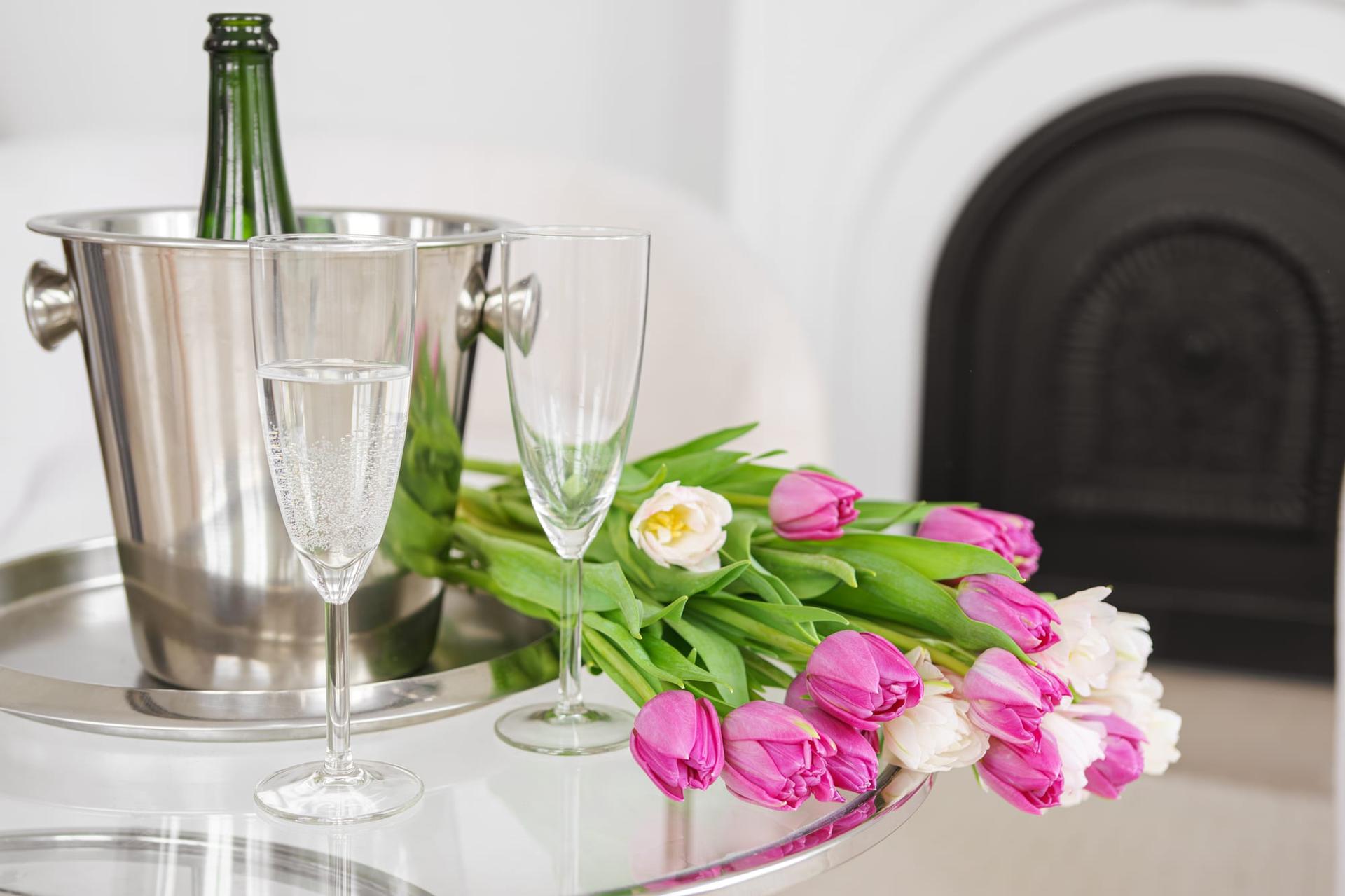
Graduation. Grad season lands in late spring and early summer, so fresh, new-beginnings flowers feel right. Tulips are Canada's quintessential spring bloom, celebrated every May at the Canadian Tulip Festival in Ottawa, and they carry the stepping-into-what's-next optimism a graduate deserves. Bright gerberas and sunflowers work beautifully too, and unlike tulips — which the ASPCA lists as toxic to cats, dogs and horses — both are non-toxic, which matters if the grad has a pet at home. Our graduation flower delivery is built for this, and same-day service helps when a ceremony date sneaks up on you.
A new job or promotion. This is where orchids earn their reputation. As a prestige flower, they signal accomplishment without shouting about it, and the usual gift orchid, Phalaenopsis, is non-toxic to pets. Pink roses, which modern florists read as pride and admiration, are another polished choice for a boss, a mentor, or a well-liked colleague.
A new baby. Personalize it with the baby's birth-month flower: a carnation for a January arrival, a rose for June, a gladiolus for August, a marigold for October. It is a small, thoughtful detail that tends to land, and it gives the parents a keepsake bloom to remember the month by. Check the household first, though: carnation and gladiolus are both ASPCA-toxic to cats and dogs, and the Tagetes marigolds sold as cut flowers are rated mildly toxic by the Pet Poison Helpline, though the pot marigold, Calendula officinalis, is not. June's rose is the one of the four that is non-toxic.
A new home. Housewarming gifts lean practical, so a longer-lived potted plant or a low, sturdy arrangement that fits a kitchen counter beats a towering bouquet in a half-unpacked space. If a cat or dog is moving in too, a Phalaenopsis orchid or a spider plant are both non-toxic choices.
For everything in between, from a first home to passing the bar exam, a bright celebratory arrangement rarely misses. Our same-day congratulations flowers reach the whole GTA when you order before 3 PM, Monday to Saturday.
What's the etiquette for congratulations flowers?
Send them soon. A congratulations bouquet lands best within a week of the good news, while the achievement still feels fresh. Beyond timing, standard etiquette says to match the arrangement's formality to your relationship: a loose, colourful mix for a good friend, something more composed like orchids or irises for a manager or a client. Of those two, iris is ASPCA-toxic to cats, dogs and horses and a Phalaenopsis orchid is not, so the orchid is the one to send when there is a pet at the destination. A short message that names the win — "You earned this" — turns flowers into a keepsake.
There are moments to skip flowers, too. If the recipient has serious pollen allergies, a low-pollen choice like a Phalaenopsis orchid plant is kinder than a pollen-heavy bouquet. In a reserved office, an oversized bouquet can draw more attention than the person wants. And pets deserve a full check, not just a note about lilies. True lilies (genus Lilium) and daylilies (genus Hemerocallis) are the most serious case: they are highly toxic to cats, and even a little pollen, a petal, or the vase water can trigger acute kidney failure, so they should not come into a home with a cat at all — keeping them "out of reach" is not a fix. Dogs escape that specific kidney damage, but that is a fact about lilies, not a general all-clear for dogs. Several standard congratulations flowers are on the ASPCA's toxic list for cats, dogs and horses alike, gladiolus, tulip, iris and carnation among them. Roses, sunflowers, gerbera daisies, alstroemeria and Phalaenopsis orchids are all listed as non-toxic, so tell us there is a pet at home and we will build from that list instead.
How do you keep a congratulations bouquet fresh?
A little care buys days of extra colour. The fundamentals are simple and well tested:
- Recut each stem at roughly a 45-degree angle before it goes in the vase, so it can drink freely.
- Strip any leaves that would sit below the waterline. Submerged foliage rots and fouls the water quickly.
- Change the water every two to three days, and keep the vase topped up.
- Set the arrangement somewhere cool, out of direct sun and away from heat vents.
- Keep it clear of the fruit bowl. Ripening fruit gives off ethylene gas, which makes cut flowers age and wilt sooner.
Skip most of the folk remedies while you are at it. A copper penny, an aspirin, or a splash of vodka will not reliably extend vase life. Lemon-lime soda is the one kitchen trick with actual research behind it, and even that is species-dependent: a trial published in HortTechnology found a 1:1 soda-and-water dilution lengthened vase life in most of the species tested, but shortened it for roses. Clean water, a clean vase, and the little sachet of flower food still do the real work. For a stem-by-stem walkthrough, our guide to caring for mixed bouquets lays it out.
Sending congratulations flowers across Toronto and the GTA
Timing is the detail most people underestimate. A convocation afternoon, a colleague's last-day-turned-promotion, the keys-in-hand moment at a new condo: these arrive on their own schedule, and flowers hit hardest when they land the same day. Order before 3 PM, Monday to Saturday, and Cindy's Flowers can hand-tie a bouquet in our Toronto studio and get it across the city and the wider GTA that afternoon.
Two practical notes for Toronto senders. June is peak graduation season across the city, and busy days sell through the best selection quickly, so order a day or two ahead when you can. Sundays and statutory holidays are the one gap: we deliver Monday through Saturday, so a Sunday order goes out the next delivery day. And if the celebration is at an office, a condo, or a hospital room, a quick line in the delivery notes about a buzzer code or front-desk drop-off helps it arrive without a hitch.