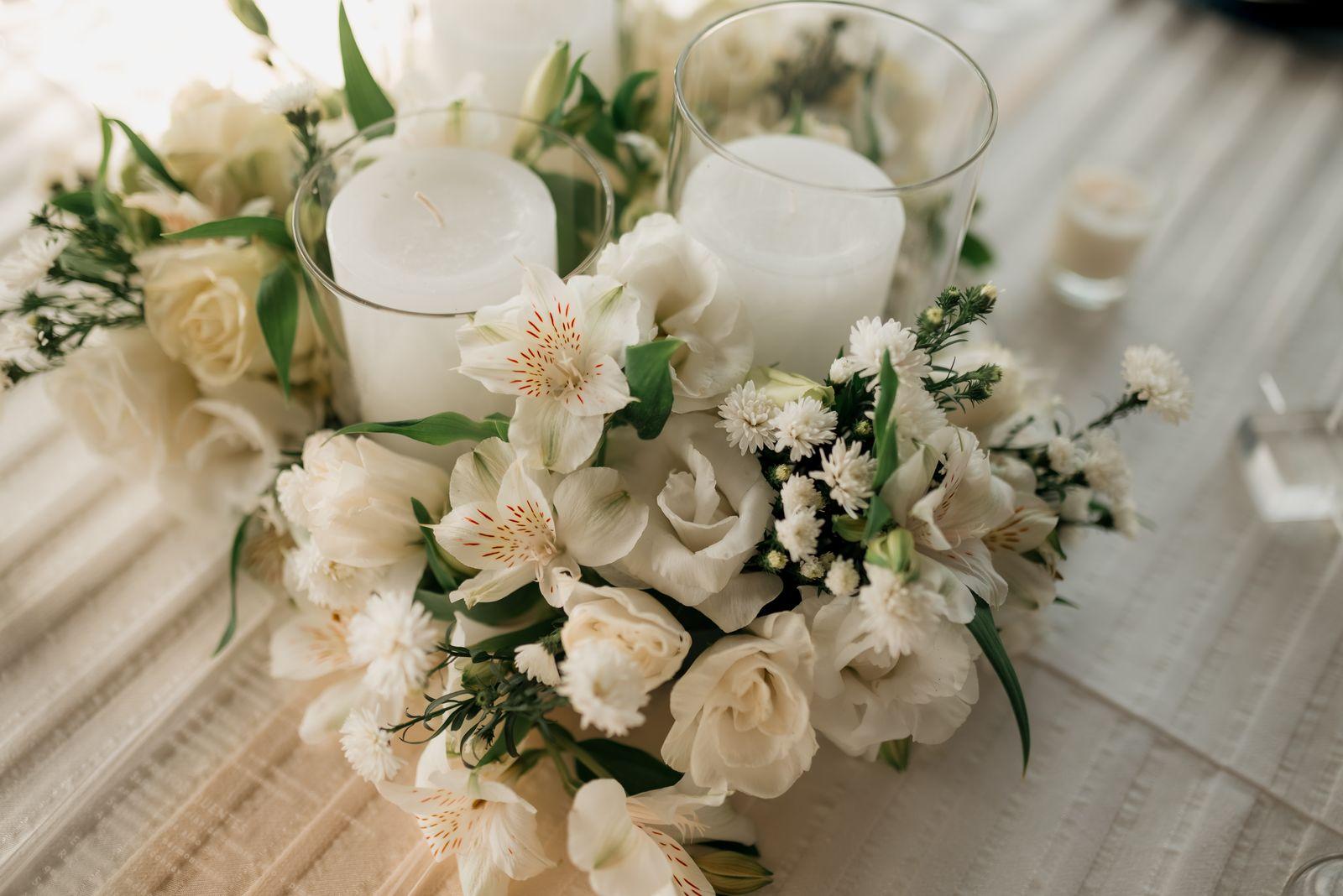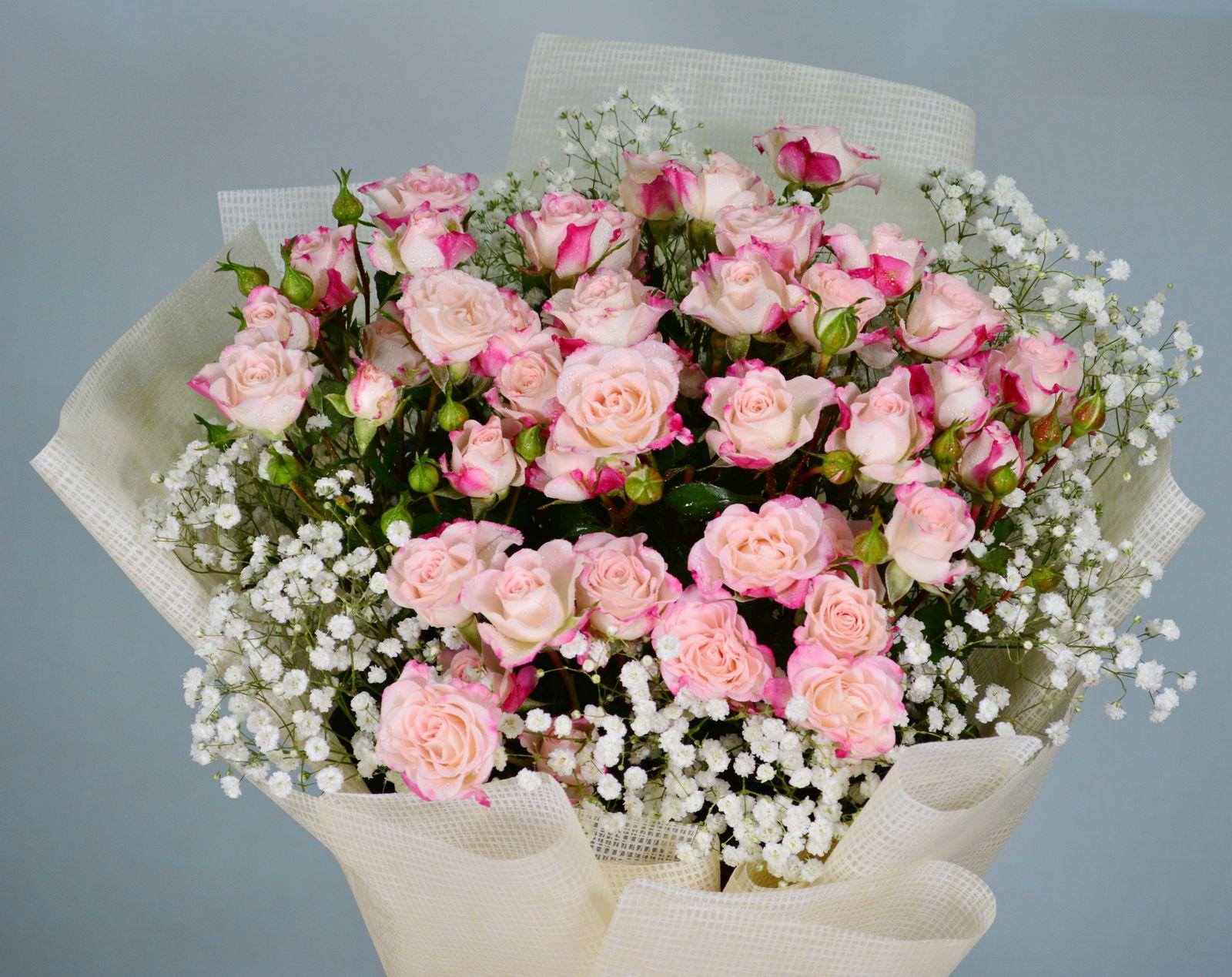
Send soft, gentle blooms for a new baby: pastel roses, tulips, daisies, and airy clouds of baby's breath. By floral convention the daisy reads as innocence and purity, and florists give baby's breath much the same meaning. Pink or blue is the easy shorthand, though a cheerful mixed arrangement suits any nursery just as well. Keep in mind that the gift really lands with a tired new parent, so choose something low-maintenance. And if the house has pets, the list needs a second look: lilies are the serious one, but tulips, daffodils, carnations and the florist daisy are on the ASPCA's toxic list too. If pets share the house, Cindy's Flowers can build that softness around roses, gerbera daisies, baby's breath and alstroemeria, hand-tied in its Toronto studio and delivered same-day to the family's door across Toronto and the GTA.
What flowers symbolize a new baby?
No single bloom officially "means" newborn, but a few have carried the right associations for generations. The daisy leads the way. It's April's birth flower in the Old Farmer's Almanac, traditionally standing for innocence, purity, and gratitude, which is about as on-theme as flower symbolism gets for a brand-new person. Baby's breath earns its spot too, though its meaning is a modern florist attribution rather than an inherited Victorian one: Kate Greenaway's 1884 Language of Flowers has no entry for it, and gypsophila only became a bouquet staple in the twentieth century. Florists today read those tiny white sprays as innocence and everlasting love, and together the two read as a fresh, unwritten start, which is exactly the sentiment most senders are reaching for.
If you'd rather the symbolism nod to the milestone itself, daffodils are the classic pick. The Almanac ties March's birth flower to new beginnings and rebirth, the standard florist answer when someone asks which flower represents a fresh start. They carry a caveat in a home with animals, though: the ASPCA lists daffodils as toxic to dogs, cats and horses, and notes that large ingestions cause convulsions, low blood pressure, tremors and cardiac arrhythmias. Outside spring, cheerful stand-ins like gerbera daisies and pastel tulips carry the same soft, hopeful mood — of those two, the gerbera is the one on the ASPCA's non-toxic list; tulips are on the toxic one. If the family skipped the pink-or-blue reveal, sunny yellows, soft peach, and pale green make a warm, gender-neutral palette.
The scale matters as much as the symbolism. Small, rounded blooms and delicate fillers echo the softness of a nursery far better than large, architectural flowers, which is part of why daisies, spray roses, and baby's breath feel instinctively right. There's a practical bonus, too: pastel roses, carnations, gerberas, and alstroemeria are imported into Toronto year-round, so they're never truly out of season. Of those four, the roses, gerberas and alstroemeria are the ones the ASPCA lists as non-toxic to dogs and cats; carnations are on its toxic list. Local peonies are the lovely exception, in bloom here only from about late May to mid-June, peaking in early June.
Matching flowers to the baby's birth month
It's a charming, low-risk idea. Birth flowers work like birthstones: folklore assigns a bloom to each month, and the Old Farmer's Almanac keeps the standard list. The Almanac itself calls these meanings folklore, so treat them as a bit of story for the card rather than hard fact. Write the traditional meaning beside the flower and a simple bouquet becomes a small keepsake.
A few of the classic examples:
- January: carnation, traditionally love, fascination, and hope.
- March: daffodil, for new beginnings and rebirth.
- April: daisy, for innocence and purity.
- June: rose, the old standby for love and affection.
- August: gladiolus, a nod to strength.
- November: chrysanthemum, for friendship and loyalty.
One caution before you commit to the calendar. May's birth flower is lily of the valley, which is genuinely toxic if eaten. It carries cardiac glycosides, and the ASPCA lists it as toxic to dogs, cats and horses, giving the clinical signs as vomiting, irregular heart beat, low blood pressure, disorientation, coma and seizures. That makes it a poor fit for a home with a curious pet or a soon-to-be-crawling baby, and a pretty symbol isn't worth the worry.
Several other months carry a milder version of the same problem, so it's worth knowing before you order. The ASPCA lists January's carnation, March's daffodil, August's gladiolus and November's chrysanthemum as toxic to dogs, cats and horses, mostly presenting as drooling, vomiting and stomach upset. April's daisy depends entirely on which daisy: the ASPCA files its Daisy entry under chrysanthemum, which is the marguerite-type daisy a florist usually means, while the gerbera daisy is a different plant on the non-toxic list. June's rose is the one month on this list that needs no footnote at all.
Flowers for the new mom, not just the baby
Here's the quiet truth of new-baby flowers: the baby won't notice them, but the person who just gave birth absolutely will. That's why the best arrangements often lean toward the parent. Pink carnations are the traditional cue, long read as a symbol of a mother's love. Carnations have been the emblem of Mother's Day since Anna Jarvis brought them to the first observances in 1908, with the pink ones coming to stand for a living mother. Worth flagging if the household has animals: the ASPCA lists carnations as toxic to dogs, cats and horses, usually as mild stomach upset and skin irritation rather than anything worse, and pale pink roses cover much the same sentiment from its non-toxic list.
A generous mixed bouquet does the heavy lifting here, layering roses, alstroemeria, and seasonal accents so the recipient gets colour, texture, and enough stems to fill a vase. Go easy on strong scent, though; a heavily perfumed arrangement can feel overwhelming in a small room where a newborn sleeps. A new parent also runs on no sleep, so the kindest bouquet needs little more than a trim and fresh water. If cut flowers feel like one more chore, a low-care potted plant is a thoughtful alternative that keeps going for months — a moth orchid is the easy pick where there's a pet, since the ASPCA lists Phalaenopsis as non-toxic to cats and dogs.
Which flowers are safe around pets and newborns?
Fewer of them than most guides imply, which is why this is worth checking flower by flower rather than assuming pastel means harmless. Lilies are still the one to handle first, because they sit in a category of their own. True lilies (Lilium) and daylilies (Hemerocallis) are highly toxic to cats. Every part is poisonous, including the pollen and even the vase water, and the ASPCA warns that poisoning is often fatal once treatment is delayed past 18 hours. A cat only has to brush pollen onto its fur and groom it off, so a high shelf is not a fix and neither is pulling the anthers; the only real answer is not to bring them into a cat's home. Alstroemeria, often sold as Peruvian lily, is the standard substitute: despite the name it isn't a true lily, and the ASPCA lists it as non-toxic to cats and dogs. You get that same ruffled, layered shape.
The rest of the new-baby shortlist needs the same look. Tulips, daffodils, carnations, gladiolus, peonies and chrysanthemums are all on the ASPCA's toxic list for dogs, cats and horses, usually showing up as drooling, vomiting and stomach upset rather than the lily's kidney emergency; daffodil is the sharper exception noted earlier. Lily of the valley, that tempting May birth flower, belongs in the serious bracket with the true lilies and is toxic to people and pets alike. And the daisy is genuinely two different flowers wearing one name: the ASPCA files its Daisy entry under chrysanthemum, so the marguerite-style bloom a florist means by "daisy" is on the toxic list, while the gerbera daisy is a separate plant on the non-toxic one. If you want daisies going into a home with a cat or dog, ask for gerberas by name.
That leaves a short but genuinely workable palette. Of everything named in this guide, the ASPCA lists roses, gerbera daisies, baby's breath and alstroemeria as non-toxic to dogs and cats, and those four alone build the soft pastel look most senders are picturing. Newborns aren't nibbling centrepieces yet, but flowers often outlast the hospital stay and land on a low table at home, so it pays to think a season ahead. When you order, tell your florist there are pets in the home and ask what's actually in the arrangement — checking the stems beats trusting the category.
Hospital or home: where to send them
When in doubt, send them to the home. Many hospital wards, especially neonatal intensive care and other intensive-care units, restrict or ban fresh flowers over infection-control and allergy concerns, so a bouquet can be turned away at the front desk. It's also worth checking whether the parent has a private room or is sharing one, since scent and pollen travel, and plenty of new parents find themselves newly sensitive to both. A quick message to another family member, or a call to the ward, saves an awkward moment.
Delivering to the house has another upside: the flowers greet the family after the chaos of discharge, which is often when a little beauty means the most. If you're arranging new baby flower delivery anywhere in Toronto or the GTA, Cindy's Flowers runs same-day delivery on orders placed before 3 PM, Monday through Saturday, so a same-day welcome to the world is doable. For an early-morning arrival, ordering the day before takes the pressure off entirely.
What should you write on the card?
Keep it short, warm, and about the family rather than the baby alone. A card doesn't need to be clever; it needs to sound like you. And if the baby already has a name, using it is a lovely touch, though it's never required. A few lines that always land:
- "Welcome to the world, little one. We're so glad you're here."
- "Congratulations on your beautiful new arrival. Sending love to all three of you."
- "A tiny person and a whole lot of love. Wishing your family rest and joy."
- "So thrilled for you both. We can't wait to meet the newest member of the clan."
If the flowers are really for the parent, say so plainly. A simple "Thinking of you, take all the naps you can get" can mean more than anything addressed to someone who's three days old. However you phrase it, the sentiment matters far more than the wording. A few honest words tucked under soft blooms are the kind of welcome new families remember.