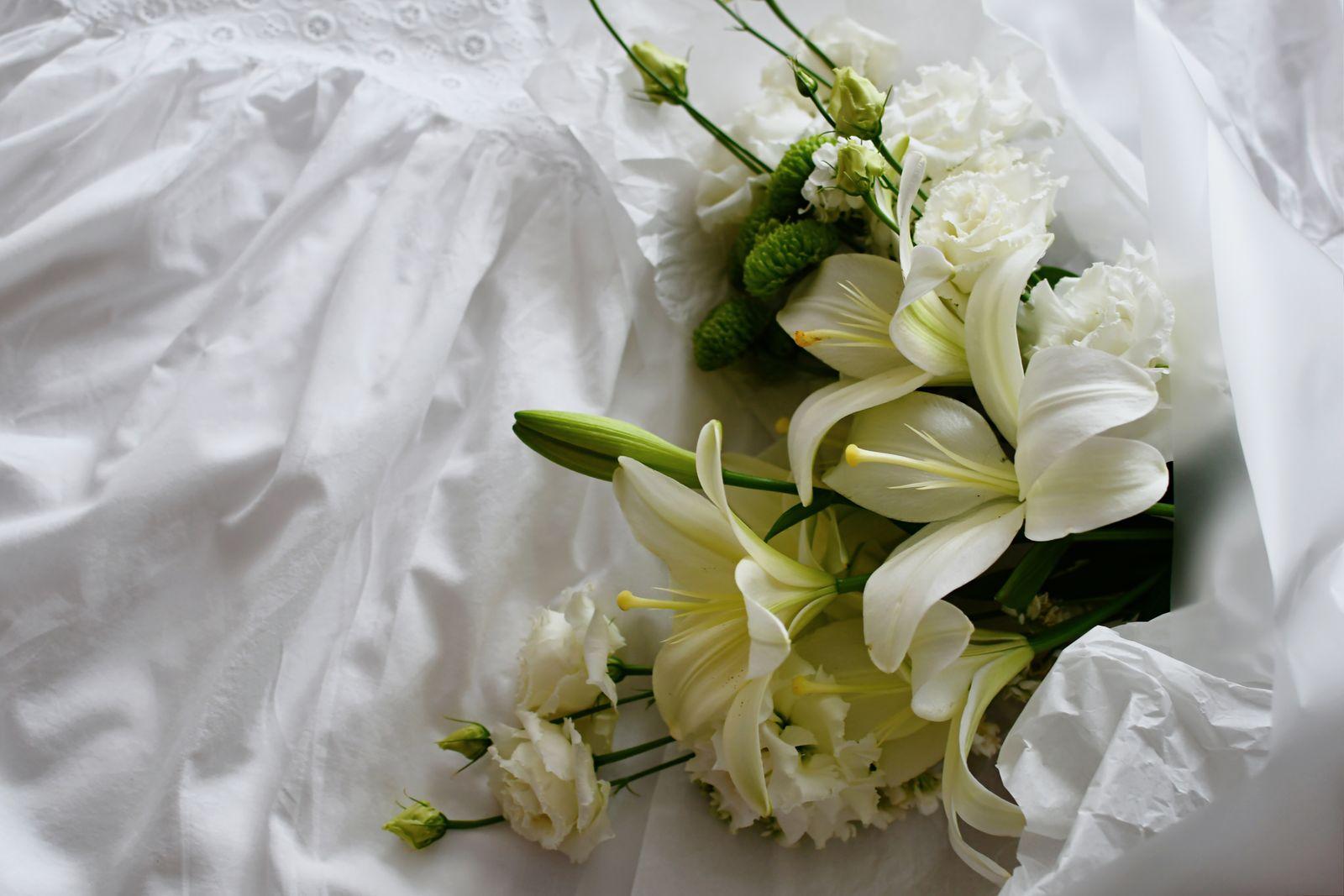
For most families, the most trusted sympathy flowers are lilies, roses, and carnations. Traditional etiquette, from Emily Post onward, names those three among other long-standing choices, and by modern florist convention each carries a gentle message: the white lily for purity, the white rose for reverence, the white carnation for innocence and pure love. Colour matters as much as the bloom. White and soft neutrals read as peaceful, while a peach rose adds warmth without turning celebratory. In Toronto, an arrangement built around these flowers speaks with quiet dignity at a service, a funeral home, or a grieving family's front door. Cindy's Flowers hand-ties condolence arrangements in our Toronto studio and delivers them to a service, a funeral home or a family's door anywhere in Toronto and the GTA.
What are the best sympathy flowers to send?
Start with the classic three: lilies, roses, and carnations. Emily Post frames it as an open list rather than a closed one, noting that "roses, lilies, carnations, and other traditional choices have never gone out of style," and florists lean on them for good reason. Each one is expressive, easy to source year-round, and appropriate almost anywhere you would send condolences.
The white lily does the heavy lifting. It is the flower most people picture at a Western funeral, and by modern florist convention it signals purity and rebirth. Roses bring reverence, especially in white, while carnations offer something practical on top of their meaning: they last. Carnations are among the longest-lived cut flowers, holding for roughly two weeks in a vase, where roses and gerbera daisies often fade inside a week. For a tribute meant to sit at a service or a bedside for days, that endurance matters. Two of those three come with a caveat if the household has animals: the ASPCA lists carnations and chrysanthemums as toxic to dogs, cats and horses, and true lilies are the most serious hazard of all for a cat. Roses are the exception the ASPCA lists as non-toxic to all three. The pet section below has the detail.
You are not limited to those three, though. Emily Post's guidance is broader than it first looks: virtually any type of flower or plant is suitable, and it can go to the bereaved's home, their workplace, or the funeral home. A mixed seasonal bouquet is entirely appropriate.
If you would rather let a florist compose the whole thing, Cindy's Flowers builds its sympathy flower delivery arrangements around this same traditional palette, hand-tied in our Toronto studio and sent same-day when you order before 3 PM.
What do sympathy flower colours mean?
Colour carries the message as clearly as the flower does. White has long stood for purity, which is why pale arrangements dominate sympathy work: Kate Greenaway's 1884 flower dictionary files the white lily under "purity, sweetness." Softer shades, peach and pale pink, add warmth without striking a celebratory note. Here is how the most common sympathy blooms are read by modern florist convention, which is where most of these meanings actually come from:
- White lily: purity and sweetness in the Victorian dictionaries; the rebirth reading funeral florists use comes from Christian iconography rather than floriography.
- White rose: purity, reverence, and a fresh start.
- White carnation: innocence and pure love.
- Pink carnation: remembrance, the classic "I'll never forget you."
- Peach rose: modesty and sincerity, warmth that stays unshowy.
- Coral or orange rose: desire and fascination, not friendship, so it is the one warm shade worth leaving out of a condolence arrangement. Friendship belongs to the yellow rose in modern usage.
- Dark crimson rose: mourning and deep sorrow, though Greenaway reads deep red as bashful shame.
A soft, all-white design suits a formal service or a colleague you did not know well, while a warmer mix of peach and pale pink feels right for a close friend. Match the tone to the relationship, not to a chart.
None of these meanings are rules. They are conventions handed down through generations of florists, so trust your sense of the person you are honouring. The white lily sits at the centre of the tradition, and our lily arrangements lean on that quiet symbolism, with the cat caveat in the next section.
A note on pets: lilies, mums, and carnations
Lilies carry the most serious caveat, and it is the single most important thing to check before you send them: they are highly toxic to cats. True lilies, the Lilium group like Stargazer, Oriental, Asiatic, and Easter lilies, along with daylilies (Hemerocallis), can cause severe kidney failure in cats. Every part of the plant is dangerous. A cat that drinks the vase water or licks pollen from its fur can be poisoned, and the ASPCA warns that cases are often fatal if treatment waits more than 18 hours. Setting the vase somewhere high does not solve it, because the pollen and the water are the hazard; in a home with a cat, the answer is simply not to send them. The ASPCA lists true lilies as non-toxic to dogs and horses, but that reassurance covers Lilium and Hemerocallis only, not the rest of this list. If a cat does make contact, call your vet or the ASPCA Animal Poison Control line at 888-426-4435 right away.
Two of the flowers this guide recommends need the same check. The ASPCA lists carnations (Dianthus) and chrysanthemums, which it files under its "Daisy" entry, as toxic to dogs, cats and horses. For the mum it names sesquiterpene lactones and pyrethrins, with vomiting, diarrhea, drooling, unsteadiness and skin irritation among the signs; for carnations it lists mild gastrointestinal signs and mild dermatitis. That is stomach upset rather than the lily's organ failure, but neither is a flower to send into a home you are trying to be careful about. Roses are the reassuring exception, listed non-toxic to dogs, cats and horses, and alstroemeria, sold as Peruvian lily, is the ASPCA-non-toxic stand-in when someone wants the shape of a lily where a cat lives. Tell us there is an animal in the house when you order and we can build the arrangement around those two instead.
Not every flower called a "lily" behaves the same way, though that is not the same as harmless. Peace lily and calla lily are not Lilium and do not cause kidney failure, yet the ASPCA lists both as toxic to dogs, cats and horses, because their calcium oxalate crystals burn the mouth and throat. Lily of the valley is not a true lily either and is the most dangerous of the group after Lilium: the ASPCA lists it as toxic to dogs, cats and horses, with cardiac glycosides that can cause an irregular heartbeat, low blood pressure, disorientation, seizures and coma. Gloriosa, sold as flame lily, is a genuine florist flower whose colchicine alkaloids damage several organs in dogs as well as cats. Only true lilies and daylilies cause that acute kidney damage, but as the list shows, that is a long way from a clean bill of health for the rest. Alstroemeria, again, is the one genuine exception in the group. Once your lilies are home, our guide to caring for lilies covers how to remove the pollen and keep the blooms fresh.
Which flowers might send the wrong message?
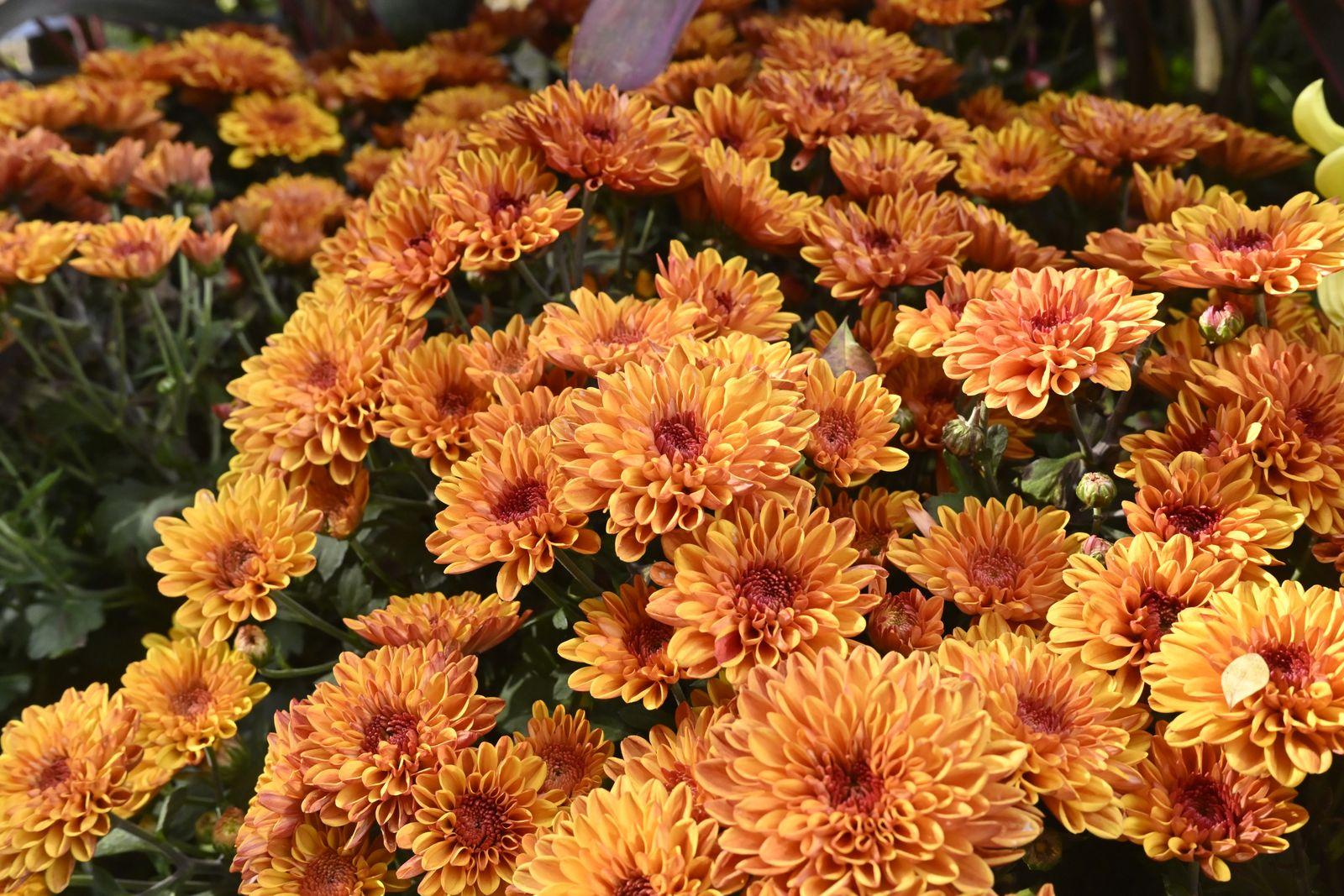
Most flowers are welcome, but a couple can carry unintended meaning. Chrysanthemums are the big one. In much of Europe, including France, Italy, Spain, Poland, and Belgium, the mum is a funeral and graveside flower, carried to cemeteries for All Saints' Day. East Asia is more nuanced than that reputation suggests. In Japan the chrysanthemum is the imperial crest, and Chrysanthemum Day is one of the five old sacred festivals; in China it is one of the Four Gentlemen of classical painting, celebrated at the Double Ninth Festival and brewed as tea. It is the white chrysanthemum specifically that carries mourning weight in both countries, while in Korea the funeral reading is the stronger one. In the United States and mainstream Canadian practice, the mum reads as cheerful and perfectly at home in a happy bouquet. So a mum-heavy arrangement is fine for most Toronto families, but if the person you are honouring has strong European or Korean roots, or you are sending white mums to a Chinese or Japanese household, it is worth a second thought. There is a household reason to pause too: as above, the ASPCA lists chrysanthemums as toxic to dogs, cats and horses, so where there are animals, roses make a safer body for the arrangement.
The other consideration is not botanical at all. Some families would rather not receive flowers. In traditional Jewish practice, flowers generally are not sent to a funeral; the custom leans toward a charitable donation in the person's memory or bringing food to the mourners. When you see "in lieu of flowers" in an obituary, that is a direct request, and the kind thing is to follow it.
Beyond mums, there is little you truly need to avoid. Bright, loud arrangements can feel out of step at a solemn service, but the flower itself is rarely the issue. It is the overall tone that matters.
Where and when to send condolence flowers
You can send condolence flowers almost anywhere: the funeral home, the place of the service, or the family's home. Etiquette guides treat all three as appropriate, and a plant or basket sent to the house is a warm gesture the family can keep. Larger funeral flowers follow a rough convention. Wreaths, standing sprays, and crosses usually come from groups, companies, or associations, while the casket spray is traditionally chosen by the immediate family. If you are an individual friend, a hand-tied bouquet or a basket is the natural choice.
Timing is forgiving. There is no strict deadline, though sooner is kinder, and many people send flowers to the home in the weeks after, once the rush of the service has passed. When you want blooms to arrive the same day, a local florist helps. We deliver across Toronto and the GTA Monday through Saturday, with same-day delivery on orders placed before 3 PM, so a late-morning decision can still reach a family by evening. From a downtown funeral home to a family's home in Scarborough or Etobicoke, the same window applies. You can browse current bouquets to see what is fresh this week.
One last thing: the card. A short, sincere line does more than a long one. "Thinking of you and your family" or "He will be deeply missed" is plenty. Skip the flourish. Presence is the point.